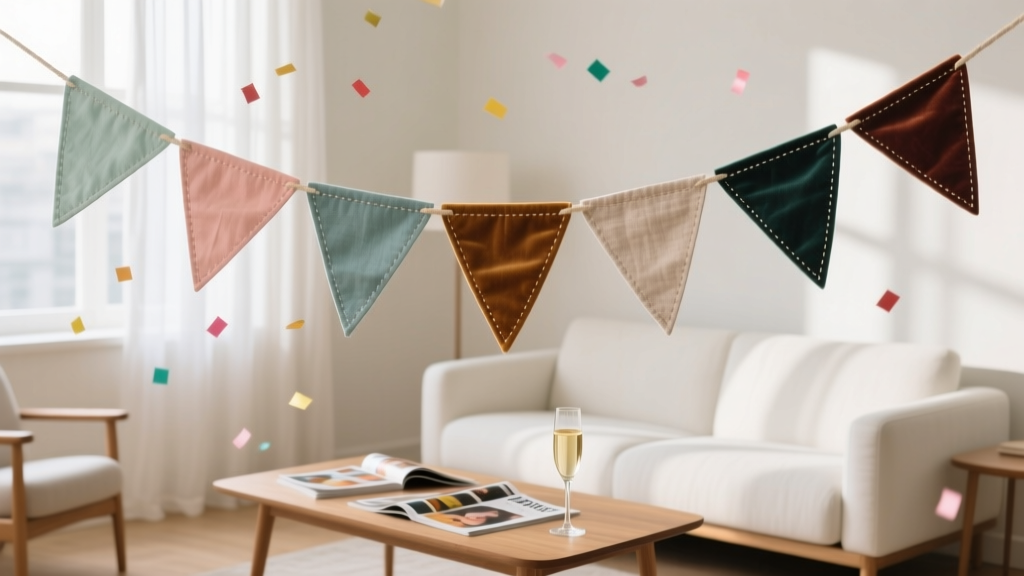
How to Make Fabric Bunting at Home
Fabric bunting is one of those DIY party decorations that instantly makes a space feel festive. Whether you’re decorating for a birthday, baby shower, bridal shower, graduation, or backyard BBQ, a string of handmade flags adds color, texture, and that “I made this for you” charm you just can’t buy off the shelf.
Even better: fabric bunting is reusable. Unlike paper garlands that wrinkle or tear, fabric holds up party after party—so the time you spend making it pays off for future celebrations. You can customize it to match any party theme (boho neutrals, bright rainbow, vintage florals, sports colors, or holiday prints), and it’s a fantastic scrap-busting project if you sew.
This step-by-step guide walks you through beginner-friendly no-sew options and polished sewn versions, plus pro tips for crisp points, even spacing, and smooth hanging. By the end, you’ll have a party-ready bunting banner you’ll be proud to hang.
Project Overview: Skill Level, Time, and Finished Size
- Skill level: Beginner (no-sew) to Intermediate (sewn binding + finishing details)
- Estimated time:
- No-sew bunting: 60–90 minutes
- Sewn bunting (basic): 1.5–3 hours
- Advanced (lined flags, applique, tassels): 3–5 hours
- Typical finished length: 6–12 ft (adjustable)
- Standard flag size (recommended): 7 in wide x 9 in tall (triangle)
- Spacing: 1–2 in between flags (or edge-to-edge for a fuller look)
Materials & Tools (with Estimated Costs)
Fabric and Notions
- Cotton quilting fabric (fat quarters or 1/4 yard cuts): easy to sew, tons of prints. Estimated cost: $3–$6 per fat quarter; $5–$9 per 1/4 yard.
- Muslin or solid cotton for backing (optional): great for double-sided bunting. Estimated cost: $4–$8 per yard.
- Bias tape (double-fold, 1/2 in): fastest binding for the top edge. Estimated cost: $3–$6 per 3-yard pack.
- Ribbon or twill tape (3/8 in to 1 in wide): an easy alternative to bias tape. Estimated cost: $4–$10 for 10 yards.
- Fusible interfacing (lightweight, optional): adds structure and helps points stay crisp. Estimated cost: $3–$7 per yard.
- Fabric glue or hot glue (no-sew option): Estimated cost: $3–$10.
- Thread (polyester all-purpose): Estimated cost: $3–$6.
Tools (Recommended)
- Sewing machine (helpful, not required for no-sew)
- Fabric scissors or rotary cutter + cutting mat + quilting ruler (best for consistent flags)
- Iron + ironing board (key for crisp, professional results)
- Ruler or measuring tape
- Fabric marking pen/chalk
- Clips or pins (clips are great for bias tape)
- Point turner or chopstick (for sharp corners on lined flags)
Budget Snapshot (Typical Total)
- Budget-friendly (scrap fabric + ribbon + glue): $8–$20
- Mid-range (new fabric + bias tape + thread): $20–$45
- Premium (double-sided + interfacing + embellishments): $35–$70
Plan Your Bunting: Size, Count, and Fabric Math
Choose Your Flag Shape
- Classic triangles: fastest and most recognizable for party bunting.
- Swallowtail (notched) flags: slightly more advanced, very “party chic.”
- Pennant-style (long triangles): sporty vibe, great for game-day party decorations.
Recommended Template Measurements (Triangle)
- Width at top: 7 in
- Height: 9 in
- Seam allowance (if sewing): 1/4 in around sides and point
How Many Flags Do You Need?
Use this quick estimate for a 10 ft bunting banner:
- Flag width: 7 in
- Spacing: 1 in between flags
- Approximate space per flag: 8 in
- 10 ft = 120 in → 120 ÷ 8 = 15 flags
Add extra length for tying on both ends:
- Extra tie length: 10–14 in per end (20–28 in total)
Step-by-Step: How to Make Fabric Bunting (3 Methods)
Step 1: Make a Reusable Template
- On cardstock or cardboard, draw a triangle: 7 in wide at the top and 9 in tall.
- Cut it out carefully.
- If sewing lined flags, make a second template that includes 1/4 in seam allowance around the shape (or simply add seam allowance when cutting).
Step 2: Cut Your Fabric Flags
- Press your fabric first (wrinkles can change your cut size).
- Fold fabric right-sides together if you’re making lined flags, or keep it single-layer for simple flags.
- Trace the template and cut:
- Single-layer flags: cut 1 triangle per flag.
- Double-sided flags: cut 2 triangles per flag (or cut on a fold if your template allows).
Method A (Beginner-Friendly): No-Sew Fabric Bunting with Ribbon
This is the quickest way to make DIY party bunting if you don’t have a sewing machine.
- Create a top channel: Fold the top edge of each triangle down 1/2 in to the back side and press.
- Glue the fold: Apply fabric glue (or a thin line of hot glue) under the fold and press firmly. Let it dry fully.
- Thread the ribbon: Slide your ribbon/twill tape through the channels.
- Space the flags: Measure 1–2 in between flags and adjust.
- Hang it up: Tie the ribbon ends or tape them to the wall with removable hooks.
Best for: lightweight cotton fabric, quick party decorations, and short-term indoor use.
Method B (Most Popular): Sewn Single-Layer Flags with Bias Tape
This gives a clean top edge and a sturdy bunting banner that lasts through multiple celebrations.
- Finish the triangle edges (optional but recommended):
- Use pinking shears, a zigzag stitch, or a serger around the two sides and point.
- If you’re using quilting cotton and it won’t be handled much, you can skip finishing.
- Prepare bias tape: Open one fold of the double-fold bias tape.
- Position flags: Place the top edge of each flag inside the opened bias tape, leaving 10–14 in of bias tape free at the beginning for tying.
- Clip in place: Use sewing clips to hold flags evenly spaced.
- Sew the bias tape: Stitch along the open fold line, catching the flag tops. Then fold bias tape over the raw edge and topstitch close to the edge to secure.
- Finish ends: Fold the bias tape ends under twice and stitch to prevent fraying.
Best for: sturdy handmade party decorations that are still fast to make.
Method C (Polished & Reversible): Double-Sided Lined Fabric Bunting
This is the “wow” version—perfect for weddings, photo backdrops, and keepsake decor.
- Cut pairs: Cut 2 triangles per flag (front and back).
- Sew right-sides together: Stitch along the two sides and point with a 1/4 in seam allowance, leaving the top edge open.
- Trim and turn: Clip the point (don’t cut through stitches), turn right-side out, and use a point turner to sharpen the tip.
- Press: Press each flag flat for crisp edges.
- Optional topstitch: Topstitch around the sides for a professional finish.
- Attach to bias tape or ribbon: Insert the top edge into bias tape and sew as in Method B.
Best for: reversible bunting banners, outdoor parties, and high-impact party backdrops.
Pro Tips for Professional-Looking DIY Bunting
- Press at every stage: Ironing is what makes fabric bunting look store-bought.
- Batch steps: Cut all flags, then sew all flags, then attach all flags. You’ll move faster and stay consistent.
- Use a spacing guide: Cut a piece of cardboard 1 in wide to use as a spacer between flags.
- Keep the top edge straight: If triangle tops stretch, fuse a strip of lightweight interfacing along the top edge before attaching to bias tape.
- Choose the right fabric weight: Quilting cotton hangs nicely; heavy upholstery fabric can droop awkwardly unless interfaced.
- Outdoor durability: Use lined flags, stronger ribbon (twill tape), and tighter spacing so wind doesn’t flip them as much.
Creative Variations (Beginner to Advanced)
Beginner-Friendly Upgrades
- Use pinking shears: Reduces fraying on single-layer flags without extra sewing.
- Mix solid + print: Alternate patterns for instant “designer” style.
- Add iron-on letters: Spell “HAPPY BIRTHDAY” across the flags using heat-transfer vinyl (HTV).
Advanced Variations for Statement Party Decor
- Applique shapes: Stars, hearts, numbers, or baby-themed icons stitched onto each flag.
- Swallowtail cut: Cut a small triangle notch out of the bottom for a pennant look.
- Pom-pom trim: Sew pom-pom fringe along the bottom edge of each flag.
- Quilted bunting: Use patchwork fabric for a cozy, heirloom-style banner.
Troubleshooting: Fix Common Issues
- My flags curl or twist on the string.
- Use lined flags (Method C) or add lightweight interfacing.
- Reduce spacing so flags support each other.
- Choose a slightly stiffer binding (twill tape works well).
- The points look rounded, not sharp.
- Trim seam allowance at the point before turning.
- Use a point turner gently (don’t poke through).
- Press with steam and a crisp fold.
- Bias tape keeps shifting while sewing.
- Clip more often, especially near each flag.
- Slow down and stitch closer to the edge on the final pass.
- Press the bias tape first to “train” the fold.
- The bunting is shorter than I expected.
- Measure total length in inches and calculate flag count before assembling.
- Add more flags or reduce spacing.
Common Crafting Mistakes to Avoid
- Skipping pressing: Unpressed fabric leads to uneven flags and wavy edges.
- Cutting without a template: Freehand triangles usually come out mismatched, which looks messy once hung.
- Using stretchy fabric (like jersey) as a first project: It can warp and droop. Start with quilting cotton.
- Forgetting tie length: Always leave 10–14 in of binding or ribbon on both ends.
- Over-gluing (no-sew method): Too much glue can seep through and leave shiny spots. Use a thin line.
- Hanging with weak tape: Fabric is heavier than paper garlands. Use removable hooks or sturdy painter’s tape for indoor walls.
FAQ: Fabric Bunting at Home
How much fabric do I need for a 10-foot bunting banner?
For standard 7 in x 9 in triangle flags, plan for about 15 flags. If you’re cutting single-layer flags from a variety of fat quarters, 4–6 fat quarters is usually enough depending on pattern direction and cutting efficiency. For double-sided flags, you’ll need roughly double the fabric (or use a solid backing fabric).
Do I need a sewing machine to make fabric bunting?
No. You can make no-sew bunting by folding and gluing a top channel and threading ribbon through it. A sewing machine makes it sturdier and faster for large banners, but it’s not required for fun, casual party decorations.
What’s the best binding to use: bias tape or ribbon?
Bias tape gives the neatest finished look and hugs the fabric flags well. Twill tape or ribbon is great for a rustic style and can be easier to find in longer rolls. For outdoor bunting, twill tape tends to hold up better than silky ribbon.
How do I make the bunting reversible?
Sew two triangles right-sides together, turn, press, and then attach the finished flags into bias tape (Method C). This creates clean flags with no wrong side showing—perfect for hanging across a room where guests see both sides.
How do I keep the fabric from fraying?
Choose one of these options:
- Make lined flags (edges are enclosed).
- Zigzag stitch or serge the edges.
- Use pinking shears for a quick fray-resistant edge.
Can I wash and reuse fabric bunting?
Yes—especially if it’s sewn. Hand wash or gentle machine wash in a laundry bag, then press flat. Avoid washing hot-glued bunting; glue can loosen with heat and moisture.
Make It, Hang It, Celebrate
Fabric bunting is a cheerful, customizable DIY craft that turns any space into a celebration zone. Start simple with a no-sew banner for a last-minute party decoration, or take your time with lined, double-sided flags for a keepsake bunting you’ll use for years. Pick fabrics that match your theme, press as you go, and don’t worry if the first one isn’t perfect—each banner gets easier (and faster).
When you’re ready for your next handmade party project, explore more DIY craft ideas, party decorations, and creative prep inspiration on smartpartyprep.com.
More Articles
 DIY Party Banners Using Cricut
 DIY Tie-Dye Shirts with Dollar Store Supplies
 DIY Tote Bags for Baby Showers
 Are Pure Encapsulations third party tested? Yes—but here’s exactly which labs verify them, what tests they run (heavy metals, microbes, potency), and how to spot fake 'certified' claims in 2024.
 How Do I Enable Third Party Cookies on My Mac? The Real Answer (Spoiler: You Can’t — But Here’s What Actually Works in 2024)
 How to Draw a Party Hat in 5 Minutes (Even If You Can’t Draw): A Foolproof, Step-by-Step Guide for Kids, Teachers & Party Planners Who Need Instant Printable Art
 How to Enable Third Party Cookies on MacBook: A Step-by-Step Safari & Chrome Fix (2024 Verified — No More 'Blocked' Errors or Broken Logins)
 How to Make a Party Popper in 7 Minutes (No Glue, No Mess, No Store-Bought Kits) — A Foolproof DIY Guide That Actually Works Every Time
 Rustic Favor Bags Ideas
 Personalized Invitations Gifts