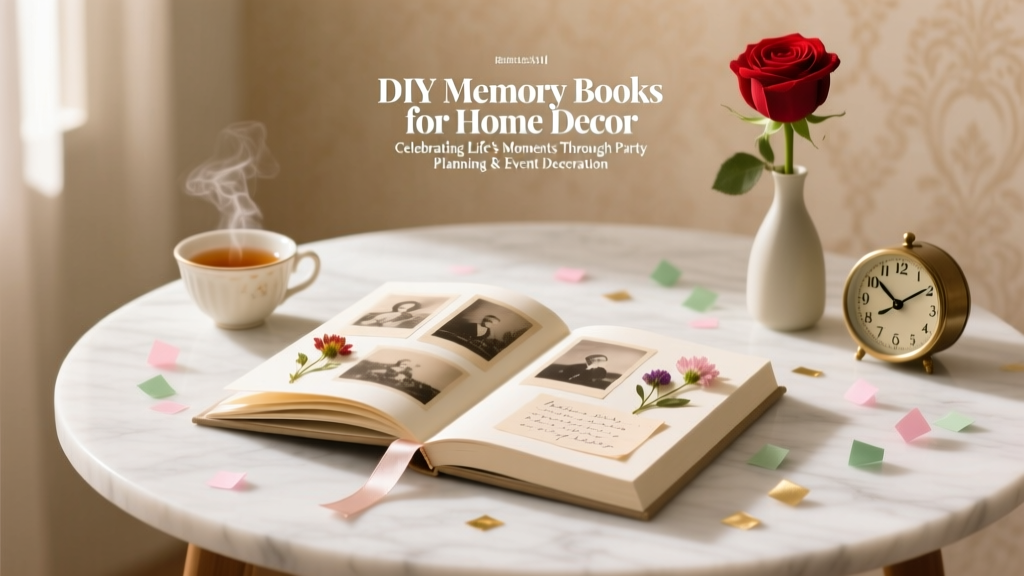
DIY Memory Books for Home Decor
Some of the best home decor pieces aren’t bought—they’re built from moments. A DIY memory book turns party photos, invitations, handwritten notes, and tiny keepsakes into something you’ll actually display on a shelf or coffee table. It’s equal parts scrapbook and decor accent, and it becomes even more meaningful every time you flip through it.
This project is especially fun for party lovers because the “supplies” are often already in your drawer: birthday cards, baby shower tags, wedding place cards, printed photo strips, and leftover ribbon. You can make a memory book after one big celebration or create a themed series (one per year, one per kid, one per season of hosting).
Best of all, it’s flexible. Beginners can keep it simple with pocket pages and photo corners, while experienced crafters can level up with stitched spines, layered layouts, and interactive elements. Either way, you’ll end up with a handmade decoration that tells your story.
Project Overview: Skill Level, Time, and Finished Size
- Skill level: Beginner to Intermediate (advanced upgrades included below)
- Time estimate: 2–4 hours for a 20-page book (plus drying time if using wet glue/paint)
- Finished size options:
- Classic decor size: 8.5" x 8.5" (great for coffee tables)
- Bookshelf-friendly: 6" x 8"
- Statement piece: 9" x 12"
- Page count: 10–30 pages (20 pages is a sweet spot)
Why Memory Books Make Great Party Decor
They double as conversation starters
Set one out during a gathering and guests naturally start flipping. It’s a subtle party decoration that also pulls people into storytelling.
They organize the “party leftovers” you love
Instead of keeping random mementos in a box, you’re curating them into a display-worthy handmade project.
They’re customizable for every theme
Birthday parties, bridal showers, graduation parties, Friendsgiving—every event can become a cohesive DIY craft with matching colors and design details.
Materials List (With Product Types & Estimated Costs)
Costs vary by brand and what you already have. The list below is designed for a sturdy, display-quality DIY memory book.
Core supplies
- Chipboard or bookboard for covers (2 pieces)
- Recommended thickness: 0.06"–0.08" (about 1.5–2 mm)
- Cut size example for an 8.5" x 8.5" book: two pieces at 9" x 9" (gives a slight overhang for pages)
- Estimated cost: $6–$15
- Cardstock for pages (65–80 lb)
- 20–30 sheets depending on page count and thickness
- Estimated cost: $5–$12
- Decorative paper or fabric for cover wrap
- Scrapbook paper (12" x 12") or cotton fabric
- Estimated cost: $3–$10
- Adhesives
- Double-sided tape (strong) or tape runner: $4–$10
- PVA bookbinding glue or craft glue: $6–$12
- Optional: glue stick for light paper: $2–$5
- Binding method (choose one)
- Binding rings (2–3 rings, 1.5"–2"): $3–$8
- OR ribbon binding (1/2" satin ribbon): $3–$6
- OR mini screw posts (1" posts): $6–$12
Tools (recommended)
- Paper trimmer (clean, square cuts): $15–$35
- Metal ruler + craft knife (for chipboard): $8–$20
- Cutting mat: $10–$20
- Bone folder (sharp creases): $5–$10
- Hole punch (single or 3-hole, adjustable is ideal): $6–$20
- Corner rounder (optional, adds a “store-bought” finish): $6–$15
- Archival pen (for journaling): $3–$8
Decor elements (pick what fits your theme)
- Photo corners or washi tape: $3–$8
- Stickers/letter tiles for titles: $4–$12
- Ribbon, twine, or lace: $3–$10
- Clear pockets (6" x 8" or 8.5" x 11" trimmed down): $5–$12
- Small envelopes or vellum for tuck spots: $3–$8
Design Plan: Pick a Theme That Matches Your Party Style
Before cutting anything, decide your “decor direction.” This keeps the book looking cohesive enough to display as home decor.
- Color palette: choose 2 main colors + 1 accent (example: blush + cream + gold)
- Memory focus: one event (birthday), one season (summer hosting), or one year
- Layout style:
- Minimal: photos + short captions
- Storybook: journaling blocks + timeline elements
- Collector: pockets for invites, napkin pieces, confetti, tags
Step-by-Step: How to Make a DIY Memory Book for Display
Step 1: Choose the size and cut your pages
- Select your page size. For an 8.5" x 8.5" book, cut pages to 8.5" x 8.5".
- Cut 20 pages from cardstock (this equals 20 single-sided pages; you can decorate both sides).
- Optional: round the corners of all pages for a polished look and fewer bent edges.
Beginner-friendly option: Use pre-cut 8.5" x 11" cardstock and trim to size with a paper trimmer.
Step 2: Create sturdy covers
- Cut chipboard covers to 9" x 9" (slightly larger than pages to protect edges).
- Cut your cover wrap (paper or fabric) to 13" x 13". This gives about a 2" wrap margin on each side for a 9" cover.
- Center the chipboard on the back of your cover wrap and adhere using PVA glue or strong double-sided tape.
- Miter the corners: cut diagonally across each corner, leaving about 1/8" of wrap beyond the chipboard corner so it folds neatly.
- Fold and glue edges to the inside, smoothing with a bone folder.
- Cover the inside with a “lining” paper (cut to 8.75" x 8.75") to hide raw edges.
Dry time: If using glue, press covers under a heavy book for 20–30 minutes to reduce warping.
Step 3: Pick a binding method (rings, ribbon, or posts)
Option A: Binding rings (fastest and very beginner-friendly)
- Mark hole placement on pages and covers. For an 8.5" square book, place holes 1" from the left edge.
- Use 2 holes (top and bottom), each about 1.25" from the top/bottom edge.
- Punch holes through pages and covers.
- Thread binding rings through the stack.
Option B: Ribbon binding (soft, decorative, party-perfect)
- Punch 2 holes as above.
- Cut two lengths of ribbon at 18"–22" each (enough to tie bows comfortably).
- Thread ribbon through holes and tie tight bows on the front cover.
Option C: Screw posts (sleek, more “book-like,” great for thick keepsakes)
- Use 2–3 holes depending on size (3 holes gives extra stability).
- Stack pages and covers, align carefully, and punch holes.
- Insert screw posts and tighten. Add extender posts later if your book grows.
Step 4: Build your layouts (photos + party keepsakes)
Work in batches: 2 pages at a time keeps the style consistent.
- Plan placement first without glue. Arrange photos, captions, and keepsakes on each page.
- Mount photos on a mat layer:
- Cut cardstock mats 1/8"–1/4" larger than each photo for a clean border.
- Attach with photo-safe tape runner or photo corners.
- Add journaling cards (about 3" x 4" or 4" x 6") with dates, funny quotes, menu notes, or a guest list highlight.
- Include interactive pieces:
- Create a pocket (cut a 4.5" x 6.5" rectangle, tape three sides)
- Add a mini envelope for confetti, a candle label, or a “favorite moments” list
- Repeat design elements every few pages (same washi tape, same title font) so it looks like intentional home decor.
Step 5: Finish the cover like a decor piece
- Add a title such as “Birthday Memories 2026” or “Our Hosting Highlights”.
- Layer a simple label: a 3" x 5" cardstock rectangle on top of a slightly larger patterned mat.
- Optional: add a ribbon closure by gluing ribbon ends to the inside of the back cover (under the lining paper).
Pro Tips for Clean Results (and a More Display-Worthy Book)
- Use a tape runner for flat items and PVA glue for fabric. This prevents wrinkles and keeps corners down.
- Press as you go: after finishing 4–5 pages, close the book and place it under a heavy book for 10 minutes.
- Keep bulky keepsakes to a few pages: too many thick items make the book gape and won’t sit nicely on a shelf.
- Write with archival ink so captions don’t fade over time.
- Print photos in consistent finishes (all matte or all glossy) for a professional look.
- Leave a 1/2" “binding margin” along the hole-punched edge so nothing gets clipped by rings or posts.
Fun Variations (Beginner-Friendly and Advanced)
Beginner-friendly adaptations
- Use a pre-made blank scrapbook album and focus on decorating pages only.
- Use pocket pages (like photo sleeves) for mess-free assembly and quick rearranging.
- Limit tools: scissors + glue runner + hole punch + ruler can get you a great result.
Advanced variations
- Hidden spine upgrade: create a cloth spine with a 1" gap between front and back cover boards for a more traditional book look.
- Shaker pocket page: seal confetti between acetate sheets (keep it flat and light so the book stays decor-friendly).
- Heat embossing: emboss the cover title in metallic powder for a luxe party decor finish.
- Stitched binding: use a pamphlet stitch or Japanese stab binding (great for a minimalist, artful look).
Troubleshooting: Quick Fixes for Common Issues
- Cover is warping: too much wet glue. Use less, spread evenly, then press under weight. Consider double-sided tape for paper wraps.
- Pages won’t turn smoothly: holes are too close to the edge or too tight on rings/posts. Move holes in to 1" and ensure rings are large enough (1.5"–2").
- Photos peeling up: oily photo surfaces can reject cheap adhesive. Use a stronger tape runner or photo corners.
- Book won’t close flat: too many bulky items. Move thick keepsakes into pockets and spread them across the book.
- Edges look messy: trim after assembly (carefully) or add a border strip (1/2" wide) to cover uneven edges.
Common Crafting Mistakes to Avoid
- Skipping a dry fit: always arrange elements before sticking them down.
- Overloading every page: white space makes your DIY memory book look like intentional home decor, not clutter.
- Using school glue on photos: it can wrinkle prints and cause lifting. Choose photo-safe tape or corners.
- Placing decor too close to holes: keep a 1/2" margin so rings don’t snag.
- Mixing too many themes: stick with one palette and repeat a few motifs (stars, florals, confetti dots).
- Forgetting the “display test”: stand the book upright. If it slumps, reduce bulk or tighten the binding.
FAQ: DIY Memory Books for Home Decor
What’s the best size for a memory book that will sit on a coffee table?
An 8.5" x 8.5" or 9" x 12" book looks intentional and “decor-like.” If you want something bookshelf-friendly, choose 6" x 8".
How do I include party keepsakes like invitations and napkins without making the book too bulky?
Add flat pockets and tuck items inside, or scan/photograph thicker pieces and include a printed version. If you want the real item, use just one thick keepsake page every 5–6 pages.
What adhesive is safest for photos and long-term keepsakes?
Use photo-safe tape runners, photo corners, or archival double-sided tape. For paper-to-paper, a strong tape runner is clean and durable.
Can I make this as a party activity?
Yes! Set up a “memory book station” at birthdays or showers with printed photos, stickers, pens, and pre-cut journaling cards. Keep the actual binding step for after the party so pages don’t get damaged.
How many photos should I include per page?
For a clean, home decor feel: 1–3 photos per page plus a short caption. If you want a fuller scrapbook style, go up to 5 photos, but keep mats and spacing consistent.
What if I don’t have a paper trimmer or chipboard?
You can use heavy cardstock for covers (layer 2–3 sheets with glue/tape) and cut with scissors + a ruler. It won’t be as rigid as chipboard, but it’s a great beginner start.
Wrap-Up: Make Your Memories Part of Your Decor
A DIY memory book is one of those handmade projects that keeps paying you back—first as a relaxing craft session, then as a party decoration and home decor piece you’ll actually pull out and enjoy. Start simple, keep your color palette consistent, and let your photos and little party details do the storytelling.
When you finish, display it proudly: stack it with a candle on a coffee table, stand it on a shelf with framed photos, or bring it out at your next gathering as a built-in conversation piece.
Want more party-ready DIY crafts and handmade decoration ideas? Explore more creative projects on smartpartyprep.com and keep those celebrations looking personal, polished, and full of heart.
More Articles
 Are Pure Encapsulations third party tested? Yes—but here’s exactly which labs verify them, what tests they run (heavy metals, microbes, potency), and how to spot fake 'certified' claims in 2024.
 How to Unlock Mario Party 8 Characters: The Only Step-by-Step Guide That Actually Works (No Cheats, No Glitches, Just Verified Methods)
 How to Remove a Pokemon from Your Party in Cobblemon: The 3-Step Method That Actually Works (No Crashes, No Lost Data, and Zero Mod Conflicts)
 12 Stunning Do It Yourself Party Centerpieces You Can Make in Under 30 Minutes (No Craft Experience Needed — Seriously)
 Personalized Origami Decorations Gifts
 DIY Party Hats Using Cricut
 Budget DIY Painted Rocks Under $10
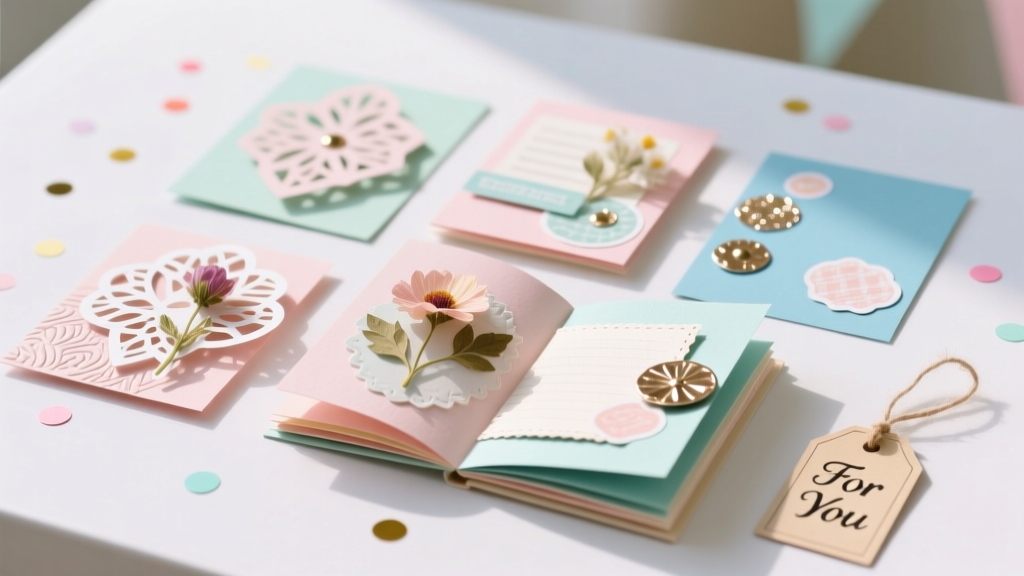 DIY Scrapbook Pages Party Favors
 No-Sew Clay Ornaments Tutorial
 When the Party Is Over Chords: The Only Complete, Beginner-Friendly Guide You’ll Ever Need (No Theory Required — Just Play in 7 Minutes)