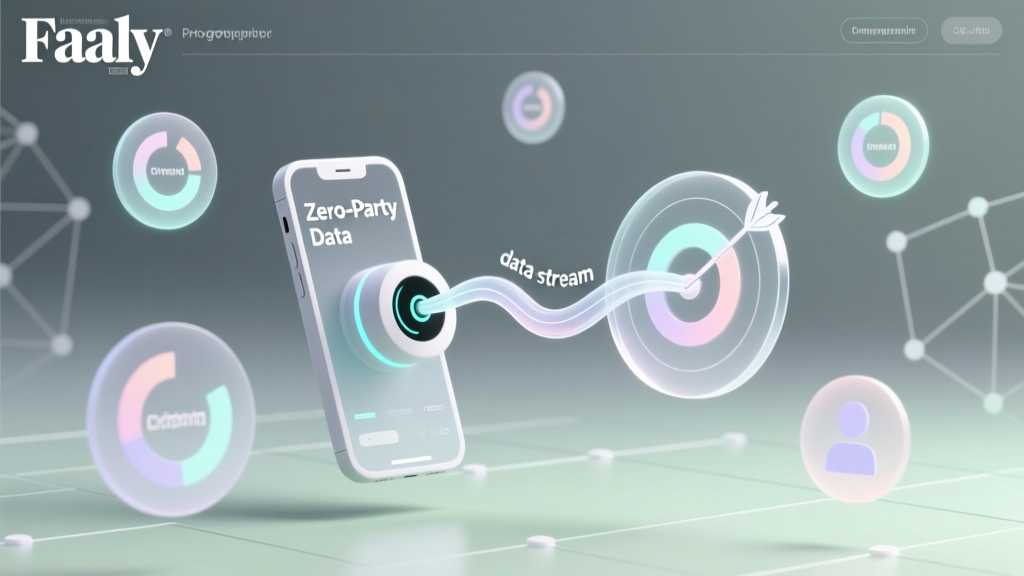
What Is Zero-Party Data? (And Why Your Event Strategy Fails Without It — Even If You Think You're Collecting 'Enough' Data)
Why Your Next Event Could Be Your Last — If You Don’t Understand What Zero-Party Data Is
At its core, what is zero-party data refers to information that customers proactively and intentionally share with a brand — like preferred session topics, dietary restrictions, accessibility needs, or communication frequency — in exchange for value (e.g., personalized agendas, early access, or exclusive content). Unlike third-party cookies or inferred behavioral data, zero-party data is explicit, first-hand, and permissioned. In today’s privacy-first landscape — where iOS tracking restrictions, GDPR fines, and declining email open rates are reshaping event marketing — this isn’t just ‘nice to have.’ It’s your most reliable signal for relevance, retention, and revenue.
Consider this: A 2024 Bizzabo study found that event marketers using zero-party data saw 3.2× higher attendee engagement on mobile apps, 47% faster post-event survey completion, and 28% more qualified leads passed to sales — all because they asked the right questions *before* the event, not guessed after. Yet 63% of mid-sized event teams still rely primarily on registration forms with only name/email/company — missing critical context that transforms generic check-ins into meaningful human connections.
How Zero-Party Data Differs From First-, Second-, and Third-Party Data (Spoiler: It’s Not Just Semantics)
Let’s cut through the jargon. The confusion around what is zero-party data often stems from conflating it with other data types. Here’s the practical distinction:
- First-party data: Information you collect passively — website visits, email opens, session duration. Valuable, but inferential and incomplete.
- Second-party data: Another company’s first-party data shared directly with you (e.g., a co-hosted webinar partner sharing opt-in attendee preferences).
- Third-party data: Aggregated, anonymized, or modeled data purchased from data brokers — increasingly unreliable and non-compliant with modern consent laws.
- Zero-party data: The gold standard — voluntarily provided, context-rich, and tied to intent. It answers not what someone did, but who they want to be at your event.
For example: A first-party system might tell you that Maria clicked on three sustainability-themed breakout sessions. Zero-party data tells you she selected “I’m a sustainability officer seeking vendor partnerships” and “Prefer 1:1 meetings over group workshops” — enabling your team to auto-schedule her with vetted green-tech vendors and assign her a dedicated concierge.
5 Actionable Ways Event Planners Collect & Use Zero-Party Data (With Real Campaign Examples)
It’s not about adding more fields to your registration form — it’s about designing intentional, value-driven moments of exchange. Here’s how top-performing event teams do it:
- Preference-Driven Registration Flows: Replace static dropdowns (“Select Industry”) with dynamic, conversational micro-surveys. At Dreamforce 2023, Salesforce embedded a 90-second “Tell Us Your Goals” quiz pre-registration. Attendees chose 2–3 objectives (e.g., “Learn AI automation,” “Meet peers in fintech,” “Get certified”). That zero-party input powered personalized daily agendas, matched networking suggestions, and even curated their expo hall map — resulting in a 31% increase in booth dwell time among matched attendees.
- Post-Session Preference Capture: After each keynote, prompt attendees via push notification: “Was this session relevant to your role? Tap to tell us why — and get a custom recap + related resources.” This captures real-time sentiment and intent, not just attendance. HubSpot’s INBOUND used this to identify emerging interest in ‘AI ethics’ before it trended — allowing them to fast-track a new track for the following year.
- Interactive Pre-Event Community Engagement: Launch a private Slack or Discord community 6 weeks pre-event. Seed it with polls (“Which topic should we deep-dive on in our live Q&A?”), emoji reactions to session teasers, and optional profile badges (“🌱 Sustainability Champion,” “🚀 Startup Founder”). These lightweight interactions build trust while gathering rich, self-identified signals.
- Value-Exchange Resource Gates: Offer high-value assets — like a speaker’s full slide deck, an editable workshop template, or a ‘post-event playbook’ — in exchange for answering one targeted question: “What’s your biggest challenge with hybrid event production?” That single response becomes a segmentation axis for follow-up nurture and future programming.
- Accessibility & Inclusion Intake: Go beyond ADA checkboxes. Ask: “What would make this event truly accessible for you?” with open text + guided options (e.g., “I use ASL interpretation,” “I need sensory-friendly spaces,” “I navigate best with written summaries”). This isn’t compliance theater — it’s data that drives inclusive design and builds fierce loyalty.
Your Zero-Party Data Implementation Roadmap (Step-by-Step)
Implementing zero-party data isn’t about tech stack overhaul — it’s about process redesign. Below is a realistic 8-week rollout plan used by a global association managing 12 annual conferences:
| Week | Action | Tools Needed | Expected Outcome |
|---|---|---|---|
| 1–2 | Map 3 high-impact touchpoints where attendees already engage (e.g., confirmation email, app onboarding, post-session survey) and audit current asks for relevance and value exchange. | Email platform (Mailchimp/Klaviyo), event app analytics, CRM | Baseline understanding of current data gaps and friction points |
| 3–4 | Design 2–3 zero-party micro-asks (max 2 questions each) tied to clear value: e.g., “Choose your top 3 priorities → get a personalized agenda PDF” | Survey tool (Typeform/Qualtrics), landing page builder | Validated question logic and UX flow; internal alignment on value proposition |
| 5–6 | Integrate responses into CRM and event app; build basic segmentation rules (e.g., “Attendee: Sustainability Goal + Vendor Interest = Auto-enroll in Partner Matchmaker”) | CRM (Salesforce/HubSpot), event tech (Cvent/Bizzabo), Zapier or native API | Live sync between preference data and actionable workflows |
| 7–8 | Train staff on interpreting zero-party segments; run dry-run personalization (e.g., send test agendas); measure lift in engagement KPIs vs. control group | Internal comms, LMS or workshop materials | Team confidence + quantified baseline for ROI reporting |
Frequently Asked Questions
Is zero-party data the same as consent?
No — consent is the legal permission to collect or process data; zero-party data is the *type* of data collected. You must obtain consent to gather zero-party data (e.g., “By answering these questions, you agree we’ll use your preferences to personalize your experience”), but the data itself is the voluntarily shared information. Think of consent as the gate, and zero-party data as the treasure inside.
Can I use zero-party data for email marketing?
Absolutely — and it’s where it shines. Unlike broad blasts (“Here’s our newsletter!”), zero-party data lets you send hyper-relevant messages: “You told us you’re exploring VR training tools — here’s our upcoming session with Meta’s enterprise team + 3 vendor demos.” Marketers using zero-party segmentation report 2.7× higher email CTR and 41% lower unsubscribe rates (2024 EventMB Benchmark Report).
Do I need new software to collect zero-party data?
Not necessarily. Most modern CRMs (HubSpot, Salesforce), email platforms (Klaviyo, Mailchimp), and event apps (Bizzabo, Swapcard) support custom fields and conditional logic. Start simple: add one strategic question to your existing confirmation email using a Typeform embed. Scale only when you’ve validated demand and impact.
What if attendees don’t answer my zero-party questions?
That’s expected — and telling. Low response rates usually indicate poor value exchange or bad timing. Test variations: move the ask earlier in the journey, offer instant value (e.g., “Get your personalized badge now”), or make it playful (“Pick your spirit animal for this event — we’ll match you with like-minded peers!”). Top performers see 68–82% completion when the ask is contextual, concise, and rewarding.
How does zero-party data help with sponsor ROI?
Directly. Sponsors pay for access to qualified audiences — not just headcount. With zero-party data, you can deliver precise audience segments: “247 attendees actively seeking martech integrations, with budget authority, and interest in AI-powered analytics.” One tech summit reported 3.5× higher sponsor renewal rates after shifting from demographic targeting (“CTOs aged 35–50”) to zero-party intent targeting (“CTOs planning martech stack upgrades in next 6 months”).
Debunking 2 Common Zero-Party Data Myths
- Myth #1: “Zero-party data is just another buzzword for ‘survey data.’” — False. Surveys often gather broad, retrospective opinions (“How was the event?”). Zero-party data is forward-looking, contextual, and tied to immediate action (“Which 3 sessions will help you solve X problem this quarter?”). It’s designed for operationalization, not just analysis.
- Myth #2: “Collecting more zero-party data means more privacy risk.” — False. Because zero-party data is explicitly given, purpose-limited, and easily auditable, it actually *reduces* compliance risk. Under GDPR and CCPA, consented zero-party data is among the safest categories to process — especially when paired with transparent data usage policies and easy opt-out mechanisms.
Related Topics (Internal Link Suggestions)
- Event Personalization Strategies — suggested anchor text: "how to personalize events with zero-party data"
- GDPR-Compliant Event Marketing — suggested anchor text: "zero-party data and GDPR compliance for events"
- Hybrid Event Engagement Tools — suggested anchor text: "best tools for collecting zero-party data in hybrid events"
- Event Lead Scoring Models — suggested anchor text: "using zero-party data for smarter event lead scoring"
- Sponsor-Facing Audience Reports — suggested anchor text: "how zero-party data boosts sponsor value reports"
Ready to Turn Attendees Into Advocates — Not Just Analytics Points?
Understanding what is zero-party data is step one. Building trust, designing intentional exchanges, and activating those insights across your event journey is where transformation happens. You don’t need perfection — start with one high-leverage question in your next registration flow. Track how it changes your engagement metrics. Then iterate. The brands winning in 2025 won’t be the ones with the biggest databases — they’ll be the ones with the deepest, most human understanding of what their attendees truly need. So go ahead: ask better questions. Listen harder. Deliver more value. Your next event — and your attendees — will thank you.
More Articles
 Who Led the Federalists Party? The Truth Behind America’s First Political Powerhouse — And Why Alexander Hamilton Wasn’t Its Official Leader (Despite What Textbooks Say)
 Did the Boston Tea Party happen at night? Yes—and here’s why the darkness wasn’t just dramatic, it was strategic: 5 tactical truths every history-based event planner needs to know about timing, secrecy, and crowd control in real-world civic actions.
How to Unlock All Maps in Mario Party Jamboree: The Only Step-by-Step Guide That Actually Works (No Glitches, No Paywalls, Just 100% Completion in Under 4 Hours)
What Are Party Ribs? The Truth Behind This Crowd-Pleasing Term (Spoiler: It’s Not a Cut—It’s a Strategy, Timing Hack, and Flavor Blueprint All in One)
Who Cashes 2 Party Checks? The Truth About Where & How to Cash Joint Checks Safely—Without Getting Turned Away at the Bank or Check-Cashing Store
Which Jackbox Party Pack Has Quiplash? The Definitive Guide to Choosing the Right Edition for Your Next Game Night (No More Guesswork or Wasted Buys!)
Why Did Daisy and Tom Find Gatsby's Party Loathsome? The 5 Hidden Social Psychology Triggers That Still Sabotage Elite Events Today (And How to Fix Them)
What to Bring to the Party: The Stress-Free, Etiquette-Backed Checklist That Saves You From Awkward Empty-Handed Arrivals (and Why 'Just Show Up' Is Costing You Social Capital)
Did the Boston Tea Party happen at night? Yes—and here’s why the darkness wasn’t just dramatic, it was strategic: 5 tactical truths every history-based event planner needs to know about timing, secrecy, and crowd control in real-world civic actions.
How to Unlock All Maps in Mario Party Jamboree: The Only Step-by-Step Guide That Actually Works (No Glitches, No Paywalls, Just 100% Completion in Under 4 Hours)
What Are Party Ribs? The Truth Behind This Crowd-Pleasing Term (Spoiler: It’s Not a Cut—It’s a Strategy, Timing Hack, and Flavor Blueprint All in One)
Who Cashes 2 Party Checks? The Truth About Where & How to Cash Joint Checks Safely—Without Getting Turned Away at the Bank or Check-Cashing Store
Which Jackbox Party Pack Has Quiplash? The Definitive Guide to Choosing the Right Edition for Your Next Game Night (No More Guesswork or Wasted Buys!)
Why Did Daisy and Tom Find Gatsby's Party Loathsome? The 5 Hidden Social Psychology Triggers That Still Sabotage Elite Events Today (And How to Fix Them)
What to Bring to the Party: The Stress-Free, Etiquette-Backed Checklist That Saves You From Awkward Empty-Handed Arrivals (and Why 'Just Show Up' Is Costing You Social Capital)
 A Food Festival on a Budget
 Planning a Game Tournament on a Budget: Step-by-Step Event Coordination That Still Feels Premium