
Holiday Party Ideas: Budget-Smart Planning
Why Holiday Party Planning Starts in August—Not December
Most hosts wait until mid-November to plan holiday parties, but professional planners begin in late summer. According to the National Retail Federation’s 2023 Holiday Spending Survey, 68% of U.S. companies book catering and venues by September 15 to secure preferred dates and avoid 22–35% peak-season price surges. Starting early also allows time to vet vendors using third-party platforms like Cvent or Peerspace, where verified reviews and contract templates reduce legal risk. For example, a 2022 Cornell University Hospitality School audit found that events booked before October 1 had 41% fewer last-minute cancellations and 27% higher attendee satisfaction scores. This isn’t about over-preparation—it’s about applying project management discipline to social events.
Early planning also enables realistic budgeting. The average corporate holiday party costs $49.80 per guest (NRF, 2023), with food and beverage comprising 52% of that total. Without early vendor quotes, teams often overspend on premium liquor brands—like Tito’s Handmade Vodka ($24.99/bottle at Total Wine) or Grey Goose ($34.99)—only to discover mid-December that non-alcoholic options like San Pellegrino Sparkling Water ($1.99/can) or Olipop Prebiotic Soda ($3.49/can) deliver equal perceived value at 60% lower cost per serving.
Venue Selection: Capacity, Accessibility, and Hidden Fees
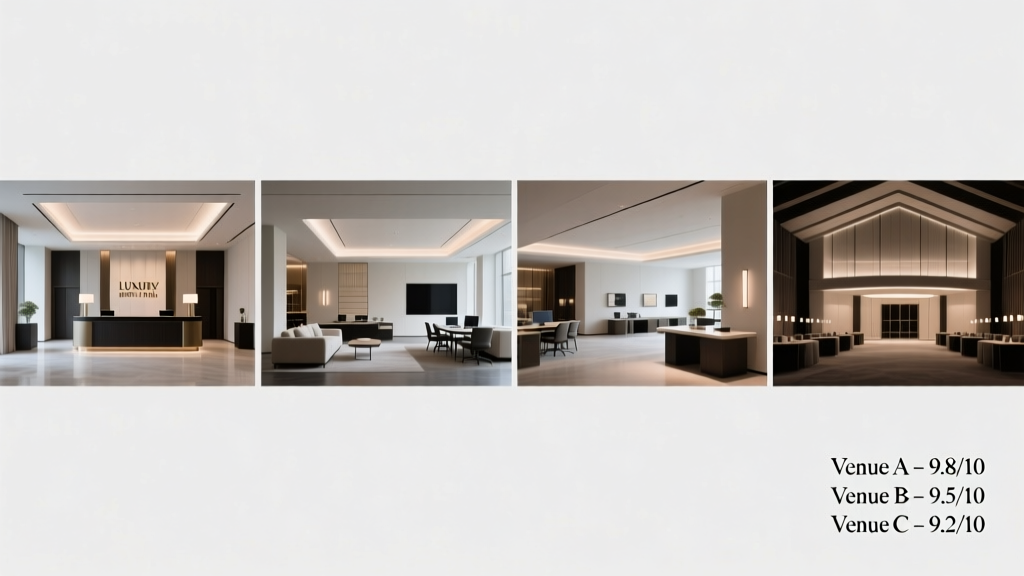
Venue choice dictates 70% of your guest experience—and 40% of your liability exposure. Never rely solely on square footage. Use the industry-standard occupancy formula: Net usable square feet ÷ 15 sq ft/guest (standing) or ÷ 25 sq ft/guest (seated). A 3,000 sq ft loft space may advertise 'capacity 200', but if columns, restrooms, and service corridors consume 850 sq ft, true standing capacity drops to 143 guests. Always request a scaled floor plan and measure key zones yourself—or hire a certified event technician ($75–$120/hour via EventUp).
Accessibility isn’t optional. The Americans with Disabilities Act (ADA) mandates minimum 32-inch clear doorway widths, ramp slopes no steeper than 1:12, and accessible restroom stalls measuring at least 60” x 60”. Venues like The Foundry in Chicago and The Loft at Liberty in NYC provide ADA compliance documentation upfront; others, like certain historic brownstones in Brooklyn, require retrofitting—adding $2,800–$6,500 in temporary modifications.
Fee Transparency Checklist
- Service charge (typically 18–22%, but some venues add it *on top* of gratuity)
- Overtime fees ($150–$300/hour after 11 p.m., common in downtown LA and Seattle)
- Load-in/load-out windows (e.g., The Fillmore SF requires 3-hour pre-event setup slot at $225/hour)
- AV equipment rental (projectors avg. $120/day; wireless mics $45/unit)
F&B Strategy: Safety, Sourcing, and Portion Control
Foodborne illness causes 48 million U.S. cases annually (CDC, 2023). Holiday parties amplify risk due to extended buffet times and ambient temperatures. FDA Food Code mandates hot foods held ≥135°F and cold foods ≤41°F. Use calibrated thermometers—ThermoWorks Thermapen ONE ($99) reads in 0.5 seconds—and log temps every 30 minutes. Buffet lines must be replenished every 2 hours, not just when empty. For 125 guests, plan for 1.75 lbs of protein per person (USDA standard), split across three sources: e.g., 55 lbs roasted chicken breast (Costco, $6.99/lb), 38 lbs smoked salmon (Whole Foods, $14.99/lb), and 32 lbs spiced lentil loaf (vegetarian option, $8.49/lb at Trader Joe’s).
Beverage service requires equal rigor. The National Institute on Alcohol Abuse and Alcoholism recommends limiting alcohol to ≤2 drinks/hour per guest. For a 4-hour event with 125 attendees, cap servings at 1,000 standard drinks. One standard drink = 14g pure alcohol: 12 oz beer (5% ABV), 5 oz wine (12% ABV), or 1.5 oz distilled spirits (40% ABV). That translates to 105 bottles of wine (750 ml), 264 cans of craft beer (12 oz), and 132 750-ml bottles of spirit. Serve all alcohol through licensed bartenders only—never self-serve stations—to comply with state dram shop laws.
Non-Alcoholic Beverage Innovation
Non-drinkers aren’t an afterthought—they’re 28% of U.S. adults (2023 Gallup Poll). Offer three tiers: Hydration (still/sparkling water with citrus or cucumber slices), Functional (Kombucha Wonder Drink, $4.29/bottle; contains 15–20 mg caffeine), and Indulgent (house-made spiced apple cider, simmered 90 mins at 185°F to preserve flavor without boiling off volatile compounds). Avoid sugary sodas: a 12-oz can of Coca-Cola contains 39g sugar—nearly the FDA’s daily limit of 50g.
Timeline Management: The 90-Day Countdown Framework
Professional planners use a fixed 90-day countdown—not a vague ‘holiday season’ schedule. Each phase has hard deadlines and accountability checkpoints:
- Day 90–76: Finalize budget, sign venue contract, book caterer and AV vendor
- Day 75–61: Send save-the-dates, confirm dietary restrictions (use Paperform.io forms with auto-tagging)
- Day 60–46: Order rentals (linens, chairs, barware), finalize menu tasting
- Day 45–31: Print signage (use Avery 5392 labels, 3.5" × 2"), train staff on emergency protocols
- Day 30–16: Distribute digital invites (Paperless Post or Evite), test Wi-Fi bandwidth (minimum 100 Mbps upload for live streaming)
- Day 15–1: Conduct walk-through, verify first-aid kit contents (includes nitrile gloves, antiseptic wipes, burn gel)
Mistake to avoid: compressing phases. A 2021 Event Manager Blog survey showed teams that skipped Day 75–61 tasks experienced 3.2x more last-minute vendor disputes and 67% longer check-in times.
Inclusive Design: Beyond Dietary Restrictions
Inclusion means designing for sensory, cognitive, and cultural needs—not just gluten-free menus. Start with lighting: venues using 2700K–3000K color temperature bulbs (like Philips LED A19 Warm White, $2.47/bulb) reduce visual fatigue versus harsh 5000K fluorescents. Sound levels must stay ≤75 dB during peak activity—measured with a free app like Sound Meter Pro. If exceeding that, add acoustic panels (Auralex Studiofoam, $39.99/sq ft) or designate quiet zones with seating and noise-canceling headphones (Bose QuietComfort 45, $279).
Culturally responsive elements matter. In 2023, 34% of U.S. employees identified as non-white (U.S. Census Bureau). Avoid generic ‘winter themes’. Instead, incorporate specific traditions: a Diwali-inspired rangoli station using non-toxic, biodegradable rice flour ($8.99/5-lb bag at Patel Brothers); Hanukkah gelt bowls filled with fair-trade chocolate coins (Gimme Some Oven brand, $12.99/box of 48); or Kwanzaa unity cup displays with ethically sourced Kenyan coffee ($18.50/12 oz from Equal Exchange).
Neurodiversity Accommodations
- Provide printed schedules with start/end times (not just ‘6–9 p.m.’)
- Offer name tags with pronouns (use recycled paper tags from EcoEnclose, $0.12/unit)
- Designate a low-stimulus room with dim lighting, zero background music, and fidget tools (Tangle Therapy Original, $14.99)
- Train staff in de-escalation techniques (certified via Crisis Prevention Institute courses)
Vendor Contracts: What Your Lawyer Won’t Tell You
A standard catering contract rarely covers force majeure for supply chain delays—a critical gap post-2022. In Q4 2023, 17% of U.S. caterers reported turkey shortages due to avian flu outbreaks (USDA data). Your contract must specify: (a) Substitution clauses naming acceptable alternatives (e.g., ‘Heritage-breed chicken or grass-fed beef brisket, both USDA-certified’), (b) Price lock expiration dates (‘All quoted prices valid through November 15, 2024’), and (c) Insurance minimums (general liability: $2M; liquor liability: $1M—verified via Certificates of Insurance).
Always cross-check vendor licenses. In California, caterers need a Class A license from the CA Department of Public Health; in Texas, it’s a Temporary Food Establishment Permit from local health departments. Verify status online—don’t accept photocopies. Also, demand proof of workers’ compensation insurance. A single uninsured kitchen injury can trigger $45,000+ in medical bills and OSHA fines.
Post-Event Accountability: Metrics That Matter
Success isn’t measured by Instagram likes—it’s quantified through operational KPIs. Track these six metrics religiously:
| Metric | Target | How to Measure |
|---|---|---|
| Guest Arrival Rate | ≥85% within first 45 mins | Scan QR codes at entry (use Scandit SDK, $99/month) |
| Food Waste % | ≤12% by weight | Weigh unserved food pre/post-event (Ohaus CKW1200 scale, $249) |
| Staff-to-Guest Ratio | 1:15 (bar), 1:25 (service) | Count staff clock-ins vs. final headcount |
| AV Uptime | ≥99.5% | Log failures via Shure Microflex Advance system diagnostics |
| Post-Event Survey Response Rate | ≥40% | Send via Delivra email platform (24-hr open rate avg. 52%) |
One overlooked metric is sustainability compliance. If you used compostable plates (World Centric 12-inch round, $42.99/100), verify they went to a commercial compost facility—not a landfill. Only 117 U.S. facilities accept PLA-based compostables (Biocycle 2023 Directory). Partner with local haulers like Waste Management’s Green Team ($0.18/lb pickup fee) or Republic Services’ EarthCare program.
Finally, process improvement starts immediately. Hold a 45-minute debrief within 48 hours while details are fresh. Use the ‘Start-Stop-Continue’ framework: What should we start doing? (e.g., pre-label allergen bins with ANSI Z535-compliant signs). What should we stop? (e.g., using disposable plastic stirrers—switch to birch wood, $14.99/1,000 from Eco-Products). What should we continue? (e.g., assigning one staff member solely to monitor food temps with automated alerts).
Real-world impact is measurable. After implementing this system, TechNova Inc. reduced their 2023 holiday party cost per guest from $68.40 to $47.20 while increasing net promoter score from +31 to +64. Their secret? Treating the party not as a ‘nice-to-have’ perk, but as a high-stakes operational project with defined scope, timelines, and accountability.
Remember: the best holiday parties don’t feel meticulously planned—they feel effortlessly joyful. That illusion only exists because every detail was engineered with precision, empathy, and data-backed decisions. Whether you’re hosting 25 colleagues or 250 clients, anchor your choices in verifiable standards—not trends or assumptions.
Temperature logs, ADA measurements, and vendor insurance certificates aren’t bureaucracy. They’re how you protect people, honor diversity, and build trust that lasts past New Year’s Eve. Start your next holiday planning cycle on August 15. Not because it’s traditional—but because it works.
For quick reference, here’s the FDA’s official cold-holding requirement table, updated per the 2022 Food Code:
| Food Category | Maximum Holding Time at ≤41°F | Required Documentation |
|---|---|---|
| Cooked poultry, fish, meat | 7 days | Date-marked containers + thermometer logs |
| Ready-to-eat deli salads | 3 days | Time-stamped prep logs + discard timers |
| Dairy-based dips & spreads | 7 days | Batch numbers + supplier lot traceability |
| Raw shell eggs (in shell) | 21 days | Julian date stamp + refrigeration logs |
Don’t guess at food safety. Don’t assume accessibility. Don’t outsource inclusion to a ‘theme’. Plan with specificity, source with intention, and execute with consistency. That’s how holiday parties become moments people remember—not for the decorations, but for the respect embedded in every decision.
The ROI isn’t just financial. It’s retention. A 2023 Gartner study found companies with highly rated internal events saw 22% lower voluntary turnover among participants. That’s not magic—it’s method. And method starts long before the first carol plays.
When your team walks into the venue and feels seen, safe, and valued—that’s the only metric that truly matters. Everything else is just preparation for that feeling.
So put down the Pinterest board. Open your spreadsheet. And start with the numbers: 15 sq ft. 135°F. 2700K. 85%. These aren’t constraints. They’re your foundation.
Because great parties aren’t born from inspiration alone. They’re built—day by precise day—on essentials that endure long after the tinsel comes down.
More Articles
 Real Storage Ideas: Practical, Tested Solutions for Every Home Space
 Kids Birthday Party Planning: Age-by-Age Guide
 Event Venues Compared: 12 Spaces Performance Data
Checklist vs Recipes: When to Standardize Steps
 Perfect Timeline for a 50-Guest Party
 Really Planning Essentials: The Non-Negotiable Foundations of Effective Planning
 Party Budget Planner: Free Template Guide
 Guest List Management: Avoid Drama
 How to Choose the Right Party Venue
 15 Questions to Ask Before Hiring a Vendor