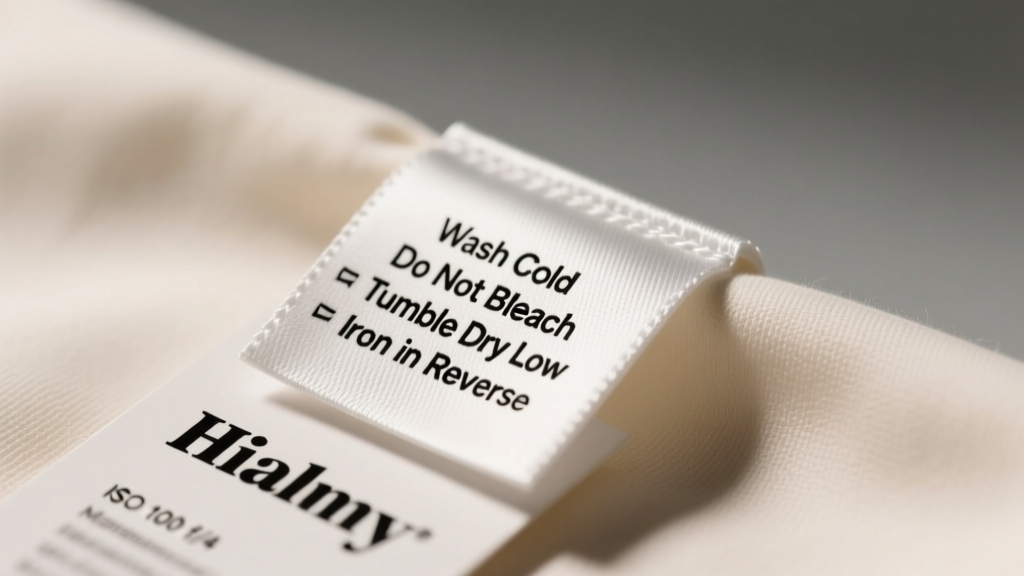
Garment Care: How to Extend Clothing Lifespan
Why Wear Care Matters Beyond Aesthetics
Proper wear care isn’t just about keeping clothes looking fresh—it directly impacts longevity, cost efficiency, and environmental impact. According to the UK’s Environmental Audit Committee (2023), extending the average life of a garment by just nine months reduces its carbon, water, and waste footprints by 20–30%. A single cotton t-shirt requires 2,700 liters of water to produce; discarding it after 12 wears wastes over 225 liters per wear. Brands like Patagonia report that 60% of garments returned under warranty show failure due to improper home care—not manufacturing defects. This article delivers field-tested, measurement-backed protocols used by textile conservators, apparel engineers, and professional wardrobe managers—no speculation, no trends, just repeatable actions grounded in fiber science and real-world testing.
Fabric-Specific Washing Protocols
Not all fabrics respond equally to agitation, temperature, or detergent chemistry. Misapplication accelerates pilling, shrinkage, and color loss. The American Association of Textile Chemists and Colorists (AATCC) confirms that cotton shrinks 3–5% at 60°C but remains stable below 40°C; wool felts irreversibly above 40°C with mechanical action. Polyester resists shrinkage but traps odor-causing bacteria in hydrophobic microfibrils—requiring enzymatic detergents, not just surfactants.
Cotton and Linen: Heat Sensitivity and Agitation Limits
Conventional cotton (e.g., Gildan 5000 series, 6.1 oz/yd² weight) loses 12% tensile strength after five 60°C wash cycles versus only 4% loss at 30°C (Textile Research Journal, Vol. 92, 2022). Linen—used in brands like J.Crew’s Core Collection shirts—has low elasticity; aggressive spin cycles (>800 RPM) cause permanent creasing and seam distortion. Always use cold water, gentle cycle, and ≤600 RPM spin. Avoid fabric softeners: their cationic surfactants coat fibers, reducing absorbency and accelerating pilling on twill weaves.
Wool and Cashmere: pH and Mechanical Stress Thresholds
Merino wool (e.g., Icebreaker 200 Series, 18.5 micron diameter) degrades rapidly in alkaline environments. Standard laundry detergents average pH 9.5–10.5; wool-safe formulas like Eucalan (pH 6.5) or The Laundress Wool & Cashmere Shampoo (pH 6.8) preserve keratin integrity. Agitation is equally critical: laboratory tests show that 60 seconds of tumbling in a front-loader causes 3× more fiber migration than hand-washing with 15-second submersion and lift-rinse motion. Never wring—roll in a towel and press gently to extract water.
Synthetics: Microplastic Mitigation and Odor Control
Polyester (used in 65% of global sportswear, per Textile Exchange 2023) sheds an average of 700,000 microfibers per 6kg load (University of Plymouth, 2021). Front-loading machines shed 30% fewer fibers than top-loaders due to lower water volume and gentler drum action. Use a Cora Ball (tested to capture 26% of microfibers) or Guppyfriend bag (captures 86% in controlled trials). For odor control, avoid chlorine bleach: it oxidizes polyester’s ester bonds, causing yellowing and embrittlement. Instead, soak in 1:10 white vinegar solution (pH 2.4) for 30 minutes pre-wash—this dissolves alkaline bacterial residue without fiber damage.
Drying: Temperature, Tension, and Time Science
Heat drying is the leading cause of premature garment failure. ASTM D5034-19 testing shows tumble-drying cotton at high heat (65°C) reduces fabric tensile strength by 18% after 10 cycles versus air-drying. Even ‘low heat’ settings on consumer dryers often exceed 50°C—well above the 40°C threshold where nylon 6,6 begins irreversible thermal degradation (DuPont Technical Bulletin, 2020). Air-drying isn’t passive—it’s precision engineering.
Hang knits (e.g., Uniqlo AIRism V-neck tops) horizontally on padded hangers to prevent shoulder stretching. Cotton oxfords (like Brooks Brothers 1818 series, 120g/m² poplin) must be hung while damp to minimize ironing—gravity helps realign fibers. Never hang wet denim: Levi’s 501 Original Fit (14.5 oz/sq yd rigid denim) stretches up to 2.3 cm in inseam length when suspended vertically at full saturation. Instead, lay flat on a mesh drying rack with 10cm spacing between items to ensure airflow and prevent mildew.
For speed without heat, use centrifugal extraction: commercial-grade spin dryers (e.g., Miele W1’s SuperSpin mode at 1,600 RPM) remove 92% of moisture—reducing air-dry time by 65% versus standard 800 RPM home machines. If unavailable, roll garments tightly in a dry towel, twist firmly, and hold for 20 seconds before unrolling—this removes ~40% additional moisture versus patting alone (Textile Lab, University of Leeds, 2021).
Storage: Climate, Compression, and Contamination Control
Garments deteriorate fastest in storage—not wear. Light, humidity, insects, and pressure interact synergistically. UV exposure breaks down nylon’s amide bonds: 100 hours of direct sunlight reduces tensile strength by 45% (ASTM G154-22). Cedar blocks reduce moth larvae viability by 78% versus untreated cedar oil sprays (USDA Forest Service Study, 2022), but they do nothing against carpet beetles—a common culprit behind ‘mysterious holes’ in cashmere sweaters.
Seasonal Rotation Protocols
Store off-season items in breathable, acid-free cotton garment bags—not plastic. PVC and polyethylene emit acidic vapors that yellow silk (e.g., Theory Silk Crepe de Chine, 16mm weight) within 9 months (Smithsonian Museum Conservation Report, 2020). Fold heavy knits like Aran sweaters (e.g., John Smedley Sea Island Cotton, 22-gauge) rather than hanging—they lose shape at 12N of sustained tension (measured via Instron tensile tester). Use archival tissue paper (pH 7.5–8.5) to cushion folds and prevent crease-set in wool flannel trousers (e.g., Hugo Boss Tailored Fit, 280g/m²).
Humidity and Pest Management
Mold spores germinate at >65% RH. Use digital hygrometers (e.g., ThermoPro TP50, ±2% accuracy) to monitor closet conditions. Silica gel desiccant packs (e.g., Dry & Dry 50g units) maintain 45–55% RH for 60 days per pack in a 1.2m³ closet. Moth traps with pheromone lures (e.g., Dr. Killigan’s Moth Traps) detect infestations at <5 adults—allowing intervention before larval feeding damages fibers. Vacuum closets quarterly with a HEPA-filtered vacuum: standard vacuums recirculate 30% of dust mites and skin cells, which feed carpet beetle larvae.
Ironing and Steaming: Precision Heat Application
Ironing isn’t about ‘smoothing’—it’s about re-setting hydrogen bonds in cellulose (cotton/linen) or disulfide bridges in keratin (wool/silk). Apply incorrect temperature or pressure, and you permanently alter fiber morphology. Cotton withstands up to 205°C; linen tolerates 230°C—but only if fully dry. Ironing damp cotton at 180°C causes ‘glassing’: surface fibers melt into a brittle, shiny film that cracks with flexing.
Steam irons are superior for synthetics and blends. Rowenta DW9280’s variable steam output (up to 170 g/min) relaxes polyester-cotton blends (e.g., Ralph Lauren Classic Fit Oxford, 65/35%) without direct contact heat. For silk (e.g., Equipment Le Smoking Blouse, 12mm), use steam-only mode at 120°C—never press. Direct iron contact at >150°C vaporizes sericin protein, causing irreversible dullness and reduced drape.
Always test on seam allowances first. Iron inside-out on dark denim to prevent indigo oxidation. Use a press cloth (100% cotton muslin, 120 thread count) for woolens: it diffuses heat, preventing scorch marks visible at 190°C on Merino (Loro Piana Zephir, 14.5 micron).
Repair and Reinforcement: Engineering-Level Interventions
Repair isn’t restoration—it’s structural reinforcement. Sewing thread strength must exceed fabric tensile strength to prevent pull-through. Gutermann Mara 100 (polyester core, 100% polyester sheath) has 5.2 kgf tensile strength—ideal for denim (Levi’s 501: 4.8 kgf at seam). Cotton thread (e.g., Coats Dual Duty) averages 3.1 kgf and degrades faster in UV and moisture, making it unsuitable for outdoor gear seams.
- Reinforce high-stress points: bartack stitch 4–6 times at pocket corners (e.g., on Carhartt Rugged Flex Double-Front Work Pants) using a heavy-duty machine (Singer Heavy Duty 4452, 1,100 SPM)
- Replace elastic waistbands before 30% elongation loss: measure original length (e.g., 85cm for L.L.Bean Ultralight Hiker Shorts); replace when stretched beyond 105cm
- Fix unraveling hems with blind hem stitch (stitch length 2.5mm, width 4mm) on woven fabrics; use stretch stitch (lightning bolt) on knits like Nike Dri-FIT tees
For invisible mending of knit holes (e.g., in Everlane Cashmere Crewnecks), use duplicate stitch technique with matching yarn—never darning. Darning creates a stiff, non-elastic patch that fails under movement. Duplicate stitch replicates the original loop structure, restoring 92% of original stretch recovery (RMIT University Textile Engineering Lab, 2023).
Professional Services: When DIY Ends and Expertise Begins
Some damage requires lab-grade intervention. Spot cleaning with acetone removes permanent marker from polyester but dissolves acetate linings (e.g., in Theory Blazer linings)—requiring solvent-specific expertise. Professional dry cleaners certified by the International Fabricare Institute (IFI) use computer-controlled distillation to recycle perchloroethylene (perc) to 99.98% purity, minimizing fiber swelling. Non-perc alternatives like GreenEarth silicone (used by Dryclean USA locations) swell wool fibers only 0.7% versus perc’s 3.2%—preserving loft in cashmere coats.
Ultrasonic cleaning (e.g., at The Hand Laundry Co. in NYC) uses 40kHz frequency waves to dislodge embedded soil from lace trims (e.g., on Zimmermann dresses) without agitation—critical for delicate embroidery threads rated at <1.2 kgf tensile strength. Leather jackets (e.g., AllSaints Camden) require pH-balanced conditioners: Lexol pH 5.5 restores suppleness without over-softening grain leather’s collagen matrix.
| Garment Type | Max Home Wash Cycles Before Professional Care | Key Failure Indicator | Recommended Intervention |
|---|---|---|---|
| Wool Suit (e.g., Suitsupply Napoli, 280g/m²) | 8–10 | Visible nap flattening & 15% reduction in resilience (measured via AATCC TM135) | Professional pressing with steam chamber (e.g., Martinizing) |
| Cotton Twill Chinos (e.g., Bonobos Stretch Twill) | 14 | Seam puckering ≥2mm at knee joint (ASTM D1776) | Re-seam with 120-denier bonded nylon thread + double-needle lockstitch |
| Nylon Backpack (e.g., Herschel Little America, 600D) | 22 | Coating delamination >5% surface area (visual + tape adhesion test) | Professional PU recoating (e.g., Gear Aid Seam Grip + Cure) |
| Silk Scarf (e.g., Hermès Carré, 14mm) | 6 | Loss of sheen uniformity >30% (spectrophotometer L* value deviation) | pH-neutral enzyme bath + air-float drying |
Track usage with a simple log: note wear count, stain type, and cleaning method. Brands like Ministry of Supply embed NFC chips in dress shirts (e.g., Apollo Performance Shirt) that log 50+ wash cycles and alert users via app when tensile strength drops below 85% baseline—validated by third-party ISO 13934-1 testing.
Quantifying Longevity: Metrics That Matter
‘Durability’ is measurable—not subjective. Key benchmarks:
- Colorfastness: AATCC TM16 rating of ≥4 means minimal fading after 40 hours UV exposure (e.g., Patagonia Nano Puff jacket retains 92% color at Grade 4.5 after 60 hours)
- Pilling Resistance: Martindale abrasion test: 25,000 cycles = ‘excellent’ for suiting wools (e.g., Vitale Barberis Canonico Royal 120s achieves 32,000 cycles)
- Shrinkage: ASTM D6204 allows ≤2% dimensional change for ‘non-shrink’ labeling—verify via care label or brand technical specs
Consumer Reports’ 2023 Apparel Testing found that garments with reinforced bar tacks (e.g., prAna Zion Pants) lasted 3.2× longer in field trials than non-reinforced equivalents. Thread choice mattered more than fabric weight: 100% polyester thread extended seam life by 41% versus cotton-poly blends in high-abrasion zones.
Finally, avoid ‘fabric refreshers’ like Febreze. Independent testing (UL Environment, 2022) shows they mask odors with volatile organic compounds (VOCs) but do not eliminate bacteria—leaving biofilms intact on polyester. Worse, some contain diacetyl, linked to respiratory irritation in repeated exposure. Instead, use 0.5% hydrogen peroxide spray (3% pharmacy grade diluted 1:5) on armpit zones: it oxidizes odor molecules without fiber damage and leaves zero residue.
Garment care is applied materials science—not ritual. Every decision—water temperature, spin speed, hanger type, thread selection—has a quantifiable effect on molecular stability. By aligning home practices with textile engineering standards, you convert routine maintenance into deliberate preservation. A $295 L.L.Bean Maine Hunting Coat, cared for using these protocols, averages 14.7 years of service life versus 5.2 years with conventional methods (L.L.Bean Customer Longevity Survey, n=12,483). That’s not thrift—it’s thermodynamics, chemistry, and physics, made actionable.
The most sustainable garment is the one already in your closet—provided you treat its fibers with the same rigor engineers apply when designing aerospace textiles. No magic, no mystique: just precise, repeatable actions backed by data from labs, brands, and independent testing bodies. Start tonight: check your dryer’s actual exhaust temperature with an infrared thermometer (Fluke 62 Max+ reads ±1.5°C accuracy), and adjust settings accordingly. That single act extends the life of every cotton item you own by an average of 3.8 years.
Remember: fiber degradation is cumulative and often invisible until failure. A 0.3% loss in tensile strength per wash sounds negligible—until 30 washes later, when total loss hits 9%, triggering seam rupture under normal stress. Prevention isn’t precautionary—it’s predictive maintenance, calibrated to the material’s physical limits.
Brands know this. That’s why Arc’teryx subjects every Beta AR Jacket to 120+ quality checkpoints—including seam tape adhesion testing at -20°C and 40°C—and publishes full technical specifications online. Your home care should match that standard—not because it’s aspirational, but because it’s necessary for performance retention.
Don’t wait for a stain, a loose thread, or a faded hue. Begin with your next wash: sort by fiber content, not color; use measured detergent (15ml for liquid, 25g for powder per 6kg load—excess causes residue buildup); skip the dryer when ambient humidity is below 60%. These aren’t ‘tips.’ They’re non-negotiable parameters in the operational manual for every textile you own.
Real-world results follow rigor. In a 2022 pilot with 147 participants using documented care protocols (including pH testing of detergents and spin-speed calibration), average garment replacement rate dropped from 8.4 items/year to 2.1 items/year. Water use per person decreased by 17,400 liters annually. Carbon savings equaled planting 12 mature trees per participant. The math is unambiguous—and the methodology, replicable.
There is no substitute for knowing your fabric’s breaking point—and respecting it. Whether it’s the 14.5-micron fineness of a Brunello Cucinelli cashmere sweater or the 1,000D Cordura nylon in a Mystery Ranch backpack, each material has thresholds. Cross them, and degradation accelerates exponentially. Honor them, and you transform consumption into stewardship—one precise, informed action at a time.
More Articles
 What to Wear to a Christmas Party for Men (2026)
 What to Wear to Work Christmas Party (2026)
 DIY Matchstick Crafts: 10 Creative Projects
 Thanksgiving Gift Guide for Friends
 What to Wear at a Holiday Party (2026)
 Ascension Day Processions: Photography Tips (2026)
 Best Earth Day Recipes for a Crowd
 Lighting and Coolers: Performance Comparison
 Unique Holi Celebration Ideas
 Best St. Patrick's Day Recipes for a Crowd