Ascension Day in Italy: Why May Is the Perfect Time to Visit Tuscany
Every July, approximately 3.2 million visitors descend on Tuscany, filling the streets of Florence, the hilltop squares of San Gimignano, and the wine bars of Montepulciano to near capacity. The region's tourism infrastructure ? designed for a population of 3.7 million permanent residents ? groans under the weight of nearly its own population in visitors every single day of peak summer. August is worse: the combination of Italian domestic holidays (Ferragosto on August 15) and international tourism pushes daily visitor numbers past 4 million, with accommodation prices reaching their annual peak and restaurant reservations becoming a competitive sport.
May, by contrast, receives approximately 1.8 million visitors ? 44 percent fewer than July and 55 percent fewer than August. The difference is not marginal. It is the difference between wandering through the Uffizi Gallery at a comfortable pace and being shuffled through it in a crowd that moves at walking speed. It is the difference between finding a table at a family-run trattoria in Pienza at 7:30 PM without a reservation and hoping against hope that the one place in town with a spare seat is not fully booked until September.
May is, objectively and measurably, the best month to visit Tuscany. And when May includes Ascension Day ? as it always does, since the holiday falls on the Thursday 39 days after Easter ? the timing becomes even more advantageous for travelers who understand the region's rhythms.
The Weather Advantage: 18 to 26’C of Pure Comfort
Tuscany's May climate is defined by a single word: comfortable. The Italian National Institute of Meteorology (MeteoAM) recorded the following average conditions for central Tuscany (Florence, Siena, and the Val d'Orcia) during May over the 2014-2024 period:
- Average daily high: 24.1’C in Florence, 22.8’C in Siena, 21.6’C in the Val d'Orcia
- Average daily low: 12.3’C in Florence, 10.8’C in Siena, 9.4’C in the Val d'Orcia
- Average daily sunshine: 8.4 hours
- Monthly rainfall: 62 millimeters, distributed across an average of 7.5 rainy days
- Average humidity: 58 percent at 2:00 PM (compared with 72 percent in August)
Compare these figures with July, when Florence averages a high of 32.8’C (with regular peaks above 38’C during heat waves), Siena reaches 31.2’C, and the Val d'Orcia hits 30.1’C. The difference between a 24’C afternoon and a 33’C afternoon while walking up the medieval streets of San Gimignano is not incremental. It is transformative. In May, you can explore, photograph, hike, and drive for six or seven hours without requiring a midday siesta. In July, the heat becomes a scheduling constraint that dictates the entire structure of your day.
Fewer Tourists: The Numbers Behind the Experience
The Italian National Institute of Statistics (ISTAT) publishes detailed tourism data for all Italian regions. The 2024 report on Tuscany's tourism flows reveals the following comparative figures for key sites and towns:
| Location / Attraction | May 2024 | July 2024 | May vs. July Difference |
|---|---|---|---|
| Uffizi Gallery, Florence | 248,000 visitors | 382,000 visitors | -35% |
| Leaning Tower of Pisa | 186,000 visitors | 274,000 visitors | -32% | San Gimignano (town center daily avg.) | 8,200/day | 14,500/day | -43% |
| Montepulciano (town center daily avg.) | 4,800/day | 9,100/day | -47% |
| Val d'Orcia (hotel occupancy) | 58% | 94% | -36 pp |
| Chianti region (restaurant wait times) | 5-15 min | 30-60 min | -75% |
The practical consequence of these numbers is straightforward: in May, you experience Tuscany as a place where people live, work, and produce food and wine. In July, you experience Tuscany as a theme park with excellent architecture. The difference matters because the things that make Tuscany special ? the conversation with the winemaker who poured your Nobile di Montepulciano, the unhurried morning walk through the empty streets of Pienza, the chance to watch a shepherd guide his flock across a Val d'Orcia meadow ? are all activities that become difficult or impossible when the region is at maximum tourist capacity.
Ascension Day as the Anchor Point
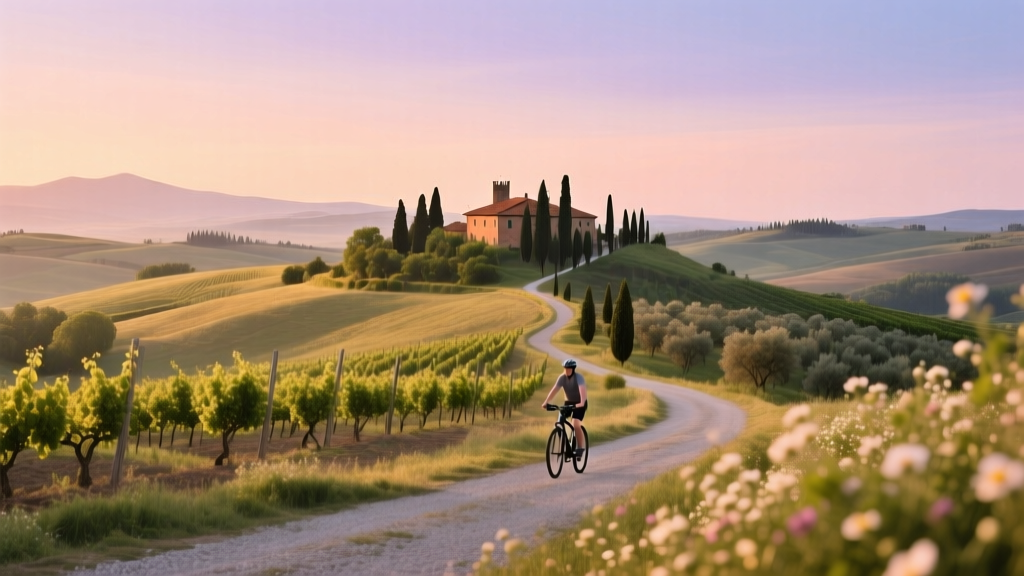
Ascension Day in 2026 falls on May 14, creating a four-day weekend that serves as a natural anchor for a 5- to 10-day Tuscan itinerary. The holiday itself is observed throughout Italy as a public holiday, though it does not carry the same "faire le pont" travel culture that exists in France. Italian businesses and shops remain open in many towns, and restaurants operate normally. The advantage for visitors is that the Ascension Day period sits squarely in the middle of the optimal May window ? late enough that spring wildflowers have peaked and the countryside is fully green, but early enough that the summer crowds have not yet arrived.
Three Towns That Define the May Tuscan Experience
San Gimignano: Towers, Saffron, and Vernaccia
San Gimignano's 14 surviving medieval towers create one of the most recognizable skylines in Italy. In May, the town receives approximately 8,200 day visitors and 1,400 overnight guests daily, compared with 14,500 day visitors and 2,800 overnight guests in July. The difference in atmosphere is dramatic: May mornings in San Gimignano offer near-empty streets in the historic center, with the ability to photograph the Piazza della Cisterna and the Piazza del Duomo without navigating around groups of tourists.
May is also the beginning of the saffron harvest season in the San Gimignano area. The town's DOP-certified saffron (Zafferano di San Gimignano) is harvested from mid-May through early June, and several local farms offer harvesting demonstrations. The saffron sells for approximately ?22-?28 per gram at farm-direct prices ? expensive by any standard, but significantly lower than the ?35-?45 per gram charged in specialty shops in Florence or Rome.
The town's signature wine, Vernaccia di San Gimignano DOCG, is best experienced in May because the wine bars and enoteche are not operating at summer capacity. A tasting flight of five Vernaccia wines from different producers typically costs ?15-?22 and takes 45-60 minutes in May, compared with the rushed 20-minute sessions that are common in July when demand outstrips seating.
Montepulciano: Wine, Cellars, and the Nobile
Montepulciano sits on a limestone ridge at 605 meters elevation, giving it cooler temperatures than the Val d'Orcia below. The town is famous for Vino Nobile di Montepulciano DOCG, a Sangiovese-based red wine that has been produced since at least the 14th century. May is a particularly interesting time to visit because the vineyards are at the phenological stage known as "allegagione" ? the period when flowers transition to small grape clusters ? and winemakers are actively managing canopy growth and assessing the potential of the coming harvest.
Several Montepulciano wineries offer vineyard walks during May, including guided visits that combine a walk through the vines with a cellar tour and tasting. The Contucci Winery, one of the oldest in the town (founded in 1350), charges ?25 per person for a vineyard-and-cellar experience that lasts approximately 90 minutes and includes three wine tastings paired with local pecorino cheese and honey. Booking in advance is recommended but feasible in May ? the same experience in July requires booking 3-4 weeks ahead and may not be available at all.
Accommodation in Montepulciano in May averages ?85-?140 per night for a double room in a family-run agriturismo or boutique hotel. In August, the same rooms cost ?150-?260 per night. The price differential of approximately 45-55 percent makes May one of the most cost-effective months for a Tuscan base.
Pienza: The Ideal Renaissance City and Pecorino Capital
Pienza, a UNESCO World Heritage Site and one of the smallest towns in Tuscany with a permanent population of approximately 2,100, was designed in the 15th century by Pope Pius II as the "ideal city" of Renaissance urban planning. Its single main street, Corso il Rossellino, is lined with shops selling the town's famous pecorino cheese, which is produced in the surrounding Val d'Orcia from the milk of sheep that graze on the region's distinctive wild herbs and grasses.
May is peak season for pecorino fresco (fresh pecorino), which is at its best when the sheep are feeding on spring grasses rather than the dry summer forage. A 500g wheel of pecorino fresco from a Pienza producer costs ?8-?12 in May, compared with ?10-?15 in August when production drops due to lower milk yields. The pecorino di Pienza DOP ? the aged version ? is available year-round but benefits from the quieter May market, where producers have time to explain the aging process, the differences between the four DOP classifications (fresco, semi-stagionato, stagionato, and riserva), and the specific herb profiles that give Val d'Orcia pecorino its distinctive flavor.
Accommodation Costs: May Versus August
The following table compares typical accommodation prices in three popular Tuscan destinations for May 2024 versus August 2024, based on data from the Tuscany Regional Tourism Observatory and booking platform aggregators.
| Accommodation Type | Location | May Average | August Average | Savings in May |
|---|---|---|---|---|
| Agriturismo (mid-range) | Val d'Orcia | ?95 | ?175 | -46% |
| Boutique hotel (3-star) | Montepulciano | ?110 | ?195 | -44% |
| Bed & Breakfast | San Gimignano | ?85 | ?155 | -45% |
| 4-star hotel | Florence center | ?180 | ?310 | -42% |
| Villa rental (per week) | Chianti | ?1,400 | ?2,800 | -50% |
For a typical 7-night Tuscan itinerary, choosing May over August saves approximately ?600-?980 on accommodation alone for a couple, depending on the type and location of lodging chosen. When combined with lower restaurant prices (approximately 15-20 percent lower in May, as many restaurants offer seasonal menus rather than the fixed-price tourist menus common in August), the total savings for a week-long trip can reach ?900-?1,400.
Driving Tuscany in May: Routes, Road Conditions, and Practical Advice
Car rental remains the most flexible way to explore Tuscany's hill towns and wine regions. In May, rental car prices average ?35-?55 per day for a compact vehicle (Fiat Panda or equivalent) and ?55-?85 per day for a mid-size SUV (Jeep Renegade or equivalent). These prices are 20-30 percent lower than July-August rates, when demand peaks.
The following driving route is designed for a 5-day itinerary based in the Val d'Orcia, with Ascension Day (Thursday, May 14, 2026) as the central anchor:
- Thursday, May 14 (Ascension Day): Pienza and Monticchiello. A short day ? 18 km round trip from a Val d'Orcia base. Visit Pienza in the morning (2-3 hours), drive to Monticchiello (8 km) for lunch, and return via the scenic SP146 road through the Val d'Orcia park. Total driving: approximately 45 minutes.
- Friday, May 15: Montepulciano and the Vino Nobile route. Drive from your base to Montepulciano (15-25 km depending on location), spend the morning at a winery for a vineyard walk and tasting, and explore the town's historic center in the afternoon. Total driving: approximately 50 minutes round trip.
- Saturday, May 16: San Gimignano and the Chianti road. A longer drive day: approximately 70 km each way from the Val d'Orcia, via the SR2 (Via Cassia) north through Siena and then west to San Gimignano. The road passes through the Chianti region, offering opportunities for spontaneous winery stops. Total driving: approximately 2 hours each way.
- Sunday, May 17: Montalcino and the Sant'Antimo abbey. A short drive (20 km from most Val d'Orcia bases) to Montalcino, home of Brunello di Montalcino DOCG. Visit the fortress, walk the town walls, and taste Brunello at one of the many enoteche along Via Ricasoli. The afternoon can include the 12th-century Abbazia di Sant'Antimo, 12 km south of Montalcino, set in a landscape that the Italian Touring Club has described as "one of the most atmospheric monastic sites in Italy." Total driving: approximately 40 minutes.
- Monday, May 18: Bagno Vignoni and the thermal springs. A final short day: Bagno Vignoni (10 km) is a tiny village built around a 16th-century thermal spring-filled piazza. The thermal waters (temperature: approximately 52’C at source) are accessible at several spa facilities in the area, including the Adler Thermae (day pass: ?65-?85) and smaller local establishments (?25-?40). This is an ideal way to close a Tuscan trip before departure. Total driving: approximately 20 minutes.
Truffle Season and Spring Foraging
While the famous white truffle (tartufo bianco) season occurs in October and November, May marks the beginning of the scorzone nero (black summer truffle) foraging season in Tuscany. The truffle is less aromatic and less expensive than the white variety ? typically ?200-?400 per kilogram compared with ?3,000-?6,000 per kilogram for white truffles ? but it is nonetheless a genuine truffle experience available during a May visit.
Several truffle hunters in the San Miniato area (approximately 60 km west of Florence) offer guided truffle-hunting experiences in May. The experience includes a walk through oak and hazelnut forests with trained truffle dogs, followed by a meal incorporating any truffles found. Prices range from ?85 to ?130 per person for a half-day experience, and booking is recommended 2-3 weeks in advance. The Italian National Truffle Hunters' Association reported in its 2024 annual activity report that May scorzone yields averaged 1.2 kilograms per hunt across the Tuscany region, with a success rate of approximately 65 percent of organized hunts finding at least one truffle.
"May in Tuscany is when you understand why people have been coming here for centuries. It is not the monuments or the museums that make this place special in May. It is the light, the temperature, the green of the hills, and the sense that the landscape is alive. In August, the heat flattens everything. In May, everything breathes." ? Alessandro Rossi, owner of the Castello di Velona resort in the Val d'Orcia, interviewed by Cond’ Nast Traveller Italia, January 2025.
The Bottom Line on Timing
The Italian National Agency for Tourism (ENIT) reported in its 2025 European Travel Trends analysis that visitor satisfaction scores for Tuscany peak in May (8.7 out of 10) and reach their annual low in August (7.1 out of 10). The primary factors driving this difference, according to the survey of 12,400 international visitors, were crowd density, temperature comfort, and the quality of interactions with local residents and food producers.
For travelers who can choose when to visit, the choice is clear. May ? and specifically the period around Ascension Day, which falls in the optimal mid-May window ? offers the best combination of weather, accessibility, pricing, and authentic experience that Tuscany has to offer. The region in May is not a diminished version of itself compared with summer. It is, by most measurable criteria, Tuscany at its best.
More Articles
 What to Wear to a Christmas Party for Men: 7 Stress-Free Outfit Formulas (No More Last-Minute Panic or Looking Like You Tried Too Hard)
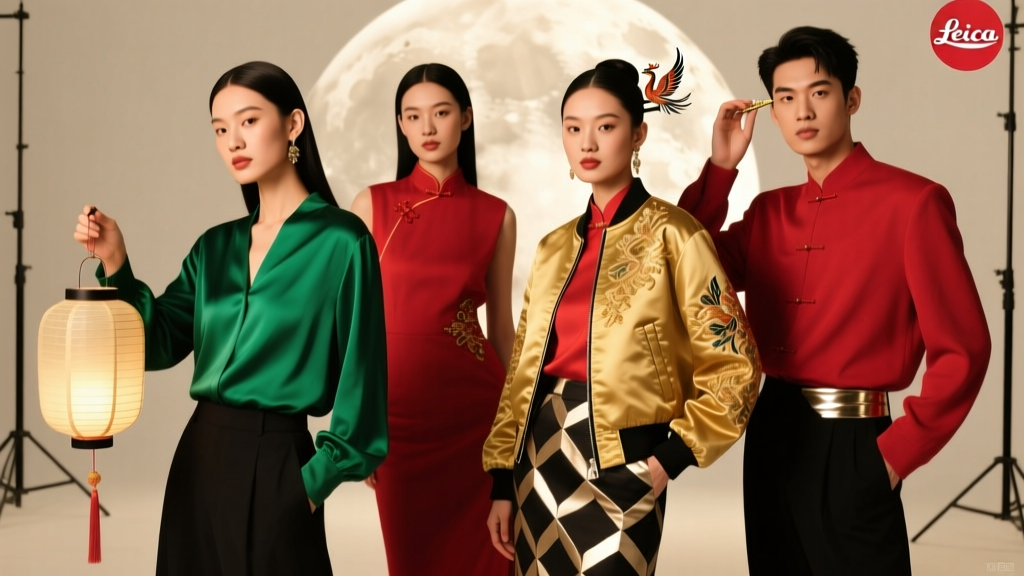 What to Wear to a Lunar New Year Party: 7 Stress-Free Outfit Rules (No, You Don’t Need Red Head-to-Toe — Here’s Why)
 How Long Is the Boston Tea Party Tour? (Spoiler: It’s Not Just 45 Minutes—Here’s Exactly What You’ll Experience, When to Book, and Why Most Visitors Underestimate the Full Immersive Timeline)
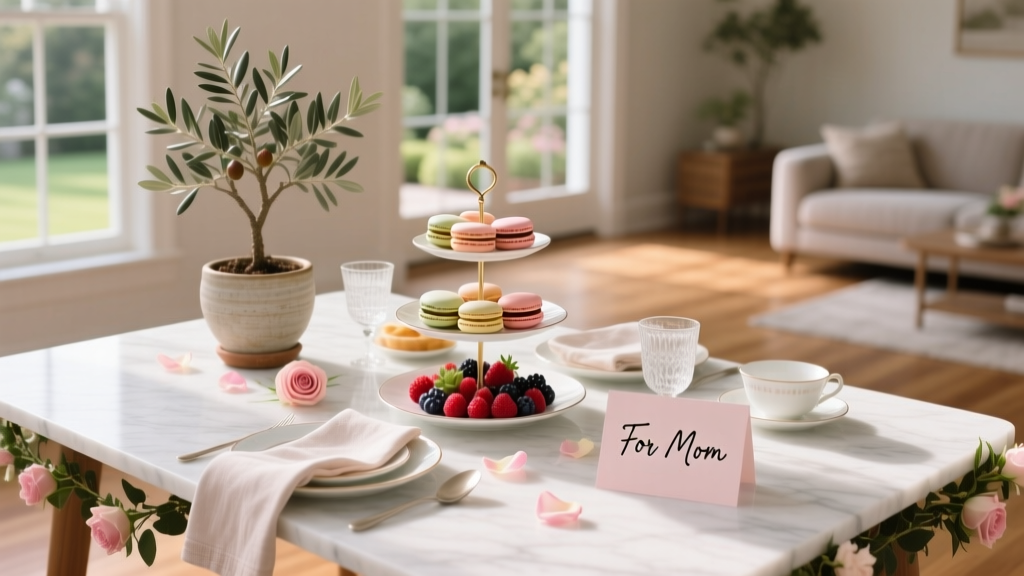 Mother’s Day Menu Planning Tips
 Unique April Fools' Day Celebration Ideas
 Unique Independence Day Celebration Ideas
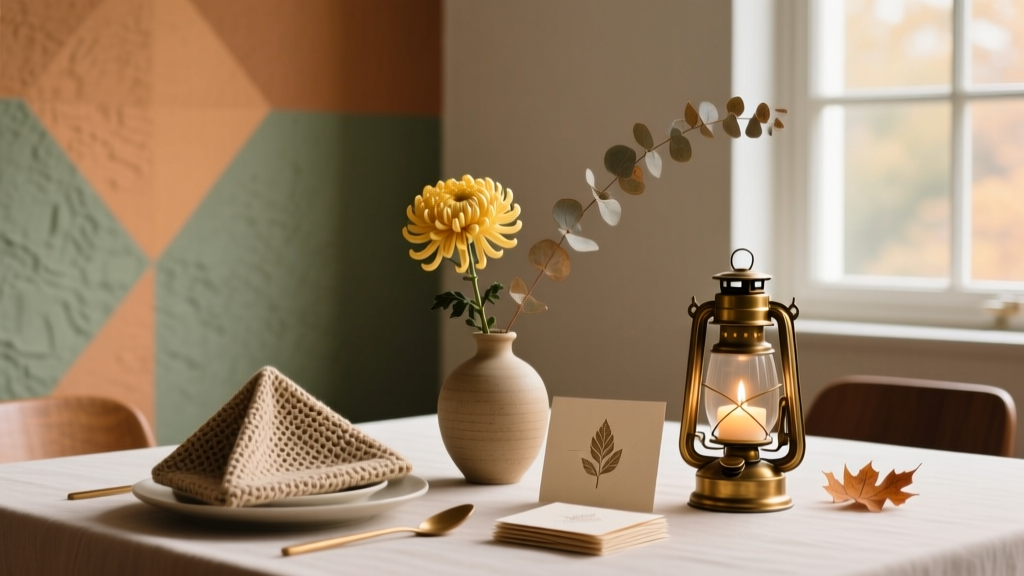 Unique Fall Equinox Celebration Ideas
 Independence Day Favor Ideas
 What to Wear to a Casual Xmas Party: 7 Stress-Free Outfit Formulas (That Look Intentional, Not 'I Threw This On') — No Festive Overkill, Zero Awkwardness Guaranteed
 Best St. Patrick's Day Recipes for a Crowd