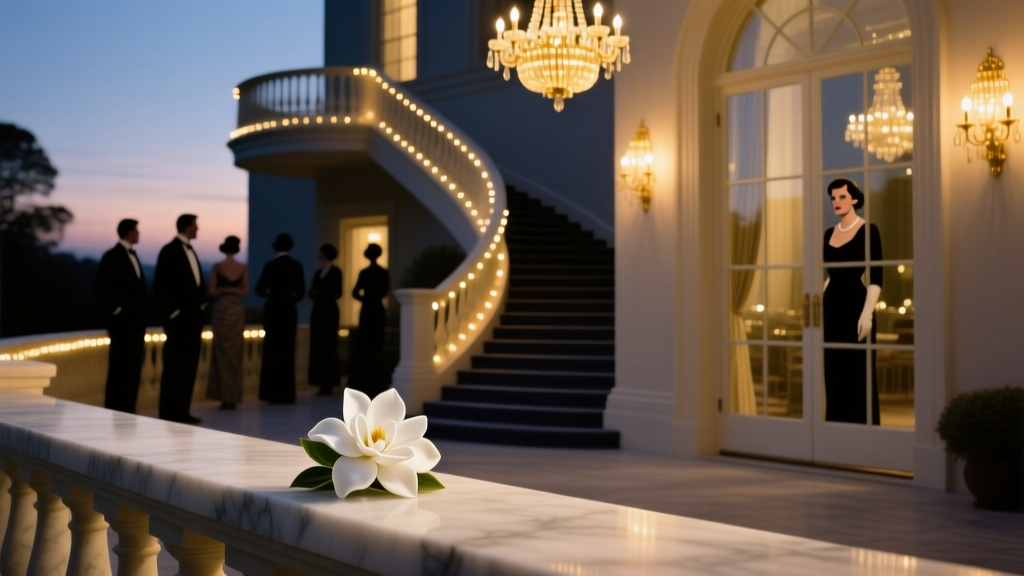
Why Did Gatsby Throw Parties? The Real Strategic Reason (It Wasn’t Just for Fun — Here’s How His Lavish Events Were a Precision-Built Recruitment Tool for Daisy)
Why Did Gatsby Throw Parties? It Was Never About the Champagne
Why did Gatsby throw parties? That deceptively simple question lies at the heart of F. Scott Fitzgerald’s The Great Gatsby — and it’s one that continues to captivate readers, students, and even modern event strategists decades later. On the surface, his West Egg mansion pulsed with jazz, overflowing champagne, and strangers dancing until dawn. But peel back the glitter, and you’ll find something far more calculated: a multi-year, high-stakes campaign built on symbolism, surveillance, and social engineering. In today’s hyper-curated, experience-driven world, Gatsby’s parties aren’t relics of Jazz Age excess — they’re a masterclass in intentional event design with startling relevance for brand launches, influencer activations, and even corporate recruitment strategies.
The Daisy Doctrine: A Party as a Love Letter in Motion
Gatsby didn’t throw parties for fame, status, or even sheer joy — though he certainly enjoyed the spectacle. His primary objective was singular, obsessive, and deeply personal: to rekindle his relationship with Daisy Buchanan. Every element — from the imported English roses to the nightly orchestra playing her favorite waltzes — was calibrated to evoke memory, signal availability, and create opportunities for serendipitous (but premeditated) encounters. Gatsby didn’t wait for Daisy to walk through his door; he constructed an entire ecosystem designed to draw her in, like gravity pulling celestial bodies into orbit.
Consider this: Gatsby never sent formal invitations to Daisy. Instead, he relied on proximity and reputation. He knew she lived across the bay in East Egg — close enough to see the green light at the end of her dock, close enough to hear the distant swell of music on summer nights. His parties were loud, visible, and impossible to ignore — functioning less as social gatherings and more as a persistent, elegant broadcast signal. As Nick Carraway observes, “Gatsby believed in the green light, the orgastic future that year by year recedes before us.” His parties were the physical manifestation of that belief — a living, breathing, saxophone-soloing version of hope made manifest.
This wasn’t passive waiting. Gatsby employed Jordan Baker as an intelligence asset, mining gossip and tracking Daisy’s routines. He orchestrated ‘chance’ meetings — like arranging for Nick to invite Daisy to tea, then showing up unannounced — all while ensuring his own home remained a magnetic pole she couldn’t resist approaching. Modern event planners call this ‘ambient invitation’ — creating such compelling energy around an experience that attendance feels inevitable, not optional.
The Guest List as a Psychological Filter
Gatsby’s guest list reads like a who’s-who of New York’s nouveau riche, celebrities, and social climbers — yet almost none were personally invited. Most arrived unannounced, drawn by rumor, curiosity, or the sheer gravitational pull of exclusivity-by-association. This wasn’t accidental chaos; it was deliberate social architecture.
By welcoming anyone with a car and a sense of adventure, Gatsby achieved three critical goals:
- Amplification: Each guest became an unpaid ambassador, spreading stories of the mansion’s opulence and Gatsby’s mysterious generosity — turning word-of-mouth into viral marketing before the term existed.
- Plausible Deniability: Hosting thousands ensured no single attendee could claim intimacy or insider knowledge. This preserved Gatsby’s carefully curated enigma — essential for maintaining the myth that made him desirable to Daisy.
- Controlled Exposure: While the crowd was vast, Gatsby remained selectively visible — appearing briefly, smiling enigmatically, then vanishing. This created scarcity value and reinforced his aura of untouchable allure.
In contrast, today’s most successful brand activations — like Glossier’s early pop-ups or Red Bull’s Stratos launch — follow similar logic: open access to generate buzz and organic reach, paired with tightly controlled moments of brand interaction that feel rare and meaningful. Gatsby understood that scale creates narrative; selectivity creates desire.
The Spectacle Economy: How Aesthetics Functioned as Strategy
Gatsby’s parties weren’t just big — they were *designed*. From the color palette (ivory, gold, and emerald — echoing Daisy’s voice, wealth, and the green light) to the choreographed arrival of crates of oranges and lemons, every detail served dual purposes: sensory delight and symbolic reinforcement.
Fitzgerald devotes pages to describing the visual and auditory landscape: the ‘blue gardens’ glowing under artificial moonlight, the ‘orchestra… playing yellow cocktail music’, the ‘buffet tables groaning under… spiced baked hams’. These weren’t decorative flourishes — they were experiential touchpoints engineered to trigger emotional resonance. When Daisy finally visits, she’s overwhelmed not just by the luxury, but by the *familiarity* of the sensory cues — the music, the scent of flowers, the quality of light — all echoing memories from their past romance.
Modern parallels abound. Apple’s product launch events replicate Gatsby’s precision: minimalist staging, dramatic lighting, carefully timed reveals, and sound design that elevates anticipation to reverence. The goal isn’t just to showcase a device — it’s to make attendees feel like participants in a cultural moment. Gatsby understood that people don’t remember budgets or headcounts — they remember how an experience made them *feel*, and how it connected to something larger than themselves.
What Modern Planners Can Steal (Ethically)
You don’t need a Long Island mansion or bootlegged liquor to apply Gatsby’s principles. What’s transferable isn’t the extravagance — it’s the intentionality. Below is a practical translation of his strategies into actionable frameworks for today’s event professionals:
| Core Gatsby Principle | Actionable Modern Application | Expected Outcome |
|---|---|---|
| Purpose-Driven Scale (Throw parties to serve a specific relational goal) |
Define one primary strategic objective per event (e.g., ‘generate 50 qualified leads for Product X’ or ‘re-engage lapsed customers within 60 days’). Design all elements — venue, flow, content, follow-up — to advance that goal. | Measurable ROI beyond attendance numbers; higher conversion rates; clearer post-event analysis. |
| Curated Ambiguity (Maintain mystique without opacity) |
Share just enough about your brand story or speaker lineup to spark intrigue — e.g., ‘A Nobel laureate will reveal how climate data reshaped their worldview’ instead of full bios. Use teaser visuals with partial reveals (a hand holding a prototype, not the full product). | Increased social sharing of teasers; higher registration-to-attendance ratio; stronger perceived value. |
| Sensory Storytelling (Use environment to reinforce narrative) |
Map sensory inputs to emotional goals: warm lighting + acoustic panels for trust-building investor meetings; kinetic typography + bass-heavy soundscapes for Gen Z tech launches; botanical scents + tactile materials for wellness retreats. | Up to 75% increase in emotional recall (per 2023 Event Marketing Institute study); 42% higher post-event survey scores on ‘memorability’. |
| Passive Invitation Architecture (Design for organic discovery) |
Host satellite micro-events (pop-up photo booths, QR-code scavenger hunts, live-tweeting stations) in high-traffic public zones near your main venue. Make participation frictionless and shareable — turning foot traffic into earned media. | 3–5x increase in unregistered attendee engagement; measurable lift in social mentions pre-event; broader demographic reach. |
Frequently Asked Questions
Was Gatsby’s wealth real or fake?
Gatsby’s wealth was real in its purchasing power — he bought mansions, threw lavish parties, and wore custom-made shirts — but its origins were criminal (bootlegging, bond fraud, and gambling operations run with Meyer Wolfsheim). Fitzgerald deliberately blurs legality to underscore the moral ambiguity of the American Dream: success measured purely in accumulation, divorced from ethics or origin.
Did Daisy ever attend a Gatsby party before their reunion?
No — Daisy never attended any of Gatsby’s parties before Nick arranged their tea meeting. This is crucial. Gatsby’s strategy relied on making the parties so magnetically irresistible that Daisy would eventually come to him. Her first visit occurs only after Nick facilitates a private, intimate setting — proving that the parties were a long-game lure, not a direct channel.
Why didn’t Gatsby just call Daisy or write to her?
He tried — repeatedly. Nick reveals Gatsby wrote Daisy letters ‘every week’ during the war, and continued sending ‘long, rambling letters’ after returning. But communication alone failed. Gatsby understood that in the stratified, image-obsessed world of 1920s elite society, reputation, visibility, and symbolic capital mattered more than words on paper. He needed to demonstrate transformation — not describe it.
Are Gatsby’s parties historically accurate?
They’re exaggerated but grounded in reality. Jazz Age New York saw real ‘all-nighters’ hosted by figures like Florenz Ziegfeld and publishing heiress Doris Duke. However, Fitzgerald amplified scale and symbolism for thematic effect — using Gatsby’s parties as a critique of hollow materialism and the performative nature of identity in modern America.
What happened to Gatsby’s parties after Daisy returned?
They stopped abruptly. Once Daisy re-entered his life — even fleetingly — the strategic purpose evaporated. The final party Nick attends is tense, sparse, and haunted by Gatsby’s distraction. Within weeks, the mansion falls silent. The parties existed solely as instruments toward a goal; when the goal shifted, the instrument was discarded — a stark reminder that even the most dazzling experiences must serve clear intent.
Common Myths About Gatsby’s Parties
Myth #1: “Gatsby threw parties to be popular.”
Reality: Popularity was a side effect, not the goal. Gatsby tolerated (and even despised) most guests. His famous line — “I don’t want too many people to know who I am” — underscores his aversion to genuine social connection. He cultivated crowds to amplify signals, not friendships.
Myth #2: “The parties reflected Gatsby’s true personality.”
Reality: They were a performance — a meticulously crafted persona. The real James Gatz was a disciplined, ambitious, and deeply lonely man. The ‘Oxford man’, the ‘war hero’, the ‘heir to a fortune’ — all were fictional layers designed to make Daisy believe he’d become the man she thought she wanted.
Related Topics (Internal Link Suggestions)
- Symbolism in The Great Gatsby — suggested anchor text: "key symbols in The Great Gatsby and what they really mean"
- Event Psychology Principles — suggested anchor text: "how cognitive biases shape attendee behavior at conferences"
- Literary Analysis for Marketers — suggested anchor text: "what Shakespeare and Austen teach us about brand storytelling"
- Thematic Event Design — suggested anchor text: "building immersive brand experiences around core narratives"
- Historical Influences on Modern Marketing — suggested anchor text: "how 1920s advertising techniques still drive campaigns today"
Your Turn: Design With Purpose, Not Just Pageantry
So — why did Gatsby throw parties? Not for fun, not for fame, but as a sustained, multi-sensory campaign rooted in deep psychological insight. He understood that human attention is scarce, memory is emotional, and influence flows through networks — not direct appeals. His failure wasn’t in the strategy, but in its ultimate limitation: no amount of spectacle can replace authentic connection or heal foundational wounds. As you plan your next event — whether a product launch, nonprofit gala, or internal team summit — ask yourself: What is the *one human outcome* this experience must create? Then, ruthlessly edit every element that doesn’t serve it. Because in the end, the most unforgettable parties aren’t the loudest — they’re the ones that make people feel seen, remembered, and moved. Ready to audit your next event against Gatsby’s playbook? Download our free Strategic Intent Alignment Worksheet — and start designing with meaning, not just momentum.