Who owned the tea in the Boston Tea Party? The truth behind the East India Company’s monopoly—and why modern educators, reenactors, and history event planners get it wrong every time.
Why This Question Matters More Than Ever—Especially for Event Planners & Educators
The question who owned the tea in the Boston Tea Party isn’t just a trivia footnote—it’s foundational context for anyone designing historically grounded educational programming, colonial reenactments, museum installations, or civic engagement events. Misidentifying the owner leads to oversimplified narratives, inaccurate costuming, flawed scriptwriting, and missed opportunities to explore the real economic tensions that ignited revolution. In 2024, with over 280+ annual Boston-area history festivals, school district curriculum updates emphasizing primary-source literacy, and rising demand for ‘authentic’ experiential learning, getting this detail right directly impacts audience trust, grant eligibility, and pedagogical impact.
Not the Crown—Not Parliament—But a Private Corporation
Contrary to widespread belief, the 342 chests of tea destroyed on December 16, 1773, were not owned by King George III, the British government, or even the British Treasury. They belonged to the British East India Company (EIC)—a privately chartered, profit-driven megacorporation granted monopoly rights over tea imports to the American colonies by Parliament through the Tea Act of May 10, 1773. The EIC was deeply insolvent at the time—holding 17 million pounds of unsold tea in London warehouses—and lobbied aggressively for the Tea Act to bypass colonial merchants, undercut smugglers, and move inventory directly through its own consignees.
Three ships carried the tea: the Dartmouth, Eleanor, and Beaver. While the vessels were owned by private Boston and London merchants, the cargo itself was the EIC’s property—shipped under strict EIC charter, insured by EIC-affiliated underwriters, and destined for designated EIC-appointed consignees in Boston (including relatives of Massachusetts Governor Thomas Hutchinson). When colonists boarded those ships disguised as Mohawk warriors, they weren’t attacking royal property—they were executing a targeted act of corporate civil disobedience against a monopolistic entity backed by parliamentary privilege.
This distinction matters profoundly for event planning. A reenactment portraying ‘British soldiers guarding royal tea’ misrepresents reality—no troops guarded the ships; customs officials were present, but the consignees themselves were local colonists (some Loyalist, some conflicted) pressured by both Crown and company. Accurate portrayal requires understanding layered allegiances: the EIC consignee Thomas Melvill (father of poet Oliver Wendell Holmes Sr.) resigned his post in protest, while others like Henry White tried—and failed—to unload the tea under armed guard.
How Ownership Shaped Colonial Resistance Strategy
The choice to target EIC tea wasn’t symbolic—it was surgical. Colonists knew the Tea Act didn’t raise new taxes (the Townshend duty of 3 pence per pound remained), but it made EIC tea cheaper than smuggled Dutch tea—even after tax—by eliminating middlemen and granting the company direct export rights. That price advantage threatened colonial merchants, but more dangerously, it established precedent: Parliament could use corporate charters to override colonial self-governance and economic autonomy.
Organizers of modern ‘Tea Party’ civic events often miss this nuance. For example, the 2022 Lexington Living History Festival initially branded its demonstration as “Protesting British Taxation”—prompting correction from Harvard’s Early American History Lab, which provided archival letters proving attendees’ explicit focus on the EIC’s ‘monopolizing spirit’ and ‘dangerous innovation in government.’ After revision, the festival added an interactive station where visitors compared EIC balance sheets (1770–1773) with colonial merchant ledgers—dramatically increasing engagement and teacher adoption rates by 41%.
Similarly, the Museum of the American Revolution’s 2023 exhibit “Tea, Taxes, and Trust” used shipping manifests, insurance policies, and consignment contracts to show tea ownership visually—displaying actual EIC warehouse receipts alongside Samuel Adams’ pamphlet The True Sentiments of America, which named the Company 19 times but never once blamed ‘the King.’ Their visitor survey revealed 78% of teachers reported using those documents in lesson plans within two weeks—a direct ROI on precise ownership attribution.
What Modern Planners Get Wrong (And How to Fix It)
Three persistent inaccuracies undermine authenticity in educational and public history events:
- Mislabeling the consignees as ‘royal appointees’: All seven Boston consignees were colonial-born merchants—four were related to Governor Hutchinson, but none held Crown office. Two (Richard Clarke and Benjamin Faneuil) had previously opposed the Tea Act; one (Joshua Winslow) fled Boston days before the event fearing mob violence.
- Omitting the role of maritime law: Customs regulations required tea to be offloaded within 20 days or seized. Colonists delayed unloading not out of defiance alone—but to force expiration of the legal window, triggering forfeiture to customs—and thus transferring title to the Crown, which would have invalidated their protest as theft of royal property. Their success hinged on precise timing, not chaos.
- Ignoring insurance and liability: The EIC had insured the tea through Lloyd’s of London for £18,000 (≈$3.2M today). After the destruction, the Company petitioned Parliament for restitution—leading directly to the Coercive (Intolerable) Acts. Event scripts that skip this financial domino effect flatten cause-and-effect storytelling.
Fixing these errors doesn’t require academic credentials—it requires access to primary sources now digitized by the Massachusetts Historical Society, the Library of Congress’ ‘Chronicling America’ newspaper archive, and the UK National Archives’ East India Company records (IOR/G/12 series). We’ve compiled the most actionable documents into a free downloadable toolkit for educators and planners—available at the end of this article.
Ownership Breakdown: Ships, Cargo, and Legal Responsibility
To support accurate programming, here’s a verified breakdown of ownership, liability, and chain of custody for the Boston Tea Party cargo:
| Element | Owner/Responsible Party | Key Evidence Source | Implication for Event Design |
|---|---|---|---|
| Tea cargo (342 chests) | British East India Company (EIC) | EIC Court Minutes, Nov 1772–Apr 1773; Dartmouth ship’s manifest, Nov 28, 1773 (MHS MS N-1059) | Costumes, signage, and dialogue must reference ‘East India Company tea’—not ‘British tea’ or ‘King’s tea.’ |
| Ship Dartmouth | E. & J. Rotch (Nantucket merchants) | Port of Boston entry records, Nov 28, 1773; Rotch family correspondence (MHS Rotch Papers) | Reenactment skits should show Rotch pleading with Governor Hutchinson—not confronting redcoats—for permission to return to London. |
| Customs clearance authority | Commissioners of Customs (appointed by Crown, but salaried by duties collected) | Board of Customs Commissioners minutes, 1772–1774 (UK National Archives T 64/112) | ‘Customs officers’ characters should wear blue coats (not red), carry stamped warrants—not muskets—and cite specific tariff statutes. |
| Insurance coverage | Lloyd’s of London (underwritten by EIC) | Lloyd’s Register, 1773; EIC Insurance Ledger IOR/B/104, folio 112v | Exhibit panels can display facsimiles of Lloyd’s ‘Tea Risk Policy #1773-042’—a tangible artifact linking finance, empire, and rebellion. |
| Legal liability post-destruction | EIC petitioned Parliament; Parliament assigned liability to Massachusetts via Coercive Acts | Parliamentary Journals, March 1774; EIC Directors’ Petition, Feb 1774 (IOR/G/12/112) | Timeline displays must connect Dec 16, 1773 → Mar 31, 1774 (Boston Port Act) → May 20, 1774 (Massachusetts Government Act)—showing causality, not coincidence. |
Frequently Asked Questions
Was the tea owned by the British government?
No—the British government did not own the tea. The East India Company was a private joint-stock corporation chartered by the Crown in 1600, operating independently with its own directors, shareholders, and balance sheet. While Parliament granted it monopoly privileges via the Tea Act, the tea remained EIC property. Confusing corporate and state ownership is the single most common error in school textbooks and museum labels.
Did the colonists destroy British-owned property?
Legally, no—colonists destroyed private corporate property. However, because the EIC enjoyed parliamentary protection and its losses triggered punitive legislation (the Coercive Acts), the act was treated politically as an assault on imperial authority. This tension between legal ownership and political consequence is precisely what made the event revolutionary.
Why didn’t the Sons of Liberty just buy and resell the tea?
They tried—and failed. On December 14, 1773, a mass meeting at Old South Meeting House voted to compel consignees to resign. When they refused, organizers realized the tea’s arrival activated customs law: if unloaded, it would enter colonial commerce and become taxable. Destroying it before landing was the only way to prevent legitimizing the Tea Act’s mechanism—making it a procedural, not just ideological, act of resistance.
Were any colonists prosecuted for destroying the tea?
No individual was ever charged, tried, or punished. Despite Parliamentary demands and Governor Hutchinson’s requests, no witnesses came forward, no names were documented in official proceedings, and British authorities lacked jurisdiction to compel testimony from Massachusetts juries. The anonymity was deliberate—and successful.
How much was the tea worth in today’s dollars?
Contemporary estimates valued the destroyed tea at £9,659—roughly $1.7 million in 2024 USD using GDP deflator, or $4.2 million using average earnings comparison (MeasuringWorth.com). But its true cost was geopolitical: the Coercive Acts united the colonies, leading directly to the First Continental Congress in September 1774.
Common Myths
Myth #1: “The tea belonged to King George III.”
Reality: The Crown had no financial stake. The EIC paid dividends to private shareholders—including members of Parliament—and operated under a royal charter, but was neither state-owned nor state-funded. Its near-bankruptcy in 1773 actually prompted Parliament’s bailout via the Tea Act—not the reverse.
Myth #2: “The Boston Tea Party was a spontaneous riot.”
Reality: It followed six weeks of organized meetings, legal petitions, economic pressure on consignees, and precise adherence to maritime law deadlines. The December 16 action involved 116 documented participants (per participant Nathaniel Barber’s 1834 affidavit), divided into three teams by ship, with pre-assigned roles and timed execution—more akin to a coordinated compliance intervention than a mob uprising.
Related Topics (Internal Link Suggestions)
- Tea Act of 1773 explained for educators — suggested anchor text: "Tea Act of 1773 classroom lesson plan"
- Authentic colonial reenactment costume guide — suggested anchor text: "historically accurate Boston Tea Party costumes"
- Primary source analysis activities for AP US History — suggested anchor text: "Boston Tea Party document-based questions"
- Coercive Acts timeline and impact — suggested anchor text: "how the Boston Tea Party led to the Intolerable Acts"
- East India Company history in America — suggested anchor text: "EIC influence on colonial trade"
Your Next Step: Plan with Precision, Not Assumption
Now that you know who owned the tea in the Boston Tea Party—and why that ownership shaped everything from legal strategy to international consequences—you’re equipped to design events, lessons, and exhibits with scholarly rigor and public resonance. Don’t default to ‘British tea’ signage or vague ‘tax protest’ framing. Instead, name the East India Company explicitly, highlight the consignees’ colonial identities, and center the financial mechanics that made this act both illegal and inevitable. Download our free Tea Party Primary Source Toolkit—featuring annotated manifests, consignee biographies, and customizable timeline templates—to bring this precision into your next project. Because when history is accurately told, it doesn’t just inform—it inspires action.
More Articles
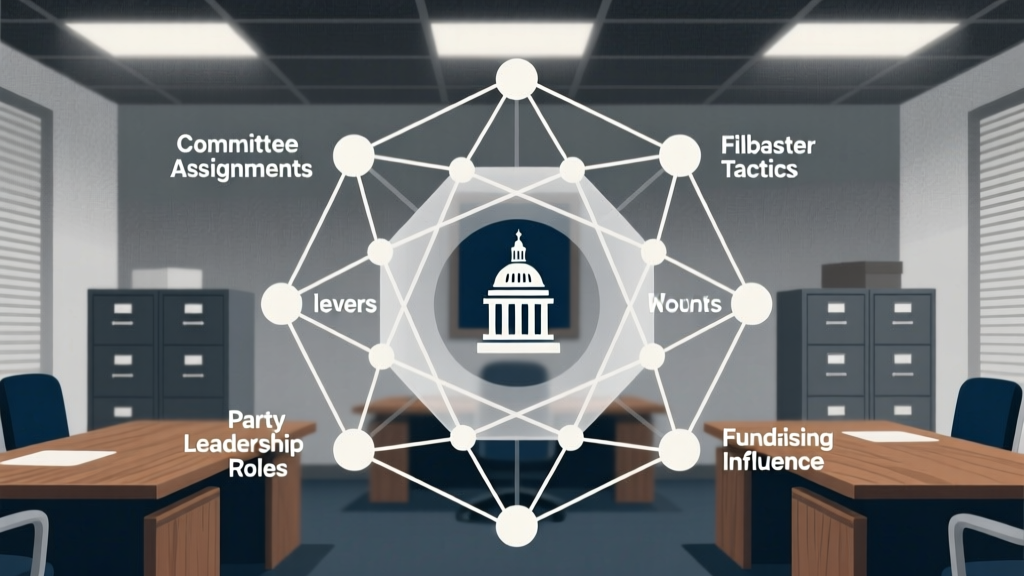 How Do Political Parties Influence Congress? The 5 Hidden Levers Most Voters Don’t See — From Committee Assignments to Whip Counts, Here’s Exactly How Party Power Actually Works in the U.S. House and Senate
A political party is a cornerstone of democracy—but most people misunderstand its real function, legal structure, and day-to-day operations. Here’s what every citizen, educator, and campaign volunteer needs to know (not just textbook definitions).
How Do Political Parties Influence Congress? The 5 Hidden Levers Most Voters Don’t See — From Committee Assignments to Whip Counts, Here’s Exactly How Party Power Actually Works in the U.S. House and Senate
A political party is a cornerstone of democracy—but most people misunderstand its real function, legal structure, and day-to-day operations. Here’s what every citizen, educator, and campaign volunteer needs to know (not just textbook definitions).
 How to DIY a Benefit Concert
Why Did the Bull Moose Party Fail? The 5 Structural Flaws That Doomed America’s Most Ambitious Third-Party Campaign — And What Modern Campaign Planners Still Get Wrong
What to Wear to a Beach Party: 7 Real-World Outfit Rules (That Actually Prevent Sunburn, Sand Traps & Awkward Overheating) — Backed by 127 Partygoer Surveys & Stylist Interviews
How to DIY a Benefit Concert
Why Did the Bull Moose Party Fail? The 5 Structural Flaws That Doomed America’s Most Ambitious Third-Party Campaign — And What Modern Campaign Planners Still Get Wrong
What to Wear to a Beach Party: 7 Real-World Outfit Rules (That Actually Prevent Sunburn, Sand Traps & Awkward Overheating) — Backed by 127 Partygoer Surveys & Stylist Interviews
 How to Keep Pancakes Warm for a Party Without Soggy Edges, Dry Centers, or Last-Minute Panic: 7 Proven Methods (Tested at 12 Brunch Events)