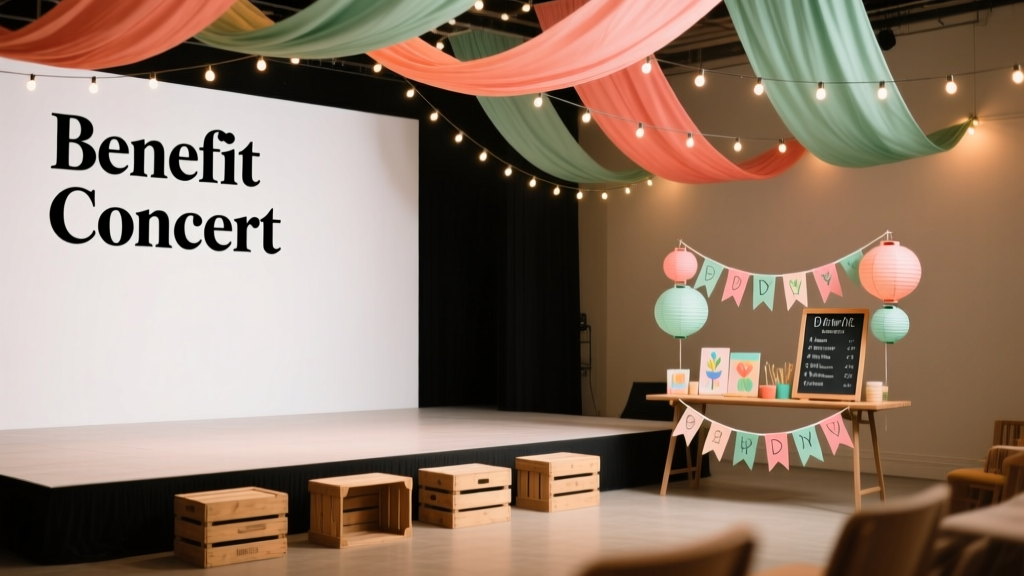
How to DIY a Benefit Concert
A benefit concert is one of the most powerful fundraising events you can host: it blends community, entertainment, and a clear mission into a single night that can raise money—and awareness—fast. The catch is that concerts have more moving parts than most parties or nonprofit events. Sound, lighting, talent coordination, licensing, crowd flow, and safety planning all stack up quickly. Without a clear event planning process, even a great cause can end up with last-minute chaos, budget overruns, and a frustrating guest experience.
Proper planning keeps your “why” at the center while ensuring the event is professional, safe, and profitable. The goal isn’t perfection; it’s a coordinated experience where guests understand the impact of their ticket, sponsors feel valued, performers are supported, and your team can actually enjoy the night. This guide breaks down a step-by-step benefit concert planning timeline, budget considerations, vendor selection tips, and proven organizational strategies you can use to DIY a concert with confidence.
Start With the Mission, Metrics, and Event Format
Define your purpose and the “ask”
Before you book a venue or contact bands, decide what success looks like. A benefit concert can be designed for:
- Direct fundraising: ticket sales, donations, auction, text-to-give.
- Awareness building: building a supporter list, media coverage, community outreach.
- Hybrid goals: raise funds while recruiting volunteers and long-term donors.
Set measurable targets:
- Fundraising goal (gross and net): e.g., $15,000 gross / $9,000 net
- Attendance target: e.g., 250 paid guests
- Sponsor target: e.g., 6 local businesses + 1 presenting sponsor
- Email/SMS opt-ins: e.g., 150 new contacts
Choose your concert model
Pick a format that matches your budget, volunteer capacity, and audience:
- Single-headliner show: simpler run-of-show, higher perceived value.
- Multi-band showcase: broader draw, more scheduling complexity.
- Acoustic “listening room” night: lower production needs, intimate experience.
- Daytime community concert: family-friendly, easier to attract local sponsors.
Real-world example
Neighborhood Animal Rescue Benefit: A small team hosted a 200-person showcase with three local bands at a community hall. They kept production minimal (basic stage wash lighting + house PA), leaned into sponsorships (pet stores and groomers), and focused on a simple “ask” during a 3-minute impact speech plus a QR-code donation push. The event exceeded the net goal by prioritizing low fixed costs and a clear fundraising moment.
Build Your Planning Team and Roles
A DIY benefit concert still needs structure. Use a simple org chart so volunteers know who decides what.
- Event Lead/Producer: overall timeline, contracts, approvals
- Talent Coordinator: booking, hospitality, schedules, green room
- Venue & Logistics Lead: floor plan, load-in/out, permits, security
- Production Lead: sound, lighting, stage plot, tech rehearsal
- Sponsorship Lead: sponsor outreach, benefits fulfillment, signage
- Marketing & Ticketing Lead: promo calendar, ads, ticket platform
- Finance Lead: budget, payment tracking, donation reporting
- Day-of Volunteer Captain: check-in, merch/donation table, runners
Pro tip: Use a shared project management tool (Trello, Asana, or a Google Sheet) with one master checklist, plus a “day-of” run-of-show document that everyone can access on their phone.
Step-by-Step Planning Timeline (With Checklist)
This timeline assumes an 8–10 week runway. If you have 12+ weeks, spread tasks out and spend more time on sponsorships and marketing partnerships.
8–10 Weeks Out: Foundation and Feasibility
- Confirm beneficiary and how funds will be handled (fiscal sponsor, nonprofit partner, or dedicated account).
- Set fundraising goal, target audience, and ticket price range.
- Choose event date and backup date (avoid major community conflicts).
- Create a draft budget (production, venue, marketing, insurance, staff).
- Shortlist venues and request quotes (include load-in times and sound restrictions).
- Draft sponsor tiers and benefits (logo placement, stage shout-outs, VIP tickets).
- Identify 5–10 potential performers and preferred genre.
6–8 Weeks Out: Book the Big Pieces
- Book venue and secure written agreement (rental fee, capacity, bar terms, staffing).
- Confirm talent and get agreements in writing (even if they donate their time).
- Decide production approach:
- Use venue’s in-house sound/lighting, or
- Hire an AV vendor, or
- Bring a qualified volunteer engineer (only if they have proven experience).
- Choose ticketing platform and build event page (mission, lineup, schedule, donation link).
- Start sponsor outreach with a clear one-page deck.
- Outline run-of-show (doors, opener, impact moment, headliner, closing ask).
4–6 Weeks Out: Promotion and Operations
- Launch ticket sales and announce lineup on social and email.
- Create a promo calendar:
- 2–3 posts per week (behind-the-scenes + artist spotlights)
- Weekly email update
- Partner posts from performers and sponsors
- Finalize sponsorships and collect logos, copy, and ad specs.
- Plan donation capture:
- QR codes at every touchpoint (check-in, bar, stage signage)
- Text-to-give keyword or mobile giving page
- Silent auction or raffle (if legal in your area)
- Confirm permits/insurance needs (see section below).
- Draft volunteer staffing plan (check-in, merch, donation table, backstage runner).
2–3 Weeks Out: Production Details and Guest Experience
- Collect stage plots and input lists from bands (or use a standard setup to reduce changeover time).
- Confirm load-in schedule, parking, and green room needs.
- Order signage and print materials:
- Welcome banner
- Sponsor board
- Donation QR posters
- Directional signage (restrooms, merch, exits)
- Finalize run-of-show with time stamps and responsibilities.
- Create a simple event floor plan:
- Check-in
- Donation/merch table
- Sponsor table
- First aid station (even if just a clearly marked point of contact)
- Push final sponsor promo and local media outreach (community calendars, local radio).
1 Week Out: Lock Everything
- Reconfirm all vendors and performers (arrival times, contacts, needs).
- Prepare cashless payment options (Square/Stripe) and backup chargers/batteries.
- Build a “show binder” (digital + printed):
- Contacts list
- Run-of-show
- Venue rules
- Vendor agreements
- Emergency plan
- Volunteer briefing: roles, dress code, arrival times, escalation path.
- Prep content: a 60–90 second impact video or a short on-stage speech.
Event Day Checklist (Quick-Scan)
- Load-in complete; soundcheck and line check done.
- Donation QR codes placed and tested (scan with multiple phones).
- Check-in ready (alphabetized list or QR ticket scanner).
- Cashless devices logged in; Wi-Fi tested; hotspot backup available.
- Stage announcement script printed for MC.
- Volunteer positions staffed and radios/group chat active.
- Green room stocked (water, light snacks, set times posted).
- Clear plan for end-of-night settlement (vendor payments, cash count, donation totals).
Budget Considerations (With Sample Breakdown)
Benefit concerts succeed when fixed costs stay controlled and revenue streams are diversified. Build your event budget around “must-haves” and “nice-to-haves.”
Common expense categories
- Venue: rental fee, staffing, cleaning, security, deposit
- Production: sound, lighting, stage, engineer(s)
- Insurance & permits: event liability, music licensing (if applicable)
- Marketing: posters, ads, photographer/videographer (optional)
- Hospitality: water, snacks, performer meals
- Ticketing fees: platform and card processing
- Decor/signage: banners, sponsor board, wayfinding
Sample budget (250-person local venue)
- Venue rental + staffing: $1,800
- Sound/lighting package + engineer: $2,000
- Insurance/permits: $450
- Marketing/printing: $350
- Hospitality: $250
- Ticketing/processing fees (estimate): $600
- Signage + sponsor materials: $300
- Contingency (10%): $575
Estimated total costs: $6,325
Revenue ideas beyond ticket sales
- Sponsorships: presenting sponsor, stage sponsor, in-kind donations
- VIP upgrades: early entry, reserved area, meet-and-greet (if appropriate)
- On-site donations: QR codes, text-to-give, pledge cards
- Merch collaboration: limited edition shirt benefiting the cause
- Raffle/silent auction: confirm local rules and required licenses
Trend watch: Cashless events and mobile-first donations continue to outperform cash-based giving. Guests are more likely to give when the donation flow is frictionless, the impact is clearly stated, and the ask happens at an emotional high point (after a performance peak or during a story moment).
Vendor Selection Tips (Venue, AV, Ticketing, and More)
Venue: questions to ask before you sign
- What is the capacity (seated vs. standing)? What is the fire code limit?
- Is there an in-house PA? What’s included (mics, monitors, engineer)?
- Are there sound curfews or neighborhood noise restrictions?
- What’s the bar/food arrangement, and do you receive a percentage?
- What security is required, and who provides it?
- Load-in access: parking, ramp/elevator, stage door, storage.
AV/Production: prioritize reliability over flash
- Hire a vendor with live music experience (not just corporate A/V).
- Share a single, standardized stage setup when possible to reduce changeovers.
- Request a clear quote listing equipment, labor hours, and overtime rates.
- Schedule a tight soundcheck plan (e.g., 15 minutes per act for line checks).
Ticketing and entry management
- Use a platform that supports QR code tickets, on-site sales, and attendee messaging.
- Build a refund/transfer policy that matches your risk tolerance.
- Track source links (performer A vs. sponsor B) to see which promo channels convert.
Permits, Licensing, and Safety Planning
Requirements vary by location, but plan early so you’re not scrambling the week of the event.
- Event liability insurance: many venues require proof of coverage.
- Permits: outdoor events may need park permits, street closure permits, or temporary event permits.
- Music licensing: the venue may already cover this; confirm if performances require additional licensing for recorded music before/after sets.
- Security and medical: match staffing to crowd size; identify an emergency meeting point and procedures.
- Accessibility: ensure accessible entrances, restrooms, and viewing areas where feasible.
Marketing, Community Partnerships, and Ticket Sales Strategy
For DIY event planning, marketing works best when it’s scheduled, collaborative, and repeatable.
Promotion plan that actually converts
- Lead with the cause, reinforce with the lineup: Why the event matters, then why it will be fun.
- Make it easy to share: provide performers and sponsors with a media kit (graphics, captions, ticket link).
- Use urgency: early bird pricing, limited VIP upgrades, “last 50 tickets” updates.
- Capture contacts: email/SMS opt-in at ticket checkout and on-site.
Real-world example marketing schedule (4-week sprint)
- Week 4: announce event + mission video + ticket launch
- Week 3: artist spotlight series + sponsor reveal
- Week 2: behind-the-scenes rehearsal clip + donation impact story
- Week 1: “know before you go” + last-chance ticket push + sponsor thank-you
Run-of-Show Template (Copy/Paste)
- 4:00 PM Load-in begins (production + bands)
- 5:30 PM Soundcheck (Act 1, Act 2, Headliner line check)
- 6:30 PM Doors open (playlist music, donation table live)
- 7:10 PM Welcome/house notes (restrooms, donation QR, sponsors)
- 7:15 PM Act 1 (25 minutes)
- 7:40 PM Changeover (10 minutes)
- 7:50 PM Act 2 (30 minutes)
- 8:20 PM Impact moment + fundraising ask (3–5 minutes)
- 8:30 PM Headliner (60 minutes)
- 9:30 PM Closing thank-you + final donation push
- 10:00 PM Load-out and settlement
Pro tip: Put the fundraising ask right before the headliner (when the room is full) or right after the most emotionally resonant performance moment. Keep it short, specific, and paired with a simple action (scan, text, or pledge).
Common Benefit Concert Planning Mistakes to Avoid
- Overcomplicating the lineup: too many acts increases changeovers and delays. Fewer performers often creates a stronger guest experience.
- Underestimating production costs: sound and lighting are not the place to “wing it.” Poor audio can sink the night.
- No contingency budget: add 10–15% for surprises (extra cables, overtime, printing fixes).
- Weak donation capture: if guests can’t donate in 10 seconds, many won’t. Use QR codes, mobile giving, and clear signage.
- Skipping a day-of operations plan: a run-of-show, contact list, and defined roles prevent chaos.
- Forgetting sponsor fulfillment: missing logos, shout-outs, or VIP seats hurts future fundraising relationships.
FAQ: DIY Benefit Concert Planning
How far in advance should I plan a benefit concert?
For a small local benefit concert, plan for 8–12 weeks. Larger events with major sponsors, multiple vendors, or outdoor permitting often need 3–6 months.
Do performers usually play for free at benefit concerts?
Sometimes, especially for local causes, but don’t assume. Offer options: donated performance, reduced rate, or a split of ticket revenue. Always confirm expectations in writing, including set length and hospitality.
How do we keep costs low without looking “cheap”?
Invest in strong sound and clean signage, then simplify everything else. Use sponsor-funded print materials, limit decor, standardize stage setup, and focus on a clear mission story plus a smooth guest experience.
What’s the best way to collect donations during the concert?
Use mobile-first giving: QR codes on tables and signage, a short stage announcement with a specific goal, and a donation link included in ticket confirmation emails. Many events see better results when the ask is time-bound (“Help us reach $5,000 tonight—scan now”).
Should we sell alcohol at a benefit concert?
It depends on your venue, audience, and licensing. If alcohol is served, confirm the venue’s licensing and staffing, clarify revenue splits, and include safety planning (water availability, security, clear ID checks).
How do we measure success after the event?
Track net revenue (not just gross), attendance, donation conversion rate, sponsor satisfaction, and new contacts added to your email/SMS list. Send a follow-up impact email within 48 hours with totals and next steps.
Next Steps: Turn Your Plan Into a Confident Show
Start by setting your fundraising goal and locking in a venue that matches your audience size and technical needs. Then build your team roles, finalize a simple run-of-show, and keep your event budget focused on what drives a great concert experience: reliable production, clear communication, and frictionless donation options. Once ticket sales launch, stick to a promotion calendar and keep sponsor fulfillment organized so partners feel appreciated and want to return.
If you’re ready to keep building your event planning toolkit, explore more practical party organization and event coordination guides on smartpartyprep.com.
More Articles
 When the Party's Over Cover: 7 Proven Strategies to Hide Mess, Soothe Guests, and Preserve Your Venue’s Reputation (Without Spending $200+)
 Who Started the Boston Tea Party? The Truth Behind the 'Sons of Liberty' Myth — And Why Your Event Planning Needs the Real Story (Not the Textbook Version)
Was Eminem at the Diddy Party? The Truth Behind the Viral Rumor, Verified Guest List Breakdown, and What It Reveals About A-List Event Security Protocols in 2024
Who Started the Boston Tea Party? The Truth Behind the 'Sons of Liberty' Myth — And Why Your Event Planning Needs the Real Story (Not the Textbook Version)
Was Eminem at the Diddy Party? The Truth Behind the Viral Rumor, Verified Guest List Breakdown, and What It Reveals About A-List Event Security Protocols in 2024
 Do Chase Accept Third Party Checks? The Truth About Deposits, Vendor Payments & Event Budgets — What You *Really* Need to Know Before Your Wedding, Conference, or Fundraiser
What Does Party Mean in Politics? The Truth Behind the Term That’s Confusing Voters, Journalists, and New Civics Students — And Why Misunderstanding It Weakens Democracy
How Do Political Parties Work? The Hidden Mechanics Behind Campaigns, Power-Sharing, and Voter Influence—No Jargon, Just Clarity (And Why Most People Get It Wrong)
What’s a frat party? The unfiltered truth about Greek life gatherings—how they really work, who’s actually there, what rules (and risks) you need to know before stepping foot inside
What Was John Quincy Adams Political Party? The Surprising Truth Behind His Shifting Loyalties — From Federalist to Anti-Mason, and Why Modern Voters Still Misread His Legacy
Do Chase Accept Third Party Checks? The Truth About Deposits, Vendor Payments & Event Budgets — What You *Really* Need to Know Before Your Wedding, Conference, or Fundraiser
What Does Party Mean in Politics? The Truth Behind the Term That’s Confusing Voters, Journalists, and New Civics Students — And Why Misunderstanding It Weakens Democracy
How Do Political Parties Work? The Hidden Mechanics Behind Campaigns, Power-Sharing, and Voter Influence—No Jargon, Just Clarity (And Why Most People Get It Wrong)
What’s a frat party? The unfiltered truth about Greek life gatherings—how they really work, who’s actually there, what rules (and risks) you need to know before stepping foot inside
What Was John Quincy Adams Political Party? The Surprising Truth Behind His Shifting Loyalties — From Federalist to Anti-Mason, and Why Modern Voters Still Misread His Legacy