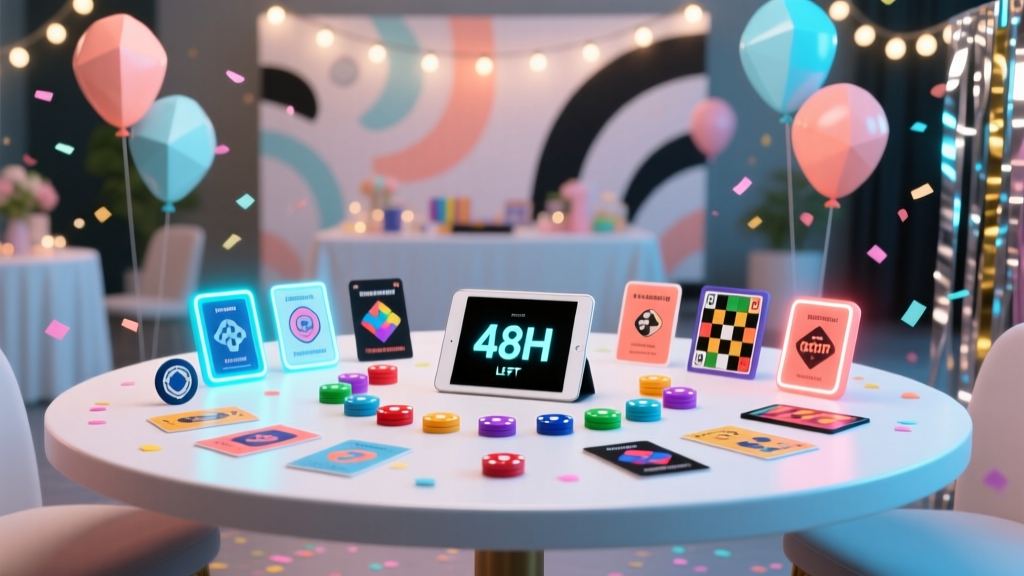
Last-Minute Game Tournament Planning Tips
Game tournaments have a special kind of energy: friendly competition, fast pacing, and a crowd that’s ready to cheer. That excitement can also magnify small planning gaps—late starts, unclear rules, missing equipment, or uneven matchups can turn a fun event into a stressful scramble. When you’re planning on short notice, structure becomes your best tool.
Last-minute event planning doesn’t have to mean “thrown together.” With a clear tournament format, a streamlined timeline, and a few proven coordination strategies, you can deliver a polished experience that feels intentional. Whether you’re hosting a backyard bracket for friends, a corporate team-building tournament, or a community gaming night, the goal is the same: keep it fair, keep it moving, and keep it fun.
This guide gives you step-by-step tournament planning tips, practical checklists, budget breakdowns, and real-world examples so you can organize a successful game tournament—even when the clock is ticking.
Start With the Fast Decisions That Drive Everything
When time is limited, prioritize decisions that impact space, equipment, staffing, and scheduling. Lock these in first and everything else becomes easier.
1) Choose the Game and Platform
- Video games: Specify title, version, platform (PC/console), and whether players bring their own gear.
- Board/card games: Confirm edition/ruleset and number of copies needed.
- Sports/yard games: Confirm equipment (cones, balls, nets, cornhole boards), safety needs, and weather plan.
2) Set Your Tournament Goal and Vibe
- Casual party tournament: quick rounds, flexible rules, light prizes
- Competitive bracket: published rules, strict timing, clear tiebreakers
- Team-building event: mixed-skill teams, rotating roles, teamwork scoring
3) Lock the Headcount and Team Size
Fast formats work best with predictable numbers. If you’re unsure, plan for a range and select a structure that adapts.
- Best for uncertainty: Swiss-style rounds or round robin in small pods
- Best for speed: single elimination with optional consolation matches
- Best for fairness: double elimination (requires more time)
4) Pick a Tournament Format That Fits Your Time
Use this quick guide:
- Single elimination: fastest, simplest; one loss and you’re out
- Double elimination: more forgiving; needs strong scheduling discipline
- Round robin: great for small groups (4–6 players/teams); everyone plays everyone
- Swiss (points-based): ideal when you want several rounds without full round robin; similar records play each other
Last-Minute Planning Timeline (From 72 Hours to Game Day)
This timeline is built for event planning under pressure. Use it as-is or adapt it to your schedule.
72–48 Hours Before: Confirm the Core Logistics
- Secure the venue: home, community hall, office space, bar/restaurant, park permit (if needed).
- Finalize format + rules: match length, scoring, tiebreakers, and equipment standards.
- Create registration plan: RSVP link, email list, or sign-up sheet with player names and contact info.
- Inventory equipment: controllers, extension cords, power strips, tables, chairs, scoreboards, whistles/timers.
- Assign staff roles: tournament director, scorekeeper, check-in lead, tech/equipment runner.
- Draft your schedule: start time, check-in window, player meeting, rounds, breaks, finals.
48–24 Hours Before: Build the Player Experience
- Publish the “one-page tournament sheet”: time, location, rules, what to bring, parking, food plan.
- Set up bracket tools: printed bracket sheets or digital bracket software.
- Confirm food and beverages: order catering, coordinate potluck items, or arrange snack station.
- Prepare signage: check-in, station numbers, rules summary, schedule, Wi-Fi info.
- Plan prizes: gift cards, trophies/medals, sponsor items, fun awards (best comeback, sportsmanship).
24–4 Hours Before: Test and Stage Everything
- Run a tech test: screens, audio, controllers, network connectivity, game settings.
- Create station kits: each station gets a rules card, timer, pens, and any accessories.
- Print backups: bracket sheets, roster, match slips.
- Pre-build teams (if possible): balance skill levels by pairing experienced players with new players.
- Set a weather plan: indoor backup, pop-up tents, or reschedule policy.
Game Day: Run a Smooth Tournament Like a Pro
- Check-in (20–40 minutes): confirm names, collect waivers if needed, assign stations.
- Player meeting (5–10 minutes): rules, sportsmanship expectations, timing, where to find help.
- Start on time: begin round 1 even if a few are late; late arrivals can join next round if format allows.
- Keep rounds tight: announce “5 minutes left” warnings; enforce match caps.
- Post results immediately: update bracket/standings in a visible place.
- Celebrate winners: quick awards moment + group photo for social sharing.
Game Tournament Planning Checklist (Copy/Paste)
Event Essentials
- Date/time confirmed
- Venue address, parking, accessibility details
- Capacity and layout plan
- Permits/insurance (if required)
- Weather backup plan (for outdoor events)
Tournament Setup
- Format selected (single/double elimination, round robin, Swiss)
- Rules document (scoring, match length, tiebreakers, conduct)
- Seeding method (random, skill-based, or mixed)
- Bracket/standings tool chosen
- Station numbering system
Equipment + Tech
- Consoles/PCs/games updated
- Controllers/chargers/batteries
- Monitors/TVs + cables
- Power strips, extension cords, gaffer tape for cord safety
- Wi-Fi plan (or offline mode plan)
- Backup equipment (at least 1 extra controller/cable)
Guest Experience
- Check-in table supplies (pens, name tags, wristbands)
- Food/water plan + dietary considerations
- Music/MC plan (optional but energizing)
- Prizes and fun awards
- Photo moment (backdrop or simple winner podium)
Simple Scheduling Templates That Work Under Pressure
Template A: 8 Players/Teams, Single Elimination (2–2.5 Hours)
- Check-in: 20 min
- Rules meeting: 10 min
- Quarterfinals: 25–30 min
- Semifinals: 25–30 min
- Finals: 30 min
- Awards + photos: 10 min
Pro tip: If you have multiple stations, run early rounds simultaneously to protect your end time.
Template B: 12–16 Players, Swiss Rounds + Final (2.5–3.5 Hours)
- Check-in + briefing: 30 min
- Round 1: 20 min
- Round 2: 20 min
- Round 3: 20 min
- Short break: 10 min
- Top 4 playoff: 45–60 min
- Awards: 10 min
Pro tip: Swiss format is a strong event planning trend for community events because it guarantees multiple matches per player without needing an all-day schedule.
Budget Considerations (With Practical Breakdown)
Last-minute costs often come from rentals, rush fees, and missing supplies. Start with a simple budget framework and adjust based on your headcount and venue.
Quick Budget Breakdown (Example: 20 Guests)
- Venue: $0 (home/office) to $300 (community room rental)
- Food + drinks: $120–$250 (snacks + pizza/wings + nonalcoholic drinks)
- Equipment/rentals: $0–$400 (tables/chairs/AV, extra monitors, tent)
- Prizes: $30–$150 (gift cards, medals, small trophy)
- Printing/signage: $10–$40
- Decor + ambiance: $20–$80 (table covers, themed accents, lighting)
- Contingency (10–15%): $20–$150
Ways to Save Without Looking Cheap
- Use “sponsor-style” prizes: local businesses donate gift cards in exchange for a shoutout.
- Focus spending on flow: invest in power strips, clear signage, and enough seating before decor.
- Pick a snack strategy: one “main” food order + self-serve snacks is easier than full catering.
- Offer BYO gear (carefully): for video game tournaments, ask players to bring controllers labeled with names.
Vendor Selection Tips (When You’re Booking Fast)
If you need vendors on short notice—food, rentals, DJ/MC, photo booth—speed and clarity matter more than endless options.
How to Choose the Right Vendors Quickly
- Use “availability-first” shortlisting: ask three vendors the same email with date, time window, guest count, and budget.
- Prioritize reliability over novelty: choose vendors with recent reviews and clear cancellation policies.
- Confirm delivery/setup details in writing: arrival time, contact person, what’s included (tables, serving utensils, fuel).
- Avoid custom menus and complex packages: go with standard options to reduce errors.
Real-World Example: Last-Minute Office Tournament
A company planned a 16-person Mario Kart tournament with 48 hours’ notice. They succeeded by renting two extra monitors (same-day pickup), using single-elimination with a consolation ladder for early losses, and ordering a simple “pizza + salad + drinks” package timed for the semifinal break. The event stayed on schedule because they set strict 8-minute races and posted station assignments near check-in.
Current Event Planning Trends to Borrow for Your Tournament
- Micro-zones: Create distinct areas—check-in, play stations, spectator seating, snack bar—so the room feels organized.
- Experience-forward pacing: Shorter rounds, faster transitions, and scheduled breaks keep energy high.
- Hybrid-friendly communication: Use a group text or event chat for announcements and standings updates.
- Inclusive competition: Offer beginner-friendly side matches or “open play” for those who get eliminated early.
- Photo-ready moments: A simple winner backdrop increases social sharing and event buzz.
Common Game Tournament Planning Mistakes to Avoid
1) Overcomplicating the Format
Complex brackets and custom rules are hard to explain and even harder to run last-minute. Choose a familiar format and keep rules short enough to fit on one page.
2) Not Building in Buffer Time
Late arrivals, technical issues, and overtime matches happen. Add 10–15% padding to your schedule and enforce match caps.
3) Underestimating Power, Cables, and Wi-Fi
- Bring extra extension cords and power strips.
- Tape down cords in walkways.
- Have an offline plan if internet fails.
4) Unclear Scoring and Tiebreakers
Arguments slow everything down. Define:
- How a win is recorded
- What happens during a disconnect/interruption
- Tiebreakers (points differential, head-to-head, sudden death round)
5) Forgetting the “Eliminated Player” Experience
If someone loses early and has nothing to do, they’ll disengage. Plan:
- Consolation matches
- Mini-challenges (fastest lap, best trick shot, speed round)
- Spectator voting awards
FAQ: Last-Minute Game Tournament Planning
How many players can I handle with a small team?
With one organizer and one helper, 8–16 players is realistic if you use a simple format (single elimination or Swiss) and keep match times capped. More than 16 players usually needs dedicated scorekeeping and station managers.
What’s the best tournament format when people might show up late?
Swiss rounds or small-group round robin works well because late arrivals can join in the next round more easily. If you must do single elimination, set a clear late policy (forfeit after X minutes) and start on time.
How do I keep matches from running long?
Use a visible timer, set match limits (time cap or best-of-1 instead of best-of-3), and announce “last call” warnings. Assign a staff member to manage transitions so the next match starts immediately.
Do I need waivers for a tournament?
For casual home events, usually not. For public venues, sports activities, or community events, waivers can be a smart risk-management step. Check venue requirements and local guidelines, especially for minors.
What are easy prize ideas for a last-minute tournament?
- Digital gift cards (instant delivery)
- Simple medals or a small trophy
- “Champion” lanyard or belt for photos
- Fun awards: best sportsmanship, MVP, crowd favorite
How can I make a small tournament feel like a big event?
Use signage and station numbers, do a short opening briefing, play a hype playlist, and create one photo moment (winner backdrop or podium). A clean schedule and confident announcing makes the event feel professional.
Actionable Next Steps for a Smooth Last-Minute Tournament
- Pick your format now: choose the simplest structure that fits your headcount and time window.
- Create a one-page rules + schedule sheet: print it and share it digitally.
- Do a 30-minute equipment test: power, controllers, cables, and game settings.
- Assign three roles: check-in, scorekeeping, and tech runner (even if they’re all you and one friend).
- Build a buffer: add time padding and enforce match caps to protect the end time.
- Plan a consolation activity: keep everyone engaged from first match to finals.
With a tight plan and clear coordination, a last-minute game tournament can feel organized, high-energy, and memorable for every guest—players and spectators alike.
For more event planning checklists, party organization ideas, and coordination guides, explore the latest resources on smartpartyprep.com.
More Articles
 Who Has the Best Dice in Mario Party? We Tested All 12 Character Dice Across 7 Games (Super Mario Party, Mario Party Superstars & More) to Reveal the Real Winners—and Why Your Go-To Pick Might Be Costing You Stars
 What Is 3rd Party Liability Insurance? The Truth No Event Planner Tells You (But Should): It’s Not Just ‘Extra Coverage’ — It’s Your Legal Shield Against $2M+ Lawsuits from Vendors, Guests, and Venues
How to Throw a Beach Party Without the Stress: 7 Non-Negotiable Steps (Backed by 127 Real Events & 97% Guest Satisfaction)
What Is 3rd Party Liability Insurance? The Truth No Event Planner Tells You (But Should): It’s Not Just ‘Extra Coverage’ — It’s Your Legal Shield Against $2M+ Lawsuits from Vendors, Guests, and Venues
How to Throw a Beach Party Without the Stress: 7 Non-Negotiable Steps (Backed by 127 Real Events & 97% Guest Satisfaction)
 How Many Episodes Are in The Hunting Party? Spoiler-Free Breakdown of All 8 Immersive Story Arcs, Timing Tips, and Why Booking Early Saves Your Spot (2024 Edition)
 Is Georgia a one party consent state? Yes — but here’s exactly when that protection vanishes (and how to avoid felony charges while recording weddings, meetings, or podcasts)
 How to Make Punch for a Party: 7 Foolproof Steps (No Fancy Tools, No Bitter Surprises, and Zero Last-Minute Panic)
Does PS4 Record Party Chat? The Truth No One Tells You (And Exactly How to Capture It Legally & Without Glitches)
How to Sell Car to Private Party in California: The 7-Step Legal Checklist That Prevents Title Delays, DMV Rejections, and Buyer Disputes (Most Sellers Skip #4)
How to Get Donkey Kong in Mario Party: The Exact Unlock Methods for Every Game (Super Mario Bros. Wonder Edition Included)
Who Made Party Rock? The Real Story Behind the Anthem That Changed How We Throw Parties (and Why You’re Probably Crediting the Wrong People)
How to Make Punch for a Party: 7 Foolproof Steps (No Fancy Tools, No Bitter Surprises, and Zero Last-Minute Panic)
Does PS4 Record Party Chat? The Truth No One Tells You (And Exactly How to Capture It Legally & Without Glitches)
How to Sell Car to Private Party in California: The 7-Step Legal Checklist That Prevents Title Delays, DMV Rejections, and Buyer Disputes (Most Sellers Skip #4)
How to Get Donkey Kong in Mario Party: The Exact Unlock Methods for Every Game (Super Mario Bros. Wonder Edition Included)
Who Made Party Rock? The Real Story Behind the Anthem That Changed How We Throw Parties (and Why You’re Probably Crediting the Wrong People)