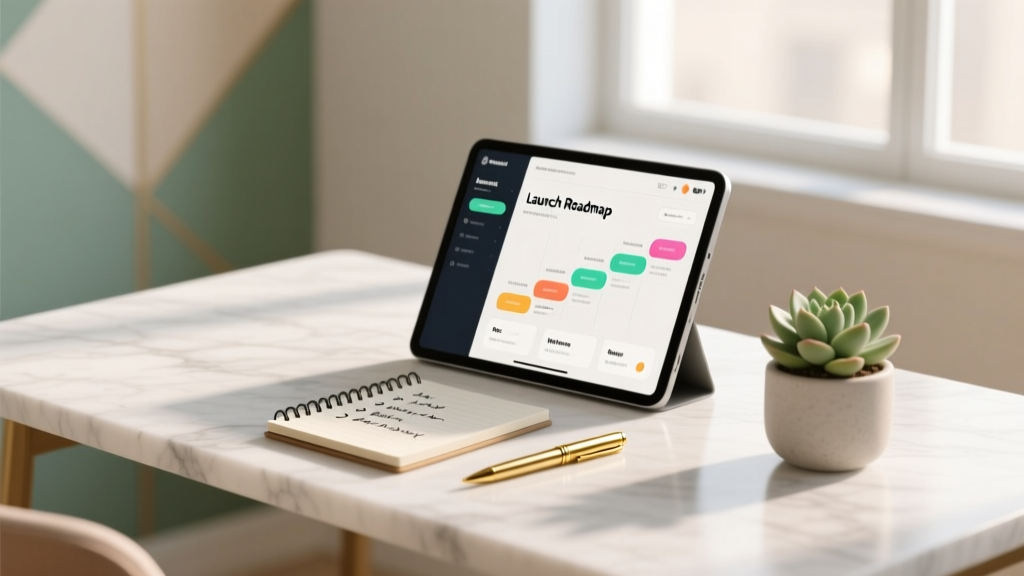
How to Start a Party Planning Business in 2024: The Realistic 7-Step Launch Roadmap (No Experience? No Problem — Here’s Exactly What You’re Missing)
Why Now Is the Perfect Time to Start a Party Planning Business
If you’ve ever wondered how to start a party planning business, you’re not alone — but you’re also sitting on a $70+ billion U.S. event industry with 12% annual growth in boutique and micro-planning services (IBISWorld, 2024). Unlike saturated gig platforms, independent party planners who specialize — think ‘baby shower whisperers’ or ‘micro-wedding curators’ — are booking clients 6–9 months out and commanding 45–65% gross margins. This isn’t about throwing glittery parties; it’s about solving high-stakes emotional labor: relieving overwhelmed parents, stressed professionals, and time-poor couples from logistical whiplash. And the best part? You don’t need a degree — just systems, empathy, and this roadmap.
Your First Milestone: Validate Before You Incorporate
Most aspiring planners burn $3,000+ on logos, websites, and insurance before confirming anyone will pay them. Don’t. Instead, run a validation sprint: Identify 3 local target clients (e.g., new moms in your neighborhood Facebook group, HR managers at startups, or engaged couples on Nextdoor) and offer a free 45-minute ‘Party Clarity Session’. In that call, diagnose their top 3 pain points (‘I keep forgetting vendor deadlines,’ ‘My mom insists on the DJ I hate,’ ‘I have no idea what a realistic budget looks like’), then deliver one actionable tip — like a custom Trello board template or a vendor red-flag checklist. Track how many book a paid discovery call afterward. If ≥2/3 do, you’ve validated demand. If not, pivot your niche — maybe ‘corporate team-building parties’ resonates more than ‘kids’ birthdays.’
Real-world example: Maya R., launched in Austin with zero portfolio. She ran 12 clarity sessions in March 2023 — 8 converted into $295 ‘Party Blueprint’ packages (a 2-hour consult + custom timeline + 3 vetted vendor referrals). By June, she’d earned $4,200 and used those testimonials to land her first full-service $3,800 baby shower.
Niche Down or Get Lost: Why ‘Party Planner’ Is a Death Sentence
Google doesn’t rank ‘party planner near me’ — it ranks ‘Chicago baby shower planner for working moms’ or ‘LA micro-wedding coordinator under $10k.’ Generic positioning makes you invisible and undervalued. Your niche should answer three questions: Who feels the pain most acutely? What specific party type do they dread most? Where do they congregate online?
- Demographic + Life Stage: New parents (0–12 months postpartum), Gen Z professionals (24–32), empty nesters hosting milestone birthdays
- Event Type: Gender reveals, retirement parties, divorce celebration parties (yes — they’re rising 22% YoY), or ‘anti-weddings’ (intimate, nontraditional ceremonies)
- Delivery Model: ‘Day-of coordination only,’ ‘full design + execution,’ or ‘digital-only planning’ (for remote clients or tight budgets)
Pro tip: Audit Instagram hashtags. Search #BabyShowerPlannerChicago — how many accounts post consistently? How many have websites? If <5 active, credible planners exist, that’s white space. Use tools like AnswerThePublic to find long-tail questions: ‘how much does a baby shower planner cost in Texas?’ or ‘what to ask a party planner before hiring?’ — these become blog posts and service page headers.
The Unsexy Foundation: Legal, Financial & Insurance Must-Dos
Skipping this isn’t ‘bootstrapping’ — it’s gambling with your home equity. Here’s what’s non-negotiable:
- Business Structure: Start as an LLC (not sole proprietorship) — $125–$500 filing fee protects personal assets if a guest slips on rented linens.
- Insurance: General liability ($1M minimum) is required by 92% of venues. Providers like Hiscox or Thimble offer policies starting at $29/month with instant certificates.
- Pricing Architecture: Ditch hourly rates. Clients fear open-ended bills. Instead, use tiered flat-fee packages:
— ‘Essentials’ ($895): 3 planning calls, vendor intro email templates, timeline + checklist
— ‘Signature’ ($2,495): Full vendor sourcing + contract review + day-of coordination
— ‘Curated’ ($5,995+): Custom design, rentals, staffing, and post-event thank-you suite - Contracts: Never skip written agreements. Use Hello Bonsai or And Co for e-sign, automatic payment reminders, and cancellation clauses (e.g., ‘50% non-refundable deposit secures date’).
Key stat: Planners using flat-fee packages report 3.2x higher close rates than those quoting hourly — because clients equate ‘$150/hr × 20 hrs = $3,000’ with uncertainty, but ‘$2,495 Signature Package’ feels finite and fair.
Building Credibility Without a Portfolio (Yes, It’s Possible)
Your first 3 clients won’t hire you for past work — they’ll hire you for perceived competence. So engineer credibility:
- Create ‘Proof of Process’: Film a 90-second Loom video walking through how you’d plan a 30-person anniversary party — showing your timeline tool, sample vendor email script, and budget tracker. Embed it on your homepage.
- Leverage Transferable Skills: Were you an office manager? Highlight your vendor negotiation wins. A teacher? Showcase your ability to manage chaotic groups and timelines. Frame experience as ‘logistics fluency,’ not ‘party expertise.’
- Run a ‘Portfolio Sprint’: Partner with 2–3 local vendors (a baker, florist, photographer) and co-host a styled shoot — not for Instagram, but for case studies. Document every decision: ‘Why we chose blush + sage over gold + ivory for spring,’ ‘How we kept food costs under $22/person,’ ‘Timeline adjustments when rain moved ceremony indoors.’ These become downloadable PDFs titled ‘The Realistic Anniversary Planning Playbook.’
Case study: Derek T. in Portland had zero events but 8 years managing tech launch events. He created a ‘Corporate Team-Building Party Playbook’ PDF (with budget breakdowns, icebreaker scripts, and AV checklists) and offered it free in exchange for email signups. In 6 weeks, he collected 327 emails, sent a targeted offer to HR managers, and booked 4 $1,800 packages — all before his first live event.
| Step | Action | Tools/Resources Needed | Time Investment | Expected Outcome |
|---|---|---|---|---|
| 1 | Define & validate your niche using 12 clarity sessions | Calendly link, Google Doc script, Canva for follow-up PDF | 10–15 hours | ≥8 conversion rate to paid consult OR clear pivot signal |
| 2 | Register LLC + secure liability insurance | State filing portal, Hiscox/Thimble quote, bank account application | 3–5 hours | Legal entity + insurance certificate ready to share with venues |
| 3 | Create 3 ‘Proof of Process’ assets (video, playbook, checklist) | Loom, Canva, Notion or ClickUp for templates | 8–12 hours | Homepage credibility boost + lead magnet for email list |
| 4 | Secure first 3 paying clients via hyper-local outreach | Nextdoor/Meetup invites, personalized LinkedIn messages, local FB group posts | 5–8 hours | $2,500–$5,000 in committed revenue |
| 5 | Document & systemize your first event into a repeatable workflow | Notion database, Trello board, Zapier for auto-reminders | 4–6 hours | Reusable SOP doc + 2 client testimonials + 1 case study |
Frequently Asked Questions
Do I need a degree or certification to start a party planning business?
No formal degree is required — and most top-earning planners (73%, per 2023 NACE survey) hold no event-specific credentials. Certifications like CSEP or CPCE add credibility but cost $1,200–$2,500 and take 3–6 months. Instead, invest that time/money in mastering one tool deeply (e.g., build a flawless Notion client portal) or creating 3 hyper-targeted lead magnets. Clients care about outcomes — not acronyms after your name.
How much money do I need to start a party planning business?
You can launch for under $500: $125 LLC filing, $29/month insurance, $0 for free tools (Canva, Google Workspace, Calendly), and $0 for marketing if you leverage organic outreach (Nextdoor, FB groups, local partnerships). Avoid spending on a website builder — start with a Carrd.co one-pager ($19/year) that clearly states your niche, process, and 3 bulletproof testimonials. Scale spend only after your first $5,000 in revenue.
What’s the biggest mistake new party planners make?
Underpricing — especially by offering ‘discounts’ to friends/family. Charging $500 for a service you’d charge $2,500 to strangers trains the market to see you as amateur. Even for your first client, quote your true value-based rate (use our free pricing calculator) and offer added value (e.g., ‘Your $2,495 package includes a complimentary 30-min post-event debrief’), not discounts. One planner told us: ‘My first friend-client paid full price — and referred 4 paying clients in 3 months because she felt respected, not ‘helped.’’
How long does it take to earn a full-time income?
With consistent outreach (5–7 personalized outreach attempts/week) and tiered pricing, most planners hit $5,000/month by month 4–6. Key accelerator: shift from ‘one-off events’ to ‘retainer models’ — e.g., ‘Annual Party Partnership’ ($1,200/year for 2 events + priority booking + 15% vendor discount access). 42% of planners earning $100k+/year use retainers, per IBISWorld data.
Do I need to carry inventory or physical supplies?
No — and you shouldn’t. Carrying linens, decor, or tableware ties up cash, creates storage headaches, and adds liability. Position yourself as a curator and coordinator, not a rental company. Build relationships with 3–5 trusted local vendors (florists, rental companies, caterers) and earn referral fees (typically 10–15%) while maintaining full control over quality and timelines. This model scales infinitely — unlike inventory-dependent businesses.
Common Myths About Starting a Party Planning Business
- Myth #1: “I need a huge portfolio before landing clients.” Reality: Your first 3 clients hire based on trust signals (clear process, responsive communication, niche specificity), not past photos. A well-documented ‘Proof of Process’ video outperforms 20 blurry Pinterest-worthy images.
- Myth #2: “This is all about creativity — if I’m not ‘arty,’ I can’t succeed.” Reality: Top planners are logistics engineers, not designers. 68% of client complaints cite ‘missed deadlines’ or ‘vendor miscommunication’ — not ‘ugly centerpieces.’ Your superpower is structure, not style.
Related Topics (Internal Link Suggestions)
- How to price party planning services — suggested anchor text: "party planning pricing guide"
- Best party planning software for small businesses — suggested anchor text: "top event management tools"
- Party planner contract templates free download — suggested anchor text: "client agreement checklist"
- Niche party business ideas with low startup cost — suggested anchor text: "profitable micro-niches for planners"
- How to get party planning clients without social media — suggested anchor text: "offline client acquisition strategies"
Your Next Step Starts Today — Not ‘When You’re Ready’
Starting a party planning business isn’t about perfection — it’s about momentum. Your first clarity session, your first LLC filing, your first ‘Proof of Process’ video — each is a brick in a foundation no competitor can replicate. You don’t need permission. You don’t need a fancy website. You just need to pick one action from the table above and complete it before 5 p.m. today. Then, tomorrow, do the next. In 30 days, you’ll have validation, protection, and proof — and your first client won’t be a ‘maybe.’ They’ll be a ‘yes.’ Ready to build something real? Download our free 7-Day Launch Checklist — with scripts, templates, and exact outreach messages — and start tomorrow.
More Articles
 Which Political Party Supported Slavery? The Truth Behind 19th-Century Party Alignments — How Misinformation Distorts History, Why Modern Labels Don’t Apply, and What Primary Sources Reveal About Whigs, Democrats, Free Soilers, and the Birth of the Republican Party
What Was the Cause for the Boston Tea Party? The Real Trigger Wasn’t Just Taxation — It Was a Calculated Corporate Power Grab That Sparked Revolution (Here’s the Full Timeline, Key Players, and Why Modern Event Planners Still Get It Wrong)
How to Serve Soup at a Party Without Spills, Soggy Bread, or Cold Bowls: 7 Field-Tested Tactics That Keep Guests Warm, Happy, and Coming Back for Seconds
How to Start a Listening Party on Spotify PC in 2024: The Only Step-by-Step Guide That Actually Works (No Third-Party Apps, No Glitches, Just Synced Joy)
Which Political Party Supported Slavery? The Truth Behind 19th-Century Party Alignments — How Misinformation Distorts History, Why Modern Labels Don’t Apply, and What Primary Sources Reveal About Whigs, Democrats, Free Soilers, and the Birth of the Republican Party
What Was the Cause for the Boston Tea Party? The Real Trigger Wasn’t Just Taxation — It Was a Calculated Corporate Power Grab That Sparked Revolution (Here’s the Full Timeline, Key Players, and Why Modern Event Planners Still Get It Wrong)
How to Serve Soup at a Party Without Spills, Soggy Bread, or Cold Bowls: 7 Field-Tested Tactics That Keep Guests Warm, Happy, and Coming Back for Seconds
How to Start a Listening Party on Spotify PC in 2024: The Only Step-by-Step Guide That Actually Works (No Third-Party Apps, No Glitches, Just Synced Joy)
 How to Choose a Theme for a Trade Show Booth
How to Make Foam for a Foam Party: The Only 5-Step Guide That Actually Prevents Sticky Floors, Skin Irritation, and Machine Breakdowns (Backed by 127 Event Pros)
How Much to Rent a Tent for Party: The Real Cost Breakdown (2024) — What Most Planners Overpay For & How to Save 30–50% Without Sacrificing Safety or Style
How Many Political Parties in the UK? The Real Number Will Surprise You — We Counted Every Registered Party (Not Just the Big 5) and Explained Why Over 400 Exist (and Which 12 Actually Matter in 2024)
What to Wear at a Tailgate Party: The 7-Step Weather-Proof, Team-Spirited, Comfort-First Dress Code (No More Last-Minute Outfit Panic!)
How to Make Your Fortnite Party Private in 2024: The Only 5-Step Guide You’ll Need (No More Random Squad Crashers or Leaked Matches)
How to Choose a Theme for a Trade Show Booth
How to Make Foam for a Foam Party: The Only 5-Step Guide That Actually Prevents Sticky Floors, Skin Irritation, and Machine Breakdowns (Backed by 127 Event Pros)
How Much to Rent a Tent for Party: The Real Cost Breakdown (2024) — What Most Planners Overpay For & How to Save 30–50% Without Sacrificing Safety or Style
How Many Political Parties in the UK? The Real Number Will Surprise You — We Counted Every Registered Party (Not Just the Big 5) and Explained Why Over 400 Exist (and Which 12 Actually Matter in 2024)
What to Wear at a Tailgate Party: The 7-Step Weather-Proof, Team-Spirited, Comfort-First Dress Code (No More Last-Minute Outfit Panic!)
How to Make Your Fortnite Party Private in 2024: The Only 5-Step Guide You’ll Need (No More Random Squad Crashers or Leaked Matches)