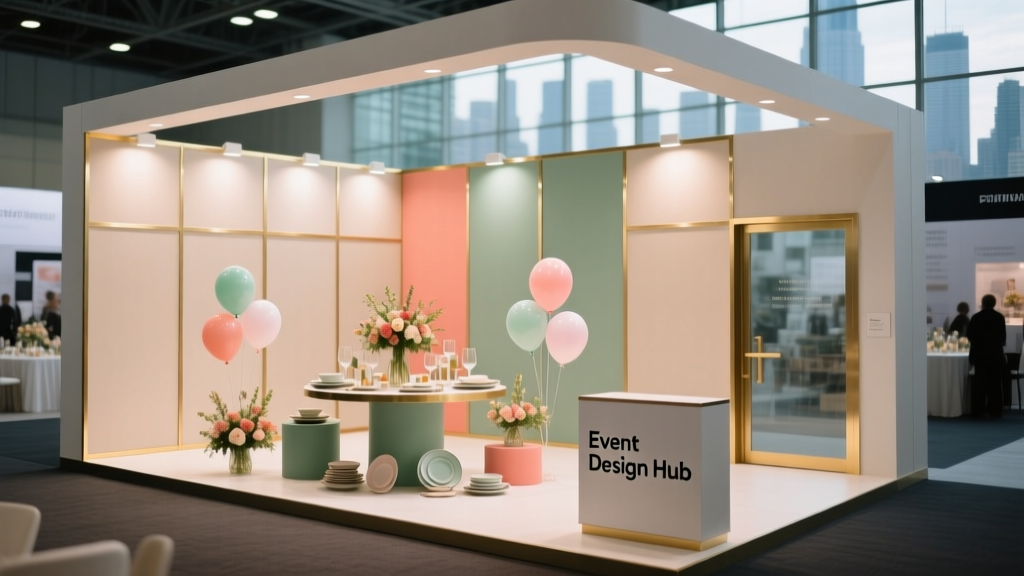
How to Choose a Theme for a Trade Show Booth
A trade show booth has one job: earn attention quickly and turn it into meaningful conversations. With dozens—or hundreds—of exhibitors competing for the same foot traffic, a strong booth theme helps your brand stand out, attracts the right attendees, and makes your message easier to remember long after the event ends.
Theme selection isn’t about picking something “fun” and hoping it works. It’s a strategic event planning decision that affects your booth design, staffing plan, promotional items, lead capture process, and even your pre-show marketing. When the theme supports your goals, it becomes a coordination tool—aligning everyone from sales to design to vendors.
This guide walks you through choosing a trade show booth theme step-by-step, with practical tips, planning timelines, checklist items, budget considerations, and common mistakes to avoid. Use it as a planning framework whether you’re coordinating a small 10x10 booth or managing a large brand activation.
What a “Booth Theme” Really Means (and Why It Matters)
A booth theme is the unifying concept that shapes how your exhibit looks, feels, and functions. It’s not limited to décor or color palettes. A strong theme ties together:
- Brand message: What you want people to know or believe after they meet you
- Visual identity: Colors, textures, signage, lighting, and layout
- Experience design: Demos, interactions, giveaways, and flow of traffic
- Staffing approach: What your team says, how they qualify leads, and how they guide attendees
- Event marketing: Pre-show emails, social posts, appointment-setting, and on-site promotions
In event planning and coordination terms, a theme acts as a decision filter. If an idea doesn’t support the theme, it’s easier to cut—and protect your budget and timeline.
Step 1: Clarify Your Trade Show Goals Before Brainstorming
Choosing a theme is easier when your objectives are specific. Start with measurable outcomes:
- Lead generation: Number of qualified leads, demos completed, or meetings booked
- Brand awareness: Press mentions, social engagement, booth traffic, or brand recall
- Product launch: Feature adoption, trial sign-ups, feedback collected
- Partner recruitment: Channel inquiries or reseller applications
- Customer retention: Client meetings, renewal conversations, VIP events
Quick Goal-to-Theme Matching
- If your goal is leads: Choose a theme that supports speed and clarity (fast demos, clear “what we do” signage).
- If your goal is awareness: Choose a theme built for visual impact and shareability (photo moments, bold brand elements).
- If your goal is credibility: Choose a theme that emphasizes proof (case studies, results wall, testimonials).
Step 2: Know Your Audience and the Show Environment
Good booth themes are designed for a specific attendee mindset. Use attendee personas and show research to guide decisions.
Audience Questions to Answer
- Who attends (job titles, industries, buying power)?
- Are they exploring early-stage solutions or selecting finalists?
- What problems are they trying to solve this quarter?
- What objections come up repeatedly in sales calls?
- What would make them stop walking for 10 seconds?
Show Floor Reality Check
- Noise level: A theme relying on audio may struggle; lean into visuals and short text.
- Lighting rules: Some venues restrict truss height or lighting types—confirm exhibitor guidelines early.
- Booth size: A 10x10 needs a theme that reads instantly; large islands can support multi-zone storytelling.
- Competitor patterns: If everyone uses “sleek tech minimalism,” a warmer hospitality-inspired theme can differentiate.
Step 3: Choose the Right Theme Type for Your Brand
Not every theme style fits every company. Pick a category, then customize it to your brand personality and event planning constraints.
Theme Category Options (with Real-World Examples)
-
Problem/Solution Theme
Example: “From Chaos to Clarity” for a workflow platform. Visuals show messy processes transforming into streamlined dashboards. -
Industry Immersion Theme
Example: “Smart Warehouse Control Center” for logistics tech. The booth feels like an operations hub with live dashboards. -
Outcome/Transformation Theme
Example: “30-Day Growth Sprint” for a marketing service, featuring a step-by-step journey wall with milestones. -
Brand Story Theme
Example: “Built for Builders” for a construction supplier, using rugged textures, jobsite-inspired graphics, and tool-like fixtures. -
Interactive Experience Theme
Example: “Test Lab Challenge” for a cybersecurity company, offering quick threat-spotting mini games with leaderboard screens. -
Sustainability/Values Theme
Example: “Circular by Design” highlighting recyclable materials, modular displays, and transparent reporting of booth footprint.
Current event planning trends that work well for trade show themes include modular booth systems (easy to reconfigure), tactile textures and “warm minimalism,” QR-led product journeys, micro-experiences (2–3 minute interactions), and sustainability-forward choices (reusability, reduced shipping waste, low-VOC materials).
Step 4: Build Your Theme Around a Clear Message Hierarchy
Your theme should support a message that’s easy to understand at a distance and compelling up close. Use this three-layer structure:
- 10-foot message: A short statement people can read while walking by (5–7 words).
- 3-foot message: A benefit-driven explanation and proof (bullets, icons, metrics).
- 1-foot message: The details for serious prospects (product specs, case study sheets, demo scripts).
Practical Tip: Write the “Booth Theme Sentence”
Fill in the blank: “We help [audience] achieve [outcome] by [unique method].”
If your theme doesn’t reinforce that sentence, it’s probably decoration, not strategy.
Step 5: Translate Theme into Booth Design, Experience, and Staffing
Trade show planning is easier when you map your theme into concrete elements.
Theme-to-Execution Map
- Visuals: Color palette, materials, signage style, hero graphic, lighting mood
- Layout: Entry points, demo zone, meeting space, storage, lead capture station
- Activation: Demo, game, photo moment, sampling, mini sessions, scheduled presentations
- Giveaways: Useful, brand-aligned items tied to your message (avoid generic clutter)
- Staffing: Roles, scripts, attire, talk tracks, lead qualification questions
Real-World Example: “Clinic of Clarity” (B2B SaaS)
- Theme: Diagnose workflow bottlenecks
- Design: Clean white/teal palette, “checkup stations,” simple icons
- Experience: 3-minute “workflow checkup” quiz on tablets + instant results
- Giveaway: Pocket “prescription pad” notepad with 5 productivity prompts
- Staffing: One greeter, two “specialists” running checkups, one closer booking demos
Step 6: Plan Your Trade Show Booth Theme Timeline (8–12 Weeks)
Use this planning timeline template to keep booth design, party organization details (giveaways, hospitality), and coordination tasks on track.
8–12 Weeks Before: Strategy + Concept
- Confirm goals and KPIs (leads, meetings, demos, traffic)
- Review exhibitor manual (rules, deadlines, shipping, height limits)
- Choose theme category and create mood board
- Draft the 10-foot headline and core messaging
- Outline booth zones and activation concept
- Start vendor outreach (exhibit house, print, AV, swag)
6–8 Weeks Before: Design + Orders
- Finalize booth layout and graphics
- Order display structures, furniture, flooring, lighting
- Confirm lead capture method (badge scanner, QR forms, CRM sync)
- Order branded giveaways and printed collateral
- Book labor (install/dismantle), internet, electrical, rigging as needed
4–6 Weeks Before: Content + Training
- Create demo scripts and “what to say” talk tracks
- Build a staffing schedule (coverage, breaks, roles)
- Prepare case study one-pagers and customer proof points
- Plan pre-show marketing (email invites, social posts, meeting calendar link)
- Confirm shipping plan and onsite storage needs
2–3 Weeks Before: Final Checks
- Print and proof all graphics (verify color and readability)
- Test tech: tablets, screens, videos, QR codes, forms
- Confirm booth staff travel, attire, and daily call times
- Pack an “event toolkit” (tape, zip ties, markers, extension cords, backups)
Show Week: Execute + Optimize
- Arrive early for install supervision and punch list fixes
- Run a 10-minute daily standup: goals, roles, objections, schedule
- Track performance: leads/hour, demo conversions, meeting bookings
- Adjust messaging if attendees misunderstand your offer
Within 48 Hours After: Follow-Up
- Segment leads (hot/warm/nurture) and assign owners
- Send follow-up emails with theme-consistent messaging
- Debrief: what drew people in, what stalled conversations, what to improve
Theme Planning Checklist (Copy/Paste)
- Goals + KPIs defined
- Audience persona confirmed
- Booth theme sentence written
- 10-foot headline approved
- Layout zones mapped (demo, meeting, storage, lead capture)
- Activation planned (interactive element or structured demo)
- Giveaway selected (useful, aligned, easy to transport)
- Graphics designed (readable, on-brand, high contrast)
- Lead capture tested (QR, scanner, CRM sync)
- Staff roles assigned (greeter, demo, closer, floater)
- Vendor timelines confirmed (print, fabrication, shipping)
- Install/dismantle plan (labor, tools, onsite contacts)
Budget Considerations: What Your Theme Will Cost (and Where to Spend)
Your theme choices can either protect your budget or inflate it quickly. Start by setting a total budget, then allocate by impact. Here’s a sample breakdown you can adapt:
Sample Trade Show Booth Budget Breakdown (Percentages)
- Booth space + show services: 25–40% (space, electricity, internet, labor, rigging)
- Exhibit structure + furniture: 20–35% (rental or purchase)
- Graphics + printing: 8–15% (back walls, banners, counters, decals)
- AV + tech: 8–20% (screens, tablets, demo stations)
- Giveaways + collateral: 5–12%
- Staff travel + logistics: 10–25%
- Contingency: 5–10%
Smart Ways to Save Without Weakening the Theme
- Use modular elements: Invest in a reusable frame; swap graphics per event.
- Prioritize one “hero” moment: One standout feature (lighting, structure, or interactive) beats many small extras.
- Choose lightweight giveaways: Lower shipping and easier on-site storage.
- Design for quick setup: Less labor time can reduce drayage and install costs.
Vendor Selection Tips for Booth Theme Success
Vendors can make or break your theme execution. When evaluating partners, use clear scopes and proof.
What to Ask Exhibit and Print Vendors
- Can you provide examples of similar booth sizes and theme styles?
- What are your production timelines and rush fees?
- Do you handle show shipping, drayage coordination, and onsite supervision?
- How do you ensure color accuracy across printed pieces?
- What’s included in revisions, and who owns final files?
Coordination Tip: One Owner for Every Vendor
Assign a single internal point person per vendor (booth build, print, AV, giveaways). This reduces communication gaps and keeps event planning organized.
Common Mistakes to Avoid When Choosing a Trade Show Booth Theme
- Choosing a theme that’s trendy but off-brand: If it doesn’t sound like your company, it won’t feel authentic onsite.
- Overcomplicating the message: Attendees should understand your value in seconds.
- Designing for photos instead of conversations: Social moments help, but the booth must support lead capture and demos.
- Ignoring logistics: Heavy props, fragile décor, or complex builds can cause shipping and labor cost spikes.
- Undertraining staff: A beautiful themed booth fails if staff can’t greet, qualify, and guide attendees smoothly.
- Running out of time for proofs and testing: QR codes, videos, and forms need real device testing before the show.
FAQ: Choosing a Theme for a Trade Show Booth
How do I choose a booth theme that attracts the right people, not just more people?
Build the theme around a specific audience outcome and include qualifying language in your headline (industry, use case, or pain point). Example: “Reduce Shipping Errors by 30%” will attract operations leaders more effectively than “Innovate Faster.”
Should my trade show booth theme match my website and brand campaign?
Yes—consistency increases trust and recall. Your booth theme can be a “chapter” of a larger campaign, using the same visual identity and core message while adapting to an in-person experience.
What’s a good theme for a small 10x10 booth?
Choose a theme that’s message-first and easy to execute: one bold headline, one hero visual, and one clear action (scan for demo, quick assessment, or book a meeting). Avoid themes that require large props or multiple zones.
How far in advance should I finalize the theme?
Aim for 8–12 weeks out, earlier if you need custom fabrication. Finalize the theme before you start ordering graphics and giveaways so everything aligns and you avoid expensive reprints.
How do I measure whether the theme worked?
Track both activity and quality: booth traffic, demos completed, lead-to-meeting conversion rate, and post-show sales pipeline influenced. Add one question to your lead form: “What brought you over today?” to validate what’s pulling people in.
Do I need interactive elements for a strong theme?
Not always. Interactive elements help when they support your goal (qualification, education, or proof). A clear message + strong demo flow can outperform a gimmick that doesn’t tie back to your product.
Next Steps: Turn Your Theme into a Booth Plan You Can Execute
- Write your booth theme sentence and confirm your 10-foot headline.
- Select one theme category and list 3 ways it shows up visually and experientially.
- Draft a simple layout (entry, demo, meeting, lead capture).
- Build your timeline using the 8–12 week template and assign owners to tasks.
- Set a budget with a 5–10% contingency, then request vendor quotes with clear deliverables.
A well-chosen theme makes trade show planning more organized, helps your team coordinate confidently, and creates an experience attendees remember for the right reasons.
For more practical event planning, party organization, and coordination guides, explore the latest resources on smartpartyprep.com.
More Articles
 What Is a Stag Party? The Real-World Guide You Need (Not the Stereotypes) — 7 Myths Debunked, 5 Planning Pitfalls to Avoid, and How to Build One That Actually Honors Your Friend
What to Wear at Vegas Pool Party: The 7-Second Outfit Checklist (No Overpacking, No Awkward Fits, No Last-Minute Panic)
What Is a Stag Party? The Real-World Guide You Need (Not the Stereotypes) — 7 Myths Debunked, 5 Planning Pitfalls to Avoid, and How to Build One That Actually Honors Your Friend
What to Wear at Vegas Pool Party: The 7-Second Outfit Checklist (No Overpacking, No Awkward Fits, No Last-Minute Panic)
 What Party Was William Henry Harrison? The Surprising Truth Behind America’s First Whig President — And Why His 32-Day Presidency Changed Campaigning Forever
 Is Colorado a one party consent state? Yes—but here’s exactly when that rule fails, what exceptions could land you in civil court, and how smart event pros avoid liability before hitting 'record'.
 Common Mistakes When Planning a Music Festival (and How to Avoid Them)
 What Is the White Party? The Unspoken Rules, Real Costs, and 7 Mistakes That Turn Elegant Gatherings Into Awkward Disasters (2024 Edition)
What Is an Ideological Party? The Truth Behind the Term — Why Most People Confuse It With Interest Groups, Single-Issue Movements, and Populist Campaigns (and How to Spot the Real Thing in 2024)
When Did the Democrat and Republican Party Switch? The Truth Behind the Great American Political Realignment (Spoiler: It Wasn’t a Single Day—and You’ve Been Misled)
What Is the White Party? The Unspoken Rules, Real Costs, and 7 Mistakes That Turn Elegant Gatherings Into Awkward Disasters (2024 Edition)
What Is an Ideological Party? The Truth Behind the Term — Why Most People Confuse It With Interest Groups, Single-Issue Movements, and Populist Campaigns (and How to Spot the Real Thing in 2024)
When Did the Democrat and Republican Party Switch? The Truth Behind the Great American Political Realignment (Spoiler: It Wasn’t a Single Day—and You’ve Been Misled)
 Where Can I Watch The Hunting Party for Free in 2024? 7 Legal, Safe & Ad-Supported Options (No Credit Card Required)
How to Send Western Party Invitations: The 7-Step Checklist That Prevents RSVP Chaos (No Design Skills or Fancy Tools Required)
Where Can I Watch The Hunting Party for Free in 2024? 7 Legal, Safe & Ad-Supported Options (No Credit Card Required)
How to Send Western Party Invitations: The 7-Step Checklist That Prevents RSVP Chaos (No Design Skills or Fancy Tools Required)