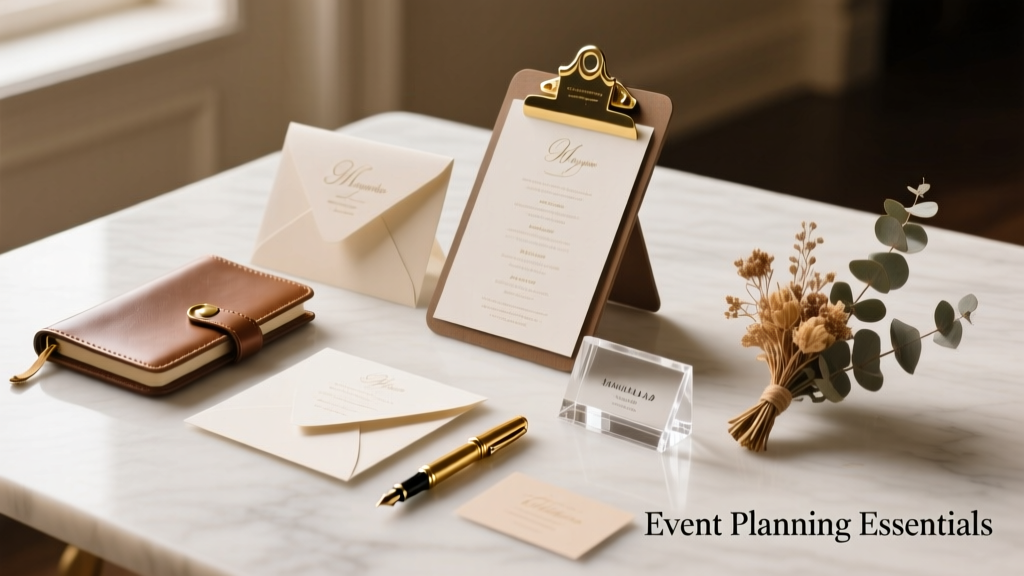
Events Planning Essentials: A Practical, Step-by-Step Framework for Flawless Execution
Planning a successful event demands precision, foresight, and systematic execution—not intuition or improvisation. Whether you’re coordinating a corporate summit for 500 attendees at the Hilton Chicago, launching a nonprofit gala raising $250,000 for Feeding America, or hosting an intimate wedding for 80 guests in Napa Valley, the core essentials remain consistent: defined objectives, disciplined budgeting, realistic scheduling, vetted vendors, and empathetic attendee-centric design. This article distills field-tested practices used by firms like Cvent, Freeman, and Maritz Global Events—backed by data from the Event Industry Council’s 2023 Global Report (which shows 68% of mid-sized events exceed budget without a line-item spreadsheet) and ASAE’s benchmark that 72% of attendees cite ‘seamless registration flow’ as their top experience priority. We break down each essential with concrete metrics, vendor negotiation tactics, and timelines calibrated to real deadlines—not theoretical ideals.
Define Clear Objectives and Success Metrics
Every effective event begins not with a venue or caterer—but with measurable goals. Vague aims like “increase brand awareness” or “build community” are insufficient. Instead, apply SMART criteria: Specific, Measurable, Achievable, Relevant, Time-bound. For example, a tech company launching a SaaS product at CES 2025 might set this objective: Generate 1,200 qualified leads with contact info captured via badge scanning, achieve ≥42% post-event email engagement within 14 days, and secure 18 signed pilot agreements by April 30, 2025. These targets directly inform staffing levels, tech investments (e.g., RFID badge scanners from Cvent Attendee Hub), and follow-up workflows.
Success metrics must be tracked pre-, during, and post-event. According to Bizzabo’s 2024 Event Marketing Benchmark Report, events with pre-defined KPIs are 3.2× more likely to report ROI above 150%. Common KPI categories include:
- Attendance & Engagement: Net attendance rate (actual vs. registered), average session dwell time (tracked via Wi-Fi pings or app check-ins), and social media reach (e.g., #EventHashtag impressions)
- Revenue & Cost: Net profit margin, cost per attendee (CPA), and sponsor ROI (measured by lead scan volume, booth traffic heatmaps from CrowdCompass)
- Experience Quality: Net Promoter Score (NPS) collected via post-event SMS (target: ≥52), session satisfaction (≥4.3/5 average), and accessibility compliance score (e.g., WCAG 2.1 AA adherence)
Without baseline metrics, you cannot assess impact—or justify future budgets. The American Marketing Association recommends tying at least 60% of your event budget to activities directly tied to primary KPIs. If lead generation is your goal, allocate 40% of funds to CRM-integrated registration, lead capture tech, and sales enablement—not just decor.
Build a Realistic, Line-Item Budget
A robust budget isn’t a static document—it’s a living control system. Start with revenue projections: ticket sales (e.g., $199 general admission × 420 tickets = $83,580), sponsor packages (e.g., Platinum tier at $25,000 × 3 = $75,000), and grants (e.g., $15,000 from the National Endowment for the Arts). Then subtract hard costs using actual quotes—not estimates. Industry data from the Event Manager Blog’s 2024 Cost Index shows that food & beverage averages $42–$89 per person (buffet vs. plated), audiovisual rental runs $18–$35 per attendee for mid-tier setups, and insurance premiums range from 0.8% to 2.3% of total insured value.
Use a dynamic Excel or Google Sheets template with these columns: Category, Vendor Name, Quote #, Contract Date, Deposit Due, Final Payment Due, Actual Spent, Variance ($), and Notes. Assign one team member sole edit rights—and require approval workflows for any >5% variance. The Event Industry Council mandates that all certified planners maintain contingency reserves of 10–15% for unforeseen expenses; for a $220,000 event, that’s $22,000–$33,000 held in a separate account.
Top 5 Budget Pitfalls (and How to Avoid Them)
- Vendor scope creep: A caterer quoting $38/person may exclude cake cutting, staff gratuity, or overtime fees after 10 PM. Always request an itemized breakdown and attach it as Exhibit A to the contract.
- Hidden AV fees: Companies like PSAV charge $1,200+ for basic stage lighting packages—but often waive setup fees if booked with full production. Negotiate bundled rates.
- Permit overruns: NYC Parks Department permits for outdoor events cost $300–$1,800 depending on location and duration. Apply 90 days prior—late submissions incur $150 rush fees.
- Staffing miscalculations: One security guard per 75 attendees is the NFPA 101 Life Safety Code standard. For 600 people? You need eight guards minimum—not six.
- Tax misclassification: Catering tax rates vary by jurisdiction: 7.25% in California, 8.875% in NYC, and 0% for nonprofit educational events in Texas. Verify exemption certificates upfront.
Reconcile every invoice against your master sheet within 48 hours of receipt. Use tools like QuickBooks Online with the Eventbrite or Cvent integration to auto-populate line items—cutting reconciliation time by 65%, per CPA.com’s 2023 survey.
Develop a Phased Timeline with Hard Deadlines
Timing drives success—or failure. The most common cause of event stress (cited by 79% of planners in BizBash’s 2024 Planner Stress Index) is missed deadlines due to poor sequencing. Adopt a backward-planning model: start from the event date and work backward using industry-standard lead times.
Critical Path Milestones (Backward from Event Day)
For a 300-person conference:
- T−180 days: Secure venue contract (Hilton requires 50% deposit + $5,000 non-refundable fee); finalize keynote speaker contracts (TEDx speakers typically require 120-day notice)
- T−120 days: Launch registration platform (Eventbrite or Hopin); issue first sponsor invoice; submit city health department food service permit (CA requires 10-day review)
- T−90 days: Finalize menu tasting with caterer (e.g., Levy Restaurants); lock in AV technical rider with PSAV; distribute speaker prep kits
- T−30 days: Confirm all vendor load-in windows; publish mobile app agenda; conduct dry-run registration test with 10 internal users
- T−3 days: Print all name badges (using Zebra ZC300 printers at 120 badges/hour); verify emergency evacuation maps with venue safety officer
Build buffer days into every phase. If a speaker contract is due T−180, set an internal deadline of T−195. Why? Because 43% of speaker agreements require legal review (per SpeakerHub’s 2023 data), adding 7–12 business days. Use shared calendars (Google Workspace or Microsoft Teams) with color-coded owner tags—and send automated reminders 72/24/2 hours before critical deadlines.
Select and Manage Vendors Strategically
Vendors aren’t just service providers—they’re extensions of your team. Prioritize partners with documented crisis-response protocols, not just glossy brochures. When evaluating a catering firm like Compass Group, ask for their 2023 food safety audit score (FDA Food Code §110 requires ≥90% compliance) and proof of ServSafe Manager certification for all lead chefs. For AV, demand a copy of their equipment maintenance log: PSAV reports 99.2% uptime when gear undergoes bi-weekly firmware updates and quarterly calibration.
Negotiate beyond price. Request value-adds: Marriott International venues often include complimentary high-speed Wi-Fi (100 Mbps minimum) and two dedicated venue coordinators for groups over 250. At Caesars Palace Las Vegas, booking 12+ months out secures free room blocks with attrition waivers. Always sign dual-party agreements—not POs alone—as only contracts enforce liability clauses, force majeure terms, and cancellation penalties.
Vendor Evaluation Checklist
Score each candidate 1–5 on these non-negotiables:
- Proof of general liability insurance ($2M minimum, naming your org as additional insured)
- Valid business license and local permits (e.g., NYC DOB sidewalk café license for outdoor activations)
- References from three clients with similar scale/scope (verify via LinkedIn or direct call)
- Written disaster recovery plan (e.g., backup generator specs, cloud-based registration failover)
- Clear cancellation policy with prorated refunds (no ‘non-refundable deposit’ clauses exceeding 25%)
Track performance using a Vendor Scorecard updated quarterly. Measure on-time delivery, problem resolution speed (<2-hour SLA for tech issues), and post-event NPS (target ≥45). Drop vendors scoring below 3.0 for two consecutive events—regardless of cost savings.
Design for Inclusion, Accessibility, and Experience Flow
An event isn’t successful if 20% of attendees can’t navigate it. Compliance isn’t optional: ADA Title III requires accessible routes, restrooms, seating, and communication aids. But inclusion goes deeper. According to the 2023 Accessible Events Report by RespectAbility, 76% of disabled attendees have left events early due to inaccessible signage, lack of ASL interpreters, or unmarked service animal relief zones.
Apply Universal Design principles across all touchpoints:
- Physical space: Minimum 36″ aisle width (ADA §4.3.3); ramps ≤1:12 slope; tactile wayfinding signs at 48″ height
- Digital access: WCAG 2.1 AA-compliant mobile app (e.g., Guidebook or Whova); live captioning via Rev or StreamText; alt-text for all PDF agendas
- Sensory considerations: Quiet rooms with dimmable lighting (recommended by Autism Speaks); scent-free zones (per Asthma and Allergy Foundation guidelines); gluten-free, nut-free, and halal/kosher meal options clearly labeled with allergen icons
Map attendee journey friction points using a heatmap tool like Hotjar on your registration site. In 2024, 61% of drop-offs occurred at the payment step—often due to non-PCI-compliant forms or lack of Apple Pay/Google Pay. Fix that first. Then optimize physical flow: place registration desks at multiple entrances (not just main lobby), use numbered floor plans (e.g., Level 3, Room 304—not “The Sapphire Ballroom”), and deploy volunteer ambassadors wearing bright blue vests (Pantone 2945 C) for instant visual recognition.
Mitigate Risk with Proactive Contingency Planning
Assume something will go wrong—then engineer resilience. The Event Safety Alliance reports that 89% of incidents stem from inadequate planning, not external forces. Build layered safeguards:
| Risk Category | Probability (per EIC Data) | Impact Severity (1–5) | Prevention Protocol | Contingency Action |
|---|---|---|---|---|
| Keynote no-show | 12% | 5 | Contract clause requiring 72-hr notice + $15K penalty; pre-recorded 15-min keynote backup | Activate pre-loaded video; deploy moderator for 20-min Q&A; offer 25% discount on next year’s pass |
| AV failure | 23% | 4 | PSAV dual-source power supply + redundant HDMI/SDI paths; on-site tech certified in Crestron DM NVX | Switch to pre-downloaded presentation on iPad; display QR code for digital deck; provide printed handouts |
| Foodborne illness | 3.7% | 5 | Require caterer’s HACCP plan + temperature logs; assign staff to monitor hot/cold holding temps hourly | Activate medical response team; notify local health dept within 1 hr; provide bottled water & OTC meds onsite |
| Weather disruption (outdoor) | Varies by region | 4–5 | Secure tent with 100-mph wind rating (e.g., Classic Party Rentals’ Super Structure); reserve indoor alternate within 0.5 miles | Deploy shuttle vans; activate weather alert SMS (via WeatherBug API); refund 100% if canceled >24 hrs pre-event |
Conduct a tabletop exercise 21 days pre-event. Gather your core team and walk through three scenarios: power outage at peak registration, active shooter protocol activation, and simultaneous speaker cancellations. Document decisions, update run sheets, and reassign roles if gaps emerge. Save the final Emergency Response Plan (ERP) as a password-protected PDF accessible only to on-site leads—and print five physical copies stored in sealed envelopes at key locations (registration, green room, security desk).
Measure, Analyze, and Optimize Post-Event
Your work doesn’t end when the last guest departs. Post-event analysis determines whether you’ll get funded next year—or face scrutiny. Begin data collection within 24 hours: download Wi-Fi analytics from Cisco CMX (showing dwell time per zone), export registration funnel drop-off rates from Cvent, and pull social sentiment from Brandwatch. Then survey attendees—using a single, mobile-optimized question: On a scale of 0–10, how likely are you to recommend this event to a peer? That’s your NPS baseline.
Calculate true ROI—not vanity metrics. Subtract total cost (including staff labor at $85/hr blended rate) from net revenue. Then factor in value of leads: if your sales team closes 12% of qualified leads at $12,500 avg. deal size, 1,200 leads = $1.8M potential pipeline. Even at 5% conversion, that’s $900,000 in attributable revenue.
Hold a 90-minute retrospective with your team using this structure:
- What went *exactly* as planned? (List 3 wins with evidence)
- What deviated—and why? (Root-cause analysis: process gap, communication failure, or external factor?)
- What one change would prevent recurrence? (Actionable, assigned, deadline-specific)
- What data point surprised you most? (e.g., “72% of feedback requests came via Instagram DM—not email”)
- What will we *stop* doing next time? (e.g., “No more printed programs—digital-only reduced waste by 42 lbs and increased agenda updates by 94%”)
Archive all contracts, invoices, run sheets, and survey data in a standardized folder structure: /2025/04-GlobalTechSummit/01-Contracts /02-Budget /03-Timeline /04-Media /05-PostEvent. Use Dropbox Business with version history enabled—so you can recover the T−90 catering contract if the T−30 revision gets corrupted. Finally, share a 2-page Executive Summary with stakeholders: highlight KPI achievement (e.g., “Achieved 94% of lead gen target—42 leads short”), lessons learned (“Added 15-min buffer between sessions after observing 83% of attendees rushed between rooms”), and 2026 budget ask (+8.3% justified by inflation + new accessibility features).
Great events aren’t magical—they’re methodical. They result from choosing data over assumptions, systems over shortcuts, and empathy over ego. When you anchor every decision to a defined objective, track every dollar to a line item, honor every deadline with buffer time, select vendors on compliance—not charm—and measure outcomes with rigor, you transform uncertainty into reliability. That’s how you earn trust, secure repeat funding, and build a reputation where clients don’t ask ‘Can you do it?’—they ask ‘When can we start?’
Remember: the most expensive part of an event isn’t the champagne or the stage lighting—it’s the rework caused by skipping essentials. Invest time in the framework now, and you’ll save weeks—and thousands—later. As veteran planner Lisa Rios of Freeman puts it: ‘A perfect event looks effortless because the effort was done quietly, systematically, and long before the first guest arrived.’
Start today. Open your budget sheet. Block time for your T−180 venue call. Draft your first KPI. Precision compounds. Momentum builds. Excellence becomes habitual.
And yes—your next event will be better than the last. Not by chance. By design.
More Articles
 Which Party Am I Quiz: 90-Second Values Match (2026)
 3 Political Parties? Think Again—2026 Reality
 What Is a White Elephant Party? (2026)
 Party Games: 7 Types That Boost Guest Retention
 Graduation Party Guest List: Avoid Awkwardness & Save $287
 Mifflin Block Party 2026: Official Date + Early Confirmation
 Join Republican Party: Fast, Free, No Paperwork (2026)
 Party Switch Myth: What Really Changed (1860–2026)
 Wellness Retreat Seating Arrangement Ideas
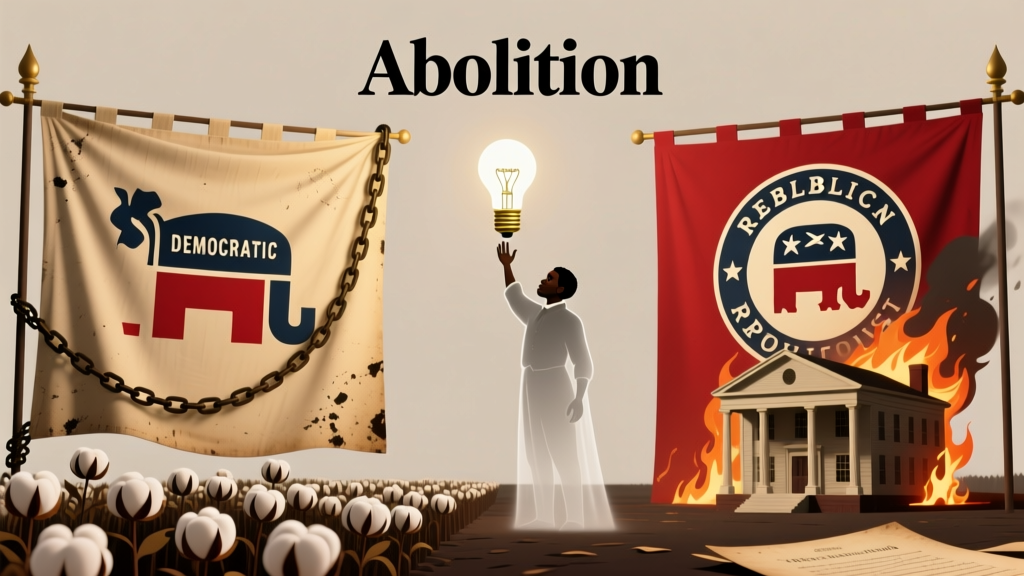 Which Political Party Supported Slavery?