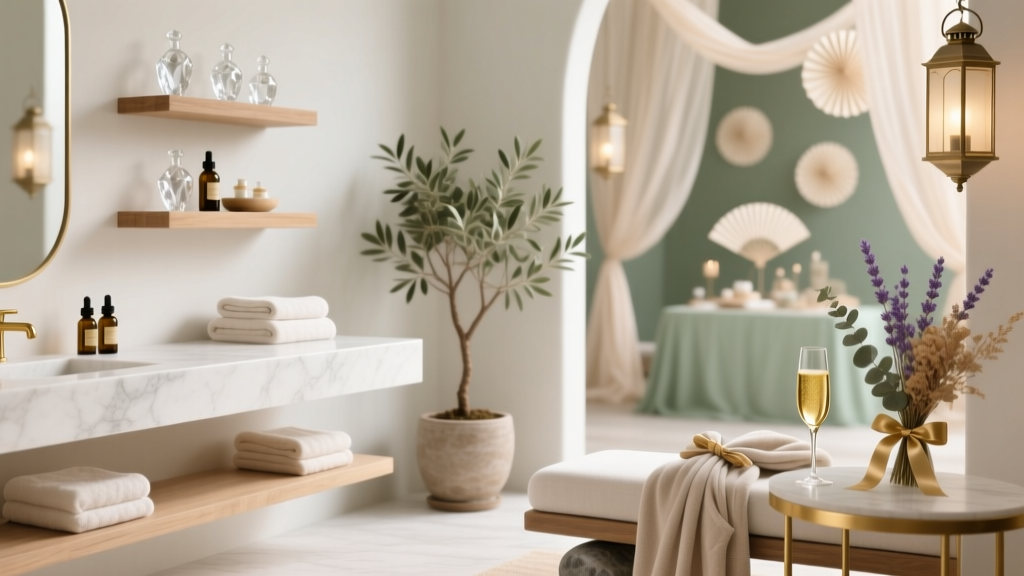
Common Mistakes When Planning a Spa Day
A spa day can feel effortless when it’s done well: calm music, warm towels, thoughtfully timed services, and guests who actually get to relax. But behind that serene vibe is solid event planning—because spa parties and wellness gatherings have a lot of moving pieces (timing, privacy, vendors, sanitation, and guest comfort) that can quickly derail the experience if they’re overlooked.
Whether you’re coordinating a birthday spa party, a bridal spa day, a corporate wellness retreat, or an at-home self-care event, planning matters for one main reason: your guests arrive expecting calm. When logistics are messy—late therapists, not enough robes, confusing schedules, or a noisy setup—stress replaces relaxation. The good news: most spa day planning problems are predictable, and with a clear timeline, budget, and checklist, you can avoid them.
This guide breaks down the most common spa day planning mistakes and how to prevent them, with practical templates, vendor tips, budget breakdowns, and real-world examples you can adapt to your own event.
What a “Spa Day” Event Actually Includes (So You Can Plan It Right)
Before you plan, define the format. “Spa day” can mean very different things depending on the venue and guest expectations.
Popular spa day formats
- Destination spa day: You book services at a spa location (day spa, resort spa, hotel spa) and guests travel there.
- Mobile spa at home: Massage therapists, estheticians, or nail techs come to a home or rental.
- DIY spa party: A curated self-care experience (face masks, foot soaks, aromatherapy, and mini treatments) with minimal or no licensed services.
- Wellness-focused event: A spa-meets-wellness hybrid (sound bath, yoga, breathwork, nutrition bites, and recovery stations).
Current trends to consider (and plan for)
- Wellness personalization: Guests love choose-your-own experiences (service menus, scent options, tea bars).
- Shorter service blocks: Instead of one long treatment, 15–30 minute “samplers” increase participation and reduce schedule bottlenecks.
- Phone-free zones: A simple “quiet + no phone” policy creates a premium feel.
- Recovery elements: Compression boots, red-light therapy add-ons, hydration stations, and protein-forward snacks.
- Eco-conscious hosting: Refillable dispensers, compostable cups, minimal single-use items.
Common Mistakes When Planning a Spa Day (and How to Avoid Them)
1) Not defining the goal, vibe, and guest experience
A spa day can be quiet and restorative or social and celebratory. Problems start when the host’s vision doesn’t match guest expectations.
- Mistake: Calling it a “spa day” but planning a loud, crowded timeline with little downtime.
- Fix: Write a one-sentence experience statement, such as: “A relaxed, quiet afternoon with two mini services per guest, a tea bar, and guided wind-down.”
2) Underestimating time and creating a schedule that can’t work
Spa services run on precision. If you don’t build in buffer time, you’ll create a chain reaction of lateness.
- Mistake: Booking back-to-back appointments with no transition time for sanitizing, setup, bathroom breaks, or consultations.
- Fix: Add a 10–15 minute buffer between service blocks and 30 minutes at the start for arrivals and orientation.
3) Skipping a clear service menu (and ending up with confusion)
Guests relax more when they know what’s available and when.
- Mistake: Telling guests “we’ll see what we feel like” while vendors need fixed timing and setup.
- Fix: Create a simple menu with service length, any prep needed, and comfort notes (e.g., “Massage: 20 min, wear loose clothing”).
4) Choosing the wrong venue for privacy, noise control, or flow
Spa day logistics rely on smooth movement and calm zones.
- Mistake: Hosting in an open-plan space with no private area for services or changing.
- Fix: Plan zones: check-in, waiting lounge, service rooms, refreshments, storage, and a quiet decompression corner.
5) Forgetting sanitation and licensing realities
This is one of the biggest event coordination errors for at-home or pop-up spa events.
- Mistake: Booking unlicensed providers for services that require licensing, or using shared tools without proper sanitation.
- Fix: Verify licensing and insurance for any provider offering massage, facials, waxing, or nail services. Ask about sanitation protocols and what they bring vs. what you must supply.
6) Not collecting guest info (allergies, pregnancy, sensitivities)
Spa products, essential oils, and heat treatments can be triggers.
- Mistake: Assuming “natural” equals safe for everyone.
- Fix: Include a quick wellness questionnaire in your RSVP: allergies, skin sensitivities, pregnancy, recent injuries, scent sensitivity, and mobility needs.
7) Overloading the day with extras instead of building rest
A packed agenda fights the purpose of a spa day.
- Mistake: Adding games, speeches, and photo setups that keep guests “on.”
- Fix: Use a “less but better” plan: one welcome moment, one group experience (like a mini meditation), and a relaxed flow after.
8) Not planning food and hydration strategically
Guests who are hungry or dehydrated won’t feel good—especially with heat, sauna, or massage.
- Mistake: Only offering sweets or champagne without balancing hydration and protein.
- Fix: Build a hydration station (water + electrolytes) and a light menu: fruit, yogurt cups, salads, wraps, hummus, nuts, herbal teas.
9) Poor vendor coordination and unclear responsibilities
Vendor management is a core event planning skill, and spa days require extra clarity.
- Mistake: Assuming vendors will “figure it out” onsite.
- Fix: Send a vendor sheet with arrival times, parking notes, floor plan, outlet access, table needs, and a point-of-contact who can make decisions.
10) Ignoring comfort details (temperature, robes, seating, sound)
Small comfort misses create big friction.
- Mistake: Not having enough seating, hooks, mirrors, or a place to put personal items.
- Fix: Do a “guest journey” walkthrough: where do shoes go, where do bags go, where do guests wait, and what do they do between services?
Step-by-Step Spa Day Planning Timeline (Template You Can Follow)
Use this event planning timeline to stay organized, reduce last-minute scrambling, and keep your spa party coordination smooth.
4–6 weeks out: Define the plan and lock key vendors
- Set the event goal, vibe, and guest count cap
- Choose format: spa venue vs. mobile spa vs. DIY
- Pick date/time (weekend mornings and early afternoons often feel most “spa-like”)
- Create a preliminary budget (see breakdown below)
- Source vendors and request quotes (massage, facial, nails, yoga, sound bath)
- Confirm venue logistics: privacy areas, restroom access, noise, parking
- Send save-the-dates or invitations
2–3 weeks out: Build the schedule and guest details
- Finalize service menu and time blocks
- Create a guest intake + RSVP form (allergies, sensitivities, preferred services)
- Confirm vendor contracts, deposits, and cancellation policies
- Plan zones and furniture needs (tables, chairs, linens, hooks, baskets)
- Order supplies: robes/slippers (or set a dress code), towels, disposables, cups
7–10 days out: Confirm everything and prep the experience
- Confirm headcount and share final schedule with vendors
- Draft a simple run-of-show for you and helpers
- Build playlists (welcome, service areas, lounge) or use a single consistent soundscape
- Confirm food + beverage plan and place orders
- Create signage: “Quiet Zone,” “Hydration,” “Service Schedule,” “Phone-Free Area”
48–72 hours out: Final checks
- Text/email guests: arrival time, parking, what to wear, what to bring
- Prep space: declutter, set lighting, stage towels and baskets
- Print schedules and vendor contact sheet
- Prepare tip envelopes (if tipping applies) and petty cash
Event day: Keep it calm and on time
- Arrival window (20–30 min): Welcome drink, quick orientation, collect waivers if needed.
- Service blocks: Run on a timer with buffer (10–15 min transitions).
- Quiet cues: Soft reminders to maintain a spa vibe.
- Hydration + snack checks: Refill often; keep strong smells minimal.
- Closing moment (10 min): Thank guests, offer takeaway items, share photos later (with permission).
Spa Day Checklist Items (Copy/Paste Planning List)
- Guest management: invitations, RSVP tracking, wellness questionnaire, schedule assignments
- Vendor coordination: contracts, licensing confirmation, COI/insurance, arrival times, parking, floor plan
- Space setup: zones, privacy screens, seating, hooks, mirrors, trash + laundry bins
- Comfort: towels, robes/slippers or dress code, blankets, temperature control, lighting
- Sanitation: hand sanitizer, disinfecting wipes, disposable face cradle covers, lined bins
- Food & beverage: water, electrolytes, tea bar, light bites, allergy labels
- Ambience: playlist, candles (or flameless), aromatherapy (scent-sensitive options)
- Admin: schedule printouts, vendor contacts, tip envelopes, first aid kit
Budget Considerations (With Real-World Examples)
Your spa day budget depends on whether you’re paying for services, subsidizing, or asking guests to cover their own treatments. Here are practical ways to plan without surprises.
Typical budget categories for spa day event planning
- Venue: spa packages, room rentals, or home/rental prep costs
- Services/vendors: massage, facials, nails, wellness instructors
- Gratuity: many spas add 18–22%; mobile vendors may expect tips separately
- Food & beverage: catered light meal, tea bar, snacks, hydration
- Rentals/supplies: linens, chairs, privacy screens, towels, robes
- Decor/ambience: lighting, florals (optional), signage
- Favors: mini skincare, bath salts, eye masks
- Contingency: 10–15% buffer for last-minute needs
Example budget: At-home mobile spa for 8 guests (mid-range)
- 2 therapists for 3 hours (mini massages): $600–$900
- Supplies (extra towels, disposables, sanitation): $60–$150
- Food & beverage (light catering + tea): $150–$300
- Favors (self-care kits): $80–$160
- Contingency (10%): $90–$150
Estimated total: $980–$1,660
Example budget: Spa venue day for 6 guests (package model)
- Spa treatments (avg. $180 each): $1,080
- Service charges/gratuity (20%): $216
- Lunch + beverages: $180–$360
- Transportation/parking (optional): $60–$150
Estimated total: $1,536–$1,806
Budget-saving strategies that still feel premium
- Offer mini services (15–25 minutes) instead of full-length treatments
- Limit the guest count and increase quality per person
- Replace expensive decor with lighting + scent-free ambiance
- Choose a curated menu of two signature mocktails/teas instead of a full bar
- Use “hosted core + optional upgrades” (host pays for one treatment; guests add-on if they want)
Vendor Selection Tips (Spa, Mobile Therapists, and Wellness Pros)
Strong vendor selection is the difference between a calm spa day and a chaotic one. Use these event coordination checkpoints:
What to ask before you book
- Are you licensed for the services provided in this state/city?
- Do you carry liability insurance (and can you provide proof)?
- What do you bring vs. what do you need onsite (tables, linens, water, outlets)?
- What is your sanitation process between guests?
- How do you handle late arrivals or schedule changes?
- Do you have a minimum booking time or guest count?
Red flags that often lead to planning mistakes
- Vague pricing or unclear inclusions
- No contract or deposit policy
- Unrealistically tight service timing promises
- Unwillingness to share licensing/insurance details
Real-World Spa Day Planning Examples (Mistakes and Fixes)
Example 1: Bridal spa day that ran behind schedule
What happened: The host booked 30-minute services back-to-back for 10 guests with no transition time. Two guests arrived late, and the entire schedule shifted.
Fix that works:
- Create two parallel tracks (two providers)
- Add 10-minute transition buffers
- Set a firm “arrive by” time and assign service slots in advance
Example 2: At-home spa party with discomfort and noise
What happened: Services were set up in a living room with people chatting nearby. Guests felt awkward and rushed.
Fix that works:
- Use a bedroom or screened-off area as a quiet service zone
- Designate a separate social lounge area
- Use a “soft voices” sign and consistent background music
FAQ: Spa Day Planning and Coordination
How far in advance should I plan a spa day?
For a spa venue booking, 4–8 weeks is ideal (longer for peak weekends). For an at-home mobile spa, 3–6 weeks helps you secure preferred providers and build a workable schedule.
How many guests is “too many” for an at-home spa day?
It depends on service length and number of providers, but 6–10 guests is usually the sweet spot for a relaxed flow. If you go bigger, add more providers and create clear zones so guests aren’t crowded.
Should I assign appointment times or let guests choose on arrival?
Assign times in advance whenever services are involved. It prevents confusion, reduces waiting, and helps vendors stay on schedule—key for professional event coordination.
What food works best for a spa day party?
Light, nourishing options: fruit platters, yogurt, salads, wraps, hummus, nuts, herbal teas, and plenty of water. Label allergens and avoid overpowering smells in service areas.
How do I keep the spa vibe without spending a lot on decor?
Focus on the fundamentals: tidy space, warm lighting, consistent music, plush towels, and a simple hydration station. These choices elevate guest experience more than elaborate decorations.
Do I need event insurance for a spa day?
If you’re hosting at a venue, ask what coverage they provide. For at-home events, consider event insurance depending on your guest count and activities. Always ensure vendors have their own liability insurance for the services they provide.
Actionable Next Steps to Plan a Spa Day That Feels Effortless
- Choose your spa day format (venue, mobile, DIY) and set a guest count cap
- Draft a simple service menu and a realistic schedule with buffer time
- Use an RSVP form to capture allergies, sensitivities, and service preferences
- Build your budget with gratuity and a 10–15% contingency included
- Confirm vendors with licensing, insurance, and a clear run-of-show
- Plan zones for privacy, quiet, hydration, and waiting so guests can truly relax
A well-coordinated spa day is one of the most rewarding events to host because the payoff is immediate—guests leave feeling cared for. For more party organization tips, event planning timelines, and coordination checklists, explore additional guides on smartpartyprep.com.
More Articles
 What Political Parties Do: The Ultimate 7-Step Checklist to Plan a Memorable, Low-Stress Political-Themed Party Without Looking Cringey or Offending Anyone
How to Serve Ice Cream at a Party Without Melting Stress: 7 Proven Tactics That Keep Scoops Perfect, Lines Short, and Guests Raving (Backed by 127 Host Surveys)
How to Keep Food Cold at an Outdoor Party: 7 Science-Backed, Real-World Tested Tactics That Prevent Spoilage (Even in 95°F Heat)
What’s the Best Mario Party? We Tested All 12 Mainline Games Over 87 Play Sessions—Here’s the One That Actually Keeps Everyone Laughing (Not Arguing) at Your Next Game Night
What Political Parties Do: The Ultimate 7-Step Checklist to Plan a Memorable, Low-Stress Political-Themed Party Without Looking Cringey or Offending Anyone
How to Serve Ice Cream at a Party Without Melting Stress: 7 Proven Tactics That Keep Scoops Perfect, Lines Short, and Guests Raving (Backed by 127 Host Surveys)
How to Keep Food Cold at an Outdoor Party: 7 Science-Backed, Real-World Tested Tactics That Prevent Spoilage (Even in 95°F Heat)
What’s the Best Mario Party? We Tested All 12 Mainline Games Over 87 Play Sessions—Here’s the One That Actually Keeps Everyone Laughing (Not Arguing) at Your Next Game Night
 What Is the Green Party's Platform? A Clear, Nonpartisan Breakdown of Their Core Policies on Climate, Justice, Economy & Democracy — No Jargon, No Spin, Just What They Actually Propose
 What Is the Donner Party? The Shocking Truth Behind America’s Most Infamous Pioneer Tragedy — And Why Everything You Think You Know Is Wrong