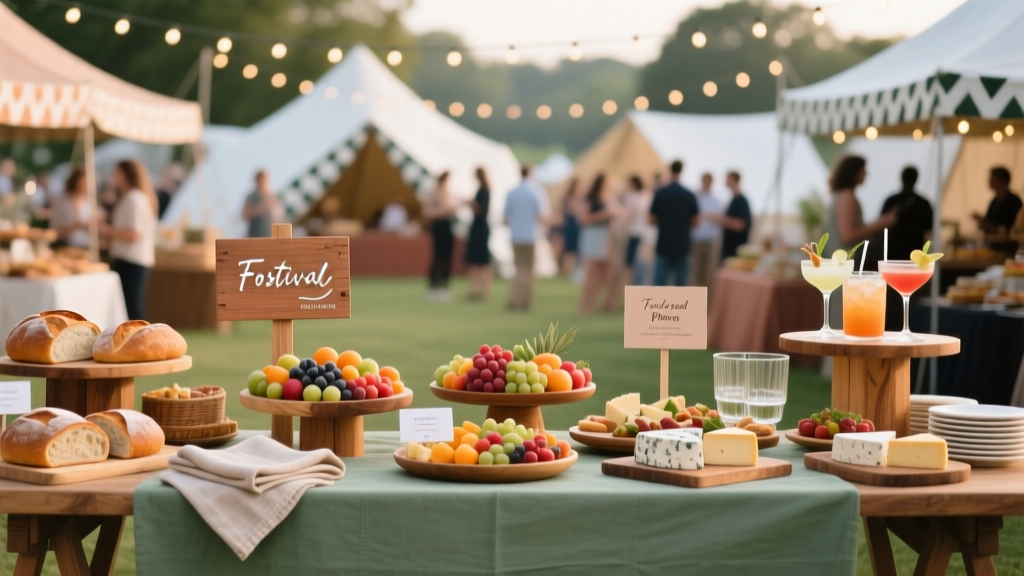
Common Mistakes When Planning a Food Festival
Food festivals look effortless when they’re done well: smooth entry lines, vendors serving quickly, guests discovering new flavors, and social media buzzing with mouthwatering photos. Behind that experience is detailed event planning, tight coordination, and a schedule that anticipates problems before they happen. Without that structure, even a festival with great vendors can feel chaotic—long waits, unclear signage, unhappy vendors, and budget surprises.
Because food festivals combine high-volume hospitality with complex logistics, the margin for error is smaller than many planners expect. You’re balancing public safety, permits, vendor management, utilities, crowd flow, waste, marketing, and guest experience—often across multiple stakeholders. The good news: most festival problems are predictable, and avoidable, with the right planning timeline and a few proven organizational strategies.
This guide breaks down the most common food festival planning mistakes, how to prevent them, and what a step-by-step festival planning checklist looks like in real life—so you can deliver a fun, profitable, and well-coordinated event.
What Makes Food Festivals Unique (and Easy to Mismanage)
A food festival isn’t just a party with vendors. It’s a temporary restaurant district plus an entertainment event. Planning must account for:
- Food safety and compliance: health department rules, handwashing, temperature control, allergen communication.
- Utilities: power, propane, water access, gray water disposal.
- High-traffic operations: long lines, payment systems, peak surges, and queue management.
- Environmental impact: trash, recycling, composting, grease disposal, and venue cleanup standards.
- Multiple vendors and stakeholders: vendors, sponsors, venue owners, city departments, security, entertainment, volunteers.
Many common mistakes happen when planners treat the event like a typical community fair rather than a high-volume food service operation.
The Most Common Food Festival Planning Mistakes (and How to Avoid Them)
1) Starting Without Clear Goals, Format, and Capacity
Planning stalls (or explodes) when the festival concept is vague. “A food festival” can mean a ticketed tasting event, a pay-as-you-go vendor market, a culinary competition, or a neighborhood street festival—each with different permits, staffing, and budget models.
Fix it with a one-page Festival Blueprint:
- Purpose: fundraiser, community engagement, tourism, brand activation, profit.
- Format: ticketed unlimited tastings vs. entry ticket + vendor sales.
- Capacity: maximum attendees per hour and per day.
- Ideal guest experience: average wait time target (e.g., under 10 minutes), number of vendor interactions, entertainment cadence.
- Success metrics: ticket sales, vendor satisfaction score, sponsor deliverables, net revenue, safety incidents.
Real-world example: A downtown “tasting festival” sells 2,000 tickets expecting small portions. Vendors arrive prepared for full-meal service, lines clog, and guests complain about running out of samples. A blueprint would have locked portion expectations and vendor prep requirements early.
2) Underestimating Permits, Insurance, and Compliance Timelines
Permits are not a last-minute checkbox. Depending on your city, approvals for street closures, fire inspections, and health department review can take weeks or months.
Fix it with an early compliance plan:
- Contact local agencies 4–6 months out (or earlier for large events).
- Confirm requirements for: temporary food permits, alcohol service, tents, open flame, generators, amplified sound, and occupancy limits.
- Build a document folder for COIs (Certificates of Insurance), vendor licenses, and site plans.
Trend to leverage: Many municipalities now accept digital submissions. Use a shared drive and standardized forms to keep vendor documentation organized and searchable.
3) Choosing the Wrong Site Layout (Crowd Flow, Lines, and Bottlenecks)
Beautiful venues can become operational nightmares if the layout forces lines into walkways or creates dead zones where vendors get poor traffic.
Fix it with a guest-flow-first site plan:
- Map the festival as “zones”: entry, main food lane, seating, restrooms, entertainment, sponsor activations, first aid.
- Keep vendor lines parallel to walkways whenever possible.
- Plan at least two “relief areas” where crowds can disperse (seating + shade).
- Place high-demand vendors in multiple areas to avoid one-line gridlock.
Practical tip: Walk the site at the same day/time as the event to observe sun exposure, parking congestion, and ambient noise.
4) Inadequate Power, Water, and Waste Planning
Nothing derails a food festival faster than tripped breakers, insufficient water for handwashing, or trash overflowing by midday.
Fix it with utility and sanitation forecasting:
- Power: Collect vendor electrical needs (amps/watts), confirm distribution, and include backup generators where required.
- Water: Ensure adequate potable water and handwashing stations; confirm refill logistics.
- Waste: Estimate trash volume, provide vendor grease disposal guidance, and schedule mid-event pickups.
Trend to leverage: Composting and reusable serviceware programs are increasingly expected by guests and sponsors. If you adopt them, assign a “waste educator” volunteer team near disposal stations to reduce contamination.
5) Weak Vendor Selection and Communication
Vendor selection isn’t just “who has good food.” The best vendors for festivals can handle volume, maintain quality under pressure, and follow operational rules.
Fix it with a structured vendor process:
- Vendor application: menu, pricing, serving speed, setup needs, certifications, past event references.
- Vendor mix: balance cuisines, dietary options (vegan/gluten-free), dessert, beverages, and kid-friendly choices.
- Vendor agreement: arrival/departure times, portion sizes (if tasting), signage rules, payment systems, trash responsibilities, no-shows policy.
Vendor selection tips:
- Ask: “How many servings can you produce per hour?” and “What’s your plan for a 2-hour rush?”
- Require vendors to bring a printed menu and clear pricing (or standardized tasting tokens).
- Confirm they have adequate staffing; a great chef with one helper creates long lines.
6) Pricing and Ticketing Mistakes (Revenue Leaks and Guest Frustration)
Poor ticketing strategy can cause long entry lines and confusion at booths. Guests need clarity: what’s included, how to pay, and how to get help.
Fix it with a simple “how it works” system:
- Ticketing model:
- Entry-only: guests pay vendors directly (fast to explain, less control over spend).
- All-inclusive tastings: higher ticket price, strict portion rules (premium feel, requires strong compliance).
- Token system: controlled spend, sponsorship opportunities (requires token staffing and security).
- Offer mobile ticket scanning and a separate line for will-call/issues.
- Post large-format signage at entry: “Step 1 / Step 2 / Step 3.”
Real-world example: A festival sells VIP tickets with “early access” but doesn’t open enough vendors early. VIP guests feel misled and post negative reviews. Align VIP promises with vendor readiness and staffing.
7) Not Planning for Weather, Safety, and Medical Needs
Heat, rain, wind, and medical incidents are predictable risks at outdoor food events.
Fix it with a risk plan and clear roles:
- Define weather triggers (e.g., wind threshold for tents, lightning protocol, heat index actions).
- Provide shade, water refill points, and cooling areas.
- Include a first aid/medical station and communicate its location on maps.
- Coordinate with security for crowd management and incident reporting.
8) Skipping Staff and Volunteer Training (The Hidden Failure Point)
Even with a perfect plan, execution depends on people. Untrained staff causes inconsistent answers, slow problem-solving, and guest frustration.
Fix it with a short training + a one-page “Day-Of Playbook”:
- Site map, emergency contacts, and escalation path.
- Standard answers to top questions (parking, restrooms, lost & found, ADA access, re-entry).
- Radio channels and who monitors them.
- “If X happens, do Y” scenarios (lost child, power outage, vendor no-show).
9) Marketing Too Late or Without a Conversion Plan
Food festivals rely on momentum. If marketing starts late, you’ll either discount tickets or scramble with last-minute promotions.
Fix it with a marketing calendar tied to ticket milestones:
- Launch with a strong hook: theme, headline vendors, entertainment, charity impact, or local celebrity chef.
- Use vendor cross-promotion: provide each vendor with a media kit (graphics, captions, ticket link, discount code).
- Collect emails early (waitlist, vendor announcements) and use segmented reminders.
Trend to leverage: Short-form video and creator partnerships drive ticket sales. Invite 5–10 local food creators for a preview tasting or behind-the-scenes setup tour in exchange for scheduled posts.
Step-by-Step Food Festival Planning Timeline (with Checklist)
6–9 Months Before: Foundation and Feasibility
- Define festival concept, format, capacity, and success metrics.
- Secure venue/date(s) and confirm site rules (noise, load-in, tents, alcohol).
- Create a preliminary budget (fixed costs vs. variable costs).
- Identify required permits and agencies; start applications.
- Outline vendor strategy: number of vendors, categories, selection criteria.
- Draft sponsor packages (if applicable).
4–6 Months Before: Vendors, Permits, and Core Ops
- Open vendor applications; begin curation and confirmations.
- Book key services: security, waste hauler, rentals, staging/sound, power/generators.
- Develop a site plan draft: booth sizes, spacing, entry/exit, restrooms, seating.
- Finalize ticketing model and sales platform.
- Confirm insurance requirements (general liability, liquor liability if needed).
2–3 Months Before: Logistics, Marketing, and Staffing
- Send vendor packet: rules, arrival times, maps, utility access, compliance checklist.
- Collect vendor documents: COIs, permits, food safety certificates as required.
- Launch marketing campaign and vendor cross-promotion.
- Recruit volunteers and staff leads (check-in, vendor support, waste team, info desk).
- Plan entertainment schedule and announcements to distribute crowds.
4–6 Weeks Before: Finalize Details and Stress-Test the Plan
- Confirm vendor list and backup vendors for cancellations.
- Finalize site map and signage plan (entry, restrooms, first aid, exits, ATM/cashless info).
- Confirm utilities: power drops, generator placement, water stations.
- Create a weather and emergency plan; align with venue/security.
- Order wristbands/tokens, print maps, and finalize run-of-show.
Event Week: Coordination and Execution
- Hold a staff/volunteer briefing and distribute Day-Of Playbook.
- Confirm load-in schedule, vendor check-in process, and vehicle access rules.
- Prepare a command center kit:
- Printed site plans, contact list, incident forms
- Extra signage supplies (tape, zip ties, markers)
- Chargers, batteries, backup radios
- Do a final walkthrough: entry lanes, ADA access, restrooms, seating, waste stations.
Post-Event (Within 72 Hours): Wrap-Up and Improvement
- Collect vendor feedback (what worked, what didn’t, what they need next time).
- Reconcile budget: ticket revenue, expenses, refunds, sponsor deliverables.
- Post highlights and thank-you content while excitement is high.
- Document lessons learned in a “Festival Ops Notes” file for next year.
Budget Considerations: Where Food Festivals Commonly Overspend
A realistic festival budget separates fixed costs (you pay regardless of attendance) from variable costs (increase with guest count). Here’s a practical breakdown you can adapt:
Sample Budget Categories (Percentage Ranges)
- Venue + permits + insurance (15–25%)
- Rentals (tents, tables, barricades, restrooms) (15–25%)
- Utilities (power, generators, water) (5–12%)
- Security + medical + staffing (10–20%)
- Marketing + ticketing fees (8–15%)
- Waste management + cleaning (5–10%)
- Entertainment + production (5–15%)
- Signage + printing + decor (2–6%)
- Contingency (8–12%)
Budget Mistakes to Avoid
- No contingency line: Aim for 10% to cover weather rentals, last-minute staffing, or utility upgrades.
- Underestimating restroom needs: Add units for peak hours and include handwashing stations.
- Forgetting “small” operational costs: radios, staff water, volunteer meals, signage stands, cable ramps.
- Overpaying for marketing without tracking: Use trackable links and promo codes for vendor partners and ads.
Vendor Selection Tips That Improve Guest Experience (and Reduce Risk)
Strong vendor curation is one of the best event coordination strategies because it directly affects lines, safety, and reviews.
Build a Balanced Vendor Mix
- Anchor vendors with fast service (tacos, bowls, sandwiches) to stabilize wait times.
- Include “destination” vendors (specialty desserts, regional cuisine) for buzz.
- Plan beverage capacity: water, non-alcoholic, and alcohol (if permitted) with enough points of sale.
- Prioritize dietary inclusivity: clear vegetarian/vegan/gluten-free options and allergen visibility.
Create Vendor Standards (Simple, Enforceable)
- Menu limits (e.g., 3–6 core items) to speed service.
- Required signage for pricing and allergens.
- Defined waste expectations and end-of-night cleanup rules.
- Arrival deadlines with consequences (to protect the full guest experience).
Quick “Don’t Do This” List: Food Festival Planning Mistakes at a Glance
- Announcing the event date before confirming permits and vendor feasibility.
- Letting vendors choose booth placement without a crowd-flow plan.
- Assuming the venue’s power is sufficient without load calculations.
- Offering VIP perks that vendors and staff can’t deliver operationally.
- Skipping a signage plan (guests should never have to ask “Where is…?”).
- Not assigning a vendor support lead for day-of troubleshooting.
- Understaffing entry and ticket scanning during peak arrival windows.
- Forgetting hydration and shade planning for staff, vendors, and guests.
FAQ: Food Festival Planning and Coordination
How many vendors should a food festival have?
It depends on your attendance and service model. A practical starting point is to plan vendor capacity based on servings per hour. For mid-size festivals, aim for enough vendors so average wait times stay under 10–15 minutes during peak periods. Also balance food types so one vendor category doesn’t become the only option.
Should we do an all-inclusive tasting ticket or pay-as-you-go?
All-inclusive tastings can feel premium and simplify guest decisions, but they require strict portion guidelines and vendor compliance. Pay-as-you-go is easier operationally and reduces disputes about portions, but guest spending becomes less predictable. Token systems split the difference and can create sponsor opportunities.
What are the most overlooked operational items?
Power distribution (not just total power), cable ramps for safety, handwashing logistics, mid-event trash removal, and clear vendor load-in instructions. These are the details that keep your festival running smoothly.
How do we reduce lines at a food festival?
Use a mix of fast-service vendors, keep menus short, place popular vendors in multiple areas, and provide enough payment points. Schedule entertainment or activations to spread crowds, and use clear queue lanes so lines don’t block walkways.
What’s the best way to manage vendors on event day?
Assign a dedicated vendor support team with radios and a clear escalation path. Use scheduled check-ins (e.g., 30 minutes after gates open, mid-peak, and one hour before close) to catch issues early—ice needs, power problems, trash overflow, or signage gaps.
Actionable Next Steps for a Smooth, Profitable Food Festival
- Write your one-page Festival Blueprint (format, capacity, success metrics).
- Start permits and insurance requirements early, then build your planning calendar around those deadlines.
- Lock a vendor application and agreement process that screens for volume capability and compliance.
- Draft a guest-flow-first site plan focused on lines, seating, shade, and clear signage.
- Build a realistic budget with a 10% contingency and track spend weekly.
- Create a Day-Of Playbook and train staff/volunteers for consistent guest support.
If you want more step-by-step event planning guidance, vendor coordination templates, and practical party organization strategies, explore the latest planning resources on smartpartyprep.com.
More Articles
 Who Founded the Green Party? The Surprising Truth Behind Its Origins — Not One Person, But a Global Wave of Activists, Scientists, and Disillusioned Politicians Who Refused to Wait for Permission
What Is a Third Party Site? 7 Red Flags You’re Risking Your Event Budget, Guest Data, and Reputation (and How to Spot Them Before Booking)
Do You Want to Party? Return of the Living Dead Theme Guide: 7 Non-Negotiable Steps to Throw a Viral, Authentic, Low-Stress Zombie Bash (Without Renting a Morgue)
How to Collect First-Party Data Without Losing Trust or Conversions: 7 Ethical, High-Yield Tactics That Outperform Pop-Ups (Backed by 2024 Benchmarks)
What Does the Conservative Party Stand For? 7 Core Principles You’re Not Hearing in Headlines — Plus What’s Changed Since 2019, What’s Staying, and Where the Real Divides Lie
What’s a Hen Party? The No-Stress, Step-by-Step Guide That Prevents Awkwardness, Budget Blowouts, and Last-Minute Panic — Even If You’ve Never Planned One Before
Who Founded the Green Party? The Surprising Truth Behind Its Origins — Not One Person, But a Global Wave of Activists, Scientists, and Disillusioned Politicians Who Refused to Wait for Permission
What Is a Third Party Site? 7 Red Flags You’re Risking Your Event Budget, Guest Data, and Reputation (and How to Spot Them Before Booking)
Do You Want to Party? Return of the Living Dead Theme Guide: 7 Non-Negotiable Steps to Throw a Viral, Authentic, Low-Stress Zombie Bash (Without Renting a Morgue)
How to Collect First-Party Data Without Losing Trust or Conversions: 7 Ethical, High-Yield Tactics That Outperform Pop-Ups (Backed by 2024 Benchmarks)
What Does the Conservative Party Stand For? 7 Core Principles You’re Not Hearing in Headlines — Plus What’s Changed Since 2019, What’s Staying, and Where the Real Divides Lie
What’s a Hen Party? The No-Stress, Step-by-Step Guide That Prevents Awkwardness, Budget Blowouts, and Last-Minute Panic — Even If You’ve Never Planned One Before
 Is ASU a party school? The unfiltered truth about Arizona State University’s social scene—what rankings hide, what students actually do on weekends, and how campus culture varies wildly by campus, major, and housing choice.
How Many Nuggets Are in the Party Pack at Wendy’s? We Ordered Every Size, Counted Each Piece, and Compared Value Per Nugget—Here’s What You *Really* Get (Spoiler: It’s Not Always 20)
How to Party Up in Monster Hunter Wilds: The 7-Step Co-Op Setup Guide That Solves Lag, Mismatched Builds, and Ghosted Quests (No More Solo Grind)
What to Wear to a Retirement Party as a Guest: 7 Stress-Free Outfit Rules (That Actually Work — No Guesswork, No Awkwardness, Just Confidence)
Is ASU a party school? The unfiltered truth about Arizona State University’s social scene—what rankings hide, what students actually do on weekends, and how campus culture varies wildly by campus, major, and housing choice.
How Many Nuggets Are in the Party Pack at Wendy’s? We Ordered Every Size, Counted Each Piece, and Compared Value Per Nugget—Here’s What You *Really* Get (Spoiler: It’s Not Always 20)
How to Party Up in Monster Hunter Wilds: The 7-Step Co-Op Setup Guide That Solves Lag, Mismatched Builds, and Ghosted Quests (No More Solo Grind)
What to Wear to a Retirement Party as a Guest: 7 Stress-Free Outfit Rules (That Actually Work — No Guesswork, No Awkwardness, Just Confidence)