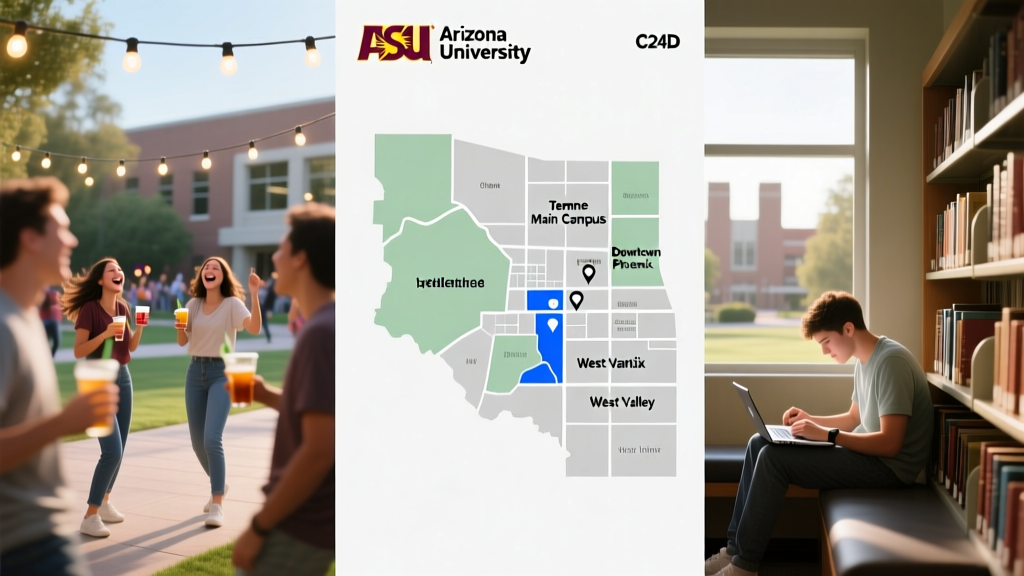
Is ASU a party school? The unfiltered truth about Arizona State University’s social scene—what rankings hide, what students actually do on weekends, and how campus culture varies wildly by campus, major, and housing choice.
Why This Question Matters More Than Ever
Is ASU a party school? That question isn’t just casual curiosity—it’s a high-stakes information gap for thousands of prospective students weighing academic ambition against social fit. With enrollment topping 80,000 across five campuses and rising national attention on student well-being, understanding Arizona State University’s true social ecosystem is critical—not for stereotyping, but for intentional decision-making. Whether you’re a pre-med student worried about distractions, a transfer student seeking community, or a parent assessing safety and accountability, the answer shapes housing choices, class scheduling, involvement strategy, and even long-term retention. And spoiler: the label 'party school' flattens a dynamic, multi-layered reality that changes dramatically depending on where you live, what you study, and how you define 'party.'
What the Data Actually Says (Not Just the Headlines)
Let’s start with the source most people cite: the Princeton Review’s annual ‘Party Schools’ list. ASU has appeared on it only once—in 2014, ranked #15—yet that single listing still echoes across Reddit threads and college forums over a decade later. But here’s what the methodology doesn’t tell you: Princeton Review’s ranking relies on student surveys asking *‘How would you rate the party scene at your school?’*—a subjective, self-reported metric with no correlation to alcohol violations, GPA impact, or campus safety data. In fact, ASU’s 2023 Annual Security Report shows just 127 alcohol-related disciplinary cases university-wide—a figure that represents <0.16% of total enrollment. Compare that to peer institutions like the University of Florida (321 cases) or Penn State (419), and the narrative shifts.
More telling is the National College Health Assessment (NCHA) data: Only 22% of ASU undergraduates report binge drinking (5+ drinks for men, 4+ for women) in the past two weeks—the same rate as the national public university average and significantly lower than schools consistently ranked higher on ‘party’ lists (e.g., University of Alabama: 34%). What’s more, ASU’s retention rate for first-year students is 85%, above the national average of 76%, suggesting strong academic and social integration—not disengagement.
The Campus-by-Campus Reality Check
ASU isn’t one monolithic campus—it’s five distinct physical locations, each with its own rhythm, demographics, and culture. Calling ‘ASU’ a party school ignores this vital nuance:
- Tempe Campus: The largest and most traditional undergraduate hub. Home to 60% of undergrads, including 23 fraternities and 20 sororities. Greek life participation sits at ~12%—moderate compared to schools like USC (25%) or Vanderbilt (45%). Tempe’s proximity to Mill Avenue means bars, live music, and weekend energy—but also robust academic support infrastructure (e.g., the Learning Resource Center open until midnight daily).
- West Campus (Glendale): Strongly focused on nursing, education, and applied sciences. Over 65% of students are commuters or non-traditional (25+ years old). Social life centers on cohort-based labs, clinical rotations, and family-friendly events—not bar crawls.
- Downtown Phoenix Campus: Embedded in Arizona’s capital, serving law, journalism, and public service majors. Students often intern full-time while enrolled; nightlife leans toward networking mixers, civic hackathons, and cultural events at the Phoenix Art Museum—not keg stands.
- Polytechnic Campus (Mesa): Engineering, aviation, and tech-focused. Known for project-based learning and industry partnerships (Boeing, Honeywell). Social events include robotics competitions, drone races, and startup pitch nights—not frat parties.
- SkySong (Scottsdale): A graduate and professional studies hub—no undergraduates, no residence halls, no Greek chapters. It’s a business incubator, not a party zone.
A 2022 ASU Student Life Survey revealed something revealing: When asked ‘Where do you spend most of your free time on weekends?,’ only 18% selected ‘bars/clubs,’ while 39% chose ‘studying or working on projects,’ 27% said ‘campus recreation facilities or hiking trails,’ and 16% reported ‘volunteering or community service.’
How Your Major—and Your Choices—Shape Your Experience
The ‘party school’ label assumes uniformity—but ASU’s academic structure actively discourages homogeneity. Consider these real-world examples:
“I’m a Barrett Honors College student in computational biology. My schedule includes three lab sections, biweekly journal clubs, and a research assistantship at TGen. I’ve been to one fraternity event in two years—and it was a STEM outreach fundraiser. My friends? We host ‘coding + kombucha’ nights.” — Maya R., Class of 2025, Tempe Campus
Conversely, a first-year business major living in the newly renovated Tooker House might attend weekly Greek socials—but also co-found a student-run investment club that manages $250K in real portfolio funds. The difference isn’t ‘party vs. serious’—it’s intentionality. ASU’s flexible curriculum allows students to design their own pathways: You can take 18 credits and work part-time, enroll in accelerated 7-week courses to free up summer for internships, or join the Changemaker Central program to launch a nonprofit before graduation.
Even housing tells a story. ASU offers 14 residential communities—from traditional dorms to Living-Learning Communities (LLCs) like Global Launch (for international students), Design & Innovation, and Wellness & Mindfulness. Students in the latter report 32% lower stress levels and 2.1x higher participation in wellness programming than non-LLC peers (ASU Housing Annual Report, 2023).
ASU’s Social Infrastructure: Beyond the Stereotype
What truly defines ASU’s social landscape isn’t whether parties happen—but what systems exist to foster connection, responsibility, and growth. Here’s how the university invests in healthy, sustainable community-building:
- Red Watchband Program: A nationally recognized peer education initiative training students in bystander intervention, alcohol harm reduction, and mental health first aid. Over 1,200 students certified annually.
- Sun Devil Sync: An AI-powered platform matching students with clubs, study groups, volunteer roles, and mentorship based on values—not just interests. 78% of users report finding meaningful connection within 3 weeks.
- Night Ride SafeRide: Free, 24/7 shuttle service covering all campuses and off-campus neighborhoods—used over 220,000 times last year.
- ASU Thrive: A holistic wellness platform offering free therapy sessions, nutrition coaching, sleep hygiene workshops, and financial counseling—accessed by 41% of undergrads in 2023.
This infrastructure reframes the conversation: It’s not ‘Does ASU have parties?’ (Yes, some do.) It’s ‘Does ASU empower students to build the kind of community they want?’ The data says yes—with intentionality built into the architecture.
| Factor | ASU (Tempe Campus) | National Public University Avg. | Top-Ranked 'Party School' (e.g., U. Alabama) |
|---|---|---|---|
| Greek Life Participation Rate | 12% | 15% | 45% |
| Binge Drinking (Past 2 Weeks) | 22% | 22% | 34% |
| First-Year Retention Rate | 85% | 76% | 81% |
| Campus Alcohol Violations per 1,000 Students | 1.6 | 3.8 | 6.2 |
| Students in Living-Learning Communities | 31% | 12% | 9% |
Frequently Asked Questions
Is ASU known for partying?
No—ASU is nationally recognized for innovation, accessibility, and academic entrepreneurship. While social life exists (as it does at every large university), ‘partying’ is neither the dominant nor defining feature of student experience. Media narratives often amplify outlier moments; longitudinal data shows ASU students prioritize academic achievement, civic engagement, and career preparation.
Do fraternities and sororities dominate campus life at ASU?
No. Greek organizations represent just 12% of undergraduates—far below peer institutions. ASU’s top student organizations by membership are the Sun Devil Marching Band (800+ members), Habitat for Humanity (420+), and the Student Sustainability Initiative (380+). Greek life is one option among dozens—not the default social pathway.
Is ASU safe for students who don’t drink or party?
Absolutely. ASU’s Office of Student Rights and Responsibilities reports 92% of conduct cases involve academic integrity—not substance violations. The university offers over 1,200 student organizations, including sober social clubs like ‘Sober Devils,’ faith-based groups, and 30+ cultural associations. Housing options include substance-free floors and mindfulness-focused LLCs.
How does ASU compare to other large public universities socially?
ASU stands out for its decentralized, choice-driven model. Unlike universities with a single dominant campus culture, ASU empowers students to curate their own experience across academic colleges, campuses, and communities. This leads to greater diversity of lifestyles—and less pressure to conform to a single ‘scene.’
Does being labeled a ‘party school’ hurt ASU’s academic reputation?
Ironically, no—ASU’s academic profile continues to rise despite the outdated label. It’s ranked #1 in the U.S. for innovation (U.S. News & World Report, 2023–2024), houses 5 NASA Space Grant Consortia, and produces more Patents per faculty than MIT. Employers consistently rank ASU grads highly for adaptability and real-world problem-solving—traits nurtured in collaborative, project-based environments—not party culture.
Common Myths
Myth #1: “If you go to ASU, you’ll be surrounded by partying 24/7.”
Reality: Over 40% of ASU undergraduates are commuter students, and nearly 30% are over age 25. Many live off-campus with families or full-time jobs—and their social rhythms center on professional development, caregiving, or quiet study spaces like the recently expanded Hayden Library’s silent reading floors.
Myth #2: “ASU’s party reputation means academics are lax.”
Reality: ASU’s Barrett Honors College admits students with a 3.82+ GPA and 1320+ SAT average. Its engineering programs require rigorous capstone projects partnered with industry. The university’s 85% first-year retention and 74% six-year graduation rate reflect strong academic support—not leniency.
Related Topics (Internal Link Suggestions)
- ASU housing options by personality type — suggested anchor text: "find your ideal ASU residence hall"
- Living-Learning Communities at ASU — suggested anchor text: "ASU LLCs for wellness, leadership, and innovation"
- ASU student retention and support services — suggested anchor text: "how ASU helps students succeed beyond freshman year"
- Barrett Honors College at ASU — suggested anchor text: "Barrett Honors application tips and benefits"
- ASU campus safety statistics and resources — suggested anchor text: "ASU safety report and student protection tools"
Your Next Step: Design Your ASU Experience—Intentionally
So—is ASU a party school? The evidence confirms it’s not. It’s a university where students choose their own intensity: You can attend a rooftop mixer at SkySong, lead a sustainability hackathon in Downtown Phoenix, run night labs in Polytechnic’s aerospace hangar, or co-author a paper with a Nobel laureate in Tempe—all in the same semester. The ‘party school’ label doesn’t disappear because ASU lacks fun—it fades because ASU offers something richer: agency. Your experience won’t be dictated by a stereotype. It’ll be shaped by your choices: Which campus aligns with your goals? Which LLC supports your values? Which clubs ignite your curiosity? Visit ASU Student Life to explore communities—or use our Housing Finder Tool to match your lifestyle with the right residence hall. Don’t ask ‘Is ASU a party school?’ Ask instead: What kind of Sun Devil do I want to become?
More Articles
 How to Change Shopify Inventory Location to 3rd Party: The Exact 7-Step Process That Prevents Overselling, Saves 12+ Hours/Week, and Syncs Stock Across ShipStation, Deliverr & Amazon FBA—No Coding Required
What to Do for Bachelor Party: The Stress-Free 7-Step Blueprint (No More Last-Minute Panic, Awkward Group Texts, or Regrettable Decisions)
How to Host a Fondue Party Without Stress: The 7-Step Blueprint That Saves 3+ Hours of Prep, Prevents Melting Disasters, and Turns First-Timers Into Fondue Hosts Everyone Raves About
Why Does America Have Two Party System? The Real Reason Isn’t What You Think — It’s Not Voters’ Choice, But Structural Lock-In Built Into Elections, Laws, and History (And How That’s Starting to Crack)
How to Change Shopify Inventory Location to 3rd Party: The Exact 7-Step Process That Prevents Overselling, Saves 12+ Hours/Week, and Syncs Stock Across ShipStation, Deliverr & Amazon FBA—No Coding Required
What to Do for Bachelor Party: The Stress-Free 7-Step Blueprint (No More Last-Minute Panic, Awkward Group Texts, or Regrettable Decisions)
How to Host a Fondue Party Without Stress: The 7-Step Blueprint That Saves 3+ Hours of Prep, Prevents Melting Disasters, and Turns First-Timers Into Fondue Hosts Everyone Raves About
Why Does America Have Two Party System? The Real Reason Isn’t What You Think — It’s Not Voters’ Choice, But Structural Lock-In Built Into Elections, Laws, and History (And How That’s Starting to Crack)
 How Much Is a Dave and Buster’s Party Really? We Broke Down 7 Real Packages (Including Hidden Fees, Age-Based Pricing, and How to Save Up to 40%)
How to Serve Fruit at a Party Without It Turning Brown, Getting Soggy, or Looking Like an Afterthought — 7 Proven Tactics from Caterers Who’ve Served 200+ Events
Which Party Started Slavery? The Truth Behind America’s Foundational Injustice — Debunking 5 Dangerous Myths That Still Shape Politics Today
How Much Is a DJ for a Party? The Real Cost Breakdown (2024) — From $150 Student DJs to $3,500 Premium Packages, What You’re *Actually* Paying For (and How to Avoid Overpaying)
What Is Political Party Definition? 7 Core Elements Every Citizen (and Campaign Staff) Must Understand to Navigate Elections Without Confusion or Misinformation
How Much Is a Dave and Buster’s Party Really? We Broke Down 7 Real Packages (Including Hidden Fees, Age-Based Pricing, and How to Save Up to 40%)
How to Serve Fruit at a Party Without It Turning Brown, Getting Soggy, or Looking Like an Afterthought — 7 Proven Tactics from Caterers Who’ve Served 200+ Events
Which Party Started Slavery? The Truth Behind America’s Foundational Injustice — Debunking 5 Dangerous Myths That Still Shape Politics Today
How Much Is a DJ for a Party? The Real Cost Breakdown (2024) — From $150 Student DJs to $3,500 Premium Packages, What You’re *Actually* Paying For (and How to Avoid Overpaying)
What Is Political Party Definition? 7 Core Elements Every Citizen (and Campaign Staff) Must Understand to Navigate Elections Without Confusion or Misinformation
 Did the parties switch? How to instantly spot and fix accidental guest list swaps, seating mix-ups, and bridal/groom’s party role reversals before your big day goes off-script.