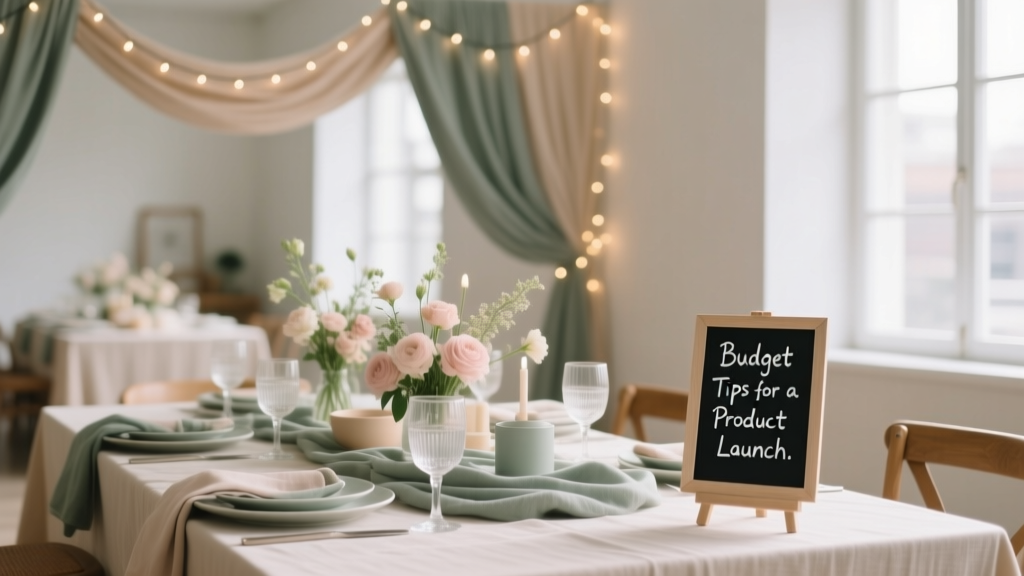
Budget Tips for a Product Launch
A product launch is more than a party—it’s a strategic moment when your brand promise meets real people. Whether you’re unveiling a new app, beverage, beauty line, or consumer gadget, the event experience shapes how attendees perceive quality, credibility, and momentum. The challenge is balancing big expectations with a realistic budget.
Great launches aren’t defined by expensive decor or celebrity DJs. They’re defined by clear goals, sharp planning, and smart choices: the right venue layout for demos, the right guest mix for word-of-mouth, the right photo moments for social sharing, and a run-of-show that keeps energy high without wasting resources.
This guide breaks down practical, step-by-step budget tips for a product launch, including a planning timeline, budget breakdown examples, vendor selection tips, organizational strategies, and common mistakes to avoid—so you can deliver a polished event without overspending.
Start With the Launch Strategy (So Your Budget Has a Job)
Before you price venues or request catering quotes, define what “success” looks like. Budgeting is easiest when every line item supports a purpose.
Clarify your launch goals
- Brand awareness: Earn social content, press mentions, influencer posts, and attendee sharing.
- Sales: Drive pre-orders, subscriptions, or on-site purchases.
- Partnerships: Attract retailers, distributors, investors, or collaborators.
- Product validation: Collect feedback from ideal customers through guided demos and surveys.
Define success metrics (simple and measurable)
- Attendance rate (% RSVPs who show up)
- Cost per attendee (total budget / attendees)
- Leads captured (emails, QR sign-ups, demo requests)
- Press/influencer attendance and posts
- On-site or post-event conversions within 7–14 days
Choose a launch format that fits your budget
- Press preview (small, high-touch): Lower headcount, higher ROI if media attends.
- Community pop-up: Great for local brands; lean on foot traffic and a simple demo bar.
- Hybrid launch: Small in-person audience + livestream; can reduce venue size and catering costs.
- Retail or partner-hosted event: Shared costs and built-in audience.
Product Launch Budget Planning: Build a Lean, Flexible Framework
Budgeting for event planning works best when you separate “must-haves” from “nice-to-haves,” then hold a contingency fund for surprises.
Use the 70/20/10 budgeting rule
- 70% Core event needs: Venue, basic production, staffing, essential catering, permits/insurance.
- 20% Experience upgrades: Branded moments, enhanced lighting, special activations, premium rentals.
- 10% Contingency: Overtime, extra security, weather needs, last-minute printing, replacement items.
Typical budget categories (and what drives cost)
- Venue: Rental fee, security deposit, minimum spend, furniture included, time window, load-in/load-out rules.
- Food & beverage: Headcount, service style, bar package, staffing ratios, dietary needs.
- Production: AV, microphones, lighting, staging, power needs, Wi-Fi upgrades.
- Branding & signage: Step-and-repeat, directional signage, menus, demo instructions, tabletop signs.
- Staffing: Registration, brand ambassadors, product specialists, security, event manager.
- Marketing: Photography/video, social content, influencer fees, press outreach.
- Rentals: Tables, linens, lounge furniture, demo counters, pipe-and-drape.
- Permits/insurance: COI, liquor permit, street closure, amplified sound permit (varies by city).
Smart Cost-Saving Moves That Don’t Look “Budget”
1) Right-size your guest list (and design for show rate)
Over-inviting is one of the most expensive launch mistakes. Plan for RSVP behavior:
- Industry/press event: Expect 40–60% show rate unless attendance is confirmed personally.
- Consumer/community event: Expect 50–75% show rate if reminders are strong and the location is convenient.
Budget tip: If catering is per-person, set your guaranteed headcount based on realistic show rate plus a small buffer (5–10%).
2) Choose venues that include built-ins
Venues with included furniture, in-house AV, and flexible layouts can save more than a cheaper empty space that requires rentals.
- Look for included tables/chairs, basic sound system, bar setup, and staff requirements.
- Ask about overtime rates and what “event hours” actually include (setup, rehearsal, breakdown).
3) Use a “hero moment” approach
Instead of decorating every corner, spend on one standout photo and demo area, then keep the rest clean and branded.
- One branded backdrop + good lighting beats five scattered decor pieces.
- One statement installation (balloon wall, floral feature, or modular LED) creates shareable content.
4) Simplify the menu without feeling skimpy
- Choose passed bites + one signature station rather than a full multi-station spread.
- Limit bar offerings to beer/wine + a signature cocktail/mocktail.
- Serve products creatively if applicable (tastings, sample flights, mini demos).
5) Lean into current event planning trends that reduce costs
- Hybrid content capture: Record short vertical videos on-site for weeks of social posts.
- QR-first signage: Replace large printed programs with QR codes linking to product specs, pricing, and media kits.
- Modular branding: Reusable banners and fabric signage that can travel to future pop-ups.
- Sustainability-focused choices: Digital invites, minimal waste, compostable serviceware—often cost-neutral and brand-positive.
Step-by-Step Planning Timeline (With Checklist)
Use this event coordination timeline as a template. Adjust based on complexity and venue availability.
8–10 Weeks Out: Define the plan and secure the essentials
- Set launch goals, target audience, and ideal guest count
- Choose format (press preview, community pop-up, hybrid, partner-hosted)
- Draft a budget with categories and maximums
- Shortlist and tour venues; request full proposals
- Lock date/time; review venue contract and restrictions
- Identify key vendors: catering, AV, photo/video, rentals
- Create a simple event brief (purpose, schedule, brand guidelines)
6–8 Weeks Out: Build the guest journey and confirm vendors
- Finalize event layout: registration, demo zones, stage/talk area, photo moment
- Confirm vendor bookings and collect certificates of insurance (COIs)
- Begin invite list and RSVP strategy (email invites + calendar holds)
- Plan content capture needs (shots list for photographer/videographer)
- Draft run-of-show and staffing plan
- Order branded signage and any reusable assets
4–6 Weeks Out: Promote, produce, and refine
- Send invitations; set up RSVP landing page
- Plan influencer/press outreach (media kit, talking points, product details)
- Finalize menu and bar selections; confirm dietary options
- Confirm demo script and product training for staff
- Create a contingency plan (weather, power, Wi-Fi, extra staff)
- Confirm any permits: amplified sound, liquor, street access (as needed)
2–3 Weeks Out: Tighten logistics and reduce risk
- Walkthrough with venue and key vendors (or virtual walkthrough)
- Finalize floor plan and load-in schedule
- Confirm rentals and delivery windows
- Order name badges or QR check-in list
- Send RSVP reminder #1; begin reconfirming VIPs personally
- Build day-of contact list: vendor leads, venue manager, emergency contacts
1 Week Out: Final confirmations
- Confirm final headcount and catering guarantee date
- Send RSVP reminder #2 + event info (parking, arrival time, dress code)
- Print minimal essentials: directional signs, bar menu, demo instructions
- Confirm run-of-show, speaking notes, and mic needs
- Prepare an event kit: tape, scissors, extension cords, chargers, markers, safety pins
Event Day: Execute with a clean run-of-show
- Vendor load-in and setup; test sound, lighting, Wi-Fi
- Team briefing: roles, timing, guest flow, escalation plan
- Doors open: registration + welcome drink + clear directions to demo
- Main moment: product reveal, short talk, or guided demo
- Content capture: photo moment, testimonials, influencer shots
- Wrap: last call, thank-you announcement, lead capture reminder
- Load-out: confirm rentals, damage check, collect items and signage
48 Hours After: Measure results and reuse assets
- Send thank-you email with product link, press kit, and next steps
- Share photo/video recap and tag partners/vendors
- Review metrics: attendance, leads, sales, content performance
- Hold a short debrief: what worked, what to improve next time
Sample Budget Breakdowns (Realistic Starting Points)
Budgets vary by city, venue type, and vendor rates. These examples show how to allocate funds strategically.
Example A: Lean launch for 50 guests (Target: $5,000)
- Venue: $1,200 (weekday evening or partner location)
- Food & beverage: $1,700 (light bites + beer/wine + signature drink)
- Photo: $600 (2 hours, highlight coverage)
- AV/basic sound: $400 (speaker + handheld mic)
- Branding/signage: $350 (reusable banner + tabletop signs)
- Staffing: $450 (registration + floor support)
- Contingency: $300
Example B: Mid-scale launch for 120 guests (Target: $15,000)
- Venue: $4,000
- Food & beverage: $6,000
- AV/lighting: $1,800 (mic, small stage, uplighting)
- Photo + short-form video: $1,500
- Branding + hero moment: $900
- Rentals: $500 (demo counters or lounge pieces)
- Staffing/security: $1,000
- Permits/insurance: $400
- Contingency: $900
Budget tip: Track “cost per outcome,” not just cost per guest
If your goal is leads, compare spend against leads captured. A $15,000 launch that generates 400 qualified sign-ups may outperform a $7,000 event that generates 40.
Vendor Selection Tips (How to Get Quality Without Overpaying)
Request quotes the smart way
Vendors price faster and more accurately when you provide consistent details:
- Date, time window (including setup/breakdown), and location
- Guest count range (e.g., 80–120) and desired service style
- Event goals and vibe (press-focused, influencer-heavy, consumer demo)
- Deliverables needed (for photo/video: number of edited images, turnaround time)
- Any venue restrictions (preferred vendor lists, sound limits, power limits)
Compare proposals beyond the headline price
- Labor and overtime: What happens if your program runs 30 minutes late?
- Equipment and fees: Delivery, setup, service fees, admin fees, gratuity.
- Quality signals: Portfolio, references, communication speed, contingency planning.
Negotiate value, not just discounts
- Ask for bundled services (photo + short-form video, AV + lighting package).
- Swap expensive elements for high-impact alternatives (uplighting instead of elaborate floral).
- Consider off-peak dates: weekdays or Sunday afternoons often cost less.
Real-World Example: Saving Budget While Increasing Impact
A wellness brand planned a 100-guest product launch with a tight budget. Instead of renting a large venue and building a stage, they hosted a weekday evening launch at a boutique fitness studio during off-hours. The studio included sound, lighting, and a clean, modern aesthetic.
- What they simplified: No full dinner; used passed bites and a signature mocktail tied to the product story.
- What they prioritized: A branded demo bar + a single photo backdrop near the entrance with flattering lighting.
- Result: Strong attendance, dozens of user-generated posts, and a surge in email sign-ups driven by QR codes at each station.
Common Product Launch Planning Mistakes to Avoid
- Spending early on decor before confirming essentials: Lock venue, staffing, and production first.
- Skipping a run-of-show: Without timing, speakers run long, demos bottleneck, and overtime fees appear.
- Underestimating staffing needs: Not enough hands at registration and demos creates a chaotic first impression.
- Ignoring tech requirements: Weak Wi-Fi, no backup mic, or insufficient power can derail demos and livestreams.
- Failing to capture leads: A beautiful event without a sign-up plan is a missed business opportunity.
- Overcommitting to custom builds: Custom props and builds are expensive and hard to reuse; choose modular rentals and reusable branding.
FAQ: Budget Tips for a Product Launch
How much should I budget for a product launch event?
For small launches (30–60 guests), many brands land between $3,000–$8,000 depending on venue and catering. Mid-size events (80–150 guests) often range from $10,000–$30,000. Your city, venue minimums, and production needs will drive the biggest swings.
What’s the best way to cut costs without hurting the guest experience?
Right-size the venue and focus on one “hero” branded moment. Choose a simplified menu and a limited bar, then invest in great lighting and a smooth guest flow (registration, demos, signage). Guests remember energy and clarity more than expensive extras.
Should I hire an event planner or coordinator for a launch?
If you’re managing multiple vendors, demos, speakers, and media, a day-of coordinator (or event manager) is often worth it. They protect your budget by preventing overtime, handling vendor timing, and keeping the run-of-show on track.
How do I choose vendors for a launch event?
Look for vendors who understand brand events and can show examples of past launches. Ask what they do when a shipment is late, the schedule slips, or the guest count changes. Strong communication and contingency planning are usually better ROI than the cheapest quote.
What’s a realistic event planning timeline for a launch?
Plan for 8–10 weeks for a well-organized launch, especially if you need permits, press outreach, or custom branding. Smaller pop-ups can be done in 4–6 weeks if your venue and vendors are readily available.
How can I ensure my launch generates leads and sales?
Use QR codes at key touchpoints (registration, demo stations, photo area) linking to a dedicated landing page. Offer an incentive (early access, discount code, giveaway), and assign staff to actively guide guests to sign up.
Actionable Next Steps for a Budget-Smart Launch
- Write a one-page event brief (goals, audience, headcount, success metrics).
- Draft a budget with caps by category and set aside 10% contingency.
- Choose a venue with built-ins to reduce rentals and production costs.
- Build your timeline and run-of-show to prevent last-minute expenses and overtime.
- Design for lead capture with QR codes, simple signage, and trained staff.
If you want more step-by-step event planning, party organization, and coordination guides, explore the latest resources at smartpartyprep.com to plan with confidence and launch with impact.
More Articles
 How to DIY a Benefit Concert
What Is a Third Party Application? (And Why 73% of Event Planners Accidentally Risk Data Breaches by Misusing One)
What Is Spanish For Party? The Exact Translation + 7 Culturally Accurate Ways to Say It (So You Don’t Sound Like a Textbook at Your Next Fiesta)
How to DIY a Benefit Concert
What Is a Third Party Application? (And Why 73% of Event Planners Accidentally Risk Data Breaches by Misusing One)
What Is Spanish For Party? The Exact Translation + 7 Culturally Accurate Ways to Say It (So You Don’t Sound Like a Textbook at Your Next Fiesta)
 Is Xbox Party Chat Down Right Now? Here’s How to Instantly Diagnose, Bypass, and Fix It — Even When Microsoft’s Status Page Is Silent (2024 Real-Time Guide)
Where to Host a 1st Birthday Party: 7 Real-World Venue Options (With Cost Breakdowns, Safety Checks, and Hidden Pitfalls Most Parents Miss)
What Did the Federalist Party Believe In? The 7 Core Principles You Were Never Taught in High School — And Why They Still Shape U.S. Government Today
What Is the Importance of Political Parties? 7 Real-World Functions You Didn’t Learn in Civics Class — And Why Ignoring Them Weakens Your Vote, Your Voice, and Your Community’s Future
Who Was the Founder of the Black Panther Party? The Truth Behind Huey P. Newton and Bobby Seale — Plus 5 Critical Misconceptions You’ve Probably Believed
How Did England Respond to the Boston Tea Party? The 4 Coercive Acts That Ignited Revolution — What Every History Educator & Living History Planner Must Know Today
Is Xbox Party Chat Down Right Now? Here’s How to Instantly Diagnose, Bypass, and Fix It — Even When Microsoft’s Status Page Is Silent (2024 Real-Time Guide)
Where to Host a 1st Birthday Party: 7 Real-World Venue Options (With Cost Breakdowns, Safety Checks, and Hidden Pitfalls Most Parents Miss)
What Did the Federalist Party Believe In? The 7 Core Principles You Were Never Taught in High School — And Why They Still Shape U.S. Government Today
What Is the Importance of Political Parties? 7 Real-World Functions You Didn’t Learn in Civics Class — And Why Ignoring Them Weakens Your Vote, Your Voice, and Your Community’s Future
Who Was the Founder of the Black Panther Party? The Truth Behind Huey P. Newton and Bobby Seale — Plus 5 Critical Misconceptions You’ve Probably Believed
How Did England Respond to the Boston Tea Party? The 4 Coercive Acts That Ignited Revolution — What Every History Educator & Living History Planner Must Know Today