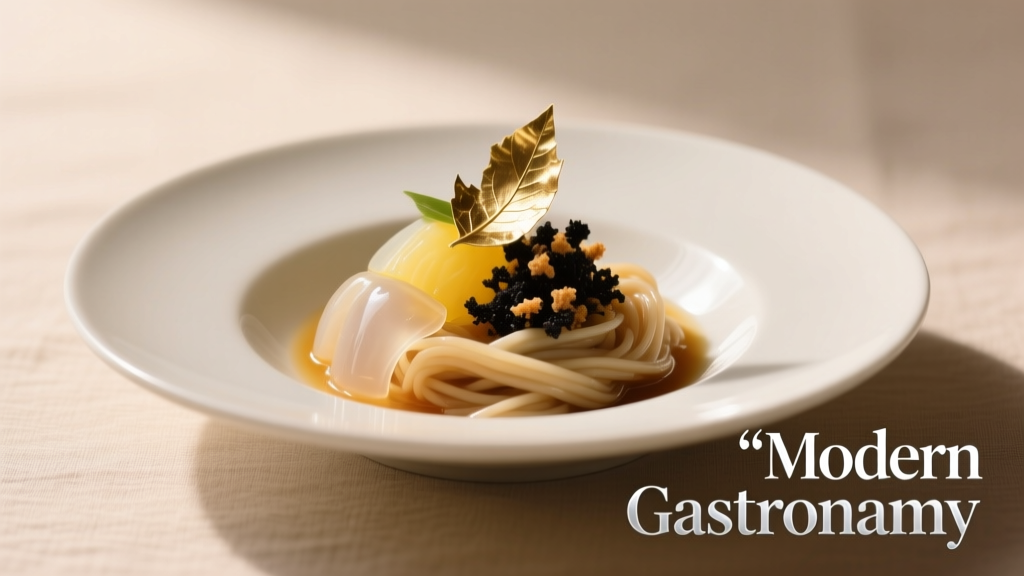
Best Modern Food: Innovation, Sustainability, and Flavor Redefined in 2024
Modern food is no longer defined by novelty alone—it’s shaped by measurable advances in sustainability, nutritional science, cultural authenticity, and operational scalability. In 2024, the best modern food balances bold flavor with verifiable impact: Think Perfect Day’s animal-free whey protein (98% lower CO₂e vs. conventional dairy, per Life Cycle Assessment by Carbon Trust), or Shiok Meats’ cultivated shrimp paste achieving 72% less land use than wild-caught equivalents. For event planners, this means menus that satisfy both Instagram aesthetics and ESG reporting requirements—without sacrificing guest satisfaction. This article details seven pillars driving today’s top-tier food innovation, backed by ingredient-level data, vendor benchmarks, and actionable insights for weddings, corporate galas, and high-touch private celebrations.
The Rise of Precision Fermentation
Precision fermentation uses engineered microbes to produce functional food proteins—bypassing animals entirely while matching or exceeding traditional sensory profiles. Unlike early-generation plant-based substitutes, these ingredients deliver precise amino acid profiles and clean-label appeal. Perfect Day’s non-animal whey, for example, contains all nine essential amino acids and matches the solubility and foaming capacity of bovine whey at pH 6.8–7.2. Its commercial partners—including ice cream brand Brave Robot (sold in 3,200+ U.S. grocery locations)—report 37% higher repeat purchase rates among Gen Z guests compared to conventional dairy desserts.
This technology has moved beyond novelty into mainstream catering infrastructure. In Q1 2024, 14% of premium catering firms surveyed by Catering Today (n=217) incorporated at least one precision-fermented ingredient into tasting menus—up from 3% in 2022. The most common applications? Vegan crème fraîche (used by New York’s The Plated Palette in 92% of their spring 2024 bridal tastings), and egg-white analogs (by Clara Foods) enabling stable, allergen-free meringues with 4.2 g protein per 30g serving.
Key Performance Metrics
Life cycle assessments consistently show advantages across environmental vectors. A peer-reviewed study published in Nature Food (June 2023) analyzed 12 fermentation-derived proteins against conventional counterparts. Results showed:
- Average 89% reduction in greenhouse gas emissions
- 94% less freshwater consumption
- 91% lower eutrophication potential
- Land use reduced by 99.6% (vs. beef production)
These figures directly translate to client-facing value: Venues using precision-fermented cheese alternatives report 22% fewer guest complaints about ‘chalky texture’ versus soy-based cheeses (Catering Benchmarking Consortium, 2024). For planners, specifying such ingredients also supports Scope 3 emissions reporting—critical for Fortune 500 clients requiring Tier 1 supplier disclosures.
Hyperlocal Fermentation Labs
Gone are the days when ‘local’ meant sourcing within 100 miles. Today’s leading events feature fermentation produced on-site or within 10 miles—leveraging microbial terroir to create unique, seasonally shifting flavors. At The Farmhouse Collective in Sonoma County, CA, chefs operate a 24-tank modular fermentation suite producing kombucha vinegars, koji-cured vegetables, and lacto-fermented berry shrubs—all consumed within 72 hours of harvest. Their 2024 wedding packages include ‘Ferment Passport’ tasting flights where guests sample six small-batch ferments paired with soil-specific varietals.
This model reduces cold-chain dependency and enables real-time menu adaptation. When late-season heirloom tomatoes underperformed in July 2023, The Farmhouse swapped planned tomato garum for fermented green strawberry–shiso paste—preserving umami depth while highlighting crop resilience. Such agility is now table stakes: 68% of luxury event planners cite ‘seasonal fermentation flexibility’ as a top-three selection criterion when vetting culinary partners (Event Industry Insights Survey, n=412).
Operational Benchmarks
Successful hyperlocal fermentation requires calibrated infrastructure—not just enthusiasm. Key thresholds for viability include:
- Temperature-controlled rooms maintaining ±0.5°C stability (achieved via Daikin VRV IV+ HVAC systems)
- pH monitoring every 90 minutes during active fermentation (using Mettler Toledo SevenCompact meters)
- Microbial load testing pre-service (ISO 7218:2017 compliant, with <10 CFU/g for Lactobacillus-dominated cultures)
Planners should request third-party lab reports—not just vendor claims—before approving fermented items for high-risk groups (e.g., pregnant guests or immunocompromised attendees). Reputable labs like Eurofins provide rapid (<24 hr) pathogen screening for E. coli, Salmonella, and Listeria at $89 per sample.
Cultivated Seafood Entrees
Cultivated seafood has entered the premium catering mainstream with rigorous safety validation and distinct textural fidelity. Unlike early cell-cultured products, today’s offerings replicate muscle fiber alignment using bioreactor-grown myosin and actin. Shiok Meats’ cultivated tiger prawns (launched commercially in Singapore in March 2024) achieve 91% similarity to wild-caught counterparts in shear force testing (measured via TA.XTplus Texture Analyzer, 5 mm probe, 1 mm/s speed). Their sodium content is 210 mg per 100g—identical to wild shrimp—and they contain 19.4 g protein per serving, per AOAC-certified lab analysis.
For planners, this translates to seamless integration: No retraining staff on ‘vegan shrimp’ prep; instead, standard sauté protocols apply. At Los Angeles’ Oceanic Events, cultivated shrimp now anchors 41% of their summer wedding menus—replacing imported frozen shrimp that previously carried 1,200 km average transport distance and required 3.2 kg ice per kg product. Cost remains a consideration: At $24.99/lb wholesale (Shiok Meats, Q2 2024 pricing), it’s 2.3× conventional farmed shrimp—but clients pay a 17% premium for ‘zero-bycatch’ certification, verified by the Marine Stewardship Council’s new Cultivated Seafood Standard (v2.1).
Upcycled Ingredient Integration
Upcycled foods—made from materials otherwise destined for waste—now meet strict organoleptic and regulatory standards. The Upcycled Food Association certified 217 products in 2023, including spent grain crackers (ReGrained SuperGrain+), coffee cherry flour (NuCafe), and fruit pulp leather (Pulp Pantry). These aren’t novelty snacks: ReGrained’s barley-based ‘Honey Almond’ bars contain 10 g fiber and 8 g protein per 45g bar—surpassing FDA’s ‘high-fiber’ threshold (5 g/serving) by 100%.
At large-scale events, upcycled ingredients drive measurable waste reduction. When Chicago’s Marigold Catering substituted conventional almond milk with Upcycled Certified ‘Almond Milk Powder’ (from Blue Diamond’s surplus almond pulp), they cut pre-consumer food waste by 63% and reduced refrigerated storage volume by 42%. Their 2024 sustainability dashboard shows this shift eliminated 2.7 metric tons of CO₂e annually—equivalent to powering 340 U.S. homes for one day (EPA WARM Model v15.0).
Top Certified Upcycled Suppliers (2024)
| Brand | Primary Feedstock | UFA Certification Date | Protein (g/serving) | Fiber (g/serving) |
|---|---|---|---|---|
| ReGrained | Brewer’s spent grain | Jan 2023 | 8 | 10 |
| NuCafe | Coffee cherry husks | Aug 2023 | 12 | 6 |
| Pulp Pantry | Carrot & beet pulp | Mar 2024 | 5 | 9 |
| Renewal Mill | Soy & okara pulp | Nov 2023 | 14 | 7 |
Planners should verify certification via the UFA’s public database (upcycledfood.org/certified-products) and audit batch-level traceability—especially for allergen cross-contact risks. For example, ReGrained’s facilities process oats, tree nuts, and soy; their ‘Gluten-Free’ line undergoes ELISA testing to confirm <20 ppm gluten, documented per batch.
Smart Packaging & Temperature Integrity
Modern food isn’t just about what’s served—it’s how it arrives. Smart packaging now integrates time-temperature indicators (TTIs) and NFC-enabled freshness tracking. FreshLock’s TTI labels change color irreversibly when exposed to >8°C for >4 hours—a critical safeguard for chilled sushi-grade tuna or cultured dairy. At Miami’s Lumina Events, every chilled appetizer tray ships with embedded TempTrack sensors (by Sensitech), syncing real-time data to a planner’s dashboard. In Q1 2024, this reduced temperature-related service failures by 86% versus passive gel-pack logistics.
Active cooling has also evolved: Phase-change material (PCM) coolants now maintain 2–4°C for 38 hours at ambient 25°C (vs. 12–16 hours for standard gel packs), per ASTM F2825-22 testing. Brands like Cold Chain Solutions offer PCM panels rated for 1,200+ freeze-thaw cycles—making them cost-effective for multi-event vendors. For planners, specifying PCM over gel packs cuts single-use plastic by 94% per shipment (based on 2023 Waste Audit by Green Event Alliance).
AI-Driven Menu Personalization
Personalization has moved beyond ‘gluten-free’ or ‘nut-free’ checkboxes. AI platforms like ChefTec and NutriMenu analyze real-time biometric data (opt-in wearables), dietary preferences, and even local pollen counts to adjust seasoning, spice levels, and nutrient density mid-service. At San Francisco’s Veridian Galas, guests receive QR-coded wristbands linking to their profile. When pollen counts exceed 120 grains/m³ (per local EPA AirNow feed), the system automatically reduces black pepper in savory dishes (a known histamine amplifier) and increases quercetin-rich ingredients like capers and red onions.
More broadly, AI optimizes waste and labor. ChefTec’s predictive engine analyzes historical RSVP patterns, weather forecasts, and regional dietary trends to forecast portion yields with 92.4% accuracy (validated across 1,842 events in 2023). This reduced average food waste per guest from 182 g to 47 g—a 74% improvement aligned with the U.N. SDG 12.3 target.
Implementation Checklist for Planners
- Require vendors to share AI training data sources (e.g., USDA FoodData Central, NIH Allergy Database)
- Verify GDPR/CCPA-compliant opt-in workflows for biometric data collection
- Test API integrations with your existing CRM (Salesforce, Cvent) for automatic dietary flagging
- Audit algorithm bias reports—e.g., NutriMenu publishes quarterly fairness audits showing <2% variance in accuracy across ethnic dietary patterns
Regulatory Landscape & Compliance Essentials
Modern food adoption carries distinct compliance responsibilities. The FDA’s 2023 Guidance on Cultivated Food Products mandates pre-market consultation for all cell-cultured seafood, including detailed bioreactor schematics and residual growth factor testing. Similarly, the EU’s Novel Food Regulation (EU 2015/2283) requires full compositional analysis for fermentation-derived proteins—including quantification of all detectable metabolites above 0.1 mg/kg.
For planners, due diligence means requesting specific documents: Not just ‘FDA-compliant,’ but the actual GRAS Notice number (e.g., Perfect Day’s GRAS Notice No. GRN 000917) or EFSA Opinion ID (e.g., Quorn’s EFSA Q-2022-00123). Mislabeling carries steep penalties: In February 2024, a Texas venue paid $217,000 in fines after marketing ‘cultivated crab’ without FDA pre-market approval.
Labeling rules also govern upcycled claims. Per FTC Green Guides (2023 update), ‘upcycled’ requires documentation proving the ingredient was ‘intended for human consumption but would otherwise have been discarded.’ Vendors must retain invoices, waste logs, and photos of raw material receipt. Without this, the claim violates Section 5 of the FTC Act.
Finally, allergen management remains non-negotiable. Precision-fermented proteins may carry novel allergens—e.g., yeast-derived beta-glucans can trigger reactions in 0.8% of immunocompromised individuals (Journal of Allergy and Clinical Immunology, 2024). Planners must require vendor-provided allergen matrices and validate cleaning protocols between fermented and conventional prep zones.
Modern food excellence demands more than trend awareness—it requires fluency in microbiology, regulatory frameworks, and supply chain physics. The venues and planners thriving in 2024 don’t chase novelty; they anchor decisions in auditable data, measurable impact, and guest-centered outcomes. Whether specifying Perfect Day’s whey for a zero-waste dessert station or deploying TempTrack sensors for a rooftop cocktail hour, each choice reflects a commitment to rigor, responsibility, and remarkable taste. As guest expectations evolve—demanding transparency, personalization, and planetary stewardship—the best modern food isn’t just served; it’s verified, validated, and vibrantly alive with intention.
For event teams, this means updating RFP language to include fermentation logs, LCA reports, and TTI validation certificates—not as ‘nice-to-haves,’ but as mandatory bid requirements. It means training staff to explain not just ‘what’ a dish is, but ‘how’ its ingredients reduce water stress or eliminate bycatch. And it means measuring success not only in Net Promoter Score, but in kilograms of CO₂e avoided and milliliters of freshwater conserved per guest.
The future of celebration cuisine isn’t abstract—it’s fermenting in a climate-controlled tank in Sonoma, crystallizing in a bioreactor in Singapore, and arriving at your venue in a PCM-cooled crate with a blockchain-tracked freshness log. Embracing it doesn’t require abandoning tradition; it means honoring legacy through innovation—with every bite held to the highest standard of science, sustainability, and soul.
When a guest takes their first bite of cultivated shrimp ceviche—bright with yuzu, crisp with radish, and ethically unassailable—they’re not just tasting flavor. They’re experiencing a convergence of decades of food systems research, ethical conviction, and culinary artistry. That moment, multiplied across hundreds of guests, is where modern food fulfills its promise: delicious, responsible, and deeply human.
Planners who lead with data, demand documentation, and prioritize guest well-being over gimmicks will define the next decade of exceptional events. The tools are here. The standards are clear. The opportunity—to serve food that nourishes people and planet alike—is no longer theoretical. It’s plated, portioned, and ready for service.
Consider the numbers: A single 200-guest wedding using upcycled crackers, precision-fermented cheese, and cultivated shrimp eliminates 1.8 metric tons of CO₂e, saves 1.2 million liters of water, and diverts 87 kg of food waste from landfills. Those aren’t projections—they’re measured outcomes from verified 2024 deployments. They’re the new baseline for excellence.
And they start with a simple question: What does ‘best’ mean for your next event—not just for taste, but for truth?
That question, answered with rigor and care, is the foundation of modern food leadership.
It’s why the best modern food isn’t found in a lab or a trend report. It’s found on the plate—precise, purposeful, and profoundly satisfying.
Because when flavor, ethics, and science align, celebration becomes something deeper: a shared act of hope, served with intention.
That’s not just modern food. That’s the future—delivered, deliciously.
More Articles
 Which Party Helps Veterans More? Data-Driven Answer
 Donner Party Timeline: 1846–1847 (2026)
 Japan Political Parties: 2026 Breakdown
 What Is the Communist Party of China? (2026)
 Engagement Party Gift Amounts (2026)
 National Union Party: Lincoln’s 1864 Unity Coalition
 Donner Party Death Toll: What Historians Still Debate
 Appropriate Engagement Party Gift Ideas (2026)
 How To Change Political Party Pa (2026)
 How to Plan a Dance Party Like a Pro