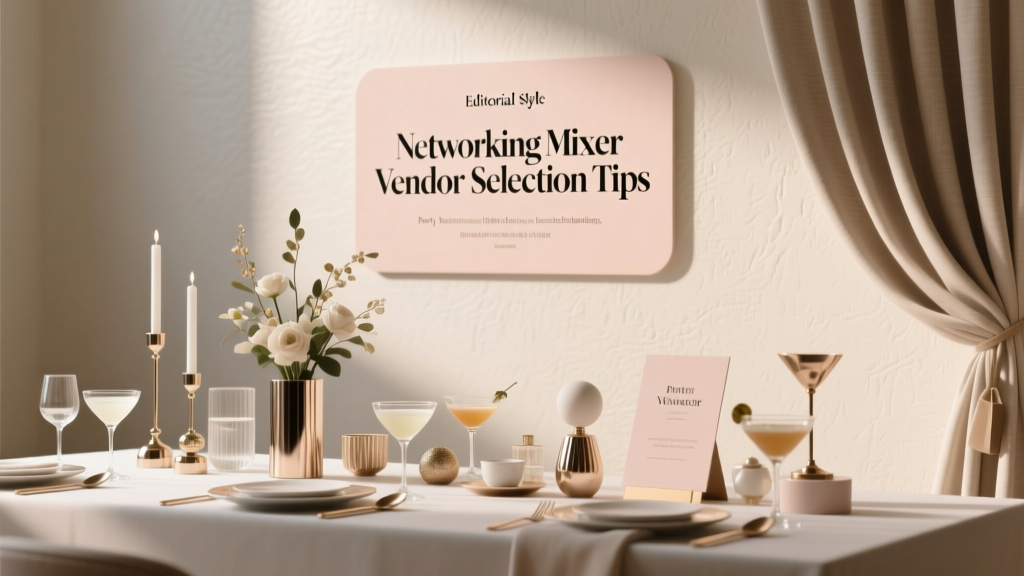
Networking Mixer Vendor Selection Tips
A networking mixer looks effortless when it’s done well: the room feels welcoming, conversations flow naturally, and guests leave with new contacts (and a reason to follow up). Behind that ease is careful planning and the right vendor team—people who understand that the goal isn’t “a party,” it’s connection.
Vendor selection can make or break a mixer because every touchpoint affects how comfortable guests feel: the check-in experience, the noise level, the lighting, the food format, and even how quickly drinks are served. When vendors are aligned with your event goals, you get a smooth run-of-show and a space that encourages introductions rather than distractions.
This guide shares practical, step-by-step vendor selection tips for networking mixers—plus timelines, budget benchmarks, trend-forward ideas, and real-world examples—so you can plan with confidence and coordinate like a pro.
Start with the “Why”: Define Your Mixer’s Purpose and Success Metrics
Before you compare venues or caterers, clarify what “success” looks like. A networking mixer can serve different goals, and your vendor choices should support the outcome you want.
Quick goal-setting prompts
- Audience: Industry peers, potential clients, alumni, investors, or community partners?
- Connection style: Free-flow mingling, guided introductions, speed networking, or curated matches?
- Attendance target: 40, 80, 150+? Your headcount changes venue, staffing, and budget.
- Brand tone: Polished corporate, creative startup, nonprofit community, or luxury?
- KPIs: # of meaningful conversations, leads captured, post-event follow-ups scheduled, sponsor visibility, attendee satisfaction score.
Vendor decisions that map to your goals
- High-volume networking: Faster bar service, abundant high-top tables, brighter lighting, lower music volume.
- Premium relationship-building: Elevated catering, reserved lounge seating, curated guest list, subtle branding, strong hospitality staff.
- Lead-generation: Registration tech, badge printing, CRM integration, professional photography, clear sponsor placements.
Core Vendors for Networking Mixers (and What to Prioritize)
Not every mixer needs every vendor, but most events rely on a few essentials. Choose partners experienced in event planning and event coordination for business-focused gatherings, not just social parties.
1) Venue (or venue + in-house services)
The venue drives your vibe, flow, acoustics, and guest comfort. Prioritize:
- Layout: Open mingling space, multiple “conversation pockets,” and room for check-in without bottlenecks.
- Sound: Networking needs talk-friendly acoustics. Avoid echo-heavy spaces unless you can add softening elements (draping, rugs).
- Lighting: Bright enough for face recognition and name tags, warm enough to feel inviting.
- Accessibility: ADA access, elevators, clear signage, nearby parking/transit.
- Included items: Tables, chairs, linens, bar setup, basic AV—these affect your total cost.
2) Catering (passed bites vs. stations)
For a mixer, food should be easy, clean, and conversation-friendly. Look for caterers who can execute:
- Small bites that don’t require cutting (skewers, crostini, mini bowls)
- Strategic dietary coverage: vegetarian/vegan, gluten-free, nut-aware
- Smart pacing: an early wave of snacks to break the ice, then a second wave to sustain energy
3) Bar service
Long drink lines stall networking. Ask about:
- Bar-to-guest ratio: often 1 bartender per 50–75 guests (more if craft cocktails)
- Speed menu: wine, beer, 1–2 signature cocktails, and quality non-alcoholic options
- Trends: zero-proof cocktails, local ingredients, and “choose-your-own garnish” stations
4) AV / Music / Microphones
A mixer rarely needs a full concert setup, but it does need clarity for brief announcements.
- Wireless handheld mic for welcome remarks and sponsor shout-outs
- Low-volume background music (think “energy,” not “dance floor”)
- Optional: subtle stage wash lighting for branded moments (step-and-repeat, sponsor wall)
5) Photography / Content capture
Modern event planning trends favor content-ready moments while keeping the experience authentic.
- 1 photographer can cover 75–150 guests for 2–3 hours
- Request “networking storytelling” shots: introductions, handshakes, candid conversations
- Consider a simple branded backdrop (not a full production) to speed photos
6) Rentals / Decor (as needed)
Decor should support connection, not clutter it. High-impact, low-lift items:
- High-top cocktail tables (encourage mingling)
- Lounge clusters (support longer conversations)
- Clear signage and wayfinding (reduces confusion)
- Minimal florals/greenery to soften the room and reduce echo
7) Staffing / Event coordination support
If your budget allows, add:
- Check-in staff (keeps arrivals smooth)
- Floor host(s) to make introductions and keep energy up
- Event coordinator to manage vendor load-in, timing, and troubleshooting
Vendor Selection Tips: How to Choose Partners Who “Get” Networking
Step 1: Create a one-page vendor brief
Send the same brief to each vendor so you can compare apples to apples. Include:
- Date, time, and event duration (including load-in/out)
- Estimated guest count + VIP count
- Event goal (networking, lead gen, community building)
- Venue address (or “seeking venue”) and any restrictions
- Food/beverage expectations and dietary notes
- Brand guidelines (logo, tone, sponsor requirements)
- Decision deadline and how you’ll select
Step 2: Ask networking-specific questions during calls
- “What do you recommend to keep lines short and people circulating?”
- “How do you handle dietary needs without slowing service?”
- “What’s your staffing plan for this headcount?”
- “What’s your plan B if attendance is 20% higher than expected?”
- “Can you share examples of similar mixers you’ve supported?”
Step 3: Evaluate proposals using a simple scorecard
Use a 1–5 scale to reduce decision fatigue:
- Relevant experience with networking events
- Clarity and completeness of proposal
- Value (not just price)
- Communication speed and professionalism
- Flexibility with changes
- References/reviews
Step 4: Confirm logistics early (the hidden cost zone)
- Load-in/out times and access routes (elevators, docks)
- Parking fees, permits, and security requirements
- Power needs for AV, lighting, and bars
- Insurance (COI) and liability coverage
- Cancellation and reschedule policies
Step 5: Put everything into a single master vendor sheet
This is a proven organizational strategy used by professional event planners. Your sheet should include:
- Primary contact + day-of phone numbers
- Arrival times and responsibilities
- Payment schedule and balances due
- Special notes (dietary, VIPs, sponsor placements)
Step-by-Step Planning Timeline (with Checklist Templates)
8–10 Weeks Out: Strategy + Venue Lock
- Define goals, audience, and ideal headcount
- Set preliminary budget range
- Shortlist 3–5 venues and schedule walkthroughs
- Confirm date, hours, and any building restrictions
- Draft a floor plan concept (check-in, bar, food, photo spot)
6–8 Weeks Out: Vendor Booking + Guest Experience Design
- Book: catering, bar, AV/music, photographer, rentals (if needed)
- Select service style: passed bites vs. stations vs. hybrid
- Decide on name tags: printed vs. handwritten (printed looks polished)
- Plan programming: welcome remarks (3–5 minutes), sponsor thanks, optional “conversation prompts”
- Launch invitations and registration page
4–6 Weeks Out: Sponsorships, Branding, and Logistics
- Finalize sponsor deliverables (logo placement, mentions, signage)
- Order signage: check-in, restrooms, agenda, sponsor board
- Confirm menu and beverage selections
- Review insurance requirements and submit COIs
- Build your run-of-show and staffing plan
2–3 Weeks Out: Confirmations + Production Details
- Send vendor confirmations with timeline and load-in instructions
- Finalize guest list and dietary needs
- Order name badges and lanyards (or label stock)
- Prepare emcee notes and any announcements
- Confirm AV needs: mic, playlist, speaker placement
1 Week Out: Final Numbers + Day-Of Pack List
- Send final headcount to venue/catering (per contract deadline)
- Print check-in list (plus a few blank badges)
- Prepare vendor tip envelopes (if applicable)
- Confirm floor plan and signage locations
Event Day: Execution Checklist
- Arrive early for load-in and a quick vendor huddle
- Test mic, music volume, and lighting
- Stage check-in: badges alphabetized, scanners charged, pens ready
- Place high-tops and lounge clusters to avoid dead zones
- Brief staff on VIPs, sponsor mentions, and any sensitive notes
- Do a 10-minute pre-open walkthrough: restrooms, signage, trash, bar readiness
Post-Event: Follow-Up Checklist (Within 48 Hours)
- Send thank-you email to attendees + link to photos
- Share sponsor recap: attendance, photos, engagement highlights
- Pay remaining vendor balances and request feedback
- Document lessons learned: what worked, what to change next time
Budget Considerations (Benchmarks + Sample Breakdown)
Networking mixer budgets vary widely by city and venue type. Use these benchmarks to guide your vendor selection and negotiate smartly.
Common budget drivers
- Venue minimums and service charges
- Food format (plated vs. stations vs. passed)
- Alcohol package vs. consumption bar
- AV complexity and staffing
- Rentals (tables, linens, lounge furniture)
- Insurance, security, permits
Sample budget breakdown (80-guest mixer, 3 hours)
- Venue: 25–35%
- Catering (bites + service): 20–30%
- Bar (alcohol + bartenders): 15–25%
- AV/music: 5–10%
- Photography/content: 5–10%
- Rentals/decor/signage: 5–10%
- Staffing/check-in support: 3–8%
- Contingency: 5–10%
Smart savings without sacrificing quality
- Limit the bar menu: beer/wine + one signature cocktail + strong non-alcoholic choices.
- Choose a venue with inclusions: built-in furniture and basic AV can remove rental costs.
- Use “statement” branding: one sponsor wall + clear signage instead of heavy decor.
- Schedule wisely: a 5:30–8:30 p.m. mixer can reduce food expectations compared to dinner hours.
Real-World Examples: Vendor Choices that Improve Networking
Example 1: Tech founders mixer (120 guests) in a converted warehouse
- Problem: Beautiful space, but echo made conversation hard.
- Vendor solution: Rental company added draping and soft lounge furniture; AV vendor reduced speaker count and re-angled sound.
- Result: Noticeably better conversation flow and longer average stay time.
Example 2: Professional association mixer (60 guests) at a hotel lounge
- Problem: Guests clustered near the entrance, creating a traffic jam.
- Vendor solution: Venue rearranged seating; planner added high-tops deeper in the room and placed food stations in two locations.
- Result: Guests circulated; fewer bottlenecks; higher engagement.
Example 3: Sponsor-forward industry meetup (90 guests) with lead capture goals
- Problem: Sponsors wanted measurable ROI.
- Vendor solution: Registration vendor provided QR code badges and sponsor scans; photographer captured branded interactions.
- Result: Clear sponsor metrics and stronger renewal conversations.
Common Networking Mixer Planning Mistakes to Avoid
- Booking a “pretty” venue that’s too loud: aesthetics don’t matter if people can’t hear each other.
- Underestimating check-in: slow arrivals create a bad first impression and delay social momentum.
- Overproducing the agenda: networking events need breathing room; keep remarks short and purposeful.
- Creating long lines: one bar or one food station can stall the entire room.
- Ignoring non-alcoholic experiences: current event planning trends prioritize inclusive beverage options.
- Not assigning ownership: every area (check-in, sponsors, AV, VIPs) needs a named point person.
FAQ: Networking Mixer Vendor Selection
How many vendors do I need for a basic networking mixer?
Most mixers can run smoothly with a venue (often with in-house staff), catering or light bites, bar service, and optional AV for a mic. Add photography and rentals if you need content and a more polished environment.
What’s the best food service style for networking?
Passed bites and small stations work best because they keep hands free and reduce crowding. Avoid meals that require cutting or balancing plates while standing.
How do I prevent long drink lines?
Use a limited “speed menu,” ensure enough bartenders for your guest count, and consider two smaller bar points instead of one long bar. Also place water stations away from the bar to reduce congestion.
Should I hire a DJ for a mixer?
Not always. A curated playlist with an AV vendor managing sound can be enough. If you do hire a DJ, choose someone comfortable keeping volume low and adjusting energy without overpowering conversation.
When should I lock in vendors?
Venues and caterers should be booked 6–10 weeks out for smaller mixers, earlier for peak seasons or high-demand cities. AV and photography are often best secured 4–8 weeks out.
What contract terms should I pay special attention to?
Minimum spends, service charges, overtime rates, final headcount deadlines, cancellation/reschedule terms, and what’s included vs. billed separately (staffing, rentals, cleaning, security).
Actionable Next Steps: Plan and Book with Confidence
- Write your one-page event brief (goal, headcount, vibe, must-haves).
- Build a vendor shortlist and use the scorecard method to compare proposals.
- Design the flow first (check-in, bar, food, seating clusters), then book vendors that support it.
- Create your master vendor sheet and draft a run-of-show that keeps remarks short and networking central.
- Confirm logistics early (access, insurance, staffing, power, timing) to avoid last-minute surprises.
If you’re ready to level up your event planning and party organization process, explore more step-by-step planning guides, timelines, and coordination checklists on smartpartyprep.com.
More Articles
 What Was the Reason for the Boston Tea Party? The Real Story Behind the Protest (Not Just 'Tea Taxes') — Unpacking Colonial Grievances, Corporate Power, and the Spark That Lit the Revolution
How to Write a Party Invitation That Gets 92% RSVPs (Not Just 'Seen'): The 7-Second Rule, Tone Traps to Avoid, and Why Your Subject Line Is Killing Your Open Rate
What to Wear to a Jimmy Buffett Themed Party: 7 Non-Negotiable Outfit Rules (That Prevent 'Parrothead Panic' & Keep You Island-Ready in 20 Minutes)
What Are Canada's Political Parties? A Clear, Nonpartisan Breakdown of Every Federal Party (Including Their Platforms, Leaders, Seats, and How They Actually Differ in 2024)
What Time Did the Boston Tea Party Occur? The Exact Hour, Date, and Why Timing Was a Strategic Masterstroke — Not Just 'December 16, 1773'
A political party is a cornerstone of democracy—but most people misunderstand its real function, legal structure, and day-to-day operations. Here’s what every citizen, educator, and campaign volunteer needs to know (not just textbook definitions).
What Was the Reason for the Boston Tea Party? The Real Story Behind the Protest (Not Just 'Tea Taxes') — Unpacking Colonial Grievances, Corporate Power, and the Spark That Lit the Revolution
How to Write a Party Invitation That Gets 92% RSVPs (Not Just 'Seen'): The 7-Second Rule, Tone Traps to Avoid, and Why Your Subject Line Is Killing Your Open Rate
What to Wear to a Jimmy Buffett Themed Party: 7 Non-Negotiable Outfit Rules (That Prevent 'Parrothead Panic' & Keep You Island-Ready in 20 Minutes)
What Are Canada's Political Parties? A Clear, Nonpartisan Breakdown of Every Federal Party (Including Their Platforms, Leaders, Seats, and How They Actually Differ in 2024)
What Time Did the Boston Tea Party Occur? The Exact Hour, Date, and Why Timing Was a Strategic Masterstroke — Not Just 'December 16, 1773'
A political party is a cornerstone of democracy—but most people misunderstand its real function, legal structure, and day-to-day operations. Here’s what every citizen, educator, and campaign volunteer needs to know (not just textbook definitions).
 What Political Party Are Conservatives? The Truth Behind U.S. Party Labels, Historical Shifts, and Why 'Conservative' Doesn’t Always Mean 'Republican' — A Clear, Nonpartisan Breakdown for Voters, Students, and Journalists
 Last-Minute Brunch Event Planning Tips
How to Display Bags of Chips at a Party: 7 Proven Tactics That Prevent Spills, Boost Snack Uptake by 63%, and Make Your Spread Look Insta-Worthy (No Fancy Gear Required)
Do I Bring a Gift to Gender Reveal Party? The Real Answer (No, Not Usually — But Here’s Exactly When You *Should* — and What to Give If You Do)
Last-Minute Brunch Event Planning Tips
How to Display Bags of Chips at a Party: 7 Proven Tactics That Prevent Spills, Boost Snack Uptake by 63%, and Make Your Spread Look Insta-Worthy (No Fancy Gear Required)
Do I Bring a Gift to Gender Reveal Party? The Real Answer (No, Not Usually — But Here’s Exactly When You *Should* — and What to Give If You Do)