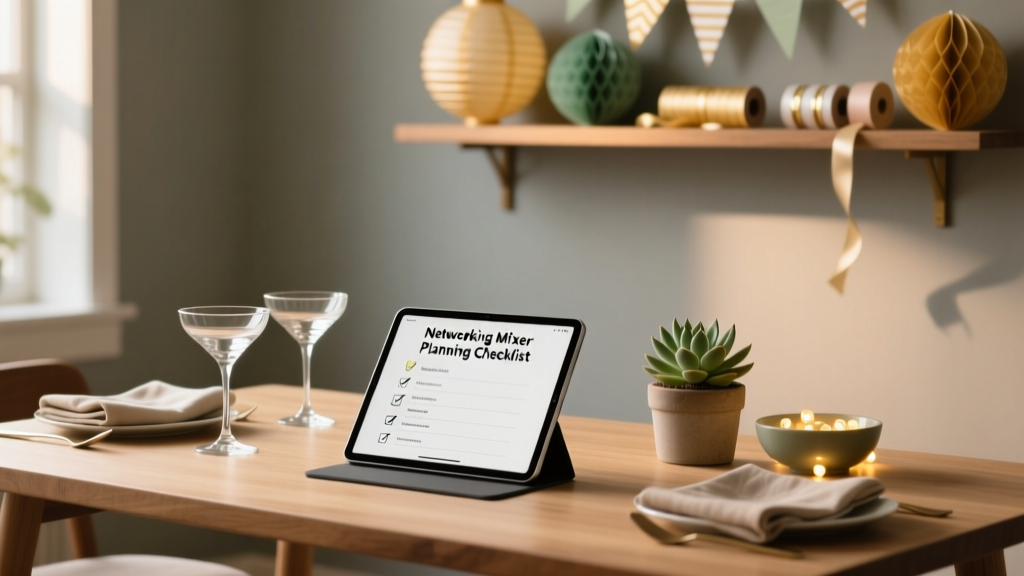
A Networking Mixer Planning Checklist
Networking mixers look simple on paper: reserve a space, offer a drink, invite people, and let the connections happen. In reality, the best mixers feel effortless because the planning is intentional—right down to the room flow, the check-in process, and how you nudge guests into meaningful conversations without making it awkward.
A well-coordinated networking event does more than fill a room. It creates the conditions for introductions, follow-ups, and future opportunities. When you plan the experience with clear goals, a realistic timeline, and a detailed event planning checklist, you reduce last-minute stress and increase the odds that guests leave saying, “That was worth my time.”
This guide gives you a practical, step-by-step networking mixer planning checklist with timeline templates, budget considerations, vendor selection tips, and real-world examples—so you can host a polished mixer that feels warm, organized, and high-value.
Define the Purpose and “Win Conditions” for Your Mixer
Before you select a venue or design a menu, get clear on what success looks like. This keeps your party organization decisions aligned and prevents scope creep.
Set 2–4 measurable goals
- Attendance: 60 RSVPs / 45 check-ins
- Connection outcomes: 100+ new LinkedIn connections or 30+ business card exchanges
- Program engagement: 70% participation in one structured networking moment (e.g., prompt cards, speed intros)
- Sponsorship/brand goals: 150 product touchpoints, 25 qualified leads, or 10 demo sign-ups
Choose a networking format that matches your audience
- Open mixer: Best for community groups and broad industries.
- Curated introductions: Best for founders, investors, job-seekers, or high-stakes matchmaking.
- Panel + mixer: Great for thought leadership and higher perceived value.
- Theme-based stations: “Hiring,” “Partnerships,” “Marketing,” etc., to reduce small-talk friction.
Networking Mixer Planning Timeline (With Checklist)
Use this timeline template as your master event coordination plan. Adjust based on event size, venue availability, and whether you need permits or sponsors.
6–8 Weeks Out: Foundations
- Confirm event goals, target guest list size, and ideal attendee mix (roles, industries, seniority).
- Select date and time:
- Weeknights (Tue–Thu) typically perform best for professional networking.
- Consider 5:30–7:30 PM for after-work accessibility.
- Choose format: open mixer, structured prompts, speed networking segment, or panel + mixer.
- Set budget and pricing model:
- Free RSVP (higher no-show rate) vs. paid tickets (better attendance) vs. refundable deposit.
- Book venue (or short-list 2–3 finalists).
- Identify vendors needed: catering, bar, AV, photographer, security, rentals, staffing.
- Draft event run-of-show (high-level schedule).
4–6 Weeks Out: Details and Promotion
- Build the registration page (Eventbrite, Splash, or your site) with:
- Clear audience description (“for product leaders and founders”)
- Dress code and what to bring
- Agenda highlights
- Accessibility and transportation notes
- Create your outreach plan:
- Email invitations (2–3 sends)
- LinkedIn event page + partner shares
- Community calendar posts
- Confirm catering direction (heavy appetizers vs. light bites; dietary options).
- Confirm bar plan:
- Hosted bar, drink tickets, or cash bar
- Mocktails and non-alcoholic options (now expected at modern events)
- Design networking supports:
- Name tags (first name + company + “topic of interest”)
- Conversation prompt cards
- Optional “ask” badges: Hiring / Seeking job / Looking for partners
- Start sponsor outreach if applicable (include deliverables: logo placement, speaking moment, lead capture).
2–4 Weeks Out: Operational Planning
- Finalize floor plan and guest flow:
- Check-in near entrance but not blocking it
- Food and bar separated to reduce congestion
- Quiet corners for deeper conversations
- Confirm AV needs:
- Mic and small speaker for announcements
- Background music at conversation-friendly volume
- Projector only if needed (avoid distracting screens)
- Order/prepare signage:
- Welcome sign
- Agenda sign
- Sponsor signage (if applicable)
- Directional signs: restrooms, coat area, exits
- Recruit staff/volunteers and assign roles:
- Lead coordinator
- Check-in lead + 1–2 helpers
- Floater/connector (introduces people)
- Vendor liaison
- Confirm vendor timelines for load-in, setup, and breakdown.
- Plan your data capture and follow-up method:
- QR code at check-in for contact sharing
- Opt-in attendee list
- Post-event email with resources and next event link
1 Week Out: Final Confirmations
- Send final attendee reminder with parking/transit, time, dress code, and a “how to network” tip.
- Confirm final headcount and guarantees with venue/caterer.
- Print materials:
- Check-in list or QR check-in app backup
- Name tags and markers
- Signage and table tents
- Run-of-show and staff contact sheet
- Prepare an event kit:
- Gaffer tape, scissors, pens, zip ties
- Phone chargers, extension cords
- Stain remover, lint roller
- First aid basics
- Confirm a rain plan if any portion is outdoors.
Event Day: Execution Checklist
- Arrive early: 90–120 minutes for small mixers; 2–3 hours for larger events.
- Walk the space: entrances, restrooms, lighting, temperature, music volume.
- Set up check-in: alphabetized list, QR scanner, extra blank name tags.
- Brief staff: goals, schedule, escalation plan, VIPs to greet.
- Test AV: mic, speaker, playlist, any presentation.
- Greet early arrivals: set an inviting tone and prevent clumping.
- Make a welcome announcement: 2 minutes max; share purpose and one networking prompt.
- Run a light structure moment: optional 5-minute “turn to someone new” prompt.
- Monitor flow: refill stations, adjust music, move bottlenecks.
- Capture content: a few candid photos, sponsor shots, room vibe.
- Close strong: final thank-you + how to follow up (QR code, next event date).
Post-Event (Within 48 Hours): Follow-Up
- Send a thank-you email with:
- Event photos (or a link)
- Sponsor acknowledgments
- Opt-in attendee directory (if applicable)
- Next event announcement
- Send a short feedback survey (5 questions max).
- Reconcile budget and vendor invoices.
- Document lessons learned: what drove connections, where flow broke, timing notes.
Budget Considerations (Sample Breakdown)
Your event budget determines the guest experience more than any single design detail. Use this sample structure for a 60-person professional networking mixer.
Example budget for 60 guests: $2,500–$6,000 range
- Venue: $500–$2,000 (minimum spend or rental fee)
- Food: $900–$2,000 (light bites to hearty appetizers)
- Beverage: $400–$1,500 (cash bar, drink tickets, or hosted bar)
- Staffing: $200–$800 (check-in support, event assistant)
- AV / music: $0–$400 (speaker rental if needed)
- Signage + name tags: $50–$200
- Photographer/content: $0–$800
- Contingency (8–12%): $200–$600
Cost-control strategies that don’t feel “cheap”
- Use drink tickets: Two tickets per person controls spend and keeps bar lines manageable.
- Prioritize “easy-to-eat” foods: passed bites, skewers, cups—less mess, better mingling.
- Shorten the event: 90 minutes can feel premium and reduces food/beverage needs.
- Partner with a sponsor: “Beverages sponsored by…” is a natural fit for mixers.
Vendor Selection Tips (Venue, Catering, AV, Photography)
Venue selection checklist
- Layout: Can guests circulate easily? Are there natural conversation areas?
- Noise level: Hard surfaces can create echo; ask about acoustic options.
- Accessibility: Step-free entry, accessible restrooms, clear signage.
- Transit and parking: Clear directions reduce late arrivals and no-shows.
- Package clarity: What’s included—tables, linens, staffing, AV, cleanup?
Catering tips for a networking mixer
- Plan 6–10 bites per person for a 2-hour mixer (more if it overlaps dinner).
- Always include vegetarian and at least one gluten-free option.
- Avoid foods that require a full plate-and-fork commitment or cause strong odors.
AV and music
- Use background music to warm up the room, but keep it conversation-forward.
- If you have announcements, a handheld mic is often enough.
- Confirm power access and have an extension cord and backup playlist offline.
Photography/content
- For marketing future events, prioritize:
- Wide room shots (energy)
- Candid small-group conversations
- Branded signage/sponsor moments
- Set expectations around privacy and opt-out options if your audience is sensitive to being photographed.
Real-World Examples: What Works at Different Mixer Styles
Example 1: Startup founders + operators mixer (80 guests)
- Goal: Partnership and hiring connections
- Structure: 10-minute welcome + “What are you building?” prompt cards
- Winning detail: Name tags included “Looking for:” Hiring / Funding / Customers
- Result: Higher-quality introductions and fewer isolated attendees
Example 2: Industry association happy hour (45 guests)
- Goal: Member retention and new member recruitment
- Structure: Open mingle + optional “host introductions” every 20 minutes
- Winning detail: Greeter assigned to introduce newcomers within 5 minutes of arrival
Common Networking Mixer Planning Mistakes to Avoid
- No clear audience definition: If “everyone” is invited, networking value drops. Curate.
- Underestimating check-in: A slow entry creates a bad first impression and clogs the door.
- Loud music or poor acoustics: Guests leave early if they can’t talk comfortably.
- Food placement bottlenecks: One table for everything creates long lines and dead zones.
- Too much programming: Mixers should breathe. Keep structure light and useful.
- No follow-up plan: Without a post-event email and easy way to reconnect, momentum fades.
- Ignoring non-drinkers: Current event planning trends favor inclusive beverage options (quality mocktails, infused waters, NA beer/wine).
Pro Tips and Current Trends to Elevate Your Mixer
- Intentional connection design: Hosts and “connectors” circulate and introduce guests based on stated interests.
- QR-based contact sharing: A simple QR code on signage can link to a digital business card or opt-in attendee directory.
- Micro-experiences: A photo moment, tasting station, or interactive prompt wall gives guests a natural conversation starter.
- Sustainability-minded planning: Compostable serviceware, minimal printed materials, and right-sized catering reduce waste and align with modern expectations.
- Psychological safety: Clear welcome remarks, inclusive language, and visible staff support make it easier for new attendees to participate.
FAQ: Networking Mixer Planning
How long should a networking mixer be?
Most professional mixers work best at 90 minutes to 2.5 hours. Shorter events feel focused and reduce costs, while longer events can lead to drop-off if there’s no light structure.
How many people should I invite if I want 60 attendees?
Plan for no-shows. For free RSVPs, invite 1.5x–2x your target (90–120 invites for 60 attendees). For paid tickets, 1.1x–1.3x is often enough.
What food works best for networking events?
Choose bite-sized, low-mess options that can be eaten standing up: skewers, mini wraps, cups, sliders, and passed hors d’oeuvres. Include vegetarian and gluten-free choices.
Should I do name tags?
Yes—name tags are one of the highest-ROI networking tools. Use large first names and add a helpful detail like company, role, or “Ask me about…” to spark conversation.
How do I encourage networking without making it forced?
Use light structure: a two-minute welcome with a prompt, optional conversation cards, and a host who makes introductions. Avoid long speeches and keep the vibe social.
Do I need event insurance?
Many venues require it, and it’s a smart risk management step. Ask your venue what coverage is needed (general liability is common) and coordinate with your insurance provider early.
Actionable Next Steps: Your Quick-Start Mixer Plan
- Pick your purpose: Decide who the mixer is for and what outcomes you want.
- Lock the basics: Date, venue, budget, and format.
- Build your checklist: Use the timeline above and assign owners to every task.
- Design connection moments: Name tags, prompts, and a greeter/connector role.
- Confirm vendors early: Especially venue, catering, and staffing.
- Plan follow-up: A post-event email and survey within 48 hours.
If you want more practical event planning checklists, party organization templates, and coordination tips, explore the latest guides at smartpartyprep.com.
More Articles
 What Party Was Ulysses S Grant Really In? The Surprising Truth Behind His Political Identity — And Why Most History Books Get It Wrong (Spoiler: It’s Not Just 'Republican')
 What Is a Socialist Party? The Truth Behind the Label — Debunking 7 Myths That Keep Voters Confused (and Why It Matters More Than Ever in 2024)
 How Much Tea Was Dumped at the Boston Tea Party? The Exact Tonnage, Ship-by-Ship Breakdown, and Why Modern Reenactments Get It Wrong Every Time
What to Get Someone for Engagement Party: 7 Thoughtful, Budget-Savvy Gifts That Won’t Feel Like an Afterthought (Plus What to Skip—92% of Guests Get This Wrong)
What Really Happened? The Full 'A Party Gone Wrong' Cast Breakdown — Who Was Responsible, What Went Viral, and How to Prevent Your Own Event Disaster
How Much Tea Was Dumped at the Boston Tea Party? The Exact Tonnage, Ship-by-Ship Breakdown, and Why Modern Reenactments Get It Wrong Every Time
What to Get Someone for Engagement Party: 7 Thoughtful, Budget-Savvy Gifts That Won’t Feel Like an Afterthought (Plus What to Skip—92% of Guests Get This Wrong)
What Really Happened? The Full 'A Party Gone Wrong' Cast Breakdown — Who Was Responsible, What Went Viral, and How to Prevent Your Own Event Disaster
 Who Was in the Donner Party? The Full Roster Revealed — Names, Ages, Family Ties, and Untold Stories Behind America’s Most Infamous Pioneer Group
 Top 25 Tips for a Grand Opening
What to Wear for a House Party: The 7-Minute Outfit Formula That Works Every Time (No More Last-Minute Panic or Overthinking)
What Does Political Parties Mean? — The 5-Minute Breakdown That Clears Up Confusion, Debunks Myths, and Shows Exactly How They Shape Your Daily Life (Even If You Don’t Vote)
Top 25 Tips for a Grand Opening
What to Wear for a House Party: The 7-Minute Outfit Formula That Works Every Time (No More Last-Minute Panic or Overthinking)
What Does Political Parties Mean? — The 5-Minute Breakdown That Clears Up Confusion, Debunks Myths, and Shows Exactly How They Shape Your Daily Life (Even If You Don’t Vote)