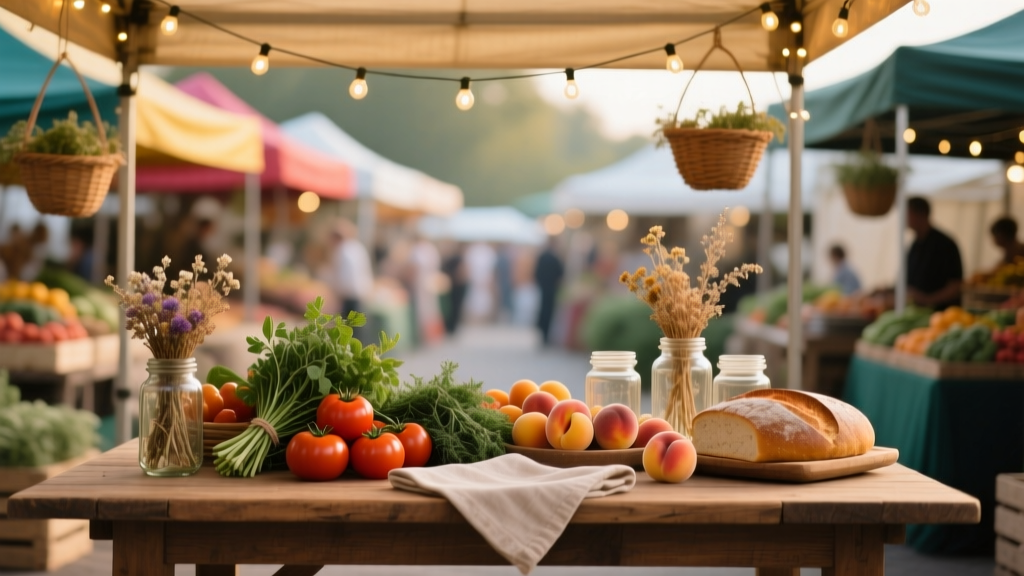
A Farmers Market Planning Checklist
A successful farmers market feels effortless to shoppers: local produce beautifully displayed, live music in the background, easy parking, clean restrooms, and vendors who are happy to be there. Behind that relaxed vibe is serious event planning, clear coordination, and a checklist-driven approach that keeps small issues from turning into big problems.
Whether you’re launching a new community market, adding a seasonal pop-up to an existing event calendar, or organizing a one-day market as part of a festival, planning matters. Farmers and makers invest time and inventory; guests expect a safe, accessible, family-friendly experience; and sponsors and municipalities need confidence that you’ll deliver a well-managed event. The payoff: higher vendor retention, stronger foot traffic, smoother logistics, and a market that becomes a recurring tradition.
This farmers market planning checklist breaks the process into a step-by-step timeline, budget framework, vendor selection tips, and proven organizational strategies used by professional event coordinators.
Define Your Market Concept (Before You Book Anything)
Clarify goals and success metrics
Start with a simple market brief that guides every decision. Identify what “success” means so you can plan staffing, layout, marketing, and vendor mix accordingly.
- Primary goal: Community gathering, local food access, fundraising, tourism activation, vendor revenue, or neighborhood revitalization
- Success metrics: Total attendance, vendor sales targets, number of vendors, email sign-ups, sponsorship revenue, return rate for vendors, social engagement
- Market format: Weekly, monthly, seasonal series, or single-day pop-up
Choose your audience and “promise”
Define who the market is for and what experience you want to deliver.
- Target shoppers: Families, foodies, commuters, seniors, tourists, college students
- Experience promise: “Fresh and local,” “family fun,” “chef demos,” “artisan goods,” “music + food trucks,” “low-waste shopping”
Real-world example
Downtown Saturday Pop-Up: A business association wants increased foot traffic from 9 a.m.–1 p.m. The market includes 20 vendors (produce, baked goods, flowers), two coffee carts, kids’ activity table, and a small music set. Success is measured by attendance, merchant feedback, and 300 new newsletter sign-ups.
Secure the Site, Permits, and Compliance
Site selection checklist
- Foot traffic potential: Nearby neighborhoods, transit stops, existing attractions
- Parking and loading: Vendor load-in route, customer parking plan, ADA drop-off
- Utilities: Power access (or generator policy), water access if needed
- Restrooms: Permanent facilities or portable restrooms with handwashing stations
- Shade and weather cover: Trees, awnings, tenting allowances
- Noise considerations: Nearby residences, sound restrictions, music cutoff times
- Emergency access: Fire lanes, clear paths for EMS
Permits and insurance (typical requirements)
Requirements vary by city/county, but most markets need a combination of the following:
- Special event permit or public assembly permit
- Health department permits (especially if prepared foods are sold)
- Food handling requirements (handwashing, temperature control, sampling rules)
- Fire department approval (tents, cooking equipment, propane)
- Business license or market operator registration
- Certificate of insurance (general liability; often $1M per occurrence) and additional insured endorsements for venue/municipality
Pro tip: Create a shared “compliance folder” (Google Drive/Dropbox) with vendor COIs, permits, and contact info. This is a proven event coordination strategy that reduces last-minute scrambling.
Build Your Farmers Market Planning Team
Key roles to assign
- Market Manager: Oversees operations, vendor relations, and day-of decisions
- Vendor Coordinator: Applications, approvals, onboarding, communications
- Logistics Lead: Site map, load-in/out, power, waste, restrooms, signage
- Marketing Lead: Promotions, email, social media, partnerships
- Volunteer Captain: Scheduling, training, check-in
- Safety Officer: First aid, incident log, weather plan, crowd flow
Day-of staffing ratios (rule of thumb)
- 1 Market Manager per market
- 1–2 floaters per 20 vendors (help with questions, issues, trash checks)
- 1 check-in staff member per vendor entrance point
- 1 volunteer per activity zone (kids area, info booth, surveys)
Vendor Selection: Curate a Balanced Market
Vendor mix guidelines
A strong market feels abundant without being repetitive. Use categories and caps to create variety.
- Core farm vendors: Produce, eggs, meat, dairy, honey
- Value-added foods: Jams, pickles, sauces, baked goods
- Prepared foods: Food trucks, ready-to-eat stalls, coffee
- Floral and plants: Bouquets, seedlings, herbs
- Artisan goods: Soaps, ceramics, textiles (keep curated so the market stays “farmers market” first)
Vendor application essentials
- Product list and sourcing details (local/handmade definitions)
- Photos of booth setup
- Licenses/permits and insurance info
- Power needs and equipment list (especially cooking/propane)
- Agreement to market rules (arrival times, waste, sampling, music levels)
Selection tips used by pros
- Prioritize reliability: Confirm capacity and production volume to avoid no-shows.
- Create a waitlist: Essential for last-minute cancellations.
- Protect the shopper experience: Cap similar vendors (e.g., no more than 2–3 candle sellers).
- Spotlight trends: Low-waste packaging, refill stations, culturally diverse foods, and “hyper-local” seasonal produce are strong draws in current event planning trends.
Step-by-Step Planning Timeline (With Checklist)
12–16 weeks out: Foundation and approvals
- Define concept, goals, and market format
- Secure venue/site and confirm dates
- Start permit applications; confirm insurance requirements
- Create preliminary site map (booth count, entry/exit, fire lanes)
- Set vendor fees and sponsorship packages
- Draft vendor rules and application form
- Build your event planning timeline in a shared project tool (Trello/Asana or a spreadsheet)
8–12 weeks out: Vendors and logistics planning
- Launch vendor applications and outreach
- Confirm equipment rentals (tents, tables, barricades, portable restrooms)
- Plan power distribution (where outlets are, generator rules)
- Develop emergency plan (weather, medical, lost child, evacuation)
- Book entertainment or programming (music, chef demo, kids craft table)
- Set up marketing assets (branding, event page, vendor spotlight template)
4–8 weeks out: Lock in the details
- Select and confirm vendors; collect deposits and paperwork
- Finalize site map with booth assignments and load-in route
- Confirm health department requirements for sampling and prepared foods
- Create signage plan (entrance signs, wayfinding, rules, sponsor banners)
- Coordinate waste plan (trash, recycling, compost if offered)
- Recruit volunteers; assign roles and shifts
- Launch coordinated marketing: email, social posts, partner cross-promotion
1–3 weeks out: Coordination and communication
- Send vendor packet (arrival times, map, parking, rules, contacts)
- Confirm rentals and delivery times
- Print materials: site maps, vendor list, signs, incident forms
- Prepare cash handling plan for vendor fees (if applicable) and donation stations
- Confirm first aid kit, water station, staff radios/phone tree
- Schedule a walk-through with site owner/municipality if needed
48–72 hours out: Final checks
- Check weather and trigger weather plan if needed (wind limits for tents, rain adjustments)
- Confirm vendor attendance and fill gaps from waitlist
- Reconfirm load-in instructions and parking restrictions
- Prep check-in supplies: wristbands/badges, cones, tape, zip ties, extra pens
Day-of market: Operational checklist
- Arrival and setup: Staff arrives early; place signage and confirm fire lanes.
- Vendor check-in: Verify booth placement, power needs, permits as required.
- Safety sweep: Trip hazards, tent weights, cords covered, cooking zones monitored.
- Open to public: Info booth staffed; announce programming times.
- During market: Trash checks every 30–45 minutes; restrooms restocked; manage crowd flow.
- Closing: Stagger load-out to prevent bottlenecks; final site sweep; incident log completed.
Post-event (within 72 hours): Follow-up and improvement
- Send vendor survey (sales range, attendance perception, improvement ideas)
- Thank sponsors and partners; share attendance highlights
- Post photos and recap; collect testimonials
- Reconcile budget; review what ran over/under
- Update your checklist for the next market date
Budget Considerations (With Sample Breakdown)
Budgeting is where great party organization becomes sustainable event coordination. Plan for fixed costs first, then scale program elements based on confirmed revenue.
Common revenue sources
- Vendor booth fees (tiered pricing for farms vs. makers)
- Sponsorships (stage sponsor, kids zone sponsor, reusable bag sponsor)
- Municipal/community grants
- Donations or “round-up” contributions
- Merchandise (tote bags, stickers)
Typical expense categories
- Permits and insurance
- Site rental fees
- Equipment rentals (tents, tables, chairs, barricades)
- Portable restrooms/handwashing stations
- Security and medical support (as required)
- Marketing (printing, ads, photography)
- Staffing/contractor pay (market manager, cleanup crew)
- Entertainment/programming
- Waste management (dumpsters, compost hauling)
Sample budget (single-day market, 25 vendors)
- Permits and insurance: $600–$1,500
- Site fee: $0–$2,000
- Tent/barricade rentals: $800–$2,500
- Portable restrooms + handwash: $400–$1,200
- Staffing/contractors: $700–$2,000
- Marketing and signage: $300–$1,000
- Entertainment/programming: $200–$1,000
- Waste/cleanup: $200–$800
- Estimated total: $3,200–$12,000
Budget tip: Add a 10% contingency line for last-minute rentals, extra trash hauling, or weather-related needs (like additional tent weights).
Layout and Guest Experience: Make It Easy to Shop
Proven layout strategies
- Clear entry point: Welcome sign, market hours, map, and “today’s highlights” board
- Anchor vendors: Place high-demand farms at the back to pull guests through the market
- Wide aisles: Plan for strollers, mobility devices, and lines at popular booths
- Separate cooking zone: Keep food trucks/prepared foods together for ventilation and safety
- Rest zone: Shaded seating encourages longer stays and higher spend
Current trends that improve flow and satisfaction
- QR codes at the info booth: Vendor directory, schedule, and feedback survey
- Low-waste stations: Clearly labeled compost/recycling/trash with volunteers to guide
- Experience additions: Chef demos, “meet the farmer” moments, kids seed-planting station
- Accessible planning: ADA routes, seating, and clear signage in large fonts
Common Farmers Market Planning Mistakes to Avoid
- Overbooking similar vendors: Too many of the same product reduces sales and causes vendor drop-off.
- No weather plan: Wind and rain impact tents, signage, and attendance. Set thresholds and communicate early.
- Underestimating load-in/load-out: Without a traffic plan, you get gridlock and safety hazards.
- Weak signage and wayfinding: Shoppers can’t find entrances, restrooms, or key vendors.
- Skipping vendor communication: Vendors need clear rules, arrival windows, and contact numbers.
- Not planning waste and restrooms: Overflowing bins and long restroom lines quickly damage guest experience.
- Ignoring compliance: Missing COIs, improper sampling, or unsafe propane setups can shut you down.
FAQ: Farmers Market Event Planning
How many vendors do I need for a successful farmers market?
For a small community pop-up, 12–20 vendors can feel full if the vendor mix is balanced (produce, baked goods, proteins, flowers, prepared food). For a destination market, 30–60+ vendors may be appropriate. Prioritize variety and quality over sheer count.
What should I charge for booth fees?
Booth fees depend on your costs and your market’s demand. Many markets use tiered pricing (farms lower, prepared foods higher). A practical approach is to set fees that cover baseline expenses first, then add sponsorships to fund enhancements like music, kids activities, and extra signage.
Do I need insurance if vendors have their own insurance?
Usually, yes. Vendors’ insurance protects them; the market operator typically needs general liability coverage for the overall event. Many venues and municipalities require your policy plus vendor COIs naming them as additional insured.
What’s the best way to handle vendor cancellations?
Use a waitlist and set clear deadlines in your vendor agreement (refund policy, cancellation window). Confirm attendance 72 hours before the market and fill any gaps quickly to maintain the shopper experience.
How do I promote a farmers market effectively?
Use a coordinated event marketing plan: weekly vendor spotlights, short-form video of products, community calendar listings, partnerships with local gyms/schools/apartments, and a consistent email newsletter. Day-of signage and cross-promotion by vendors are often the most reliable drivers of attendance.
What are day-of essentials a market manager should bring?
Printed site map, vendor list with phone numbers, incident log, first aid kit, tape/zip ties/scissors, extra pens, extension cords and cord covers (if allowed), tent weight backups, trash bags, a portable charger, and a clear communication plan for staff and volunteers.
Next Steps: Turn This Checklist Into Your Market Plan
Start by drafting your one-page market brief (goals, audience, vendor mix, date, site). Then build your planning timeline, open vendor applications, and lock in permits and insurance early. Once the foundation is set, the rest becomes repeatable: a reliable vendor process, a clean site map, and day-of operations that run smoothly.
If you want more step-by-step event planning checklists, party organization templates, and coordination tips, explore the rest of the guides on smartpartyprep.com.
More Articles
 How Long Should a Birthday Party Last? The Science-Backed Sweet Spot (Not Too Short, Not Too Long) — Plus Age-Specific Timelines That Prevent Meltdowns & Maximize Joy
How to Change Party Affiliation in NJ: A Step-by-Step Guide That Takes Just 5 Minutes (No Mail, No Waiting, and Zero Risk of Missing Primary Deadlines)
How Long Should a Birthday Party Last? The Science-Backed Sweet Spot (Not Too Short, Not Too Long) — Plus Age-Specific Timelines That Prevent Meltdowns & Maximize Joy
How to Change Party Affiliation in NJ: A Step-by-Step Guide That Takes Just 5 Minutes (No Mail, No Waiting, and Zero Risk of Missing Primary Deadlines)
 A Meditation Event Timeline Template
How Do You Make Punch for a Party Without It Tasting Like Sad Lemonade or Turning Into a Sugary Slush? (7 Proven Formulas That Actually Impress Guests)
What Is a Rave Party Like? A Realistic, Sensory-First Guide for First-Timers (No Hype, No Judgment, Just What You’ll Actually Experience)
What to Wear to Dress to Impress Party: The 7-Second Rule (and Why Your 'Nice Outfit' Isn’t Enough Anymore)
A Meditation Event Timeline Template
How Do You Make Punch for a Party Without It Tasting Like Sad Lemonade or Turning Into a Sugary Slush? (7 Proven Formulas That Actually Impress Guests)
What Is a Rave Party Like? A Realistic, Sensory-First Guide for First-Timers (No Hype, No Judgment, Just What You’ll Actually Experience)
What to Wear to Dress to Impress Party: The 7-Second Rule (and Why Your 'Nice Outfit' Isn’t Enough Anymore)