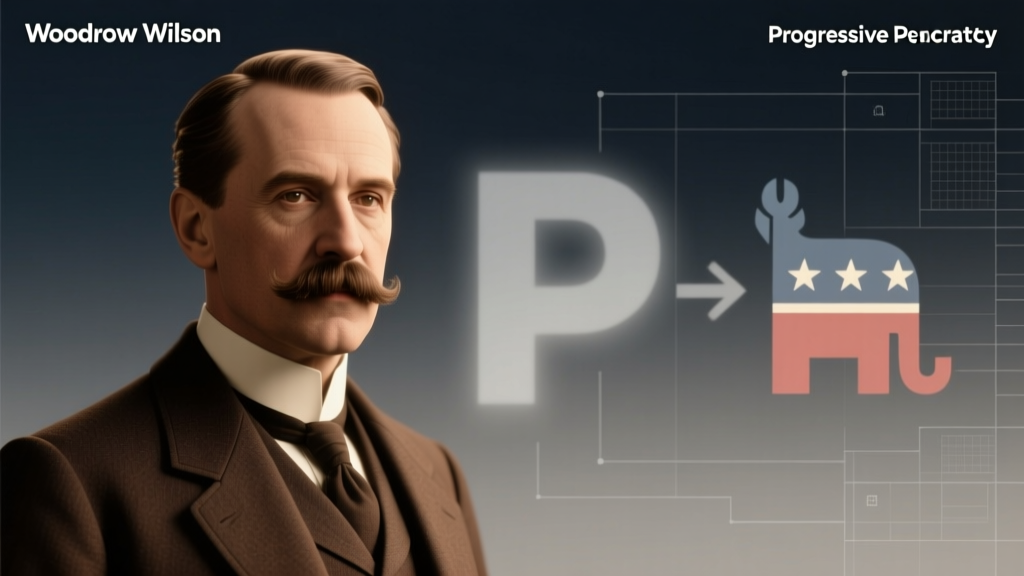
Woodrow Wilson's Party: Democratic Legacy
Why Woodrow Wilson’s Political Party Still Matters in 2024
What political party was Woodrow Wilson? He was a member of the Democratic Party—but that simple answer barely scratches the surface of one of the most consequential, contradictory, and contested presidencies in U.S. history. While today’s Democratic Party proudly traces its progressive lineage back to Wilson’s New Freedom agenda, historians increasingly emphasize how his administration institutionalized racial segregation in federal agencies, rolled back civil service protections for Black Americans, and championed policies that entrenched white supremacy under a veneer of reform. Understanding Wilson’s party identity isn’t just about labeling—it’s about reckoning with how political branding, ideological evolution, and moral compromise shape national memory.
The Democratic Nominee Who Broke a 16-Year Republican Streak
When Woodrow Wilson accepted the Democratic nomination at the 1912 Democratic National Convention in Baltimore, he did so as a relative outsider: a Princeton University president and former governor of New Jersey—not a career politician. His victory over both Republican incumbent William Howard Taft and Progressive ‘Bull Moose’ candidate Theodore Roosevelt marked the first Democratic presidential win since Grover Cleveland in 1892. Crucially, Wilson ran on a platform he called the New Freedom, distinguishing himself from Roosevelt’s New Nationalism by advocating antitrust enforcement, tariff reform, and banking decentralization—not top-down regulation. His Democratic identity wasn’t inherited; it was forged in real-time through coalition-building with Southern conservatives, urban labor organizers, and progressive intellectuals like Louis Brandeis and Herbert Croly.
Wilson’s party allegiance was strategic and deeply contextual. In the early 20th century, the Democratic Party was still recovering from Civil War-era stigma in the North while dominating the post-Reconstruction South. His 1912 campaign leaned heavily on states’ rights rhetoric and avoided challenging Jim Crow—a decision that secured vital electoral votes but came at an enormous human cost. As historian Eric Rauchway notes, Wilson didn’t just tolerate segregation; he actively expanded it. Within months of taking office, he authorized the segregation of federal workplaces in Washington, D.C., including the Treasury and Post Office departments—reversing decades of integrated employment and forcing Black civil servants into separate, lower-paying roles or out of government entirely.
From Princeton Professor to Party Architect: How Wilson Reshaped the Modern Democratic Coalition
Before Wilson, the Democratic Party was largely defined by its opposition to Reconstruction, support for laissez-faire economics, and defense of agrarian interests. Wilson rebranded it as the party of active, expert-led reform. His administration created three enduring institutions: the Federal Reserve System (1913), the Federal Trade Commission (1914), and the graduated income tax (via the 16th Amendment, ratified in 1913). Each reflected his belief in ‘scientific administration’—a technocratic vision where trained professionals, insulated from partisan politics, would manage complex systems like banking and commerce.
This shift laid groundwork for FDR’s New Deal—but also revealed deep fissures. Wilson’s progressives supported labor rights (e.g., the Clayton Antitrust Act exempted unions from antitrust prosecution) yet opposed women’s suffrage until 1918—only endorsing the 19th Amendment after sustained pressure from activists like Alice Paul and the National Woman’s Party. His administration jailed suffragists who picketed the White House, used forced feedings during hunger strikes, and dismissed their demands as ‘unpatriotic’ during wartime. These contradictions weren’t anomalies—they were features of a party balancing Northern progressivism with Southern white supremacy.
A revealing case study is Wilson’s relationship with W.E.B. Du Bois. Initially hopeful, Du Bois endorsed Wilson in 1912, writing in The Crisis that ‘the colored people of this country have reason to hope much from a Democratic administration.’ By 1914, after meeting with Wilson and witnessing federal segregation intensify, Du Bois declared the president ‘a bitter disappointment’ and launched scathing editorials accusing the administration of betraying democracy itself. This rupture signaled a broader realignment: Black voters began shifting toward the Republican Party (then associated with Lincoln and emancipation) and wouldn’t pivot en masse to the Democrats until the New Deal era—decades after Wilson’s death.
Myths vs. Reality: Debunking Common Misconceptions About Wilson’s Party Identity
Popular narratives often flatten Wilson’s political identity into either ‘progressive hero’ or ‘racist villain’—but neither captures the full complexity of his Democratic affiliation. Let’s clarify two persistent myths:
- Myth #1: “Wilson was a moderate Democrat who avoided extreme positions.” Reality: Wilson was ideologically decisive and politically ruthless. He pushed through the Underwood Tariff (cutting rates by nearly 30%) over fierce opposition—even threatening to take his case directly to the public via cross-country speaking tours when Senate Democrats balked. He insisted on personally drafting the Federal Reserve Act’s final language, overriding objections from bankers and congressmen alike. His moderation was tactical, not philosophical.
- Myth #2: “The Democratic Party of Wilson’s era was the same as today’s party.” Reality: The ideological map flipped dramatically between 1912 and 1964. Wilson’s Democrats included segregationist Dixiecrats, prohibitionists, and anti-imperialists; today’s party includes civil rights advocates, pro-choice feminists, and climate activists. The 1964 Civil Rights Act triggered the ‘Southern Strategy,’ accelerating the exodus of white conservatives from the Democratic to the Republican Party. Wilson’s legacy is thus claimed selectively—his economic reforms embraced, his racial policies disavowed.
Key Historical Milestones and Party Alignment: A Comparative Timeline
| Year | Event | Party Context | Impact on Democratic Identity |
|---|---|---|---|
| 1910 | Elected Governor of New Jersey as Democrat | First Democratic NJ governor in 50 years; defeated machine-backed incumbent | Proved reform-minded Democrats could win statewide without patronage networks |
| 1912 | Won presidency with 41.8% popular vote | Ran as Democratic nominee amid GOP split; carried 40 states | Ended 16-year Republican hold on White House; revived Democratic national viability |
| 1913 | Segregated federal offices | Acted with support of Southern Democratic cabinet members (e.g., Postmaster General Albert Burleson) | Institutionalized racial hierarchy within federal bureaucracy; emboldened Jim Crow expansion |
| 1916 | Re-elected on ‘He Kept Us Out of War’ slogan | Narrowly won swing states like California by <12,000 votes | Demonstrated Democrats could win nationally while maintaining Southern base and appealing to peace voters |
| 1919 | Failed to secure Senate ratification of Treaty of Versailles | Faced bipartisan opposition; 7 senators broke with party to oppose League of Nations | Exposed limits of Wilsonian idealism; weakened Democratic foreign policy credibility for a generation |
Frequently Asked Questions
Was Woodrow Wilson a Republican or a Democrat?
Woodrow Wilson was a lifelong Democrat. He served as governor of New Jersey as a Democrat (1911–1913) and was elected the 28th U.S. president as the Democratic nominee in 1912 and 1916. Though he admired some progressive Republicans like Theodore Roosevelt, he never affiliated with the GOP—and in fact ran against Roosevelt in 1912.
Did Woodrow Wilson change political parties during his career?
No. Wilson remained a Democrat throughout his political life. He entered politics as a Democrat in New Jersey, built his national profile within the Democratic Party, and governed as a Democratic president. His ideological evolution—from academic theorist to progressive reformer to wartime leader—occurred entirely within the Democratic framework.
Why is Woodrow Wilson associated with both progressivism and racism?
Wilson embodied the central paradox of early-20th-century American progressivism: advancing economic and administrative reforms while actively suppressing Black civil rights. His advocacy for scientific management, labor protections, and financial regulation coexisted with his endorsement of pseudoscientific racism, segregationist hiring practices, and censorship of dissent during WWI. Historians now view this duality not as inconsistency—but as foundational to how progressivism functioned in a racially stratified democracy.
How did Wilson’s Democratic Party differ from today’s Democratic Party?
Wilson’s Democratic Party was regionally fractured and ideologically diverse: dominated by white Southern conservatives on race, Northern urban progressives on economics, and rural populists on agriculture. Today’s Democratic Party is far more unified on civil rights and social issues but internally divided on economic policy (e.g., Medicare for All vs. public option). The party’s demographic base has also transformed—from majority-white and Southern-leaning to multiracial and urban/suburban-centered.
Did Woodrow Wilson support women’s suffrage?
Wilson opposed women’s suffrage for most of his presidency, arguing it was a state issue and fearing it would alienate Southern Democrats. Only after sustained protests—including arrests, jailings, and hunger strikes by the National Woman’s Party—did he endorse the 19th Amendment in 1918. Even then, he framed it as a ‘war measure’ to honor women’s contributions to WWI, not as a matter of fundamental rights.
Common Myths
Myth: Wilson’s Democratic Party was uniformly progressive across all issues.
Debunked: While Wilson advanced landmark economic reforms, his administration aggressively enforced racial segregation in federal employment and refused to condemn lynching or support anti-lynching legislation—despite repeated appeals from the NAACP and Black leaders.
Myth: Wilson’s party affiliation explains his foreign policy decisions.
Debunked: Wilson’s idealistic internationalism (e.g., Fourteen Points, League of Nations) had little precedent in Democratic foreign policy tradition, which historically emphasized non-interventionism and anti-imperialism. His vision was uniquely personal—and ultimately rejected by both Republican isolationists and Democratic pragmatists in the Senate.
Related Topics (Internal Link Suggestions)
- Progressive Era Politics — suggested anchor text: "Progressive Era political parties and reform movements"
- Woodrow Wilson’s Domestic Policies — suggested anchor text: "Wilson’s New Freedom agenda and legislative achievements"
- Racial Segregation in Federal Government — suggested anchor text: "How Wilson’s administration segregated federal workplaces"
- Democratic Party Realignment History — suggested anchor text: "When and why the Democratic and Republican parties switched ideologies"
- Presidential Legacies and Historical Reassessment — suggested anchor text: "How historians reinterpret presidents like Wilson and Jefferson"
Conclusion & Next Steps
So—what political party was Woodrow Wilson? He was a Democrat, yes—but reducing his legacy to a party label erases the moral complexity, regional tensions, and lasting consequences embedded in that affiliation. His presidency reminds us that political parties are not static brands but evolving coalitions shaped by power, principle, and prejudice. If you’re researching Wilson for a school project, civic presentation, or historical analysis, go beyond party ID: examine his speeches to Black leaders, read Du Bois’s critiques in The Crisis, compare his antitrust enforcement with modern tech regulation debates, or explore how Princeton University—his academic home—confronted his legacy through its 2020 Wilson School renaming. History doesn’t offer tidy answers—but it does demand thoughtful engagement. Start by downloading our free curated packet of Wilson-era primary documents, including Cabinet memos on segregation, suffrage protest transcripts, and Federal Reserve founding texts.
More Articles
 Stagette Party: Guest List, Budget & Timeline Risks
 How to Plan a 21st Birthday Party (2026)
 Birthday Party Length: The Science-Backed Sweet Spot (2026)
 How Long Should a Grad Party Be? (2026)
 What Is the Diddy Party Meme? (2026)
 Warm Taco Meat for Parties: 7 Tested Methods (2026)
 Farmers Market Photography Tips | Smart Party Prep
 Mifflin Block Party 2026: Official Date + Early Confirmation
 Allow Third-Party Cookies on Mac: Safari & Chrome (2026)
 Disney Christmas Party Tickets 2026 Prices & Savings