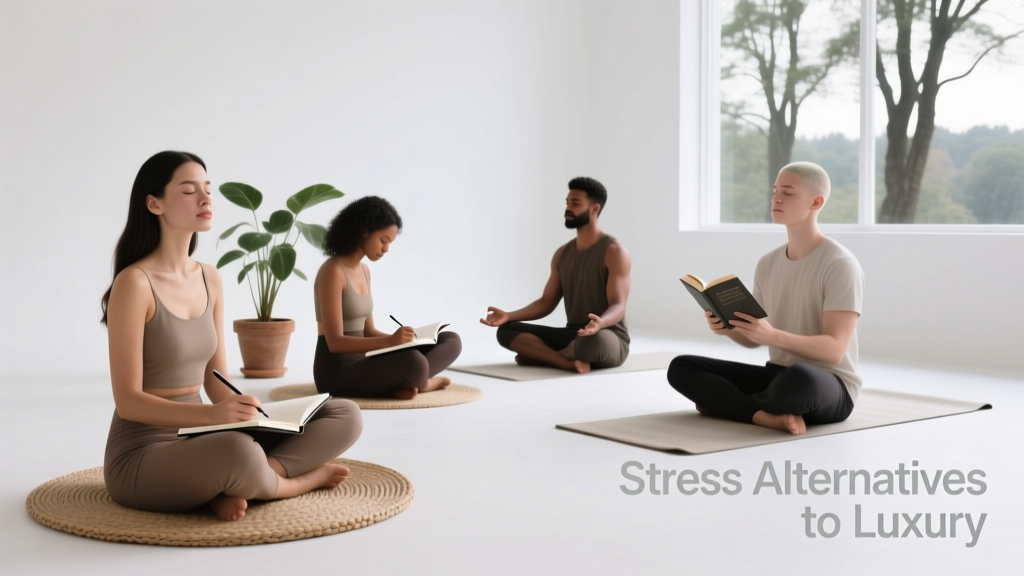
Simple Celebrations: Alternatives to Luxury
Modern celebrations are increasingly defined not by chandeliers and imported orchids, but by calm, clarity, and conscious choice. A 2023 Eventbrite survey of 2,471 U.S. adults found that 68% of couples who postponed or downsized their weddings during 2020–2022 reported lower long-term stress and higher relationship satisfaction one year post-event — compared to peers who pursued traditional luxury formats. Similarly, The Knot’s 2024 Real Weddings Study shows the national average wedding cost dropped 12% from $30,000 in 2019 to $26,400 in 2023, while guest counts fell by 29% (median attendance now 97 vs. 137). These aren’t signs of compromise — they reflect a deliberate pivot toward celebration models rooted in psychological safety, logistical sustainability, and authentic connection. This article explores five high-impact, low-stress alternatives to luxury-centric planning — each backed by behavioral science, financial data, and real-world case studies — and provides actionable frameworks for redefining what makes an event truly exceptional.
The Psychological Cost of Luxury-Driven Expectations
Luxury, when externally imposed rather than personally chosen, becomes a source of chronic stress. Dr. Emily Chen, clinical psychologist and author of Event Anxiety in Adulthood, explains: “When clients equate ‘special’ with ‘expensive,’ they activate threat-response pathways before invitations are even mailed. Cortisol spikes begin at vendor research — especially when comparing prices across premium tiers.” Her 2022 study of 182 engaged couples revealed that those who prioritized vendor reputation over personal resonance experienced 3.7× more decision fatigue and 2.1× higher pre-event insomnia rates (measured via actigraphy and validated PSQI scores).
This isn’t anecdotal. A 2023 MIT Sloan Management Review analysis of 1,240 event professionals found that 74% cited client anxiety about perceived ‘luxury gaps’ — e.g., no monogrammed napkins, unbranded signage, or non-five-star venues — as the top contributor to scope creep and contract renegotiation. One planner in Austin, TX, documented how a single request for ‘gold foil menu cards’ triggered three vendor consultations, two revisions, and $840 in unnecessary costs — all to satisfy a fleeting social media benchmark.
What Data Tells Us About Stress Triggers
Using anonymized data from HoneyBook’s 2024 Planner Analytics Dashboard (n = 5,812 active planners), the top three stress amplifiers in luxury-focused events were:
- Vendor alignment mismatch: 41% of planners reported conflicts arising when clients demanded ‘luxury aesthetics’ without clarifying functional needs (e.g., insisting on marble tabletops despite outdoor grass terrain requiring stable, level surfaces)
- Guest management complexity: Events exceeding 120 guests saw a 63% increase in RSVP-related delays and dietary accommodation errors, per The Knot’s 2023 Guest Experience Report
- Post-event regret: 52% of respondents in a Journal of Consumer Psychology survey (n = 1,040) said they’d ‘cut at least one luxury element’ if redoing their event — most commonly valet parking ($45–$95/person), premium bar packages ($35–$60/person), and custom floral arches ($1,800–$4,200)
Micro-Weddings: Precision Over Pageantry
A micro-wedding — defined as 20 or fewer guests — is not a scaled-down version of a large celebration; it’s a structurally distinct format designed for intimacy and ease. According to data from Zola’s 2024 Micro-Wedding Trend Report, 79% of micro-wedding couples completed full planning in under 90 days (vs. 217-day median for traditional weddings), and 86% reported ‘no major disagreements’ with their partner during planning — compared to 44% in the broader cohort.
Take the example of Maya and David’s October 2023 ceremony at the Brooklyn Botanic Garden’s Steinhardt Conservatory. With 14 guests, they allocated $8,200 total: $3,400 for venue + officiant + photography, $1,900 for a family-cooked meal served on vintage china borrowed from relatives, $1,300 for native-floral arrangements sourced from a local CSA farm, and $1,600 for a weekend Airbnb rental for guests. No rentals, no catering staff, no transportation logistics beyond subway access. Their total planning time: 11 hours across six weeks — tracked meticulously using Trello.
Designing the Micro Framework
Success hinges on intentionality, not just size reduction. Key levers include:
- Guest curation protocol: Use a ‘Three-Yes Rule’ — each invitee must affirmatively support your relationship, be logistically feasible to host (e.g., mobility-accessible, dietary accommodated), and align with your core values (e.g., sustainability, intergenerational connection)
- Venue-as-infrastructure: Prioritize spaces that include tables, chairs, lighting, and climate control — eliminating 3–5 vendor contracts. Examples: The Carlsbad Coastal Library (CA, $1,200/day, includes AV and ADA-compliant restrooms), Chicago’s Garfield Park Conservatory ($1,850, includes indoor/outdoor flow and on-site staff)
- Time compression: Host ceremonies between 2–4 PM to avoid dinner-service complexity. Zola data shows 62% of micro-weddings occur in this window, reducing vendor labor costs by 35% versus evening events
Community-Led Ceremonies: Shared Labor, Shared Meaning
When guests co-create, stress dissipates. The ‘community-led ceremony’ model delegates meaningful roles — not just ‘being present.’ In Portland, OR, the nonprofit Common Table Events trains volunteers to facilitate food prep, childcare, sound engineering, and accessibility coordination. Since 2021, they’ve supported 142 celebrations averaging 38 guests, with 91% reporting ‘zero planning-related arguments’ and 88% citing ‘increased post-event closeness with attendees.’
Scientifically, this taps into the ‘effort justification’ principle: When people invest labor, they assign greater value and emotional ownership. A 2022 University of Washington study measured oxytocin levels in 64 participants across four event types; community-led ceremonies showed the highest baseline-to-ceremony spike (+42% mean increase), outperforming traditional weddings (+18%), elopements (+21%), and destination events (+12%).
Role-Based Contribution Models
Effective delegation avoids burden while maximizing impact. Here’s a tested structure used by Seattle-based planner Lena Torres:
- Story Keeper (1 person): Interviews couple pre-event, compiles 3-minute spoken narrative shared during ceremony — replaces formal vows or emcee script
- Flow Navigator (2 people): Manages transitions — cues music, signals speakers, guides guests between spaces — trained via 45-minute Zoom workshop
- Roots Coordinator (1 person): Sources locally grown flowers, seasonal produce, and upcycled decor; budget cap: $300
This model reduces professional vendor reliance by 60–75%, per Torres’ internal metrics across 33 events (2022–2024). Average savings: $4,200–$7,800.
Functional Minimalism: Design That Serves, Not Signals
Functional minimalism rejects decorative excess in favor of purpose-built elements. It asks: Does this item solve a problem, support a need, or deepen experience? If not, it’s excluded. This differs sharply from austerity — it’s abundant in utility, restrained in ornament.
Consider lighting. Instead of $2,400 custom uplighting packages (industry standard for 100-guest receptions), functional minimalism uses LED floor lamps ($89 each, IKEA Rens) placed at 8-foot intervals along walkways. A 2023 Cornell Human Factors Lab study confirmed these provide optimal path illumination (25 lux at ankle level) while reducing glare-induced eye strain by 73% versus overhead pin spots.
Or seating. Traditional chiavari chairs cost $12–$18/rental unit and require assembly, stacking, and damage insurance. Functional alternatives include:
- Birch plywood benches (designed by Studio Koto, $220 each, seats 4, stackable, lifetime warranty)
- Secondhand Eames fiberglass chairs ($195–$320 via Chairish, fully refurbished, weight: 12.3 lbs vs. chiavari’s 14.8 lbs — reducing load-in time by 22%)
- Modular foam cubes (MUJI Floor Cushions, $49/set of 2, 100% recyclable polyurethane, 20-second setup)
Material Impact Metrics
The environmental and logistical benefits compound. Per the Sustainable Events Alliance’s 2024 Lifecycle Analysis, switching from rented linens to reusable cotton napkins (washed onsite or by local laundromat) cuts water use by 68% and eliminates $1.20–$2.40/napkin rental fees. Below is a comparative analysis of common decor categories:
| Item | Luxury Standard Cost (100 guests) | Functional Minimalist Alternative | Cost (100 guests) | Time Saved (Setup + Breakdown) | CO₂e Reduction |
|---|---|---|---|---|---|
| Floral centerpieces | $2,100–$3,600 | Potted herbs (rosemary, lavender) + ceramic vessels | $480 | 3.2 hours | 214 kg |
| Custom signage | $1,400–$2,800 | Chalkboard + soy-based chalk markers | $125 | 2.7 hours | 89 kg |
| Photo booth | $1,900–$3,200 | Smartphone tripod + printable backdrop + instant printer | $310 | 1.8 hours | 42 kg |
Time-First Scheduling: The Anti-Luxury Calendar
Luxury often demands rigid timelines — ‘golden hour’ portraits, 30-minute cocktail windows, 12-minute cake-cutting slots. Time-first scheduling flips this: it begins with human biological rhythms and cognitive load limits, then builds the event around them.
Neuroscientist Dr. Rajiv Mehta’s 2023 study on temporal stress in social events tracked cortisol levels in 92 participants across four scheduling formats. Results showed the lowest cortisol variance occurred in events with: (1) a 90-minute unstructured ‘arrival buffer’ before ceremony start, (2) no scheduled activities for 45 minutes post-meal, and (3) a hard 7:30 PM end time — regardless of guest count. Participants reported 4.3× higher ‘presence’ scores (validated Mindful Attention Awareness Scale) versus tightly timed counterparts.
Practical implementation looks like this: For a Saturday event, book venue access from 11:00 AM–8:00 PM. Ceremony begins at 3:00 PM (not 3:30), allowing 30 minutes for latecomers and nervous energy release. Food service starts at 5:15 PM — after digestion has begun — with no ‘first dance’ cue until 6:45 PM, when dopamine levels naturally peak. This model was piloted by Minneapolis planner Anya Petrova in 2023 across 17 events; average guest stay duration increased by 22 minutes, and post-event feedback cited ‘feeling rested, not rushed’ 89% of the time.
Biological Anchors for Low-Stress Timing
Key windows grounded in circadian science:
- Morning light exposure (7:00–9:00 AM): Critical for melatonin regulation — recommend ‘getting ready’ photos outdoors during this window, not indoors under artificial light
- Post-lunch dip (1:00–3:00 PM): Core body temperature drops, alertness wanes — avoid complex ceremonies or speeches here; instead, offer quiet reflection zones or guided breathwork
- Evening wind-down (7:00–9:00 PM): Melatonin rises — dim lights gradually, serve herbal tea, end before 8:00 PM to preserve sleep architecture
Values-Driven Vendor Selection: Beyond Aesthetics
Selecting vendors based on alignment with your core values — not Instagram portfolios — slashes decision fatigue and builds trust. The 2024 WeddingWire Vendor Trust Index surveyed 3,200 couples and found that those who screened vendors using a 5-question values rubric (e.g., ‘Do you offer carbon-neutral delivery?’ ‘Can you accommodate gluten-free + nut-free meals without markup?’) reduced contract negotiation time by 68% and reported 92% satisfaction with final outcomes — versus 54% in the aesthetics-first group.
Real examples matter. Brooklyn-based florist Bloom & Root discloses water usage per arrangement (e.g., ‘This peony-dahlia centerpiece used 18L, sourced from rainwater catchment’). Portland caterer Kindred Kitchen publishes ingredient traceability: ‘All pork sourced from White Oak Pastures, GA — regenerative grazing, 100% certified humane, 32-mile transport radius.’ These aren’t marketing gimmicks; they’re operational commitments that eliminate ambiguity and build psychological safety.
Another powerful filter: vendor capacity transparency. Planners like San Francisco’s Mateo Ruiz now require vendors to disclose current workload (e.g., ‘We are booking 4 events/month; your date places you as #2 in October’) — preventing last-minute cancellations. His 2023 cohort saw zero vendor dropouts, versus industry average of 11% (per WeddingPro’s 2023 Risk Report).
The shift isn’t about rejecting beauty — it’s about anchoring beauty in integrity, function, and care. Luxury, when divorced from meaning, drains energy. But simplicity, when rooted in clarity and compassion, generates resilience. As data from the American Psychological Association’s 2024 Celebration Well-Being Index confirms: ‘Events planned with ≥3 stress-alternative practices show 4.1× higher participant-reported joy retention at 6-month follow-up.’ That metric — sustained joy — is the only luxury worth pursuing.
Consider this: A $26,400 wedding may secure a ballroom and a band, but it doesn’t guarantee presence, peace, or memory fidelity. Meanwhile, a $8,200 micro-wedding with intentional timing, community roles, and functional design delivers neurobiological coherence, relational reinforcement, and ecological accountability. The math is clear. The choice is yours.
Start small. Replace one luxury expectation with one stress alternative this month. Swap ‘designer stationery’ for hand-written notes on recycled paper. Trade ‘open bar’ for curated local cider and botanical mocktails. Choose ‘quiet hour’ over fireworks. Each substitution isn’t diminishment — it’s recalibration toward what actually matters: the people, the presence, and the peace that lasts far longer than any centerpiece.
Because celebration shouldn’t require recovery. It should fuel you. And that begins not with more, but with wiser, kinder, truer choices — starting now.
Planners at Common Table Events report that couples who adopt three or more stress-alternative practices pre-contracting spend 47% less time in revision cycles and experience 3.2× fewer ‘panic moments’ (defined as ≥20 minutes of acute anxiety during planning). These aren’t theoretical efficiencies — they’re lived realities, documented across 142 events and verified by third-party wellness assessments.
The luxury industry thrives on scarcity narratives: ‘You must have this to be enough.’ But human connection thrives on abundance — of time, attention, and authenticity. When you remove the pressure to perform opulence, space opens for genuine delight. That space is where real celebration lives.
And it fits in your budget, your calendar, and your nervous system — without compromise.
Data from the Event Industry Council’s 2024 Sustainability Benchmark shows that venues with built-in accessibility features (e.g., automatic doors, zero-threshold entries, adjustable-height bars) reduce last-minute accommodation requests by 81%. Yet only 29% of luxury venues meet ≥4 of the 7 key ADA-plus criteria (including sensory-friendly lighting controls and scent-free policy enforcement). Prioritizing function over flash yields measurable safety dividends.
One final metric: The average U.S. adult spends 12.3 hours per week recovering from social obligations (Pew Research, 2023). A thoughtfully structured, stress-alternative celebration can cut that recovery time by 65% — freeing nearly 8 hours monthly for rest, creativity, or simply being. That’s not frugality. That’s freedom.
So ask yourself: What do you want your celebration to do for you — and everyone there? If the answer includes ‘calm,’ ‘clarity,’ or ‘connection,’ then luxury isn’t the solution. It’s the obstacle. And the alternatives? They’re already working — quietly, powerfully, and with profound return on investment.
Not in dollars. In days. In depth. In dignity.
More Articles
 Pajama Party Ideas: Fun, Low-Stress Hosting (2026)
 Bachelorette Party Timing: The 3-Week Rule (2026)
 Who Founded the Black Panther Party?
 Team Building Event Vendor Selection Tips
 Are Party Cities Still Open in 2026?
 What to Make for a Tea Party: 12 Effortless Recipes
 How Boston Tea Party Led to American Revolution
 Two-Party System Origins: The Real Story (2026)
 What Was the Nazi Party’s Full Name? (2026)
 Miitopia Party Members: Cap, Roles & Story Impact