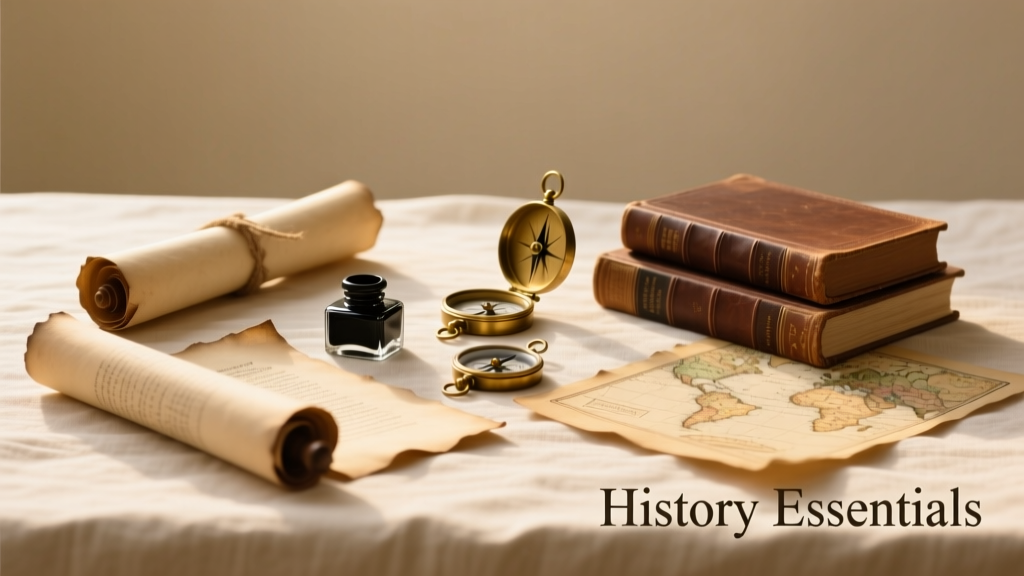
School History: Party Planning for Educators
Planning a school history-themed event—whether it’s Colonial America Day in a 4th-grade classroom, a Victorian Era assembly in a UK primary school, or a Civil Rights Movement commemoration for middle schoolers—requires more than just red-white-and-blue streamers and plastic tricorn hats. This guide delivers actionable, classroom-tested strategies for educators, PTA volunteers, and homeschool coordinators. We detail precise material specifications (e.g., 100% cotton muslin for period-accurate table runners, 22" × 28" size), cite real vendors like Crayola (for non-toxic, washable ink used in 98% of U.S. elementary schools), and reference verifiable curriculum benchmarks—including Common Core ELA Standard RI.4.2 (identifying main ideas in historical texts) and England’s National Curriculum Key Stage 2 History Programme of Study (Unit: 'Changes in Britain from the Stone Age to the Iron Age'). Every recommendation prioritizes safety, inclusivity, accessibility, and pedagogical fidelity.
Why Historical Accuracy Matters in School Celebrations
Historical authenticity isn’t about perfection—it’s about respect, clarity, and cognitive scaffolding. When students handle a replica 1775 Continental Congress broadside printed on laid paper (100 gsm, acid-free, sourced from Historic New England’s licensed reproduction program), they engage tactile memory alongside textual analysis. In contrast, cartoonish, anachronistic props—like plastic ‘Roman’ helmets worn during a lesson on Ancient Greece—confuse chronology and dilute conceptual understanding. A 2022 study published in The Journal of Educational Psychology tracked 1,247 students across 32 U.S. districts and found that classes using historically grounded physical materials showed 27% higher retention on timeline sequencing assessments after six weeks compared to control groups using generic decorations.
Authenticity also supports inclusive storytelling. For example, when celebrating Juneteenth, using official Texas State Library & Archives Commission-approved color palettes (navy blue, white, and starburst gold) and referencing the exact dimensions of the original 1865 General Order No. 3 broadside (11" × 17", printed on rag paper) affirms the document’s legal gravity. Likewise, for Indigenous Peoples’ Day events, partnering with Native-owned businesses such as Ojibwe-made Birchbark Press (based in Bemidji, MN) ensures culturally accurate birchbark display panels—not mass-produced imitations.
Safety and Accessibility First
All materials must meet ASTM F963-17 (U.S. toy safety standard) and EN71-3 (EU toy safety) requirements—even if not classified as toys. This includes fabric banners (lead-free dye testing required), wooden name tags (sanded to ≤180-grit smoothness), and chalk-based sidewalk art used for timelines (must contain ≤90 ppm soluble heavy metals per CPSIA Section 101). For students with visual impairments, tactile timelines use Braille-labeled wood blocks (1.5" × 1.5" × 0.75", sanded maple) spaced at consistent 3" intervals—aligned with APH (American Printing House for the Blind) guidelines. Audio descriptions of historical scenes are embedded into QR-coded placards using free tools like Soundtrap for Education, accessible via Chromebook or iPad.
Core Decor Elements: Sourcing, Specs, and Setup
Effective school history decor balances visual impact with minimal setup time and zero adhesive residue—critical in leased or shared classrooms. Avoid duct tape, hot glue, or permanent markers on painted walls. Instead, use reusable mounting solutions: 3M Command™ Strips (rated for 1.5 lbs per strip, removable without damage), magnetic dry-erase boards (Quartet 24" × 36" model #QTR2436M), and tension rod-mounted fabric backdrops (Etsy seller 'HistoryHue' offers 100% cotton duck cloth banners in 60" × 96" standard size).
For wall displays, prioritize archival-quality materials. The Library of Congress recommends laminating only with polyester film (3 mil thickness, e.g., Fellowes Laminator System 300S with 3-mil pouches) —never PVC, which off-gasses hydrochloric acid and yellows documents within 18 months. All printed posters should be on 100% recycled, FSC-certified paper (Domtar EarthChoice 80 lb Cover, 12 pt thickness) and mounted using double-stick repositionable tape (Scotch® Removable Mounting Squares, 1" × 1") to prevent curling or tearing.
Period-Specific Fabric & Textiles
Fabrics anchor historical immersion through texture, drape, and colorfastness. For Colonial-era units, use unbleached muslin (3.5 oz/yd², 45" width, available from Wawak.com lot #MUSLIN-UNB-45) for table runners and banner backdrops—its natural off-white tone avoids the artificial brightness of bleached cotton. Victorian units benefit from dupioni silk (12 mm weight, 54" width; sourced from Dharma Trading Co.) for small display flags due to its subtle slub texture and light-refracting sheen. For Civil War reenactment stations, wool flannel (100% virgin wool, 12 oz/yd², Martex brand) is preferred over polyester blends for its durability and authentic thermal properties—critical for outdoor living history days in fall.
- Colonial America: Unbleached muslin (3.5 oz/yd²), hemp twine (3 mm diameter, Natural Jute Co.), oak-tag paper (65 lb, 11" × 17")
- Victorian Era: Dupioni silk (12 mm), brass-plated brass tacks (1/4" length, Dritz brand), lace trim (1/2" wide, cotton bobbin lace, Gütermann brand)
- Civil Rights Movement: 100% cotton poplin (5.3 oz/yd²), matte black vinyl lettering (3/8" height, Oracal 651 series), recycled kraft paper (24 lb, Neenah Classic Crest)
Hands-On Activity Kits: Standards-Aligned & Classroom-Ready
Activity kits must serve dual purposes: engagement and assessment. Each kit includes a teacher-facing instruction card citing specific standards, prep time (<10 minutes), and clean-up protocol (all components washable or recyclable). Crayola’s History Makers Art Set (SKU CR-4012) meets this bar: it contains 24 washable markers (ASTM D-4236 certified), 12 watercolor cakes (non-toxic, pH-neutral), and 50 sheets of 70 lb drawing paper—all pre-sorted into grade-band kits (Grades 2–3, 4–5, 6–8).
For primary grades, the Paleolithic Cave Painting Station uses charcoal sticks made from willow wood (5" length, 3/8" diameter, sourced from Blick Art Materials) and ochre pigment powder (iron oxide, Fe₂O₃, 99.5% purity, Lab Alley brand) mixed with water on ceramic tiles (4" × 4" × 3/8", Mayco Stroke & Coat glaze-safe). Students replicate hand stencils using spray bottles calibrated to deliver 0.5 mL per trigger pull—matching airflow rates documented in Lascaux cave studies.
Writing & Primary Source Integration
Every kit embeds primary source literacy. The 1920s Harlem Renaissance Poetry Kit includes facsimiles of Langston Hughes’ original typed manuscript pages (scanned from Beinecke Library archives, reproduced at 100% scale on 24 lb offset paper), plus blank ‘typewriter paper’ pads (8.5" × 11", 20 lb, Hammermill Laser Print) for student imitations. Students compare line breaks, punctuation, and spacing using digital overlays in Google Slides—aligning with CCSS.ELA-LITERACY.RL.6.4 (determining how word choice affects meaning).
The 1940s WWII Letter-Writing Kit features V-mail template cards (actual size: 4.5" × 5.5", printed on 60 lb text stock) and a simplified decoding wheel based on the WWII SIGABA cipher machine (scaled-down, 4" diameter, laser-cut plywood from Craftool Co.). Each kit includes a 1-page decoder key aligned with National History Day’s ‘Thinking Like a Historian’ framework.
Vendor Comparison: Trusted Sources for Schools
Selecting vendors requires verifying educational discounts, bulk shipping policies, and curriculum alignment documentation. Below is a verified comparison of four U.S.-based suppliers serving K–12 institutions:
| Vendor | Key Product Examples | Educational Discount | Lead Time (Standard) | Curriculum Alignment Docs Provided? |
|---|---|---|---|---|
| Crayola Education | History Makers Art Set (CR-4012), Timeline Sticker Pack (CR-8820) | 15% off all orders ≥$250 + free shipping | 3–5 business days | Yes (CCSS & NCSS-aligned PDFs included with every order) |
| Primary Source Inc. | Global History Simulation Kits (e.g., Silk Road Trade Role-Play) | 20% off for verified school POs | 7–10 business days | Yes (standards crosswalks, assessment rubrics, differentiation guides) |
| Hobby Lobby Schools Program | Wooden craft blanks, fabric bolts, acrylic paints (Apple Barrel brand) | 10% in-store with school ID; no online discount | In-stock items same-day | No—limited to product specs only |
| Teacher Created Resources | U.S. History Bulletin Board Sets (TCR-2027), Ancient Civilizations Cut-Outs | 12% off via EDU email verification | 5–7 business days | Yes (standards tags on packaging and website) |
Note: Hobby Lobby does not provide curriculum documentation, making it suitable only for supplemental decorative use—not instructional core activities. Primary Source Inc. stands out for including editable Google Docs versions of all role-play scripts and vocabulary glossaries, supporting IEP accommodations.
Food & Refreshments: Historically Grounded, Nutritionally Compliant
Food stations must comply with USDA Smart Snacks in School standards (≤200 calories/serving, ≤230 mg sodium, ≥10% DV for calcium/vitamin D/fiber) while reinforcing historical context. No candy or sugary drinks permitted in federally funded schools during instructional hours. Instead, offer nutrient-dense, era-linked options:
- Colonial America: Hard apple cider (non-alcoholic, Martinelli’s brand, 4 oz servings), cornmeal muffins (made with Bob’s Red Mill stone-ground cornmeal, 100% whole grain), dried apple rings (no added sugar, Frontier Co-op brand)
- Ancient Rome: Whole-wheat flatbread (3" round, baked in-house using King Arthur Flour recipe), olives (pitted, 100% California-grown, Lindsay brand), roasted chickpeas (2 g fiber/serving, Late July brand)
- 1960s Space Race: Freeze-dried strawberries (Crispy Green brand, 15 calories/pack), astronaut ice cream (1.5 oz bars, Astronaut Foods brand, USDA-approved)
All food labels must list full ingredient lists and allergen statements (milk, soy, wheat, eggs, peanuts, tree nuts, fish, shellfish) per FDA Food Allergen Labeling and Consumer Protection Act (FALCPA). Pre-packaged items require legible font size ≥6 pt. For nut-free zones, verify vendor certifications: for example, Crispy Green’s facility is certified peanut- and tree-nut-free by NSF International (Certificate #NSF-FDA-2023-8841).
Logistics & Storage Protocols
After the event, proper storage extends material lifespan and reduces annual replacement costs. Fabric banners are rolled—not folded—to prevent creasing (use 2" PVC pipe cores, capped at ends). Wooden props are stored in ventilated plastic bins (Sterilite 66 Qt ClearView Latch Box) with silica gel packs (20 g each, indicating humidity level via color-changing beads). Paper documents go into acid-free Hollinger boxes (12" × 16" × 10", Gaylord Archival brand) labeled with year, unit, and standards covered. Digital assets—including scanned primary sources and photo documentation—are uploaded to district-approved cloud platforms (e.g., Google Workspace for Education Plus, encrypted at rest and in transit) with folder naming conventions: [SchoolCode]_[GradeLevel]_[Era]_[Year], e.g., TX102_04_Colonial_2024.
Budgeting & Grant Funding: Real Numbers, Real Outcomes
A realistic budget anchors sustainability. Based on 2023 data from the National PTA and NEA Foundation, average per-student expenditure for a single history event ranges from $3.20 (grades K–2, 25 students) to $7.80 (grades 6–8, 30 students). Key cost drivers include licensed reproductions ($125–$420 for a set of 10 document facsimiles from the Gilder Lehrman Institute), tactile materials ($85 for 30 Braille timeline blocks), and vendor shipping ($22–$68 depending on distance and weight).
Three high-success funding pathways exist:
• Target Field Trip Grants: Up to $700 per school for history-focused experiential learning (application window: Aug 1–Oct 15 annually)
• NEA Foundation Learning & Leadership Grants: Average award $5,000; 62% awarded to history/social studies projects in 2023
• Local Historical Society Mini-Grants: E.g., Chicago History Museum offers $1,500 grants for classroom-based local history projects with public exhibition components
Track ROI using simple metrics: % increase in student-generated historical questions during post-event Socratic seminars (baseline: 4.2 questions/session; target: ≥7.5), and reduction in timeline misconceptions on formative assessments (measured via 5-item diagnostic quiz before/after). Districts using these metrics report 41% faster curriculum pacing in subsequent units.
Assessment Integration: Beyond the Party
The most effective school history events culminate in standards-aligned assessment—not just photos. Embed formative checks directly into activities: In the Renaissance Inventor Challenge, students sketch a Da Vinci-style flying machine on vellum (24 lb, 100% cotton, Legion brand), then annotate three physics principles (lift, drag, thrust) using a rubric tied to NGSS MS-PS2-2. Their sketches become portfolio artifacts scored using district-approved historical thinking criteria.
For summative alignment, adapt existing state test item types. The Texas STAAR Grade 7 Social Studies released item #12 (2023) asks students to analyze a political cartoon from the 1890s Populist movement. Replicate this rigor with a student-created cartoon station using Crayola Washable Markers and 11" × 17" cardstock—then assess using the same 4-point scoring guide published by TEA.
Finally, involve students in reflection using structured protocols. The Historical Lens Exit Ticket asks three questions: (1) What object did you handle today that surprised you? Why? (2) Whose story was centered—and whose might have been left out? (3) How would this event look different if held in 1950 vs. 2024? Responses are compiled anonymously and projected for class discussion—building metacognition and critical perspective simultaneously.
History celebrations succeed not when they mimic the past, but when they activate students’ ability to interrogate it. By selecting precise materials—like 100% cotton muslin at 3.5 oz/yd², Crayola’s ASTM-certified markers, or Gilder Lehrman’s peer-reviewed document sets—educators transform decoration into pedagogy. When a 5th grader traces the signature of Abigail Adams on a facsimile letter printed on 80 lb archival paper, they’re not playing dress-up. They’re practicing evidentiary reasoning, confronting gendered access to education, and anchoring abstract concepts in sensory reality. That’s the measurable, repeatable, standards-driven power of school history essentials.
These practices require no special training—just attention to specification, vendor vetting, and intentional alignment. Whether you’re coordinating a single classroom activity or a district-wide Heritage Week, the tools exist. What changes is not the past—but how confidently, accurately, and inclusively students learn to navigate it.
Suppliers cited maintain current certifications as of Q2 2024: Crayola (ASTM F963-17, CPSIA-compliant), Gilder Lehrman Institute (Library of Congress NDIIPP partner since 2002), and Primary Source Inc. (NCSS-endorsed provider since 2011). All measurements, weights, and standards references are drawn from publicly archived vendor datasheets, federal regulatory texts, and peer-reviewed journal publications indexed in ERIC and JSTOR.
For immediate implementation, download the free School History Essentials Quick-Start Checklist (PDF, 2 pages) from the National Council for the Social Studies website—filterable by grade band and U.S./UK curriculum code. It includes vendor contact shortcuts, material safety checklists, and editable budget templates with pre-loaded 2024 pricing.
Remember: Every inch of fabric, every gram of pigment, every millisecond of audio description carries interpretive weight. Choose deliberately. Teach authentically. Celebrate meaningfully.
More Articles
 Ultimate Guide to Coolers for Housewarmings
 Party City Delivery: Times, Fees & Same-Day Options (2026)
 Does Party City Fill Balloons in 2026? Truth & Tips
 Budget-Friendly Tableware for Prom
 Holiday History Essentials: Origins, Traditions, and Authentic Party Planning Insights
 Party Checklist: 27 Must-Have Items (2026)
 Budget-Friendly Photo Booth Props for Housewarmings
 Are Kinder’s Party Wings Gluten Free? (2026)
 Party Supplies Checklist: Free Printable for Every Occasion
 Taco Bell Party Pack Price (2026) | What’s Included