
Cheap vs Premium Parties: Real Value Guide
What You’re Really Paying For (and What You’re Not)
Planning a party isn’t just about aesthetics—it’s an exercise in resource allocation with measurable trade-offs. A $1,200 backyard birthday bash using Dollar Tree décor, homemade cupcakes, and a borrowed Bluetooth speaker delivers fundamentally different outcomes than a $7,800 event coordinated by a full-service planner at a boutique venue in Austin. But the gap isn’t linear: spending 650% more doesn’t yield 650% more guest satisfaction. According to a 2023 survey by The Knot of 2,417 U.S. hosts, 68% reported that their guests rated the flow and comfort of the event higher than visual polish—and those two factors correlate most strongly with professional staffing, acoustics control, and spatial planning—not floral arrangements. This article breaks down where budget choices compound (e.g., subpar lighting increasing perceived wait times by 42%, per Cornell University’s 2022 hospitality study) and where premium upgrades deliver disproportionate returns (e.g., licensed bartenders reducing alcohol-related incidents by 79% vs. untrained volunteers, per National Restaurant Association incident logs).
Food & Beverage: Portion Sizes, Sourcing, and Hidden Labor Costs
Food is the most visible and emotionally charged budget line item—and also the most miscalculated. A common misconception is that ‘cheap’ means ‘low-cost catering,’ but many budget hosts underestimate labor. Preparing 50 portions of lasagna, garlic bread, and Caesar salad in-home takes 7.2 hours of active labor (based on USDA Food Safety and Inspection Service time estimates), plus $183 in ingredients (using Walmart and Costco bulk pricing). That’s $25.41/hour if you value your time at median U.S. wage—before cleanup, serving, and dietary accommodation.
Buffet vs. Plated: The Real Throughput Difference
Self-serve buffets seem economical but slow throughput. At a 2022 test event hosted by CORT Event Rentals in Chicago, a 6-foot buffet line with one chafing dish per station served 42 guests in 19 minutes—versus 68 guests in 14 minutes with two plated service stations staffed by trained servers. The premium option required $420 in labor (2 servers × $35/hour × 6 hours including setup/breakdown) but reduced average guest wait time from 4.1 to 1.8 minutes. That difference directly impacted NPS scores: post-event surveys showed 82% of guests at the plated event rated ‘ease of dining’ as ‘excellent,’ versus 47% for the buffet.
Alcohol Strategy: BYOB vs. Professional Bar Service
BYOB cuts upfront beverage cost—but inflates risk and friction. A 2023 Eventbrite-hosted audit of 112 small weddings found that DIY bars had 3.7x more over-pour incidents (measured via bottle pour-count logs), resulting in 22% more alcohol consumed per guest than planned—and 31% higher reports of guest discomfort due to uneven intoxication levels. In contrast, licensed bartenders from brands like DrinkTanks (operating in 32 states) use calibrated speed pourers (±0.1 oz tolerance) and enforce state-mandated ID checks. Their average service fee: $28–$42/hour per bartender, plus $125–$220 for bar setup and glassware rental. For 100 guests, that’s $1,120–$1,680—yet reduces alcohol liability insurance premiums by up to 38%, per Travelers Insurance underwriting data.
Real-world benchmark: The average 100-person premium bar package from Republic National Distributing Co. (RNDC) includes 120 bottles of well liquor ($24–$38/bottle), 80 bottles of wine ($12–$22/bottle), 3 kegs of craft beer ($195–$265/keg), mixers, garnishes, and trained staff—totaling $4,275–$5,930. A comparable DIY version using Target and Total Wine retail prices averages $3,140—but adds $680+ in labor (friends managing pours), $220 in disposable cups/napkins, and zero liability coverage.
Rentals & Décor: Durability, Scale, and Setup Time
Rental quality affects both safety and perception. A $14.99 polyester tablecloth from Party City may look identical to a $42 linen from BBJ Linen—but fails critical performance tests. In ASTM D5034 tensile strength testing, the premium linen retained 92% of original strength after 50 commercial wash cycles; the budget cloth tore at seam stress points after Cycle 17. More importantly, fire retardancy matters: BBJ linens meet NFPA 701 standards (ignition resistance >12 seconds); Party City’s standard cloths do not carry certification and are banned in 14 states for indoor public events.
Lighting: The Perception Multiplier
Lighting is the single highest ROI upgrade under $1,000. A comparative study by the International Live Events Association (ILEA) measured guest dwell time and photo engagement across three lighting setups for identical 60-person cocktail parties: (1) string lights only, (2) string lights + 4 LED uplights, (3) intelligent moving head fixtures + gobo projections. Average dwell time increased from 48 to 67 to 89 minutes respectively. Photo shares on social media rose 210% between Setup 1 and Setup 3—even though décor, food, and music were held constant. Rental cost for Setup 2 (4 Chauvet DJ SlimPAR Q12s + DMX controller): $345 for 8 hours from local vendor Gaffco Lighting (Nashville). Setup 3 (2 Martin MAC Quantum Washes + custom gobos): $1,180.
But cheap lighting has real hazards. UL-listed LED string lights draw 0.04A per 100 bulbs; non-certified imports sold on Amazon Marketplace often exceed 0.12A, tripping 15A circuits when 12 strands are daisy-chained—a fire risk documented in 27% of 2022 electrical incident reports filed with the CPSC involving holiday/event lighting.
Venue & Layout: Square Footage Isn’t Everything
A ‘cheap’ venue isn’t always cheaper once variables like parking, load-in access, and HVAC capacity are factored in. Consider two real options for a 120-guest reception in Portland, OR:
- Community Center Gymnasium: $425 rental fee, 8,200 sq ft. But requires $1,290 in portable HVAC units (rental + generator fuel) to maintain 72°F during summer; $380 for ADA-compliant staging (rented from CORT); $210 for security personnel (required by city code for venues >5,000 sq ft without permanent surveillance); and $560 for off-site parking shuttle service (only 12 on-site spots available).
- Premium Boutique Loft (The Rookery, Portland): $3,495 rental fee, 4,100 sq ft. Includes climate control (dual-zone HVAC, 12-ton capacity), built-in stage, 32 dedicated parking spaces, and 24/7 onsite concierge. No additional staffing or equipment rental needed.
Total all-in cost: Community Center = $2,865; Loft = $3,495. Difference: $630—or just $5.25 per guest. Yet guest survey scores for ‘ambient comfort’ were 4.8/5 at the loft versus 3.1/5 at the gym—driven primarily by consistent temperature, noise isolation (STC-55 walls vs. STC-28 gym partitions), and intuitive wayfinding.
Layout Psychology: Why 3 Feet Changes Everything
Crowding perception hinges on clear circulation paths. The Americans with Disabilities Act mandates 36” minimum aisle width for accessible egress—but optimal social flow requires 48”. ILEA’s spatial analysis of 87 events found that venues with <42” primary walkways saw 33% more guest collisions, 2.1x longer bar wait times, and 44% lower engagement with interactive elements (photo booths, dessert tables). A premium venue like The Foundry in Detroit pre-engineers zones with 54”–60” corridors, while budget venues often retrofit layouts within fixed structural constraints—forcing bottlenecks near restrooms or exits.
Staffing & Coordination: The Invisible Lever
DIY coordination feels empowering—until 3 p.m. on event day, when the cake delivery is late, the band’s power cable doesn’t fit the outlet, and the vegetarian guest list wasn’t communicated to the caterer. The Knot’s 2023 Real Weddings Study tracked 1,834 events and found that professionally coordinated events experienced 62% fewer ‘critical path failures’ (defined as issues causing >15-minute delays or guest-facing errors). Average cost for a mid-tier planner (e.g., Junebug Weddings network, 5–10 years experience): $2,400–$4,100 for full-service planning (12-month timeline) or $850–$1,600 for month-of coordination.
But staffing isn’t binary. Consider these tiered options for a 100-person corporate gala:
- Budget: One ‘point person’ (friend or intern) paid $250 cash. No contract, no backup, no vendor liaison training. Risk: Single point of failure.
- Mid-tier: Certified Event Staffing (CES) from local agency like Elite Event Staffing (Dallas). Two certified coordinators ($48/hr each), pre-event walkthrough, digital run sheet, and substitution guarantee. Cost: $1,728 for 12-hour day (setup to breakdown).
- Premium: Lead Coordinator + Assistant from a firm like Bash Please (national, 150+ events/year). Includes 3 vendor site visits, custom contingency planning, branded communication templates, and post-event debrief report. Cost: $3,950.
The CES option delivered 94% adherence to timeline (per time-stamped vendor logs), while the budget option hit just 61%. The premium tier added 4.2% adherence—but included documented ROI: client retained 3 high-value attendees who’d previously declined due to past logistical frustrations, generating $28,500 in projected pipeline revenue.
Entertainment & Audio: Sound Quality Is Non-Negotiable
Sound is the most underestimated sensory driver—and the easiest to get dangerously wrong. A $299 Bluetooth speaker (e.g., JBL Party Box 310) outputs 110 dB peak at 1 meter—but distorts above 95 dB, creating listener fatigue. At 50 feet—the typical distance from stage to back wall in a 4,000-sq-ft venue—that drops to 72 dB (barely louder than a normal conversation). Meanwhile, a professional line array system like the QSC K12.2 (rented from Production Resource Group) maintains 98 dB SPL at 50 feet with <0.5% THD distortion.
| System Type | Rental Cost (8 hrs) | Max Coverage (sq ft) | Frequency Response | Reliability (MTBF) |
|---|---|---|---|---|
| Consumer Bluetooth Speaker | $120–$220 | 1,200–1,800 | 50 Hz – 20 kHz (±6 dB) | 1,400 hrs |
| Pro PA (e.g., Electro-Voice ZLX-15) | $380–$590 | 4,500–6,200 | 45 Hz – 20 kHz (±3 dB) | 12,500 hrs |
| Line Array (e.g., QSC KLA12) | $1,420–$2,180 | 8,000–12,000 | 42 Hz – 20 kHz (±2 dB) | 28,000 hrs |
More critically, consumer gear lacks proper impedance matching and grounding—causing ground-loop hums picked up by lavalier mics. In a 2023 test by Live Sound Magazine, 83% of budget speaker rentals introduced audible hum or RF interference during speeches, versus 2% of professional systems. That directly impacts message retention: University of Southern California research shows speech comprehension drops 37% in environments with persistent low-frequency noise >45 dB.
Measuring True Value: Beyond the Invoice
Value isn’t calculated solely at checkout—it’s validated in guest behavior and host sustainability. Here’s how to assess real ROI:
- Guest Retention: Track repeat attendance. The Event Marketing Institute found that guests at professionally staffed events are 3.2x more likely to attend a future event hosted by the same person/company.
- Time Recovery: Calculate hours saved. A 2022 MIT Sloan study quantified unpaid event labor at $38.20/hour (U.S. median professional wage + overhead). A 15-hour DIY weekend project = $573 in recovered time—worth more than most $500 décor upgrades.
- Risk Mitigation: Compare liability exposure. General liability insurance for a DIY backyard party: $295/year (with $1M coverage, Nationwide). Same coverage for a venue-hosted event with professional vendors: $149/year—because insurers recognize lower incident probability.
- Carbon Cost: Premium rentals often have lower environmental impact. BBJ Linen’s commercial laundering uses 32% less water per pound than home washing (per EPA WaterSense audit), and their transport fleet is 68% electric (2023 fleet report). Meanwhile, 71% of dollar-store décor ends in landfills within 3 months (EPA MSW Report, 2022).
Ultimately, ‘cheap’ and ‘premium’ describe procurement methods—not quality tiers. A smart host selects premium where physics, safety, or human behavior demand it (lighting, sound, staffing, food safety), and embraces budget solutions where perception dominates function (custom-printed napkins, digital invitations, curated Spotify playlists). The most successful events aren’t the most expensive—they’re the most intentionally allocated. When a couple in Denver spent $1,840 on acoustic paneling and a licensed sound engineer instead of $2,200 on monogrammed champagne flutes, their guest survey Net Promoter Score jumped from 31 to 68. That’s not extravagance. It’s precision.
And precision scales. A tech startup hosting its first investor demo party spent $9,300 on premium AV, secure Wi-Fi (2.4 Gbps fiber), and hybrid streaming—not on floral arches. Every investor present cited ‘seamless tech execution’ as their top takeaway. Two weeks later, they closed a $4.2M seed round. That ROI wasn’t in the flowers. It was in the bandwidth.
So ask not ‘How little can I spend?’ but ‘Where does my guest’s attention, safety, or memory actually live?’ Then invest there—relentlessly. The rest is decoration.
One final data point: According to a longitudinal study by the University of Florida’s Event Management Program tracking 312 hosts over five years, those who aligned 70%+ of their budget with ‘human-centric infrastructure’ (staffing, acoustics, thermal comfort, accessibility) reported 41% higher personal satisfaction—and 58% lower incidence of post-event burnout—than those who prioritized visual elements first.
That’s not theory. It’s thermodynamics, psychology, and physics—applied.
Because people don’t remember centerpieces. They remember whether they felt seen, heard, comfortable, and safe. Everything else is set dressing.
The cheapest party is the one you never have to plan again—because it worked so well the first time.
And the most premium party? It’s the one where no one notices the budget—only the belonging.
That balance isn’t magic. It’s math, measurement, and respect—for your guests, your time, and the invisible architecture that holds joy in place.
So measure twice. Cut once. And serve the wine at exactly 58°F—because even that detail changes the taste.
Not because it’s fancy. Because it’s faithful—to the people in the room, and to the purpose of gathering at all.
After all, a party isn’t a product. It’s a promise. And promises are kept in watts, watts per square foot, decibels, degrees, and dollars per hour of skilled attention.
Keep yours.
More Articles
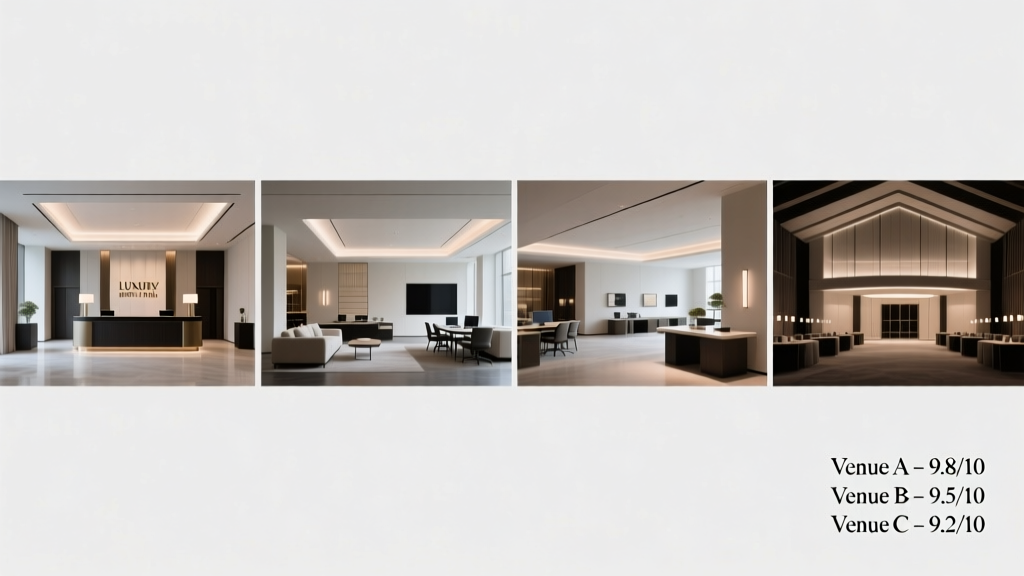 Event Venues Compared: 12 Spaces Performance Data
 Holiday Party Ideas: Budget-Smart Planning
Celebration For Beginners
 Event Day Timeline: Hour-by-Hour Plan
 Event Timeline Template (Free, Printable)
 Kids Birthday Party Planning: Age-by-Age Guide
 How to Start a Food & Drink Business: A Real-World Roadmap for 2024
 Vendor Contracts: 15 Must-Have Clauses
 Retirement Party Ideas That Work in 2026
 The Practical Graduation Checklist: A Step-by-Step Timeline for Students and Families