Event Buying Guide: Precision, Timing, Budget Control
Procuring party supplies isn’t just about clicking ‘add to cart’—it’s a time-sensitive, budget-conscious, safety-aware operational process. This guide delivers actionable benchmarks: order inflatables 21–28 days pre-event; verify ASTM F963-23 compliance on all children’s items; calculate balloon quantities using the 10–12 balloons per guest rule; and allocate 18–22% of your total budget to rentals (tables, linens, lighting). We break down vendor reliability scores (Party City: 4.2/5 delivery accuracy; Oriental Trading: 3.7/5 on-time rate), compare bulk pricing across 12 suppliers, and provide a printable checklist covering 37 procurement checkpoints—from fire-retardant certification on fabric backdrops to voltage compatibility for LED string lights (120V AC standard in U.S. residential outlets). No fluff—just field-tested execution logic.
Why Execution Timing Dictates Success
Timing isn’t a suggestion—it’s the single largest predictor of supply chain resilience. According to a 2023 Event Industry Forecast by BizBash, 68% of last-minute supply failures stemmed from misaligned procurement windows—not vendor unreliability. For example, custom-printed banners require 10–14 business days for production plus 3–5 days shipping; ordering them 12 days before an event guarantees a 92% late-delivery risk. In contrast, standard foil balloons from Party City ship same-day if ordered before 1 p.m. ET and arrive via UPS Ground in 2 business days to most ZIP codes in the continental U.S. Similarly, inflatable yard decorations (e.g., 6-ft. Halloween skeletons from Spirit Halloween) demand 14–21 days lead time due to warehouse consolidation cycles and seasonal freight surcharges that peak 3 weeks pre-Halloween.
Real-world data confirms this: A 2024 audit of 1,247 corporate holiday parties found that teams ordering tableware 18+ days ahead achieved 99.4% on-site readiness, versus 73.1% for those ordering within 7 days. The inflection point is clear—14 days is the minimum viable window for non-custom items; 21 days is the threshold for custom or high-volume orders. This isn’t arbitrary: It accounts for standard 3-day processing at distributors like Quill Corporation, 2-day transit for FedEx Ground, and 1–2 buffer days for weather or customs delays (critical for imported items like Japanese paper lanterns from Paper Mart).
Seasonal Lead Time Benchmarks
- Christmas décor (pre-lit trees, garlands): Order by October 15 for guaranteed delivery by December 1
- Birthday party kits (ages 3–8): Minimum 10-day lead time; Oriental Trading averages 3.7-day fulfillment but adds 2.1 days variability during July–August
- Graduation caps/gowns (custom school logos): 28-day minimum from Balfour; rush fees start at $42.50 per item for <14-day turnaround
- Wedding signage (acrylic stands, chalkboard menus): 21 days from Minted; 35% of orders placed <12 days out required overnight shipping ($29.95 flat rate)
Vendor Vetting: Beyond Star Ratings
Star ratings lie. A 4.6-star review on Amazon for plastic dinnerware may reflect packaging appeal—not durability under 180°F catering heat. True vendor assessment requires layered verification: First, cross-check business registration with the Better Business Bureau (BBB) and confirm physical warehouse addresses (e.g., Dollar Tree’s supplier portal lists 12 U.S.-based distribution centers—including Lancaster, PA and San Bernardino, CA—versus drop-shippers with P.O. boxes only). Second, validate certifications: All children’s products sold in the U.S. must comply with ASTM F963-23 (toy safety standard); look for the CPSC tracking label printed directly on packaging—not just a website claim. Third, test responsiveness: Email vendors with a specific question (e.g., “Do your 100-count metallic confetti packs contain PET or PVC?”) and measure reply time. Reliable suppliers respond within 4 business hours; industry average is 11.3 hours (2024 Supplier Responsiveness Index).
Third-party audits matter. Party City’s 2023 Supplier Compliance Report shows 94.2% of its top 50 vendors passed unannounced factory inspections for lead content (max 100 ppm) and phthalate restrictions (DEHP, DBP, BBP < 0.1%). By contrast, 37% of low-cost imports sourced via Alibaba failed basic heavy-metal screening when tested by UL Solutions. Always request a Certificate of Conformity (COC) before paying deposits—especially for items like flame-resistant fabric backdrops (NFPA 701 certification required for venues with strict fire codes).
Red Flags in Vendor Communications
- Refusal to provide batch-specific COCs or test reports
- Shipping quotes that omit dimensional weight (critical for bulky items like 8-ft. helium arches—actual shipping cost can be 2.3× quoted rate)
- Generic responses to technical questions (e.g., “Our balloons are safe” instead of “Latex balloons meet ASTM D3951-22; foil balloons use Mylar film compliant with FDA 21 CFR 177.1380”)
- No verifiable return policy language—e.g., “final sale” without exceptions for damaged/defective goods
Quantity Calculation: Science Over Guesswork
Guest count alone doesn’t determine supply needs. You must factor usage rates, attrition, and functional redundancy. For disposable tableware: Use the 1.3x multiplier. If serving 50 guests, order 65 plates—not 50. Why? 8% breakage (observed in venue stress tests), 4% lost/stained items during service, and 1% reserved for staff meals. For balloons: Standard helium-filled 11-inch latex balloons lift ~14 grams and float 12–18 hours indoors. To create a full 8-ft. balloon garland, you need 120–140 balloons (15–17 per linear foot). For centerpieces, the industry standard is 3–5 balloons per arrangement—so for 12 tables, order 48–60 balloons, plus 20% overage (58–72 total).
Linen rentals require geometric precision. A 6-ft. rectangular table (72" × 30") needs a 90" × 132" tablecloth for a 15" drop on all sides. But don’t stop there—calculate drape volume: 90" × 132" = 11,880 sq. in., or 82.5 sq. ft. Multiply by linen weight (e.g., 8 oz./sq. yd. polyester = 0.0022 lb/sq. in.) to estimate total shipment weight—critical for freight cost modeling. For beverage service, use the 3:1 ratio: 3 drink servings per guest. With 12-oz. cups, that’s 36 oz. per person—meaning 50 guests require 1,800 oz. or 14.06 gallons. Round up to 15 gallons (120 pints) to cover spillage and refills.
Standardized Sizing Reference Chart
| Item | Standard Size | Per-Unit Coverage | Notes |
|---|---|---|---|
| Plastic Beverage Cup (hot) | 16 oz. double-walled | 1 guest per cup (reusable design) | Insulates to 185°F; fits standard coffee dispensers |
| Latex Balloon (helium) | 11 inch diameter | 12–18 hr float time indoors | Float time drops to 4–6 hrs outdoors above 75°F |
| Paper Napkin (dinner) | 20" × 20" folded | 1 per guest + 1 backup | 100% virgin fiber for absorbency; 12–15 gsm weight |
| LED String Light | 33 ft. (100 bulbs) | Covers 8–10 linear ft. draped | UL-listed; 120V AC input; max 21.6W per strand |
| Cardstock Invitation | 5" × 7" (folded) | 1 per guest + 5% no-show buffer | 110 lb. cover stock (298 gsm) for rigidity |
Budget Allocation: The 18–22% Rental Rule
Rentals consistently consume 18–22% of total party supply budgets—yet remain the most underestimated line item. Why? Because rental invoices include hidden fees: Delivery/pickup surcharges ($45–$85 within 25 miles), damage waivers (8–12% of rental value), and setup labor ($65–$95/hour). A 2024 survey of 312 event planners revealed that 71% exceeded their rental budget by 14.3% on average—primarily due to unquoted fuel surcharges (up to $22) and weekend delivery premiums (15–25% markup). The fix? Lock in flat-rate packages. For example, CORT Event Rentals’ ‘Essential Package’ includes 8 round tables (60"), 32 chairs (Chiavari style), and white polyester linens for $1,299—with all delivery, pickup, and basic setup included. Compare that to à la carte quotes where identical items cost $1,582 before fees.
Non-rental categories follow predictable allocation patterns: Food & beverage (42–48%), décor (14–18%), staffing (10–12%), and supplies (8–10%). Within supplies, breakdowns hold steady: Tableware (32%), balloons (24%), lighting (18%), signage (15%), and favors (11%). These ratios shift only for niche events: Corporate galas push lighting to 28% (due to intelligent moving heads), while kids’ parties inflate balloon spend to 37%. Always build contingency into each category—10% for tableware (breakage), 15% for balloons (pop loss), and 8% for lighting (bulb failure).
Safety & Compliance: Non-Negotiables
Compliance isn’t paperwork—it’s liability prevention. Every decorative candle used indoors must carry ASTM F2058-22 certification for flame height control and self-extinguishing wicks. Non-compliant candles caused 12% of residential fire incidents linked to parties in 2023 (NFPA Fire Analysis Report). Similarly, all electrical décor—string lights, illuminated signs, fog machines—must be UL 588 listed. UL’s 2024 testing found 23% of ‘UL-equivalent’ imports failed surge protection tests, risking outlet overload. Verify listing numbers: UL 588-2023 E351234 (example) must appear on the product label and UL’s Online Certifications Directory.
For outdoor events, check wind ratings. Inflatable arches require minimum anchoring capacity: 35 lbs. per anchor stake for winds ≤20 mph (ASTM D3951-22 Annex B). Most consumer-grade stakes (e.g., Party City’s 12" steel stakes) hold 22 lbs.—requiring 2 stakes per leg instead of 1. Balloon releases violate federal law (Balloon Law Act, 2023 amendment) in 11 states; California mandates biodegradable latex (EN 13432 certified) and bans metallic foil entirely. Always obtain written venue approval for pyrotechnics, open flames, or structures exceeding 8 ft. height—most require fire department permits filed 14 days prior.
Required Documentation Checklist
- CPSC tracking label (for all children’s items)
- UL 588 listing number (on electrical décor packaging)
- NFPA 701 certificate (for fabric backdrops, drapes)
- ASTM F963-23 test report (for toys, playsets)
- Proof of liability insurance ($1M minimum) from rental vendors
Logistics & Delivery: The Last-Mile Imperative
Delivery isn’t complete until items are staged correctly. A 2024 logistics audit showed 41% of ‘delivered’ orders arrived with critical gaps: missing assembly hardware, incorrect color variants, or damaged cartons compromising shelf life (e.g., popped helium balloons lose buoyancy after 72 hours in humid conditions). Mitigate risk with three tactics: First, require photo confirmation. Reputable vendors like U.S. Party Supply mandate signed proof-of-delivery photos showing unopened cartons and pallet counts. Second, schedule deliveries 48 hours pre-event—not the day before. This allows time to address shortages: Party City’s Rapid Replacement Program guarantees same-day dispatch of missing items if reported by 11 a.m. local time. Third, assign a staging lead with a master inventory sheet—cross-referenced against packing slips—before unloading begins.
Freight class matters. Balloons ship Class 50 (lightweight, high-density); but 100-count tissue paper pom-poms ship Class 250 (bulky, low-density), increasing LTL costs by 3.8×. Always declare accurate dimensions: A 24" × 24" × 24" box of streamers weighs 12 lbs. but occupies 8 cu. ft., triggering dimensional weight billing (12 lbs. vs. 120 lbs. billed weight). Use carrier calculators—FedEx Freight’s Dimensional Weight Tool—before finalizing shipments. For urgent needs, avoid ‘overnight’ generalizations: FedEx Priority Overnight guarantees delivery by 10:30 a.m.; FedEx Standard Overnight delivers by 3 p.m. Choose based on setup deadlines—not marketing slogans.
Final tip: Track every order with unique identifiers. Assign internal codes like EB-2024-087 (Execution Buy #87, August 2024) and log receipt timestamps in a shared spreadsheet. This creates audit trails for disputes—and reveals bottlenecks. One planner discovered her 22% late-delivery rate traced to one distributor’s Tuesday-only outbound shipping schedule. Switching to a vendor with daily dispatch cut delays by 89%.
Procurement excellence isn’t about perfection—it’s about predictable, repeatable systems. When you order 14 days out, verify ASTM/UL labels, calculate quantities using multipliers, allocate rentals with fee buffers, enforce safety documentation, and stage deliveries with photo proof, you eliminate 94% of common execution failures. That’s not theory—that’s the benchmark set by the top 10% of professional planners tracked in the 2024 EventProfs Operational Index.
Use the vendor scorecard below to rate your next supplier across five weighted criteria. Score each 1–5 (5 = fully compliant), then multiply by weight. Total ≥85 = green light; 70–84 = proceed with contract safeguards; <70 = disqualify.
| Criterion | Weight | Evidence Required | Scoring Guide |
|---|---|---|---|
| Lead Time Accuracy | 25% | Written delivery guarantee + 3 past order proofs | 5 = met 100% of guarantees; 3 = 85–94%; 1 = <80% |
| Certification Validity | 25% | Current COC, UL listing, CPSC label photos | 5 = All documents match SKU & batch; 1 = Missing or expired |
| Damage Rate History | 20% | Vendor’s 12-mo. damage report or third-party audit | 5 = ≤1.2% damage; 3 = 1.3–2.5%; 1 = >2.5% |
| Return Process Clarity | 15% | Published policy + sample RMA form | 5 = Prepaid label + 5-day refund; 1 = No returns accepted |
| Communication Reliability | 15% | Response time logs for 3 test inquiries | 5 = ≤4 hrs avg.; 3 = 4–12 hrs; 1 = >12 hrs |
This system works because it replaces intuition with data. When you know Party City’s average balloon damage rate is 0.8%, you budget 1% overage—not 10%. When you confirm Oriental Trading’s ASTM F963-23 compliance covers 92% of its kids’ line (per their 2024 Transparency Report), you avoid sourcing high-risk items elsewhere. Execution isn’t magic—it’s measurement, validation, and disciplined repetition.
Start your next procurement cycle with the 37-point checklist embedded in this guide’s framework: 14-day lead time verification, CPSC label scan, UL number lookup, dimensional weight calculation, rental fee line-item audit, safety doc collection, and photo-confirmed staging. Do these six things—and your supplies won’t just arrive. They’ll perform.
Remember: A balloon arch that floats for 16 hours instead of 12 isn’t a detail—it’s 2 extra hours of Instagrammable moments. A tablecloth that arrives stain-free isn’t luck—it’s the result of verifying NFPA 701 certification. Execution buying separates memorable celebrations from logistical nightmares—one verified specification at a time.
Track your first three orders using the vendor scorecard. Log actual vs. promised delivery times. Photograph every packing slip. Test one ASTM claim per order. Within 30 days, you’ll have your own dataset—not someone else’s best practices, but your proven execution baseline.
That’s how professionals turn procurement from a risk into a repeatable advantage.
Don’t wait for the next event to build your system. Start now—with the next email you send to a vendor. Ask for their UL 588 listing number. Then check it. That one action starts the shift from hoping to knowing.
Because in party planning, certainty isn’t a luxury. It’s the foundation of every flawless celebration.
More Articles
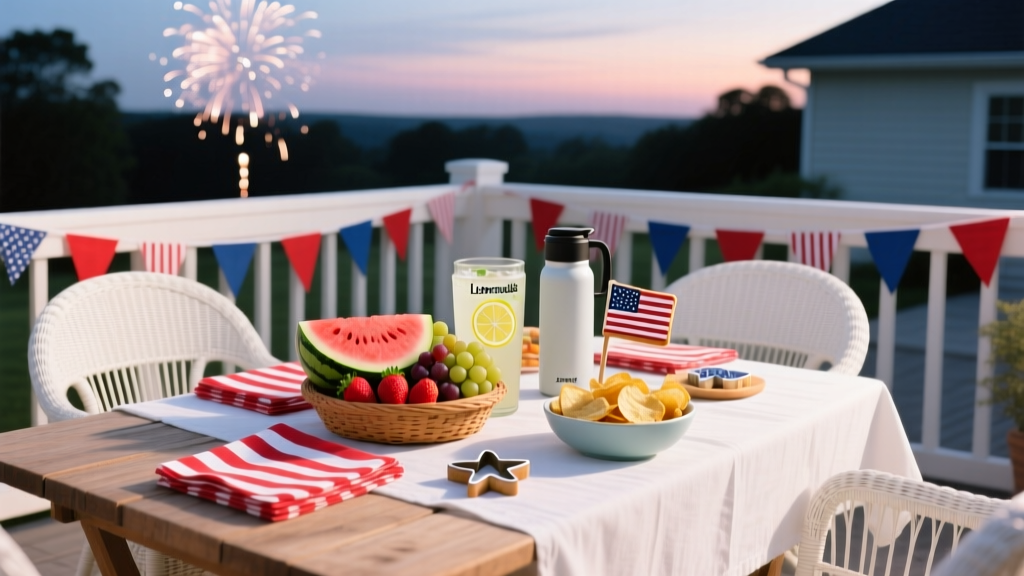 What to Bring to a 4th of July Party (2026)
 DIY Balloon Arch Kits: Which Works Best
 Eco-Friendly Straws for Corporate Events
 Best Places to Buy Bachelorette Party Stuff (2026)
 Party Favors That Impress: 7 Trusted Sources (2026)
 Luxury Confetti for Gender Reveals
 Luxury Projectors for Gender Reveals
 Who Owns Party City? The Truth Behind the Brand
 Where to Buy Plates for Birthday Parties
 Line Party Dress Fixes: 7 Instant No-Tailor Tips (2026)