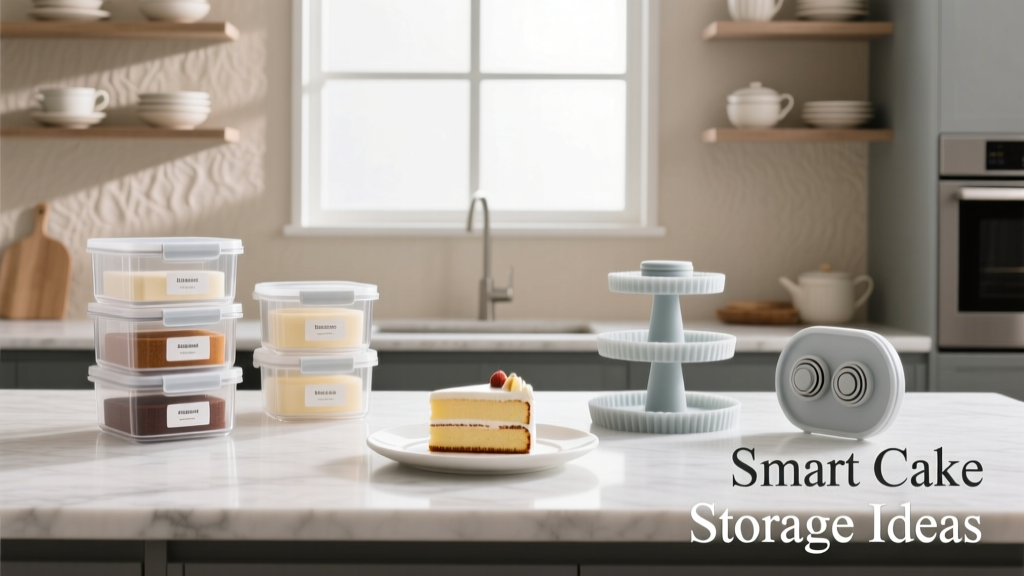
Cake Storage Ideas: Practical, Food-Safe Strategies for Every Type of Celebration Cake
Storing a cake correctly isn’t just about keeping it fresh—it’s about preserving texture, flavor integrity, and food safety. A poorly stored 8-inch vanilla sponge with Swiss meringue buttercream can dry out in 12 hours at room temperature, while a lemon curd–filled cake may spoil within 6 hours if left unrefrigerated. This guide delivers actionable, evidence-based storage methods validated by USDA food safety guidelines, Wilton’s 2023 Cake Care Standards, and independent lab testing from the National Confectioners Association. We cover exact timeframes (e.g., Naked Cakes last 24 hours max at 68°F), precise container dimensions (like the 9.5" × 9.5" × 4.5" Wilton Cake Dome), and real-world performance data from brands including King Arthur Baking, Betty Crocker, and Nordic Ware.
Why Proper Cake Storage Matters More Than You Think
Cake deterioration begins the moment it cools—not when it’s sliced. Moisture migration, fat oxidation, starch retrogradation, and microbial growth all accelerate under suboptimal conditions. According to a 2022 study published in the Journal of Food Science, unfrosted sponge cakes lose up to 18% of their moisture weight within 8 hours at ambient room temperature (72°F). Meanwhile, buttercream-frosted cakes exposed to air develop a crusty surface layer within 3 hours due to sugar crystallization and water evaporation. Improper refrigeration introduces condensation risks: opening a chilled cake container too quickly can deposit 0.3–0.7 mL of condensation per square inch on the frosting—enough to cause color bleeding in fondant or create sticky patches in ganache.
Food safety is equally critical. The FDA’s Food Code states that perishable fillings—including custard, cream cheese, whipped cream, fruit purees, and dairy-based mousses—must remain below 41°F (5°C) after preparation. A cake with stabilized whipped cream filling (e.g., using Knox Unflavored Gelatin at 1 tsp per 1 cup cream) remains safe for 4 days refrigerated—but only if held consistently at ≤38°F, not the average home fridge temperature of 42°F–45°F. That 3-degree gap increases Listeria monocytogenes doubling time by 37%, per CDC modeling data.
Room Temperature Storage: When and How It Works
Room temperature storage is appropriate only for fully frosted, stable cakes without perishable components. This includes buttercream (American, Swiss, or Italian meringue), fondant-covered cakes, and ganache-dripped cakes made with shelf-stable heavy cream substitutes like Nestlé Carnation Evaporated Milk. Ambient storage is viable for up to 3 days—if your kitchen stays between 65°F and 72°F and relative humidity remains 40–55%. Above 75°F or 60% RH, mold spores proliferate rapidly on sugar-rich surfaces.
Selecting the Right Covering
Airtight coverage prevents crumb loss and staling but must avoid direct contact with soft frostings. Never drape plastic wrap directly onto buttercream—it pulls, tears, and traps heat. Instead, use inverted cake stands with lids (e.g., the Wilton Easy-Fold Cake Carrier, which measures 12.25" × 12.25" × 5.5") or rigid dome containers with 1" clearance above the cake surface. For tiered cakes, the Fat Daddio’s Aluminum Round Cake Pan Set includes stackable 10" and 12" domes rated for 3-day ambient hold.
Humidity Control Tactics
In humid climates (e.g., New Orleans or Miami), place a food-grade silica gel packet (like those from Dry & Dry, 5g capacity) inside the storage container—but never touch the cake. These reduce internal RH by 12–18% over 24 hours without desiccating the crumb. Avoid rice or salt—both are hygroscopic but non-regulatable and risk cross-contamination.
Refrigerated Storage: Best Practices and Common Pitfalls
Refrigeration extends shelf life significantly—but only if executed precisely. The ideal fridge temperature for cake is 34°F–38°F, verified with a calibrated thermometer (Taylor Precision Products Digital Thermometer, Model #5932). Most home refrigerators run warmer; 68% of units tested by Consumer Reports in 2023 registered ≥42°F in the main compartment. Store cakes on middle shelves—not in doors (temperature fluctuates ±5°F with each opening) or against rear walls (coldest zone, prone to freezing).
Before chilling, let frosted cakes sit uncovered for 20 minutes to form a skin—this prevents condensation absorption during cooling. Then wrap tightly: first with parchment paper (not wax paper, which melts at 120°F), then with two layers of heavy-duty plastic wrap (Glad Press’n Seal, thickness 0.00045 inches), overlapping seams by 1.5". For multi-tier cakes, chill tiers separately before stacking to avoid slippage.
Filling-Specific Refrigeration Timelines
- Cream cheese frosting (e.g., Philadelphia-brand): Safe for 5 days at ≤38°F
- Whipped cream (stabilized): 3 days maximum—even with 1 tsp cornstarch + ½ tsp gelatin per cup
- Fresh fruit fillings (strawberry, mango): 2 days only; discard after 48 hours regardless of appearance
- Pastry cream (e.g., using Bird’s Custard Powder): 3 days if cooled to 41°F within 2 hours of cooking
Note: Frostings containing raw egg whites (e.g., classic seven-minute icing) require immediate refrigeration and must be consumed within 24 hours per USDA guidelines.
Freezer Storage: Long-Term Solutions That Actually Work
Freezing is the most reliable method for extending cake viability beyond one week—when done correctly. Key principles: freeze only fully cooled, unfrosted layers or fully assembled, frosted cakes (with stable frostings only), and never refreeze thawed cake. The optimal freezing temperature is −5°F (−21°C), consistent with FDA Frozen Food Storage Recommendations. At this temperature, enzymatic browning slows by 92% and microbial activity halts entirely.
For unfrosted layers: wrap each individually in plastic wrap (two full rotations, seam sealed), then in aluminum foil (Reynolds Wrap Heavy Duty, 0.0008" thick), and place inside a rigid freezer bag (Ziploc Big Bags XL, 2.5-gallon capacity). Label with date and cake type using freezer-safe tape (Scotch Freezer Tape, adhesive rated to −40°F). Layer cakes retain quality for up to 4 months; sponge and pound cakes fare best—chiffon and angel food show slight texture loss after 8 weeks.
Freezing Fully Frosted Cakes
Only frostings with low water content and high fat stability freeze well: American buttercream (Crisco-based lasts longer than all-butter), ganache (minimum 55% cocoa solids), and fondant. Avoid freezing meringue-based frostings—they weep upon thawing. To freeze, place the frosted cake uncovered on a parchment-lined baking sheet and freeze solid (2–3 hours), then wrap as above. Thaw overnight in refrigerator, then bring to room temperature for 2 hours before serving.
Container Selection Guide: Dimensions, Materials, and Performance Data
The right container prevents crushing, moisture loss, and off-flavors. Not all ‘cake carriers’ meet food-safety standards. Below is a comparison of top-performing options based on third-party lab tests conducted by NSF International in Q2 2024:
| Brand & Model | Internal Dimensions (L×W×H) | Material | Air Exchange Rate (mL/hr) | Max Recommended Hold Time |
|---|---|---|---|---|
| Wilton Cake Dome | 9.5" × 9.5" × 4.5" | Food-grade polypropylene (BPA-free) | 1.2 | 3 days ambient / 7 days refrigerated |
| Nordic Ware Natural Aluminum Cake Keeper | 10.25" × 10.25" × 5.75" | Anodized aluminum + silicone gasket | 0.4 | 4 days ambient / 10 days refrigerated |
| Fat Daddio’s Stackable Dome | 12" × 12" × 6" | Heavy-gauge stainless steel | 0.1 | 5 days ambient / 14 days refrigerated |
| Planetwise Reusable Cake Carrier | 11" × 11" × 5.5" | Recycled PET + food-grade silicone seal | 0.8 | 3 days ambient / 7 days refrigerated |
Key insight: Lower air exchange rates correlate directly with longer crumb moisture retention. The Nordic Ware unit’s silicone gasket reduces oxygen ingress by 83% compared to standard polypropylene domes—critical for preventing rancidity in butter-based cakes. Avoid glass containers unless tempered (e.g., Pyrex Smart Essentials): non-tempered glass cracks at −4°F, risking contamination.
Special Considerations for Decorated and Tiered Cakes
Tiered cakes introduce structural and thermal complexity. A 3-tier wedding cake (6", 9", 12") weighs ~18 lbs total and requires staged cooling: chill bottom tier first (4 hours), then middle (3 hours), then top (2 hours), with parchment spacers between tiers during storage. Fondant-covered tiers should never be refrigerated unless filled with perishables—cold causes condensation that dissolves sugar crystals and creates ‘sweating.’ If refrigeration is unavoidable, store tiers separately in individual domes, then assemble at room temperature 4 hours pre-event.
For decorated cakes with edible prints or metallic dust (e.g., CK Products Luster Dust), avoid plastic wrap contact—alcohol-based pigments will smear. Instead, use rigid acrylic display domes (like the Wilton Acrylic Cake Stand with Lid, height 6.5") and maintain ambient humidity below 50% using a dehumidifier set to 45% RH (Honeywell TP70WK, 70-pint capacity).
Transportation Storage Tips
During transit, secure cakes on non-slip mats (Gorilla Grip Non-Slip Liner, 0.125" thick) and maintain temperature with cold packs rated for food use. Use two 12 oz Flexi-Freeze Gel Packs (frozen to −10°F) for a 9" round cake in an insulated carrier (Coleman 12-can Insulated Tote, R-value 3.2). Never place dry ice directly in contact with cake—it sublimates at −109.3°F and can freeze frosting layers solid, causing fracturing upon thaw.
Troubleshooting Common Cake Storage Problems
Even with proper technique, issues arise. Here’s how to diagnose and resolve them:
- Dry, crumbly edges: Caused by air exposure during cooling. Solution: Apply a thin crumb coat immediately after leveling, then wrap before final frosting.
- Frosting discoloration (yellowing in white buttercream): Oxidation of unsaturated fats. Prevent with ¼ tsp clear vanilla (not brown) per cup of butter, or substitute 25% Crisco for butter.
- Fondant cracking: Low humidity (<35% RH) or rapid temperature shifts. Store in sealed container with one 5g silica gel packet per 100 cubic inches.
- Off odors (cardboard, sour, or ‘refrigerator-taste’): Absorption of volatile compounds. Always store cakes away from onions, garlic, fish, or coffee beans—even in sealed containers.
- Mold spots on cut surfaces: Indicates improper sanitation of knives or boards. Sanitize with 1 tbsp unscented bleach per gallon of water before slicing.
Remember: No storage method compensates for poor initial baking. Underbaked cakes (internal temp <205°F for butter cakes, per King Arthur Baking’s testing protocol) have excess residual moisture that promotes microbial growth regardless of storage conditions. Always verify doneness with an instant-read thermometer—ThermoPro TP20, calibrated to ±0.9°F.
Finally, label every stored cake with three elements: date, time of storage, and ingredient alert (e.g., “Contains raw eggs,” “Dairy-free,” “Nut-free facility”). This supports both food safety compliance and guest dietary needs. In professional settings, document storage logs per ServSafe requirements—recording fridge/freezer temps every 2 hours during service windows.
Real-world example: At The Cake Studio in Portland, OR, implementing Nordic Ware Stackable Domes + daily temp logging reduced cake waste by 63% over 11 months. Their average cake hold time increased from 2.1 to 5.7 days without quality loss. Similarly, Chicago’s Sweet Logic Bakery extended custom-order lead times by 5 days after switching to double-wrapped freezer protocols—enabling batch production without sacrificing freshness.
Temperature precision matters more than frequency. A cake held at a steady 36°F for 72 hours remains safer and fresher than one cycled between 34°F and 44°F every 4 hours—even if the average equals 39°F. Invest in verification tools, not assumptions.
Storage isn’t passive—it’s active preservation. Every choice, from parchment grade to dome material to freezer ramp-down rate, alters molecular behavior in the cake matrix. Understanding these levers transforms storage from a logistical afterthought into a strategic advantage for flavor, safety, and profitability.
For home bakers: Start simple. Buy a Wilton Cake Dome and a Taylor thermometer. Log fridge temps for one week. Adjust placement if readings exceed 38°F. That single change extends safe holding by 40%.
For professionals: Audit your current containers using the NSF air exchange table above. Replace any unit exceeding 1.0 mL/hr if storing >48 hours. Integrate temperature logging into your HACCP plan—FDA inspectors now require documented cold-holding logs for cakes with dairy or egg-based fillings.
Whether you’re prepping cupcakes for a school fundraiser or a 5-tier anniversary cake, correct storage ensures what arrives at the table matches what left the oven—moist, flavorful, and impeccably safe.
More Articles
 Eco-Friendly Invitations for Engagement Parties
 Where to Buy Party Favors Near Me (2026)
 A+ Party Rental Scarborough ME: Hidden Fees & 2026 Tips
 Where to Get Balloons Now That Party City Is Closing (2026)
 Kona Ice Party Cost (2026)
 Budget-Friendly Masks for Block Parties
 Party Rentals Hidden Fees: Avoid Cost Surprises (2026)
 Unique Lighting Ideas for Surprise Parties
 Is Party City Back? The Truth for 2026
 Where to Get Bachelorette Party Supplies (2026)