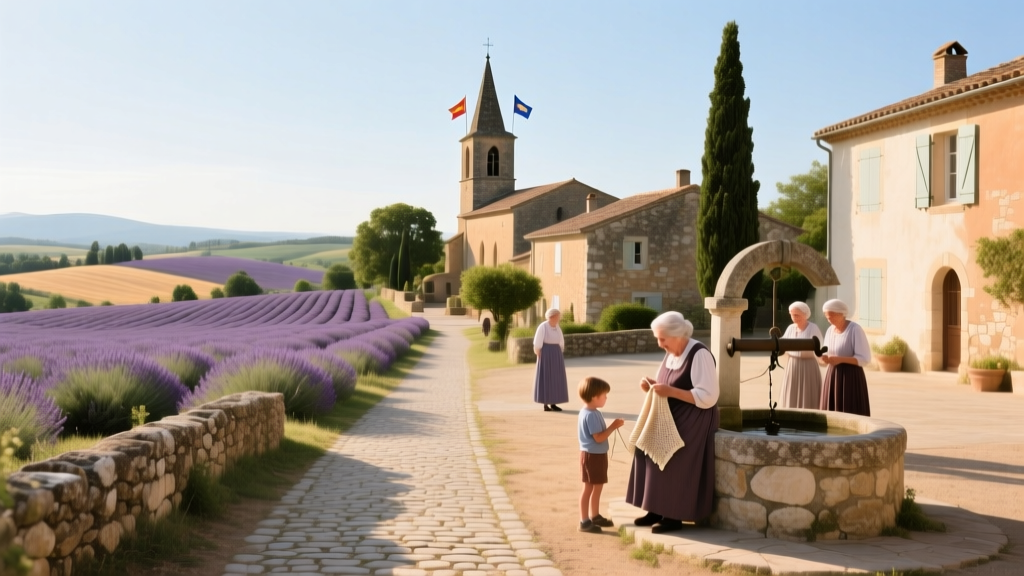
Off the Beaten Path: Ascension Day in Rural Villages of Southern France
The road to Saint-Guilhem-le-Désert winds through the Hérault valley for 14 kilometers after you leave the autoroute at Lodève. On an ordinary Thursday in May, you'll share this road with perhaps two other cars. But on Ascension Day morning, the rhythm changes. Cars appear at 9 AM, then 9:30, then 10. By 10:45, the village's single parking area ? 60 spaces carved into the limestone hillside ? is full. Visitors spill onto the shoulder of the D136. And inside the 12th-century abbey church, the congregation overflows into the cloister, where the sound of a Gregorian chant echoes off stone walls that have stood for 900 years.
This is Ascension Day in rural southern France. It's not a tourist event. It's a community ritual that visitors are welcome to witness ? and if you time it right, to join. The villages of Occitanie and Provence-Alpes-Côte d'Azur offer some of the most authentic Ascension Day experiences in Europe, precisely because they haven't been designed for tourists. They've been shaped by centuries of tradition, and the holiday still matters here in a way that it no longer does in Paris or Lyon.
Why May Is the Ideal Month
May in southern France is a narrow window of perfection. Average daytime temperatures range from 18°C in the higher elevations of the Cévennes to 26°C in the valleys of Provence. The wildflower season ? which begins in early April and peaks between May 10 and May 20 ? transforms the garrigue (the scrubland that covers much of the region) into a carpet of lavender, thyme, rosemary, and wild orchids. There are over 40 species of wild orchid native to the Hérault department alone, according to the Conservatoire Botanique National Méditerranéen's Flora of Occitanie Survey (2024).
The summer crowds haven't arrived. July and August bring 3-4 times the visitor numbers to this region, per data from the Occitanie Regional Tourism Board's Annual Visitor Flow Report (2025). In May, the roads are quiet, the restaurants are uncrowded, and the villages feel lived-in rather than staged.
Rainfall is moderate ? about 60mm across the month, spread over 8-10 days. The odds of a dry Ascension Day (May 14 in 2026) hover around 70%, based on 30-year averages from Météo-France.
Saint-Guilhem-le-Désert (Hérault)
Population: approximately 200. Elevation: 100 meters above sea level. Distance from Montpellier: 65 kilometers via the A75 and D136. Driving time: 1 hour and 15 minutes.
Saint-Guilhem-le-Désert is classified as one of France's Plus Beaux Villages (Most Beautiful Villages), and it wears the designation lightly. The village grew around the Abbey of Saint-Guilhem, founded in 804 AD by Saint William (Guilhem), Duke of Aquitaine and cousin of Charlemagne. The abbey church ? a Romanesque masterpiece ? remains the center of village life, and Ascension Day is its most important celebration of the spring season.
The Ascension Day Experience
The morning service begins at 10:30 AM in the abbey church. It's a full Mass with choir ? typically 30-40 local parishioners, plus visiting clergy from neighboring villages. After Mass, a short procession winds through the village's main street (Rue de l'Abbé Guilhem), led by the priest carrying the blessed sacrament and followed by congregants singing hymns. The route is approximately 400 meters and takes 15 minutes.
After the procession, the Place de l'Église fills with a communal meal. Residents bring dishes ? usually a mix of traditional Languedoc fare: tapenade, saucisson de Lacaune, fougasse (a local flatbread), and a large pot of ratatouille prepared by the village's women's association. Visitors are welcomed. If you're present, someone will hand you a plate and point you toward the food. It's not a performance. It's a community sharing a meal, and you're included.
Where to Stay
The village has three chambres d'hôtes (bed and breakfasts), ranging from €75 to €95 per night. The closest alternative is Lodève (14 km away), which offers gîtes (self-catering cottages) at €65-85 per night and two hotels at €80-110 per night. Book at least three weeks ahead for Ascension Day weekend.
Beyond the Holiday
The Gorges de l'Hérault, accessible via trails from the village, offer 25 kilometers of marked hiking routes. The most popular ? the Sentier de la Vallée ? is a 7-kilometer loop that takes 2.5 hours and passes through limestone cliffs, abandoned water mills, and a natural arch (the Pont du Diable, a 11th-century bridge that carries 2,000 visitors per day in peak season). In mid-May, the trail is lined with wild lavender and the temperature stays between 16°C and 22°C.
Menerbes (Vaucluse)
Population: approximately 1,100. Elevation: 250 meters. Distance from Avignon: 45 kilometers via the D900 and D24. Driving time: 50 minutes.
Menerbes is perched on a rocky outcrop in the Lubéron, visible from 5 kilometers away. The village is best known internationally as the setting for Peter Mayle's A Year in Provence, but its Ascension Day celebration has nothing to do with literary tourism. It's a religious and agricultural event, rooted in the village's viticultural heritage.
The Ascension Day Experience
The morning begins at 9 AM with a blessing of the vineyards ? a tradition dating to the 15th century when the village priest would walk the perimeter of the vineyard plots, sprinkling holy water and praying for a good harvest. In 2026, the blessing starts at the church of Notre-Dame de l'Annonciade and follows a 2-kilometer route through the vineyards on the southern slope of the village, returning at approximately 10 AM for Mass.
After Mass, the village's weekly market ? normally held on Friday ? is moved to Thursday for Ascension Day. The Place de la Mairie fills with 15-20 vendors selling local produce: olives from the Vallée des Baux, honey from the Lubéron beekeepers' cooperative (which produced 4.2 tonnes of honey in 2024, per the Syndicat Apicole du Vaucluse), cheeses from the Alpilles, and fresh bread from Menerbes's own boulangerie.
Where to Stay
Menerbes has five gîtes and two chambres d'hôtes. Prices during Ascension weekend run €85-120 per night for a gîte and €90-110 for a chambre d'hôtes with breakfast. The nearest town with more options is Cavaillon (12 km), where hotel rooms average €70-90 per night.
Beyond the Holiday
The Sentier des Ocres (Ochre Trail) in nearby Rustrel (18 km from Menerbes) is a 1.5-kilometer loop through former ochre quarries, where the earth ranges from bright yellow to deep red. The trail is free, takes 45 minutes, and is at its most photogenic in May light. The average temperature in the Lubéron in mid-May is 20°C ? warm enough for a T-shirt in the sun, cool enough for a light jacket in the shade.
Cordes-sur-Ciel (Tarn)
Population: approximately 1,000. Elevation: 320 meters. Distance from Toulouse: 75 kilometers via the A68 and D600. Driving time: 1 hour and 10 minutes.
Cordes-sur-Ciel ? "Cordes above the sky" ? earns its name when the morning fog fills the valley below and the hilltop village appears to float. The village was founded in 1222 by Raymond VII, Count of Toulouse, as a bastide (fortified town) during the Albigensian Crusade. Its Gothic houses and ramparts are among the best-preserved medieval structures in the Tarn department.
The Ascension Day Experience
Ascension Day in Cordes-sur-Ciel is a full-day affair. The morning service at the Église Saint-Michel begins at 10 AM and draws approximately 150 attendees ? roughly 15% of the department's registered Catholic population in the immediate area, according to the Diocese of Albi's Parish Participation Report (2025). After Mass, the village's artisan workshops ? leatherworkers, potters, weavers ? open their doors for a special Ascension Day market that runs from noon to 6 PM.
The afternoon includes a medieval archery demonstration on the ramparts (at 2 PM and 4 PM) and a concert of sacred music in the Église Saint-Michel at 5 PM, performed by the Chorale de Cordes, a 35-voice amateur choir that has been active since 1962.
Where to Stay
Inside the village walls, there are four chambres d'hôtes at €70-95 per night. In the valley below (the "ville basse"), two hotels offer rooms at €65-85 per night with parking ? a significant advantage if you're driving, since parking within the walls is limited to 25 spaces.
Beyond the Holiday
The Gorges de l'Aveyron, 12 kilometers to the east, offer hiking trails along the river canyon. The most accessible route ? from the village of Lescure to the Puits de Marie ? is 5 kilometers one way and takes 1.5 hours. In mid-May, the river is full from spring runoff, and the limestone cliffs are dotted with nesting peregrine falcons (three pairs were recorded in the 2024 LPO Tarn bird survey).
Gordes (Vaucluse)
Population: approximately 2,100. Elevation: 370 meters. Distance from Avignon: 38 kilometers via the D900 and D15. Driving time: 45 minutes.
Gordes is the most visited village on this list ? it draws approximately 400,000 visitors per year, compared to Saint-Guilhem-le-Désert's 80,000, per the Provence-Alpes-Côte d'Azur Regional Tourism Board's Heritage Site Attendance Report (2025). The village's hilltop position, whitewashed stone houses, and proximity to the Abbaye de Sénanque (a 12th-century Cistercian abbey surrounded by lavender fields) make it a magnet for day-trippers from Avignon and Aix-en-Provence.
But Ascension Day is different. The holiday draws a different crowd ? pilgrims, locals, and visitors who are here for the event rather than the photo opportunity. The atmosphere is quieter, more contemplative.
The Ascension Day Experience
The morning begins with Mass at the Église Saint-Firmin at 10:30 AM. Afterward, a procession descends from the village to the valley floor, following the Chemin des Moines (Monks' Path) ? a 1.2-kilometer trail that passes through olive groves and ends at a small chapel dedicated to Saint Jacques. The walk takes 25 minutes, and the view from the path ? looking back up at the village perched on its limestone promontory ? is one of the most photographed scenes in Provence.
At the chapel, a brief service is held (15 minutes), and visitors are offered a glass of local wine ? typically a white from the nearby Ventoux AOC vineyards. The return walk to the village is self-guided, and most people stop at the cafés on the Place du Château for coffee and a pastry.
Where to Stay
Gordes is the most expensive village on this list. Chambres d'hôtes run €95-140 per night, and gîtes start at €110. The nearby village of Coustellet (8 km away) offers more affordable options at €65-80 per night, with the advantage of being closer to the Lubéron's hiking trails.
Beyond the Holiday
The Abbaye de Sénanque is 6 kilometers from Gordes. The lavender fields surrounding the abbey are green in mid-May (they flower in late June and July), but the abbey itself ? a remarkably pure example of Cistercian architecture ? is open for visits from 10 AM to 12 PM and 2 PM to 6 PM. Entry is €8 for adults. The cloister, the chapter house, and the monks' dormitory are accessible, and the acoustic quality of the abbey church makes it one of the best venues in Provence for unaccompanied choral music.
Roquebrun (Hérault)
Population: approximately 650. Elevation: 80 meters. Distance from Béziers: 50 kilometers via the D909. Driving time: 55 minutes.
Roquebrun calls itself "the Nice of the Hérault" ? a claim based on its microclimate, which is warm enough to support palms, mimosas, and citrus trees that wouldn't survive 20 kilometers inland. The village sits on a bend in the Orb river, with a medieval tower perched above the houses and a subtropical garden (the Jardin exotique) that houses over 300 species of plant, including 40 varieties of palm.
The Ascension Day Experience
Roquebrun's Ascension Day celebration is the most relaxed on this list. The morning service at the Église Saint-Pierre begins at 11 AM ? later than most villages, reflecting the village's unhurried character. After Mass, the riverside promenade fills with a small market (8-10 vendors) selling local products: olive oil from the Orb valley, honey, herbs, and freshly caught trout from the river.
The afternoon features a community walk ? the "Randonnée de l'Ascension" ? organized by the village's hiking club. The route is 8 kilometers, takes approximately 3 hours, and follows the Orb river upstream through a gorge where the cliffs rise 80 meters above the water. The walk is open to all, and participants are given a small glass of local wine at the halfway point. In 2025, 120 people participated ? roughly 20% of the village's population plus visitors.
Where to Stay
Roquebrun has three chambres d'hôtes at €65-80 per night and one gîte at €70 per night. The nearby town of Béziers (50 km) offers hotel rooms at €60-85 per night, but the commute reduces the experience significantly. Staying in the village is worth the premium.
Beyond the Holiday
The Jardin exotique de Roquebrun is open daily from 10 AM to 6 PM in May. Entry is €7 for adults. The garden covers 2 hectares and includes a botanical trail that takes 45 minutes to complete. The highlight is the collection of citrus trees ? lemons, oranges, and grapefruits ? which are in blossom in mid-May and fill the garden with a scent that carries down to the river.
Practical Information for Visiting These Villages
| Village | Department | Nearest City | Drive Time | Accommodation Range | Mass Time |
|---|---|---|---|---|---|
| Saint-Guilhem-le-Désert | Hérault | Montpellier | 1h 15m | €65-95/night | 10:30 AM |
| Menerbes | Vaucluse | Avignon | 50m | €85-120/night | 10:00 AM |
| Cordes-sur-Ciel | Tarn | Toulouse | 1h 10m | €65-95/night | 10:00 AM |
| Gordes | Vaucluse | Avignon | 45m | €95-140/night | 10:30 AM |
| Roquebrun | Hérault | Béziers | 55m | €65-80/night | 11:00 AM |
Getting to these villages requires a car. Public transport in rural southern France is limited ? the nearest train stations are in Lodève (for Saint-Guilhem), Cavaillon (for Menerbes), Albi (for Cordes-sur-Ciel), Apt (for Gordes), and Béziers (for Roquebrun), and from each station you'll need a taxi or rental car to reach the village. Distances range from 12 to 50 kilometers, and taxi fares run €25-60 depending on the route.
If you're planning a multi-village itinerary, base yourself in one location and make day trips. Menerbes and Gordes are close enough (30 km apart) to visit both from a single base. Saint-Guilhem and Roquebrun are further apart (90 km) but both accessible from Béziers or Montpellier. Cordes-sur-Ciel is the outlier ? it's 150 km from the nearest village on this list, so it deserves its own base.
"The villages of southern France don't perform their traditions for visitors. They live them. If you come to an Ascension Day celebration in one of these places, you're not an audience ? you're a guest. The difference matters. It means you should arrive with respect, stay with curiosity, and leave with the understanding that you've witnessed something real, not staged."
Mid-May in southern France is a brief window where the weather, the landscape, and the cultural calendar align. The wildflowers bloom for two weeks. The temperatures hover in the low twenties. The summer crowds haven't arrived. And the villages ? each with its own history, its own rhythm, its own way of marking a holiday that stretches back centuries ? offer an experience that no guidebook can fully capture. You have to be there.