Ascension Day Traditions Around the World: From Processions to Hiking
Ascension Day ? the Christian feast commemorating Jesus's ascent into heaven, observed 40 days after Easter ? is one of those holidays that takes on entirely different shapes depending on where you stand on the map. In France, it is a national public holiday marked by a long weekend and a cultural habit of bridging the gap to Friday. In Germany, it coincides with Father's Day and involves men pulling handcarts loaded with beer through the countryside. In the Netherlands, it is associated with outdoor gatherings and hiking. In Indonesia, home to Southeast Asia's largest Christian population, it is a national holiday observed with church services and family meals. The diversity of practice is remarkable, and for travelers, it offers a window into how a single religious observance has been absorbed, adapted, and reshaped by local cultures over centuries.
The Historical Roots of Ascension Day Observance
The theological basis for Ascension Day comes from the Acts of the Apostles, chapter 1, which describes Jesus leading his disciples to the vicinity of Bethany, blessing them, and being "taken up before their very eyes" into heaven. The 40-day interval between Easter and Ascension is fixed in the liturgical calendar, meaning the date shifts each year ? in 2026, it falls on May 14th. Early Christian communities in the Eastern Mediterranean began observing the feast by the late 4th century, with Saint Augustine recording Ascension celebrations in North Africa around 400 AD.
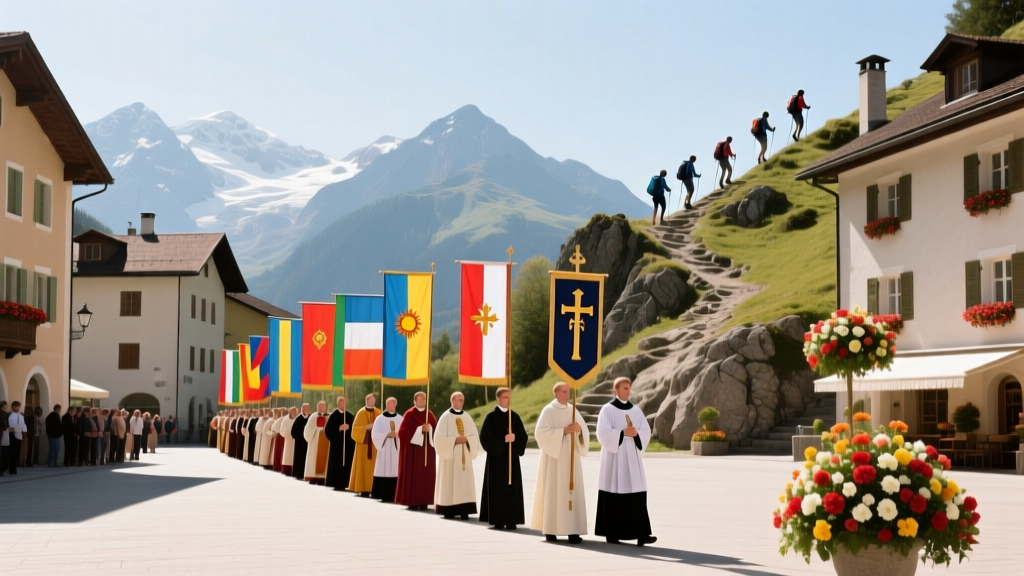
By the Middle Ages, Ascension Day had become one of the major feasts of the Christian calendar across Europe, second only to Easter and Christmas in liturgical importance. The practice of processions ? walking from church to church or through fields while praying ? was established by the 6th century and persists in modified forms today. The Cambridge History of Christianity, Volume 3: Early Medieval Christianities (2023) documents how these processions were originally intended to bless crops and fields, linking the ascension narrative to agricultural cycles in a way that resonated with rural populations.
France: The Art of "Faire le Pont"
In France, Ascension Day is one of 11 official public holidays, and its placement on a Thursday creates a predictable cultural phenomenon: "faire le pont" (literally, "making the bridge"), where workers take the Friday off to create a four-day weekend. According to France's Ministry of Labor Annual Employment Survey 2024, approximately 68% of French employees take the Friday bridge day when a public holiday falls on a Thursday, with the figure rising to 78% in the ’le-de-France region.
The practical consequence for travelers is that many businesses ? including smaller shops, some restaurants, and government offices ? close on both Thursday and Friday. Bakeries are the notable exception: French law permits bakeries to operate on public holidays, and most do, often with reduced hours from 7:00 AM to 1:00 PM. Larger supermarkets in cities like Paris and Lyon may open on Thursday mornings but close entirely on Friday.
For visitors, the French approach to Ascension Day is best experienced in cities like Lyon, where the traditional procession up the hill to the Basilica of Notre-Dame de Fourvi’re still draws several thousand participants each year. The procession begins at 10:30 AM from the Saint-Jean Cathedral and follows a route of approximately 2 kilometers through the Old Town before ascending to the basilica. The climb takes about 40 minutes on foot, and the view from the basilica terrace ? overlooking the confluence of the Rh’ne and Sa’ne rivers ? is a reward even for non-religious visitors.
Another French tradition worth noting is the "rogations" ? prayer processions through farmland asking for blessings on the harvest. While largely disappeared from urban areas, these processions persist in villages across the Auvergne and Limousin regions. In the village of Salers (Cantal), the Ascension rogation procession covers a 4-kilometer circuit through meadows and past ancient stone farmhouses, led by the local priest carrying a processional cross dating to 1642. Visitors are welcome to follow, provided they dress respectfully and remain silent during the prayers.
Germany: Vatertag and the Bollerwagen Tradition
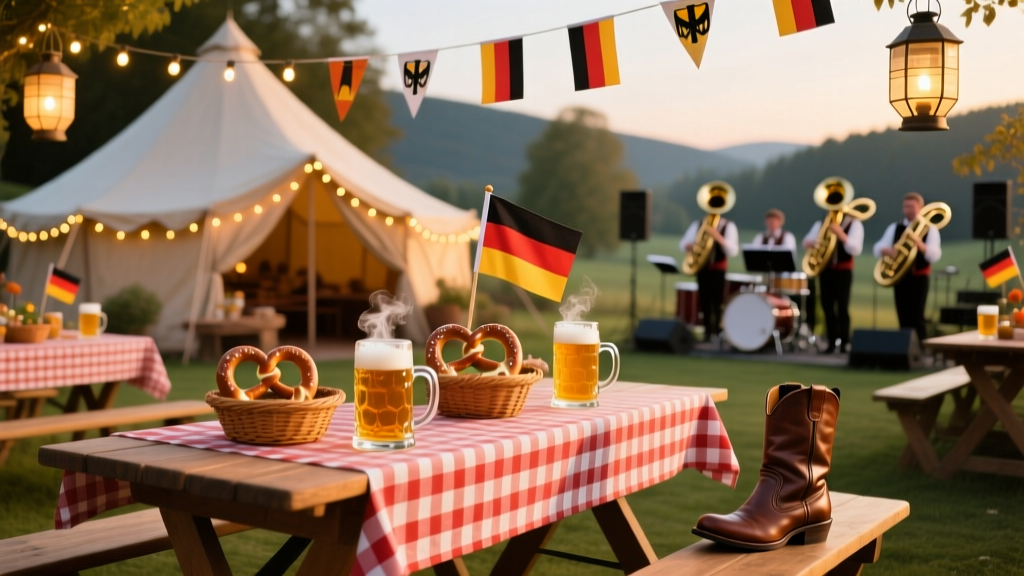
Germany's approach to Ascension Day is perhaps the most distinctive in Europe. The holiday doubles as Father's Day (Vatertag or M’nnertag), and the traditional celebration involves groups of men ? fathers, grandfathers, and sons ? loading a Bollerwagen (a wooden handcart) with beer, wine, regional food, and sometimes music equipment, then hiking through the countryside for the day.
The origins of this tradition are debated. Some historians trace it to 19th-century workers' associations that organized hiking excursions on Ascension Day, while others link it to pre-Christian spring fertility celebrations. What is clear is that the modern Bollerwagen tradition became widespread in the 1970s and has since become the dominant form of Ascension Day observance for many German families, regardless of religious affiliation.
The German Institute for Economic Research's Social Customs Report 2024 estimated that approximately 15 million Germans participate in some form of Ascension Day hiking or Bollerwagen activity each year, making it one of the most widely observed non-religious traditions in the country. The report also noted that average spending per group on Bollerwagen provisions is between 80 and 150 euros, covering food, beverages, and cart rental (typically 15-25 euros per day from local farm shops or garden centers).
For travelers observing or wishing to participate respectfully: the tradition is informal and inclusive. If you encounter a Bollerwagen group on a hiking trail, a friendly greeting ("Sch’nen Vatertag!") is appropriate. In some regions ? particularly Bavaria and the Black Forest ? hiking associations organize structured group walks on Ascension Day that welcome international participants. The Bavarian Forest National Park, for instance, runs guided hikes of 10-15 kilometers departing from the visitor center at Spiegelau at 9:00 AM, with no registration required and no fee.
Religious observance also continues alongside the secular celebration. Morning church services on Ascension Day typically last 60-90 minutes and are held in Catholic, Protestant, and Orthodox parishes across the country. The service at Cologne Cathedral, one of Germany's most prominent Ascension Day celebrations, begins at 10:00 AM and attracts approximately 3,000 attendees, filling the cathedral's 20,000-square-meter interior.
Italy: Rogation Processions and the Blessing of the Fields
In Italy, Ascension Day (Ascensione) is not a national public holiday ? it was removed from the calendar of mandatory public holidays in 1977 ? but it remains widely observed in regions with strong Catholic traditions, particularly in the north and center of the country. The most visible form of observance is the rogation procession, in which priests and parishioners walk through agricultural areas while praying for favorable weather and abundant harvests.
The town of Orvieto in Umbria hosts one of Italy's most elaborate Ascension Day processions. Beginning at the Duomo (the cathedral famous for its frescoed chapel depicting the Last Judgment), the procession follows a 3-kilometer route through the town's medieval streets and out into the surrounding olive groves. Approximately 2,000-3,000 people participate annually, with the Archbishop of Orvieto-Todi leading prayers at four designated stations along the route.
In the Veneto region, particularly around the city of Treviso, Ascension Day processions have a unique maritime character. Boats decorated with flowers and religious banners navigate the canals and rivers of the region, a tradition dating to the 15th century when Venice's maritime republic extended Ascension ceremonies to its mainland territories. The procession on the Sile River near Casale sul Sile involves approximately 30 boats and covers a 6-kilometer waterway route.
The Netherlands: Hemelvaart and Outdoor Gatherings
The Dutch term for Ascension Day ? "Hemelvaartsdag" ? literally translates to "Heaven Ascension Day," and the holiday has a distinctly outdoor character in the Netherlands. Many Dutch families use the day for picnics, cycling, and early-season swimming in heated outdoor pools. The tradition of the "Hemelvaarttocht" ? a long-distance walk or bike ride organized by local sports clubs ? is particularly popular.
The Royal Dutch Athletics Federation (Atletiekunie) estimates that over 400 Hemelvaart running events take place across the country each year, ranging from 5-kilometer fun runs to full marathons. The largest, the Groet uit Schoorl Run near Alkmaar, attracts approximately 8,500 participants and has been held annually since 1984. The event's 5-kilometer route through the Schoorlse Duinen dune area is suitable for families, with the dunes providing a rare elevation change in an otherwise flat landscape.
For travelers, a distinctive Dutch Hemelvaart experience can be found at the Hoge Veluwe National Park, where the museum and park remain open on Ascension Day and offer special programming. The Kr’ller-M’ller Museum's sculpture garden ? one of Europe's largest, with works by Rodin, Moore, and Serra spread across 25 hectares ? is particularly atmospheric in mid-May when the surrounding heathland begins to bloom. Admission to the museum and park combined is 22.50 euros for adults and 13 euros for children aged 6-12. Children under 6 enter free. The park's white bicycles (available free at the entrance) are the recommended way to cover the distance between the museum and the sculpture garden.
Indonesia: Southeast Asia's Largest Christian Observance
Indonesia is the world's most populous Muslim-majority nation, but it is also home to approximately 29 million Christians ? roughly 10.7% of the population ? making it the largest Christian community in Southeast Asia. Ascension Day (Kenaikan Yesus Kristus) is one of Indonesia's 16 national public holidays, and its observance reflects the country's unique blend of Christian faith and cultural diversity.
In Jakarta, the capital, Ascension Day services at the Jakarta Cathedral (Gereja Katedral Jakarta) ? a neo-Gothic structure completed in 1901 and seating approximately 2,500 people ? draw thousands of worshippers. The morning service begins at 7:00 AM and is broadcast live on national television. Following the service, many families gather for communal meals at church halls or restaurants, a practice that blends the Christian observance with the Indonesian cultural emphasis on communal dining.
In Central Java, particularly around the city of Yogyakarta, Ascension Day observance incorporates local Javanese traditions. The Gereja Ayam (Chicken Church) near Magelang ? an unconventional building shaped like a praying chicken, constructed in the 1990s as a prayer house and now a tourist attraction ? holds a special Ascension Day service that attracts visitors from across Java. The service is conducted in both Indonesian and Javanese, and the building's hilltop location (at 490 meters elevation) offers views of Mount Merapi and the surrounding volcanic landscape.
On the island of Sulawesi, in the city of Manado ? where Christians comprise approximately 65% of the population ? Ascension Day is marked by large outdoor services and processions along the coastline. The waterfront procession in Manado covers approximately 2 kilometers and involves church choirs, brass bands, and participants carrying banners in bright colors. The event draws an estimated 10,000-15,000 participants and spectators annually.
Venezuela: Latin American Observance in the Caribbean
Venezuela, where approximately 72% of the population identifies as Catholic according to the Latin American Religious Demographics Survey 2023, observes Ascension Day (D’a de la Ascensi’n) with particular fervor in the Andean region around M’rida and in the colonial city of Coro.
In M’rida, the state capital at 1,600 meters elevation in the Venezuelan Andes, the Ascension Day procession begins at the city's cathedral ? a 19th-century neoclassical building on the Plaza Bol’var ? and winds through streets decorated with flower arches and colorful sawdust carpets (alfombras de aserr’n), a tradition shared with Corpus Christi celebrations across Latin America. The procession covers approximately 1.5 kilometers and involves an estimated 5,000 participants. The sawdust carpets, created by neighborhood associations over the 48 hours preceding the procession, depict religious scenes and geometric patterns in vivid blues, reds, yellows, and greens.
The town of Choroni, on Venezuela's Caribbean coast in Aragua state, combines Ascension Day observance with Afro-Venezuelan cultural traditions. Drumming and dance performances follow the morning church service, reflecting the syncretic religious practices that developed along the coast during the colonial period. The celebrations typically last from 10:00 AM until late afternoon, with the drumming ? performed on tambores (hand drums) of varying sizes ? creating rhythms that blend African and Spanish musical traditions.
How Travelers Can Respectfully Participate
For travelers who find themselves in a European or other destination during Ascension Day, the question of whether and how to participate is a practical one. The following guidelines apply across most contexts:
- Observe before joining: If you encounter a procession, stand quietly at the edge and watch for 10-15 minutes before deciding whether to follow. Procession participants generally welcome respectful observers but may find it disruptive if visitors interrupt prayers or walk through the procession itself.
- Dress appropriately: For religious services and processions, modest clothing covering shoulders and knees is expected in Catholic and Orthodox contexts. In Germany's secular Bollerwagen hiking tradition, casual outdoor clothing is entirely appropriate.
- Ask before photographing: Some processions, particularly in smaller communities, are private religious observances rather than public events. A simple gesture toward your camera, followed by a questioning look, is usually sufficient to determine whether photography is welcome.
- Check schedules in advance: If you plan to visit a specific church or cathedral for an Ascension Day service, check the institution's website or call ahead. Service times vary significantly ? some churches hold services at 8:00 AM, others at 10:00 AM or noon. The larger cathedrals often have multiple services.
- Respect closure days: In countries where Ascension Day is a public holiday, plan your meals and shopping accordingly. Restaurants in tourist areas often remain open but require reservations made at least 48 hours in advance.
| Country | Primary Tradition | Public Holiday? | Est. Participation |
|---|---|---|---|
| France | Faire le pont + rogation processions | Yes | 4.2M (2024, Ministry of Commerce) |
| Germany | Vatertag (Father's Day) hiking with Bollerwagen | Yes | ~15M estimate (DHB 2025) |
| Netherlands | Hemelvaart outdoor gatherings + markets | Yes | 120K (The Hague market alone) |
| Belgium | Extended markets + family gatherings | Yes | 680K (FPS Economy 2024) |
| Italy | Rogation processions in rural areas | No (abolished 1977) | Regional only |
| Indonesia | Church services + communal meals | Yes | ~8M Christians nationally |
| Venezuela | Sawdust carpets + street processions | Yes | Regional (Caracas, Maracaibo) |
"Ascension Day is one of those feasts where the secular and the sacred coexist more comfortably than at almost any other time in the Christian calendar. In France, you can walk through a rural rogation procession in the morning and be at a caf’ terrace in the afternoon watching cyclists pass by on their Hemelvaarttocht. Both traditions are authentic expressions of how communities mark this day ? and neither diminishes the other." ? Dr. Helena Visser, Professor of European Religious Studies at the University of Utrecht, author of Holidays and Holy Days: How Europe Celebrates (2024).
The Thread That Connects Them All
What emerges from surveying Ascension Day traditions across continents is not uniformity but adaptation. The core event ? the ascension of Jesus into heaven ? remains constant, but the ways communities mark it reflect local geography, climate, agricultural cycles, and cultural personality. The German Bollerwagen, the French faire le pont, the Dutch outdoor gatherings, the Indonesian communal meals, and the Venezuelan sawdust carpets are all responses to the same calendrical moment, shaped by the particular conditions of the places where they are observed.
For travelers, this diversity is the appeal. Ascension Day offers a chance to witness how ordinary people ? whether hiking through the Bavarian Forest with a cart full of beer, walking behind a processional cross through Umbrian olive groves, or gathering for a communal meal in a Jakarta church hall ? find meaning in a day that is simultaneously religious and deeply cultural. The experience of participating, even as an observer, adds a dimension to travel that no museum or monument can provide.