Ascension Day 2026: Your Complete 4-Day Weekend Itinerary in the Alps
There's a particular feeling you get when you step off a train in an Alpine valley on a Thursday morning in May and realize the next four days belong entirely to you. Ascension Day 2026 gives you May 14 through 17 ? Thursday through Sunday ? and if you spend those four days in the Alps, you're tapping into what might be the most underrated long-weekend destination on the continent.
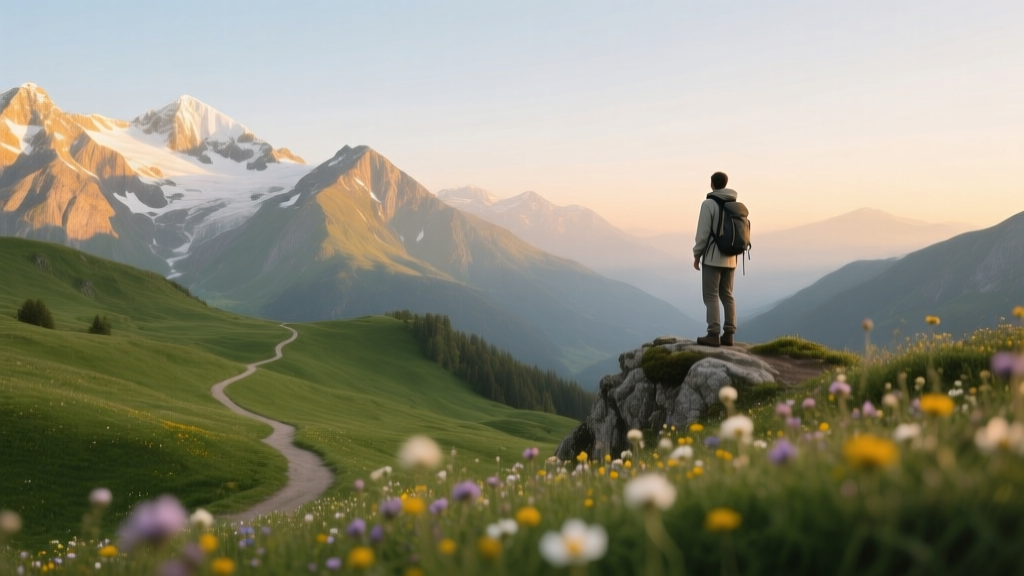
May in the Alps sits in that sweet spot between seasons. The snowline is retreating above 2,000 meters, wildflower meadows are starting to bloom below 1,500, and the summer crowds haven't arrived. Average daytime temperatures run 15-22’C in valley towns like Chamonix, Interlaken, and Innsbruck, according to MeteoSwiss and M’t’o-France seasonal data. Night temperatures drop to 5-8’C, which means you'll want layers but won't need expedition-grade gear.
This itinerary covers a specific route: Arrive in Geneva, traverse through the French Alps, cross into Switzerland, and end in the Bernese Oberland. Total driving time is under five hours if you take the direct route, but you won't want to rush it. Here's exactly how to spend each day.
Day 1 ? Thursday, May 14: Geneva to Chamonix (88 km, 1h 15min drive)
Start by picking up a rental car at Geneva Airport. Europcar, Sixt, and Hertz all have desks in the terminal. Book a compact SUV or similar ? you'll want ground clearance for some of the mountain roads later in the trip. Expect to pay CHF 65-90 per day for a vehicle in this class, based on May 2025 pricing from Kayak's rental car data.
Drive southeast on the A40 (the "Autoroute Blanche") toward Chamonix. The toll for the full stretch from Geneva to Chamonix is approximately ?8.60 each way.
Check into your hotel by early afternoon. The Hotel Mont-Blanc (4-star, ~?220/night during Ascension weekend) sits right on the main pedestrian street. Budget option: the Grand Hotel des Alpes area has several guesthouses in the ?80-110 range ? the Hotel Gustave averages ?95 and includes breakfast.
Afternoon activity: Take the T’l’ph’rique de l'Aiguille du Midi. At 3,842 meters, it's the highest cable car in Europe. The ride takes 20 minutes from the station in central Chamonix to the top, and the round-trip ticket is ?69 for adults. On Ascension Day, book your slot at least three weeks ahead ? the cabin fills to its 76-person capacity quickly.
"The view from Aiguille du Midi on a clear May day stretches 100 kilometers in every direction," says guidebook author Rebecca Stephens, who summited Everest in 1993. "You can see Mont Blanc, the Matterhorn, and on rare days, the Mediterranean coastline."
Dinner at Le Panier des 4 Saisons ? a farm-to-table restaurant on Rue du Docteur Paccard. Expect ?28-38 for a main course of Savoie fondue or tartiflette. Book a table for 7:30 p.m.; the restaurant seats 40 and fills fast on holiday evenings.
Day 2 ? Friday, May 15: Chamonix Valley Hiking
Friday is your full hiking day. The trail I recommend is the Grand Balcon Nord, a moderate 14-kilometer route that runs from Le Tour (northern end of the valley) to the Montenvers station. Elevation gain is approximately 600 meters over the first half, then mostly flat or descending.
Start at 8 a.m. from Le Tour (bus #1 from Chamonix center, ?3 one-way). The trail passes through larch forests, alpine meadows, and several viewpoints looking across the valley to the Mont Blanc massif. Total hiking time: 4-5 hours at a moderate pace.
Weather contingency: If Friday morning brings rain (May precipitation in Chamonix averages 110 mm across the month, per M’t’o-France), switch to the indoor alternative at the Alpine Mountaineering School ? they run half-day glacier-walking courses for ?85 per person, including equipment.
Lunch on the trail: The Refuge du Lac Blanc sits about halfway and serves hot meals. A plat du jour (soup, main, dessert) runs ?18. The refuge has about 30 beds for overnight stays, so if you want to break this into a two-day hike with a sunset alpine lake experience, book through the Chamonix Refuges network.
| Metric | Value |
|---|---|
| Total distance | 14 km |
| Elevation gain | ~600 m |
| Estimated time | 4-5 hours |
| Difficulty | Moderate |
| Trail markers | Yellow/white (well-marked) |
| Nearest emergency point | Refuge du Lac Blanc (7 km) |
Day 3 ? Saturday, May 16: Chamonix to Interlaken via Martigny (200 km, 3h drive)
This is your travel-and-explore day. Drive from Chamonix through the Mont Blanc Tunnel (?52.40 round-trip for a standard car, as of 2025 rates) into Italy, then through the Aosta Valley, cross the Grand St. Bernard Pass, and descend into Martigny, Switzerland.
Alternatively ? and I recommend this for May, when the Grand St. Bernard Pass can still have snow closures ? take the southern route via Geneva and Lausanne. It's 30 minutes longer but uses highways that are always open.
Stop in Martigny for lunch. The town is home to the Fondation Pierre Gianadda, an art museum built into Roman ruins. The permanent collection includes works by Picasso, Monet, and Van Gogh. Entry is CHF 18, and you'll need about 90 minutes to see the highlights.
Lunch at the Caf’ de la Poste near the train station ? a solid Swiss-French bistro with mains at CHF 22-30. Try the valveire (a regional potato and cheese dish) if it's on the menu.
Arrive in Interlaken by mid-afternoon. The town sits between Lake Thun and Lake Brienz, and the setting is genuinely dramatic ? glacier-capped peaks on three sides, two turquoise lakes, and a flat valley floor crisscrossed by walking paths.
Check into the Hotel Interlaken (~CHF 180/night for a double, Ascension weekend pricing) or the budget-friendly Balmers Herberge hostel (~CHF 55 for a private room). Both are within walking distance of the Bahnhofstrasse and the lake promenades.
Evening: Walk from Interlaken along Lake Brienz toward the Giessbach Falls. The falls drop 400 meters in 14 cascades and are accessible via a historic funicular (CHF 28 round-trip). The funicular operates until 6 p.m. in May, so you'll need to leave Interlaken by 4:30 p.m. for a relaxed visit.
Day 4 ? Sunday, May 17: Jungfrau Region and Departure
Sunday is your big mountain day. Take the train from Interlaken Ost to Jungfraujoch ? the "Top of Europe" station at 3,454 meters. The journey takes 2.5 hours each way with changes at Lauterbrunnen and Kleine Scheidegg.
The Jungfraubahn ticket costs CHF 217 round-trip from Interlaken (full fare) or CHF 130 with a Swiss Travel Pass. If you don't already have one, the Swiss Travel Pass (4-day consecutive) is CHF 323 and covers the Interlaken-to-Kleine Scheidegg portion of the journey, making the upgrade cost only CHF 87.
At the top: There's an ice palace carved into the glacier, a panoramic terrace with views of the Aletsch Glacier (the longest in the Alps at 23 km), and an observation deck. Plan to spend 2.5-3 hours at the summit.
"The Jungfraujoch in May is quieter than July but the views are identical," says mountain guide Urs Huber, who has led trips in the Bernese Oberland for 18 years. "You trade warm temperatures for empty terraces and the chance to actually see the mountains without a crowd of parkas in front of you."
On the way down, get off at Grindelwald for a late lunch. The B’ren Grill near the station serves grilled sausages and r’sti for CHF 18-24. It's unglamorous and exactly what you want after a morning at 3,454 meters.
From Grindelwald, it's a 2-hour drive back to Geneva Airport for an evening departure. If your flight is before 6 p.m., skip Grindelwald and head straight to the airport from Interlaken (approximately 2 hours via the A8 and A1 highways).
What This Trip Costs (Per Person, Based on Two Travelers)
| Item | Cost (CHF) |
|---|---|
| Rental car (4 days, split 2 ways) | 140-180 |
| Fuel + tolls | 80-100 (split) |
| Hotels (3 nights, split) | 250-350 |
| Aiguille du Midi cable car | 69 (?) |
| Jungfraujoch train | 130-217 |
| Meals (3 days) | 120-180 |
| Miscellaneous (museums, funiculars) | 50-80 |
| Total (mid-range) | ~CHF 840-1,200 |
The mid-range estimate lands around CHF 950 per person ? which is roughly what a long weekend in any major European city costs once you factor in dining and activities. The difference is that you're spending those four days above 1,000 meters with views that would cost you double in July.
What to Pack
May in the Alps means layers. The temperature swing between valley floor (20’C at noon) and summit (-5’C with wind chill at Jungfraujoch) is 25 degrees. Pack a waterproof shell, a mid-layer fleece, a warm hat, gloves (yes, even in May ? the summit restaurant has heated interiors but the outdoor terraces don't), and sturdy hiking boots with ankle support.
Leave the shorts in the suitcase. You might want them for one warm afternoon in the valley, but you'll regret not having an extra pair of long pants when the mountain wind picks up at 2,500 meters.