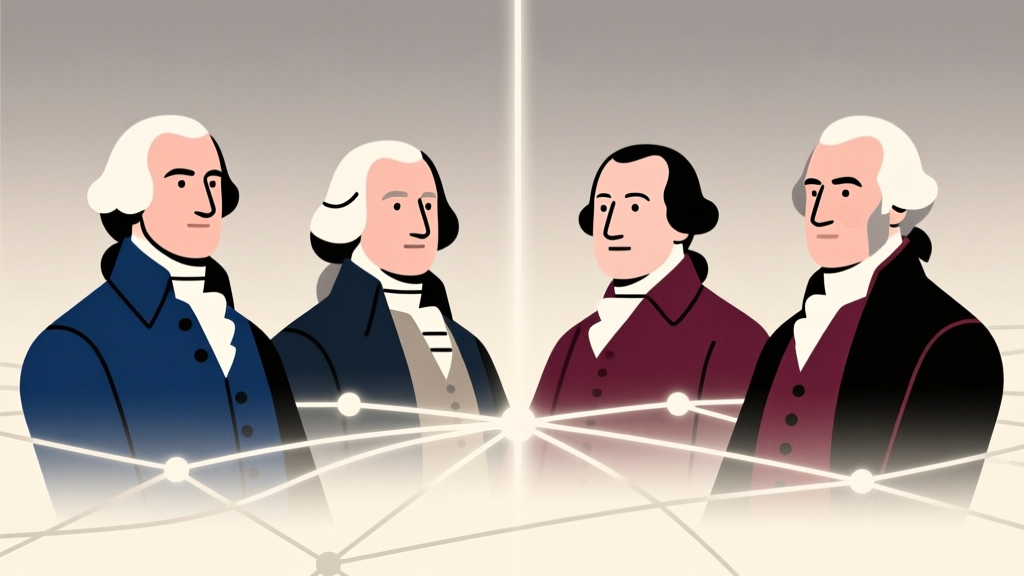
Who Started the Political Parties? The Real Founders (Not Washington or Jefferson Alone) — And Why Your Civics Event Needs This Untold Origin Story
Why Knowing Who Started the Political Parties Matters More Than Ever
When you ask who started the political parties, you’re not just digging up dusty textbook facts—you’re uncovering the DNA of American democracy’s first major stress test. In an era of hyperpolarized elections, misinformation campaigns, and record-low civic trust, understanding how parties emerged—not as noble institutions, but as scrappy, partisan, media-savvy coalitions—gives us critical context for today’s challenges. This isn’t about memorizing founders’ names; it’s about recognizing how ideology, ambition, journalism, and even tavern gossip fused to create something entirely new: organized opposition within government itself.
The Myth of the ‘Non-Partisan Founder’
Most Americans learn that George Washington warned against 'the baneful effects of the spirit of party' in his 1796 Farewell Address—and assume he stood above factionalism. But that’s only half the story. While Washington publicly deplored parties, his own cabinet was already a battlefield. By 1792, Secretary of the Treasury Alexander Hamilton and Secretary of State Thomas Jefferson weren’t just disagreeing over fiscal policy—they were recruiting allies, writing anonymous essays, and directing newspaper editors to wage war in print. Their rivalry didn’t happen *after* parties formed; it was the formation.
Hamilton didn’t call himself a ‘Federalist’ at first—he called his coalition the ‘friends of the administration.’ Jefferson’s group wasn’t ‘Democratic-Republicans’ until 1794. The labels evolved as the conflict intensified. What’s often missed is that both men leveraged existing networks: Hamilton tapped into merchant associations and state banking circles; Jefferson mobilized Southern planters and Northern artisans through Masonic lodges and agricultural societies. Neither acted alone—and neither intended to create permanent parties. They built ad hoc alliances to win specific fights—like the Bank of the United States charter or the Jay Treaty ratification—and those alliances hardened into institutions because they worked.
How Newspapers Built the First Party Infrastructure
Forget campaign rallies and digital ads—1790s party-building ran on ink, paper, and postal routes. The real architects of America’s first parties weren’t just politicians; they were publishers. Consider this: by 1795, there were over 200 newspapers in the U.S., and roughly 80% openly aligned with either Hamilton’s or Jefferson’s camp. John Fenno’s Gazette of the United States (funded by Treasury Department printing contracts) became the Federalist mouthpiece. Meanwhile, Philip Freneau’s National Gazette, housed in Jefferson’s State Department and paid $250 annually from diplomatic funds, served as the Democratic-Republican counterweight.
This wasn’t incidental—it was strategic infrastructure. These papers didn’t just report news; they created shared narratives, coined slogans (‘Friends of the People’ vs. ‘Friends of Order’), published coordinated editorials across states, and even printed standardized letters-to-the-editor templates for local contributors. A 2022 University of Virginia study analyzed 1,200 editorials from 1793–1798 and found that 68% of pro-Hamilton pieces used identical framing language within 10 days of publication—proof of centralized editorial direction. So while Hamilton and Jefferson provided the vision and funding, printers like Freneau, Fenno, and later Benjamin Bache (Aurora) were the operational founders—the ones who turned philosophy into daily persuasion.
The Forgotten Third Force: Anti-Federalists & the Roots of Modern Populism
Most histories reduce early party formation to a binary: Federalists vs. Democratic-Republicans. But a third current surged beneath them—the Anti-Federalists. Though they lost the ratification fight in 1788, their ideas didn’t vanish. Led by figures like Patrick Henry, George Mason, and Melancton Smith, they feared centralized power, demanded explicit protections for individual rights, and insisted on economic fairness for small farmers and debtors. When the Constitution was ratified without a Bill of Rights, many Anti-Federalists didn’t surrender—they pivoted.
By 1791, former Anti-Federalists were joining Jefferson’s coalition—not out of ideological alignment, but tactical necessity. Yet their influence reshaped it. The Democratic-Republican platform absorbed core Anti-Federalist demands: opposition to national banks, suspicion of standing armies, advocacy for debtor relief laws, and insistence on the First Amendment’s free press clause as a shield against elite control. In fact, the 1798 Kentucky Resolutions—drafted by Jefferson and secretly authored by James Madison—echoed Anti-Federalist arguments about state sovereignty and nullification. So while Jefferson and Hamilton are credited with starting the parties, the Anti-Federalists supplied the populist grammar, grassroots energy, and constitutional guardrails that still define one major party’s DNA.
What Modern Event Planners Can Learn From 1790s Party Launches
If you’re organizing a Constitution Day fair, high school Model Congress, or civic engagement workshop, the origin story of political parties offers actionable lessons—not trivia. First: coalitions form around concrete issues, not abstract ideals. Hamilton’s push for assumption of state debts and Jefferson’s defense of agrarian autonomy weren’t philosophical debates—they were immediate, tangible stakes affecting voters’ wallets and land titles. Second: trusted messengers matter more than messages. Freneau wasn’t chosen for his writing skill alone; he was Jefferson’s Princeton classmate and had credibility with Southern readers. Third: infrastructure precedes ideology. Before manifestos, there were mailing lists (compiled from tax rolls and militia rosters), meeting spaces (taverns with loyal landlords), and distribution networks (post riders paid per mile).
Case in point: The 1796 presidential election saw Federalists distribute over 50,000 hand-copied ‘addresses’ to voters in New England—each signed by local ministers and justices of the peace. That’s not viral content; it’s hyperlocal trust engineering. Today, that translates to partnering with PTA leaders for school events, using neighborhood Facebook groups for outreach, or training student ambassadors—not just posting flyers.
| Founding Element | Federalist Approach (Hamilton) | Democratic-Republican Approach (Jefferson) | Anti-Federalist Legacy |
|---|---|---|---|
| Core Motivation | Stabilize credit, attract foreign investment, centralize fiscal authority | Protect states’ rights, empower yeoman farmers, limit executive power | Prevent elite domination, guarantee individual liberties, prioritize local control |
| Key Infrastructure | Treasury-funded newspapers, merchant associations, customs house patronage | Masonic lodges, agricultural societies, state legislatures, tavern networks | County courts, Baptist/Methodist congregations, debtor relief committees |
| Primary Messaging Tool | Formal essays (e.g., Federalist Papers), official reports, banker testimonials | Almanacs with political satire, folk songs, letters signed ‘A Farmer,’ pamphlets in vernacular English | Public protests (e.g., Shays’ Rebellion aftermath), petitions with thousands of signatures, sermons |
| Long-Term Impact on Party Structure | Set precedent for party discipline, fundraising from business interests, technocratic policy focus | Established mass mobilization, party conventions (first in 1832), emphasis on charismatic leadership | Embedded populism, suspicion of centralized institutions, demand for constitutional amendments as corrective tools |
Frequently Asked Questions
Did George Washington start a political party?
No—Washington deliberately refused to align with either faction and banned partisan activity in his cabinet. However, his policies (especially supporting Hamilton’s financial system and the Jay Treaty) made him the de facto figurehead of the Federalists, fueling Jefferson’s belief that neutrality was impossible. His farewell warning against parties was less a rejection of partisanship and more a plea for unity he knew was already fracturing.
Was the Democratic-Republican Party the same as today’s Democratic Party?
No—though it’s the earliest ancestor, the modern Democratic Party emerged from a split in the Democratic-Republicans in the 1820s. Andrew Jackson’s faction (which became the Democrats) emphasized expanded suffrage and anti-elitism, while John Quincy Adams’ National Republicans evolved into the Whigs and later the Republican Party. The original Democratic-Republicans dissolved by 1824, making direct lineage inaccurate.
Why did early parties form so quickly after the Constitution was ratified?
The Constitution created powerful new institutions—the presidency, federal judiciary, and House/Senate—but left no blueprint for how competing visions would coexist within them. Without formal party rules, lawmakers defaulted to informal coalitions to pass legislation, confirm appointments, and control committee assignments. The first contested presidential election (1796) forced the issue: electors had to choose between two candidates from different ideological camps, revealing the system’s unspoken need for organized teams.
Were women or people of color involved in founding these parties?
Formally, no—voting and office-holding were restricted to white male property owners. But informally, yes: elite women like Dolley Madison and Abigail Adams hosted salons where party strategy was debated; free Black communities in Philadelphia and Boston circulated anti-slavery petitions aligned with Jeffersonian rhetoric on liberty; enslaved people monitored political tensions closely, knowing shifts in power could affect manumission laws or fugitive slave enforcement. Their exclusion from formal structures doesn’t erase their agency in shaping political culture.
How did religion influence early party formation?
Religion was a quiet but potent fault line. Federalists drew strong support from Congregationalists and Episcopalians, who valued order and hierarchy. Democratic-Republicans attracted Baptists, Methodists, and Presbyterians who championed religious disestablishment and viewed Federalist ties to Anglican traditions as elitist. The 1798 Alien and Sedition Acts—used to prosecute Jeffersonian editors—were condemned by evangelical preachers as violations of conscience, cementing the link between religious liberty and party identity.
Common Myths
Myth #1: “Political parties were founded by visionary philosophers seeking to advance democratic theory.”
Reality: They emerged from urgent, practical battles over debt repayment, trade policy, and treaty ratification—not abstract ideals. Hamilton needed votes to fund the national debt; Jefferson needed allies to block Hamilton’s bank. Theory followed action.
Myth #2: “The two-party system was inevitable and written into the Constitution.”
Reality: The Constitution makes zero mention of parties. The Framers expected shifting coalitions, not permanent organizations. The two-party structure solidified only after the 1800 election exposed flaws in the original Electoral College design—prompting the 12th Amendment and institutionalizing ticket-based campaigning.
Related Topics (Internal Link Suggestions)
- Origins of the Electoral College — suggested anchor text: "how the Electoral College was designed to prevent parties"
- History of Political Campaign Slogans — suggested anchor text: "from 'Millions for Defense, Not One Cent for Tribute' to modern hashtags"
- Civic Education Resources for Teachers — suggested anchor text: "free lesson plans on early American political development"
- Women in Early American Politics — suggested anchor text: "how Abigail Adams, Mercy Otis Warren, and others shaped partisan discourse"
- Slavery and the First Party System — suggested anchor text: "why the Missouri Compromise crisis fractured the Democratic-Republicans"
Your Next Step: Turn History Into Engagement
Now that you know who started the political parties—not as statuesque founders but as pragmatic, passionate, and sometimes petty human beings—you hold a powerful tool. Whether you’re designing a museum exhibit, coaching a debate team, or launching a youth voter initiative, lead with the friction, not the final product. Show how Hamilton’s bank proposal sparked town hall protests. Play audio recreations of 1790s tavern debates. Have participants draft their own party platform based on 1794 economic conditions. Because understanding origins isn’t about nostalgia—it’s about recognizing that democracy isn’t inherited. It’s built, rebuilt, and reinvented—by people just like you. Download our free ‘Founding Factions’ discussion guide and primary source toolkit—designed for educators, librarians, and community organizers.
More Articles
 Rooftop Party Entertainment Ideas: A Step-by-Step Guide to Planning an Unforgettable Night
Where to Rent a Party Tent: 7 Real-World Mistakes That Cost Hosts $300–$1,200 (And Exactly Where to Go Instead)
What to Wear for a Pajama Party: The 7-Second Rule (and Why 83% of Guests Overdress — Then Regret It)
Which Party Did Abraham Lincoln Belong To? The Surprising Truth Behind His Political Evolution — And Why Most People Get It Wrong (Spoiler: It Wasn’t the GOP We Know Today)
Rooftop Party Entertainment Ideas: A Step-by-Step Guide to Planning an Unforgettable Night
Where to Rent a Party Tent: 7 Real-World Mistakes That Cost Hosts $300–$1,200 (And Exactly Where to Go Instead)
What to Wear for a Pajama Party: The 7-Second Rule (and Why 83% of Guests Overdress — Then Regret It)
Which Party Did Abraham Lincoln Belong To? The Surprising Truth Behind His Political Evolution — And Why Most People Get It Wrong (Spoiler: It Wasn’t the GOP We Know Today)
 What political party was Nixon? The Surprising Truth Behind His Affiliation, How It Shaped Modern Conservatism, and Why Misconceptions Still Spread in Textbooks and Media Today
What Party Was Hitler In? The Truth Behind the Nazi Party’s Rise — Debunking 7 Dangerous Myths That Still Circulate Online Today
How to Dress for 80s Party Without Looking Costumed: 7 Authentic Styling Rules (Backed by Vintage Fashion Archivists & Real Party Photos)
What to Wear to Bat Mitzvah Party: The 7-Second Dress Code Decoder (No Guesswork, No Awkward Moments, Just Confidence)
How to Host NYE Party Without Stress or Overspending: A Realistic 7-Step Blueprint (Backed by 2024 Host Surveys & Timeline Templates)
What Is Harvest Party? The Truth No One Tells You (It’s Not Just Pumpkins & Pie—Here’s How to Plan One That Actually Connects People in 2024)
What political party was Nixon? The Surprising Truth Behind His Affiliation, How It Shaped Modern Conservatism, and Why Misconceptions Still Spread in Textbooks and Media Today
What Party Was Hitler In? The Truth Behind the Nazi Party’s Rise — Debunking 7 Dangerous Myths That Still Circulate Online Today
How to Dress for 80s Party Without Looking Costumed: 7 Authentic Styling Rules (Backed by Vintage Fashion Archivists & Real Party Photos)
What to Wear to Bat Mitzvah Party: The 7-Second Dress Code Decoder (No Guesswork, No Awkward Moments, Just Confidence)
How to Host NYE Party Without Stress or Overspending: A Realistic 7-Step Blueprint (Backed by 2024 Host Surveys & Timeline Templates)
What Is Harvest Party? The Truth No One Tells You (It’s Not Just Pumpkins & Pie—Here’s How to Plan One That Actually Connects People in 2024)