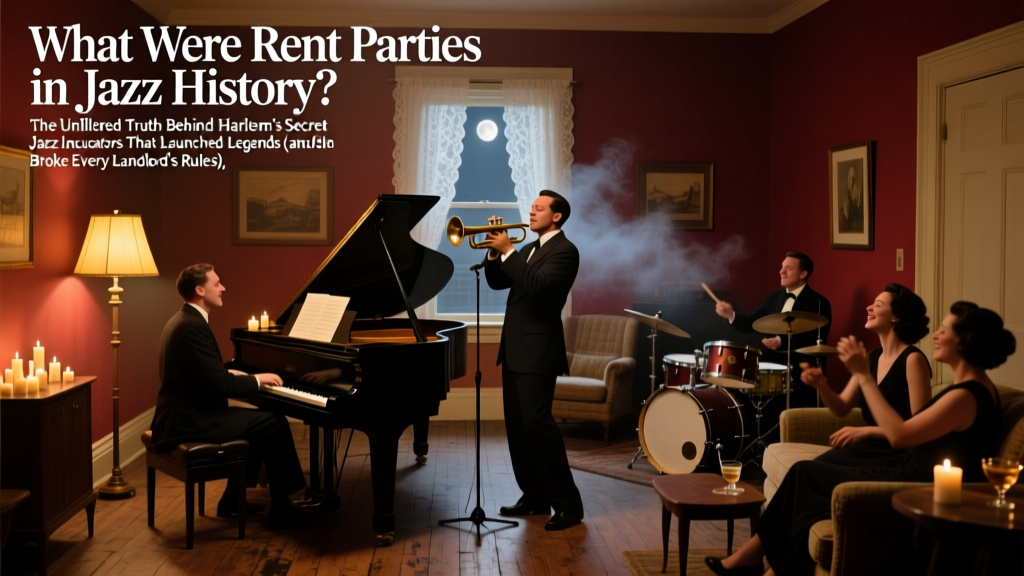
What Were Rent Parties in Jazz History? The Unfiltered Truth Behind Harlem’s Secret Jazz Incubators That Launched Legends (and Broke Every Landlord’s Rules)
Why Rent Parties Matter More Than Ever Today
What were rent parties in jazz history? They were far more than impromptu get-togethers — they were ingenious, high-stakes, community-powered events that kept families housed *and* incubated a musical revolution. In an era when Black tenants faced predatory rents, redlining, and exclusion from mainstream venues, rent parties became the unsanctioned engine room of jazz innovation. Think of them as Harlem’s original pop-up concert series: part fundraiser, part talent incubator, part social safety net — all pulsing with piano-driven swing before bebop even had a name. And today, as creators seek authentic, low-budget, community-rooted event models, understanding what rent parties in jazz history truly were offers urgent, actionable lessons in resilience, resourcefulness, and cultural entrepreneurship.
The Origins: Survival, Not Celebration
Rent parties emerged in earnest during the Great Migration’s peak — roughly 1915–1935 — as hundreds of thousands of Black Southerners settled into overcrowded, dilapidated tenements in Harlem, Chicago’s South Side, and Philadelphia’s Seventh Ward. Landlords routinely charged 20–40% above market rate, demanded weekly cash payments (often in person, at risk of harassment), and evicted tenants without notice. A missed rent meant immediate displacement — no grace period, no appeal. So neighbors organized. A tenant facing eviction would host a ‘rent party’ — an all-night gathering where guests paid $0.25–$0.50 at the door, received a plate of food (often collard greens, cornbread, and fried fish), and danced until sunrise to live music. These weren’t charity drives; they were mutual aid networks disguised as joy. As jazz historian Dr. Ingrid Monson notes, ‘The rent party wasn’t an escape from hardship — it was the architecture of resistance built inside it.’
Crucially, these events operated outside white-controlled institutions. No permits. No liquor licenses. No police oversight — though raids did happen (more on that later). Hosts used coded language: invitations read ‘Social Affairs,’ ‘Kitchen Jams,’ or ‘Saturday Night Suppers’ — never ‘rent party.’ Flyers featured hand-drawn illustrations of dancing couples or pianos with the words ‘No Rent Due Tonight!’ scrawled beneath. This linguistic camouflage was essential. It preserved dignity while signaling belonging — a subtle but powerful act of self-determination.
The Music: Where Jazz Got Its Groove Back
Here’s where ‘what were rent parties in jazz history’ transforms from socioeconomic footnote to musical genesis story. Rent parties didn’t just feature jazz — they *reforged* it. In formal clubs like the Cotton Club, Black musicians played for white-only audiences under strict ‘entertainment’ constraints: no improvisation beyond scripted solos, no ‘lowbrow’ blues inflections, and absolutely no direct engagement with the crowd. Rent parties flipped that script entirely.
At a typical Harlem rent party, the star wasn’t the bandleader — it was the rent party pianist. Often self-taught, these players mastered ‘stride piano’: a thunderous left-hand bass-and-chord pattern anchoring dizzying right-hand improvisations. Names like James P. Johnson, Willie ‘the Lion’ Smith, and Fats Waller didn’t just perform — they competed. ‘Cutting contests’ were nightly rituals: two pianists would face off, trading increasingly complex riffs, syncopations, and tempo shifts until one conceded. Audience members shouted requests, clapped polyrhythms, and judged not by sheet music but by sweat, stamina, and swing. This pressure-cooker environment forced rapid stylistic evolution — the very DNA of swing and early bebop.
Case in point: 17-year-old Thelonious Monk attended rent parties religiously in the early 1930s. His biographer Robin D.G. Kelley recounts how Monk studied stride techniques not in conservatories, but by standing behind pianos at 138th Street apartments, absorbing harmonic substitutions and rhythmic displacements that would later define his revolutionary compositions. ‘He wasn’t learning theory — he was learning survival grammar,’ Kelley writes. ‘Every chord change had to land like a punch. Every silence had to breathe like relief.’
The Blueprint: How Rent Parties Actually Worked
Forget vague nostalgia — rent parties followed precise operational logic. They were meticulously planned, socially governed, and economically calibrated. Below is a breakdown of their core mechanics:
- Host Selection: Usually a trusted tenant with a large enough apartment (often a ‘railroad flat’ — narrow, linear rooms ideal for sound projection) and strong neighborhood ties. Hosts were vetted — someone who’d hosted before, knew reliable musicians, and wouldn’t skim door proceeds.
- Pricing & Transparency: Door fees were posted publicly on flyers and verbally confirmed at entry. A portion (typically 60–70%) went directly to the renter in crisis; 20% covered musician fees (paid in cash, often $2–$5 per set); the remainder funded food, ice, and ‘insurance’ — a small envelope given to local beat cops to discourage raids.
- Sound & Space Design: Pianos were moved to center stage — often with legs removed and placed on rugs to dampen bass thump and prevent floorboards from shaking loose. Guests stood shoulder-to-shoulder; chairs were rare. The goal wasn’t comfort — it was kinetic energy transfer. As one 1932 rent party flyer declared: ‘Dance till your shoes cry uncle!’
- Social Code: Strict norms governed behavior. No arguing. No flirting with someone else’s partner (enforced by ‘party mothers’ — respected elders who monitored conduct). And absolutely no snitching — violating this rule meant permanent blacklisting from future events.
| Element | Standard Practice (1920s–30s) | Modern Event Planning Parallel | Why It Mattered |
|---|---|---|---|
| Invitations | Handwritten or mimeographed flyers distributed door-to-door; verbal ‘whisper networks’ | Instagram Stories + WhatsApp broadcast lists | Ensured trust & exclusivity — prevented gatecrashers and undercover cops |
| Revenue Model | $0.25–$0.50 entry + optional ‘tip jar’ for musicians; 70/20/10 split | Tiered ticketing (GA + VIP lounge access + merch bundle) | Made fundraising transparent and sustainable — no hidden fees eroded community trust |
| Venue Logistics | Residential apartments; no permits; sound optimized via rug placement & piano positioning | Pop-up galleries, warehouse spaces, co-op studios | Turned constraint (no venue budget) into creative advantage (intimacy, acoustics, authenticity) |
| Artist Compensation | Cash paid per set; negotiated upfront; no contracts, only handshake + reputation | Guaranteed minimum + % of bar sales + streaming promo tie-in | Protected artists from exploitation while honoring their centrality to the event’s success |
| Risk Mitigation | ‘Cops’ fund (small envelope handed to patrol officer); designated lookouts; exit routes mapped | Permit compliance checklists; liability insurance; security briefing docs | Allowed operation in hostile regulatory environments without sacrificing safety or spirit |
The Legacy: From Basement Jams to Global Movements
Rent parties didn’t vanish — they mutated. When the Harlem Renaissance waned and WWII shifted demographics, their ethos migrated: into after-hours clubs like Minton’s Playhouse (where Charlie Parker and Dizzy Gillespie workshopped bebop), into Motown’s basement recording sessions in Detroit, and even into today’s DIY indie scenes. Brooklyn’s ‘Basement Jazz Series’ (founded 2018) explicitly cites rent parties as inspiration — hosting monthly shows in rent-controlled brownstones, splitting door proceeds 50/50 between artist and host, and using QR-code menus instead of flyers. Similarly, Chicago’s ‘South Side Sound Collective’ trains youth in ‘rent party literacy’ — teaching not just music, but budgeting, consent culture, conflict de-escalation, and community accountability.
But perhaps the most profound legacy lies in their redefinition of value. Rent parties proved that economic viability and artistic integrity aren’t trade-offs — they’re interdependent. They showed that infrastructure doesn’t require capital; it requires coordination. That ‘professionalism’ isn’t defined by corporate sponsorship, but by reliability, reciprocity, and respect. And that the most revolutionary art often emerges not in gilded halls, but in cramped apartments where the rent is due Monday — and the piano hasn’t stopped swinging since Friday night.
Frequently Asked Questions
Were rent parties illegal?
Technically, yes — most violated zoning laws, noise ordinances, and liquor regulations (though alcohol was rarely served; ‘ginger ale’ often contained bathtub gin). However, enforcement was inconsistent and racially biased. Police often ignored parties in Black neighborhoods unless tipped off by rivals or landlords seeking leverage. The ‘cops’ fund’ — a small cash envelope handed to officers on patrol — functioned as informal harm reduction, not bribery. As sociologist St. Clair Drake observed, ‘It wasn’t corruption — it was calibrated coexistence.’
Did famous jazz musicians really start at rent parties?
Absolutely. Fats Waller began playing rent parties at age 15 in Harlem, earning $2 per night — enough to buy sheet music and support his family. Duke Ellington recalled sneaking into parties as a teen, studying stride piano technique from James P. Johnson. Even Miles Davis, decades later, credited rent party energy as foundational: ‘That raw, unedited, ‘what-you-got-right-now’ vibe — that’s where real jazz lives. Clubs polish it. Rent parties birth it.’
Why did rent parties decline after the 1940s?
Three converging forces: First, New Deal housing programs (like the Housing Act of 1937) created some affordable public housing — reducing immediate rent crises. Second, the rise of commercial nightclubs offered higher-paying, more stable gigs for musicians, drawing talent away from informal settings. Third, postwar migration patterns dispersed Harlem’s dense tenant networks, weakening the neighbor-to-neighbor trust essential for organizing. Yet their spirit persisted — see the ‘loft jazz’ movement of 1970s NYC, where artists hosted concerts in abandoned industrial spaces to bypass restrictive club bookings.
How can modern event planners apply rent party principles today?
Start with three pillars: Transparency (publish clear revenue splits and budget breakdowns), Reciprocity (ensure hosts, artists, and attendees all gain tangible value), and Adaptive Infrastructure (use existing spaces creatively instead of chasing ‘perfect’ venues). One successful modern example: Portland’s ‘Rent Party Revival’ series partners with housing nonprofits — 100% of door proceeds fund emergency rent assistance, while local musicians receive guaranteed fees *plus* recording time at a donated studio. It’s not nostalgia — it’s iteration.
Were rent parties only in Harlem?
No — though Harlem was the epicenter, vibrant rent party cultures thrived in Chicago’s Bronzeville, Philadelphia’s ‘Black Bottom,’ Detroit’s Paradise Valley, and even smaller cities like Indianapolis and Louisville. Regional variations existed: Chicago parties emphasized blues-inflected piano and featured more vocal quartets; Philly gatherings incorporated string bands and step-dancing traditions. What unified them was the shared economic reality and cultural imperative — making music *while* making rent.
Common Myths
Myth #1: Rent parties were chaotic, drunken free-for-alls. Reality: They operated under strict, unwritten codes of conduct enforced by community elders. Disruptive behavior resulted in immediate ejection — and social exile. Their order was organic, not imposed.
Myth #2: They were purely musical events. Reality: Music was central, but rent parties were holistic ecosystems — featuring home-cooked meals, fashion displays (‘best dressed’ contests), poetry readings, and even informal legal aid (tenants sharing eviction defense strategies). They were community hubs, not concert venues.
Related Topics (Internal Link Suggestions)
- Harlem Renaissance music scene — suggested anchor text: "Harlem Renaissance jazz venues and performers"
- Stride piano technique explained — suggested anchor text: "how stride piano shaped early jazz"
- DIY event planning for musicians — suggested anchor text: "host your own jazz house concert"
- History of jazz and housing justice — suggested anchor text: "how redlining shaped jazz geography"
- Modern rent party revival movements — suggested anchor text: "today’s grassroots jazz fundraisers"
Your Turn: Build Something Real
Understanding what rent parties in jazz history were isn’t just an academic exercise — it’s a toolkit. Their genius wasn’t in grandeur, but in granularity: hyper-local trust, transparent economics, and art rooted in real human need. Whether you’re planning a neighborhood block party, launching an indie music series, or designing a community arts grant program, ask yourself: Who benefits? How is value shared? What constraints can we turn into creative fuel? Start small. Host a ‘kitchen jam’ in your living room. Split the door 50/50 with the musician. Cook one dish and share the recipe. You won’t launch a movement overnight — but you’ll honor a legacy that turned rent deadlines into rhythm sections, and desperation into dance floors. Ready to plan your first event? Download our free Rent Party Revival Starter Kit — complete with flyer templates, budget calculators, and a curated playlist of essential stride piano recordings.
More Articles
 How to Change Political Party Affiliation NC: A Step-by-Step Guide That Takes Less Than 10 Minutes (No Mail, No Wait, No Mistakes)
 What Is Appropriate Gift for Engagement Party? 7 Real-World Rules (Backed by Etiquette Experts & 2024 Guest Survey Data) That Prevent Awkwardness, Overspending, or Offense
How Much for a Party Bus Rental? The Real Cost Breakdown (Spoiler: It’s Not Just Hourly Rates—Hidden Fees, Group Size & Seasonality Change Everything)
Can a governor appoint a senator from a different party? Yes — but it’s rare, politically explosive, and governed by 50 unique state laws that dictate who *can* be appointed, when, and under what constraints.
What Is Appropriate Gift for Engagement Party? 7 Real-World Rules (Backed by Etiquette Experts & 2024 Guest Survey Data) That Prevent Awkwardness, Overspending, or Offense
How Much for a Party Bus Rental? The Real Cost Breakdown (Spoiler: It’s Not Just Hourly Rates—Hidden Fees, Group Size & Seasonality Change Everything)
Can a governor appoint a senator from a different party? Yes — but it’s rare, politically explosive, and governed by 50 unique state laws that dictate who *can* be appointed, when, and under what constraints.
 How to Train Your Dragon Birthday Party: The 7-Step Stress-Free Blueprint That Saves 12+ Hours (and Avoids the 'Toothless Tantrum' Trap)
What Are the Dates for Mickey's Halloween Party 2025? — Your Official, Up-to-the-Minute 2025 Calendar + Ticket Release Alerts & Pro Planning Timeline (Updated Daily)
What Party Abolished Slavery? The Truth Behind Lincoln, the Republicans, and Why 'Party' Doesn’t Mean What You Think — A Clear, Myth-Free Breakdown of the 13th Amendment’s Real Architects
What to Wear at a Cocktail Party Men: The 7-Second Dress Code Decoder (No More Guesswork, No More Awkward Greetings)
How Much Are Chuck E Cheese Parties Really? We Spent 40 Hours Calling 127 Locations, Analyzing 2024 Pricing Trends, and Found Hidden Fees That Could Add $85+ to Your Bill
What Do Guys Do at a Bachelor Party? 7 Realistic, Budget-Savvy & Respectful Activities That Actually Stick (No Cringe, No Regrets)
How to Train Your Dragon Birthday Party: The 7-Step Stress-Free Blueprint That Saves 12+ Hours (and Avoids the 'Toothless Tantrum' Trap)
What Are the Dates for Mickey's Halloween Party 2025? — Your Official, Up-to-the-Minute 2025 Calendar + Ticket Release Alerts & Pro Planning Timeline (Updated Daily)
What Party Abolished Slavery? The Truth Behind Lincoln, the Republicans, and Why 'Party' Doesn’t Mean What You Think — A Clear, Myth-Free Breakdown of the 13th Amendment’s Real Architects
What to Wear at a Cocktail Party Men: The 7-Second Dress Code Decoder (No More Guesswork, No More Awkward Greetings)
How Much Are Chuck E Cheese Parties Really? We Spent 40 Hours Calling 127 Locations, Analyzing 2024 Pricing Trends, and Found Hidden Fees That Could Add $85+ to Your Bill
What Do Guys Do at a Bachelor Party? 7 Realistic, Budget-Savvy & Respectful Activities That Actually Stick (No Cringe, No Regrets)