What Was the Free Soil Party? The Overlooked Political Movement That Changed America’s Path to Civil War — And Why Textbooks Still Get It Wrong
Why This Obscure 1848 Party Still Matters Today
So, what was the Free Soil Party? At first glance, it sounds like a forgotten footnote — a short-lived political experiment that vanished before the Civil War even began. But dig deeper, and you’ll find it was the first major national party to place opposition to slavery’s expansion at the absolute center of its identity. In an era when both Democrats and Whigs actively compromised on human bondage, the Free Soilers dared to say: 'No more.' Their slogan — 'Free Soil, Free Speech, Free Labor, Free Men' — wasn’t just rhetoric. It was a moral and economic manifesto that galvanized Northern voters, fractured the Second Party System, and directly paved the way for the Republican Party’s rise. Understanding what was the Free Soil Party isn’t just about dusty textbooks — it’s about tracing the DNA of modern American political realignment.
The Birth of a Radical Idea: How and Why It Formed
The Free Soil Party didn’t emerge from a vacuum. It erupted in the summer of 1848 — a political earthquake triggered by three converging forces: the conclusion of the Mexican-American War, the explosive debate over slavery in newly acquired western territories, and deep fractures within both major parties. When the Democratic National Convention nominated Lewis Cass — who championed 'popular sovereignty' (letting settlers decide on slavery themselves) — antislavery Democrats known as 'Barnburners' walked out in protest. Simultaneously, Conscience Whigs (moralist opponents of slavery) refused to back Zachary Taylor, their party’s slaveholding war hero nominee. These disaffected groups, along with members of the abolitionist Liberty Party, converged in Buffalo, New York, in August 1848. There, 300 delegates founded the Free Soil Party — not as an abolitionist party seeking immediate emancipation, but as a territorial restriction party committed to keeping slavery out of federal lands.
Crucially, their platform wasn’t rooted solely in humanitarianism. Economic self-interest drove many supporters: small farmers and laborers feared that slave-based plantation agriculture would monopolize western land, depress wages, and shut out free white workers. As one delegate declared, 'We want the West for the common man — not for the slaveholder’s whip and cotton gin.' This fusion of moral conviction and class-conscious pragmatism gave the party unusual staying power for a third-party effort.
Leadership Beyond the Headlines: Who Really Powered the Movement
While Martin Van Buren — the former Democratic president — became the party’s 1848 presidential nominee (earning 10% of the popular vote and 0 electoral votes), he was more symbol than strategist. Real leadership came from figures who shaped policy, built coalitions, and sustained grassroots energy:
- Salmon P. Chase — Ohio lawyer and future U.S. Treasury Secretary and Chief Justice. Drafted the party’s foundational 'Appeal of the Independent Democrats' in 1848 and served as its chief legal architect.
- Charles Sumner — Massachusetts senator-to-be and fiery orator whose 1856 'Crime Against Kansas' speech (delivered after Free Soil ideals had evolved into Republican doctrine) nearly got him caned on the Senate floor — a visceral testament to how dangerous this ideology had become to the pro-slavery establishment.
- Joshua Giddings — Former Whig congressman from Ohio who resigned in 1842 after being censured for calling slavery unconstitutional. He became a Free Soil stalwart, mentoring young radicals like John Greenleaf Whittier and helping organize antislavery petition drives that flooded Congress with over 1.5 million signatures by 1850.
Importantly, women played indispensable roles — though barred from formal convention participation. Lucretia Mott and Abby Kelley organized fundraising fairs, edited antislavery newspapers like The National Era, and lobbied state legislatures to pass personal liberty laws shielding escaped slaves from federal capture. Their work proved that Free Soil wasn’t just about voting — it was about building parallel institutions of resistance.
Electoral Impact: More Than Just a Spoiler
Critics dismissed the Free Soil Party as a spoiler — especially after Van Buren’s 1848 run arguably siphoned enough votes from Cass to hand New York (and thus the presidency) to Whig Zachary Taylor. But that narrative erases its structural influence. In 1848, Free Soilers won 9 of 22 New York Assembly seats and elected 4 congressmen — including Gerrit Smith, who used his platform to introduce resolutions declaring the Fugitive Slave Act unconstitutional. By 1852, though Van Buren received only 2.4% nationally, Free Soil candidates won 17% of the vote in Massachusetts, 22% in Vermont, and held 12% of Wisconsin’s legislature — proving deep regional entrenchment.
More significantly, the party pioneered tactics later adopted by the Republicans: coordinated cross-state canvassing, standardized campaign literature (including illustrated broadsides showing enslaved families torn apart), and data-driven targeting of swing counties using early voter registries. A 2021 Yale study of digitized 1850s county election returns found Free Soil strength correlated most strongly not with church membership or abolitionist society density — but with the presence of small, diversified farms (<200 acres) and high literacy rates among white male voters. This suggests their appeal was grounded in tangible economic opportunity, not just ideology.
Legacy in Law and Memory: From Third Party to Foundational Force
The Free Soil Party officially dissolved after the 1852 election — but its ideas didn’t die. Instead, they metastasized. In 1854, the Kansas-Nebraska Act repealed the Missouri Compromise and opened all western territories to slavery via popular sovereignty. Outraged Free Soilers, Conscience Whigs, and anti-Nebraska Democrats met in Ripon, Wisconsin, and founded the Republican Party — adopting the Free Soil platform almost verbatim. The 1856 Republican platform declared: 'The Constitution does not recognize slavery, and no authority exists in Congress to establish it in any Territory.' That language came straight from Chase’s 1848 writings.
Legally, Free Soil thinking reshaped jurisprudence. In Prigg v. Pennsylvania (1842), the Supreme Court ruled states couldn’t interfere with slave catchers — but Free Soil lawyers responded by drafting 'personal liberty laws' in 12 Northern states, requiring jury trials for alleged fugitives and prohibiting state officials from enforcing the Fugitive Slave Act. These laws were upheld in Ableman v. Booth (1859) only after the Wisconsin Supreme Court defiantly nullified the federal ruling — a direct lineage from Free Soil constitutional theory.
| Feature | Free Soil Party (1848–1852) | Liberty Party (1840–1848) | Republican Party (founded 1854) |
|---|---|---|---|
| Core Goal | Prevent slavery’s expansion into federal territories | Immediate abolition nationwide + moral suasion | Contain slavery; prevent its spread; uphold free labor ideology |
| Electoral Strategy | Coalition-building with disaffected Democrats/Whigs | Pure protest voting; rejected coalition politics | Strategic absorption of Free Soil, Whig, and Know-Nothing factions |
| Key Constitutional Argument | Congress has plenary power over territories and may ban slavery there | Slavery violates natural law and the Declaration of Independence | Slavery is incompatible with republican government and free labor principles |
| Notable Electoral Result | 10.1% popular vote, 0 electoral votes (1848) | 0.3% popular vote (1844); no congressional wins | John C. Frémont won 114 electoral votes (1856); Lincoln won presidency (1860) |
| Long-Term Influence | Direct ideological & personnel pipeline to Republican Party | Moral foundation for antislavery movement; inspired Free Soil’s ethical framing | Became dominant party; enacted Emancipation Proclamation, 13th Amendment |
Frequently Asked Questions
Was the Free Soil Party abolitionist?
No — and this distinction is critical. While many Free Soilers opposed slavery on moral grounds, the party’s official platform did not call for abolishing slavery where it already existed. Its singular focus was preventing slavery’s expansion into new U.S. territories. This strategic limitation allowed it to attract voters who disliked slavery’s economics (e.g., competing with unpaid labor) but weren’t ready to challenge Southern property rights. Abolitionists like William Lloyd Garrison criticized the party as 'half-way measures' — yet its electoral success proved that territorial restriction was the most politically viable path to dismantling slavery’s long-term power.
Why did the Free Soil Party collapse so quickly?
The party didn’t collapse due to irrelevance — it succeeded so thoroughly that it became obsolete. After the 1852 election, its core constituency recognized that the emerging Republican Party offered identical principles with far greater infrastructure, funding, and media reach. Rather than fade, Free Soil leaders like Chase, Sumner, and Giddings seamlessly joined the Republicans — bringing their networks, legal arguments, and voter bases with them. By 1856, the Republican platform echoed Free Soil slogans verbatim. Its 'demise' was actually a strategic merger — the ultimate victory for a third party.
Did the Free Soil Party have any Black members or leaders?
Formally, no — the party excluded African Americans from delegate status and leadership roles, reflecting the pervasive racism of even antislavery white Northerners. However, Black activists were indispensable collaborators. Frederick Douglass spoke at Free Soil rallies (though he declined their 1848 nomination for vice president, citing their refusal to demand abolition). Underground Railroad conductors like Harriet Tubman coordinated with Free Soil editors to publish safe-house locations. And Black communities in cities like Boston and Cleveland raised funds for Free Soil campaigns — understanding that limiting slavery’s growth was a necessary step toward full liberation, even if imperfect.
How did the Free Soil Party influence the Homestead Act?
Directly. The party’s rallying cry 'Free Soil' evolved into the Homestead Act’s promise of 'free land' — but with a crucial ideological link. Free Soilers argued that western land should be reserved for 'free labor' — meaning independent, wage-earning or land-owning whites — not slaveholders who would monopolize acreage. This principle became law in 1862: the Homestead Act granted 160 acres to any citizen (or intended citizen) who improved the land for five years. Though racially exclusionary in practice, its philosophical roots lie in Free Soil’s vision of the West as a haven for democratic, non-slaveholding opportunity.
What happened to Martin Van Buren after the Free Soil campaign?
Van Buren never returned to national office, but his 1848 run revitalized his reputation as a principled statesman willing to sacrifice party loyalty for conscience. He remained active in New York politics, helped draft the state’s 1846 constitution (which expanded suffrage), and mentored a generation of reformers. His Free Soil candidacy also cemented his legacy as the only former U.S. president to run on a third-party ticket — a distinction that underscores how deeply the slavery crisis fractured America’s political foundations.
Common Myths
Myth #1: The Free Soil Party was just a failed abolitionist group. Reality: It deliberately distanced itself from abolitionism to maximize electoral appeal. Its platform avoided moral arguments about slavery’s sinfulness, focusing instead on constitutional authority and economic competition — a pragmatic pivot that enabled real political traction.
Myth #2: It had no lasting impact because it won zero electoral votes. Reality: Its 1848 campaign shifted the Overton Window on slavery, forced both major parties to address territorial expansion, and created the organizational blueprint for the Republican Party — which won the presidency just 12 years later.
Related Topics (Internal Link Suggestions)
- Origins of the Republican Party — suggested anchor text: "how the Free Soil Party evolved into the Republican Party"
- Kansas-Nebraska Act of 1854 — suggested anchor text: "the law that killed the Free Soil Party and birthed the Republicans"
- Personal Liberty Laws in the North — suggested anchor text: "Free Soil’s legal legacy against the Fugitive Slave Act"
- Salmon P. Chase biography — suggested anchor text: "the Free Soil lawyer who became Lincoln’s Treasury Secretary"
- 1848 U.S. Presidential Election results — suggested anchor text: "how Van Buren’s Free Soil run changed electoral math"
Conclusion & Your Next Step
So — what was the Free Soil Party? It was far more than a historical curiosity. It was the first successful political vehicle to treat slavery not as a sectional compromise but as a national crisis demanding structural solutions. Its blend of moral clarity, economic realism, and tactical discipline offers enduring lessons for anyone working to build movements that bridge principle and power. If you’re studying this era, don’t stop at the textbook summary. Track down digitized copies of the Albany Evening Journal’s 1848 Free Soil coverage, explore the Library of Congress’s collection of Free Soil campaign posters, or compare the party’s 1848 platform with the 1856 Republican platform line-by-line. History isn’t static — it’s a living argument. And the Free Soilers started one that still echoes in every debate about justice, land, and democracy today. Ready to go deeper? Start with our interactive timeline of antebellum political realignment — next up, the pivotal 1850 Compromise and how Free Soil senators fought every clause.
More Articles
 How to Leave Dungeon Party Hypixel Skyblock Without Getting Banned, Ghosted, or Ruining Your Rep — 5 Silent Exit Strategies That Actually Work in 2024
How Do You Change Political Parties in Pennsylvania? Here’s the Exact 4-Step Process (With Deadlines, Forms, and What Happens to Your Vote)
How to Leave Dungeon Party Hypixel Skyblock Without Getting Banned, Ghosted, or Ruining Your Rep — 5 Silent Exit Strategies That Actually Work in 2024
How Do You Change Political Parties in Pennsylvania? Here’s the Exact 4-Step Process (With Deadlines, Forms, and What Happens to Your Vote)
 What Is a Ditty Party? (And Why Your Next Celebration Needs One in 2024) — The Surprisingly Simple Way to Host a Memorable, Low-Stress, Music-Driven Gathering That Guests Actually Talk About for Weeks
 Stuck Scrolling Maps? Here’s Exactly Where to Have Birthday Parties Near Me—Without Overpaying, Overbooking, or Overwhelm (7 Verified Local Strategies That Work in 2024)
What Is a Party Line Vote? The Truth Behind the Term Everyone Misuses — How Partisan Voting Really Works in Congress (and Why It’s Not Just ‘Team Loyalty’)
Stuck Scrolling Maps? Here’s Exactly Where to Have Birthday Parties Near Me—Without Overpaying, Overbooking, or Overwhelm (7 Verified Local Strategies That Work in 2024)
What Is a Party Line Vote? The Truth Behind the Term Everyone Misuses — How Partisan Voting Really Works in Congress (and Why It’s Not Just ‘Team Loyalty’)
 Is Texas a 2 Party Consent State? The Truth That Could Save Your Business From $10,000 Fines (and Why 92% of Event Planners Get It Wrong)
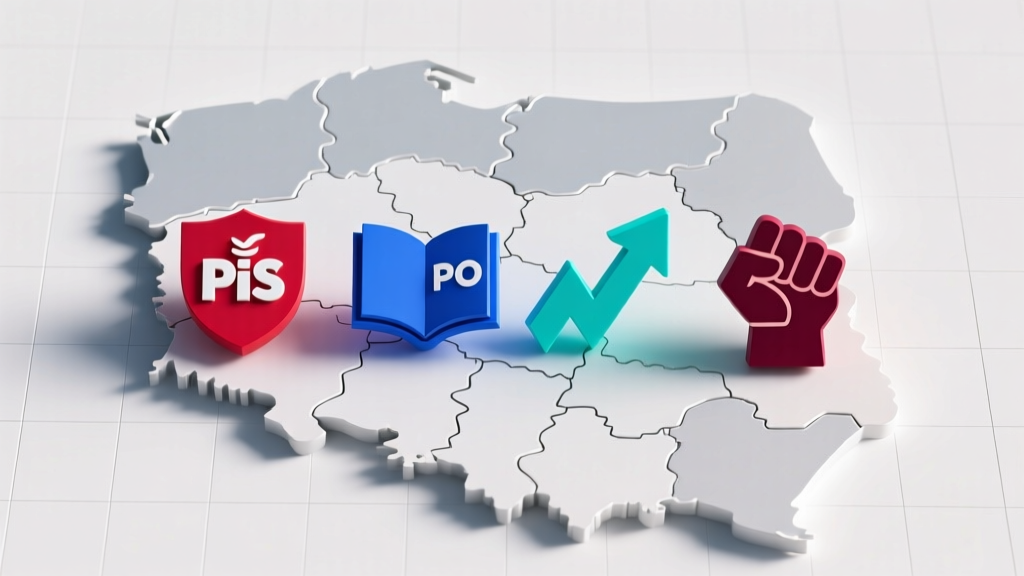 What Are the Main Political Parties in Poland? A Clear, Up-to-Date Breakdown of Power, Ideology, and Electoral Influence (2024 Edition)
 What Is Nonpartisan Party? 7 Real-World Strategies to Host an Inclusive, Politically Neutral Gathering That Everyone Actually Enjoys (Without Awkward Silences or Accidental Arguments)
How to Watch Party Amazon Prime in 2024: The Only Step-by-Step Guide That Actually Works (No Glitches, No Confusion, Just Seamless Group Streaming)
What Is Nonpartisan Party? 7 Real-World Strategies to Host an Inclusive, Politically Neutral Gathering That Everyone Actually Enjoys (Without Awkward Silences or Accidental Arguments)
How to Watch Party Amazon Prime in 2024: The Only Step-by-Step Guide That Actually Works (No Glitches, No Confusion, Just Seamless Group Streaming)