What to Wear for a 70's Party: The No-Stress, Authentic-Outfit Formula (No Thrift Store Panic, No Costume Shame, Just Instant Disco Cred)
Your 70’s Party Outfit Should Feel Like a Time Machine—Not a Costume Contest
If you’re Googling what to wear for a 70's party, you’re not alone—and you’re probably already stressing about looking either painfully dated or weirdly generic. Forget polyester nightmares and bell-bottoms that swallow your shoes. The truth? Authentic 1970s style wasn’t one monolithic look—it was a vibrant, contradictory explosion of self-expression: disco glam next to earthy boho, blaxploitation sharpness beside prog-rock rebellion. And the best news? You don’t need a closet full of vintage pieces—or $300 on Etsy—to nail it. In fact, most people overcomplicate this. With just three foundational elements (silhouette, texture, and attitude), you can build an outfit that reads ‘1973’ at first glance—not ‘I Googled “70s costume” at midnight.’ This isn’t about dressing up. It’s about dressing *in*.
Step 1: Decode the Decade’s Style DNA—Not Just the Clichés
The biggest mistake? Treating the ’70s like a single aesthetic. It spanned 10 wildly different years—from the flower-power softness of 1970–72, to the sequined extravagance of 1975–77, to the punk-adjacent deconstruction of 1978–79. So before you grab those flared jeans, ask: What kind of 70’s party is it? A backyard BBQ with tie-dye and acoustic guitars? A mirrored-ball dance floor with Donna Summer on repeat? Or a retro-film night screening Shaft or Chinatown? Your answer changes everything.
Here’s how real people dressed—not mannequins:
- Early ’70s (1970–73): Think Woodstock aftermath—flowing maxi dresses, crochet vests over tank tops, wide-brimmed floppy hats, suede fringe, and natural fabrics (cotton, linen, rayon). Men wore corduroy suits with narrow lapels, turtlenecks, and platform sandals.
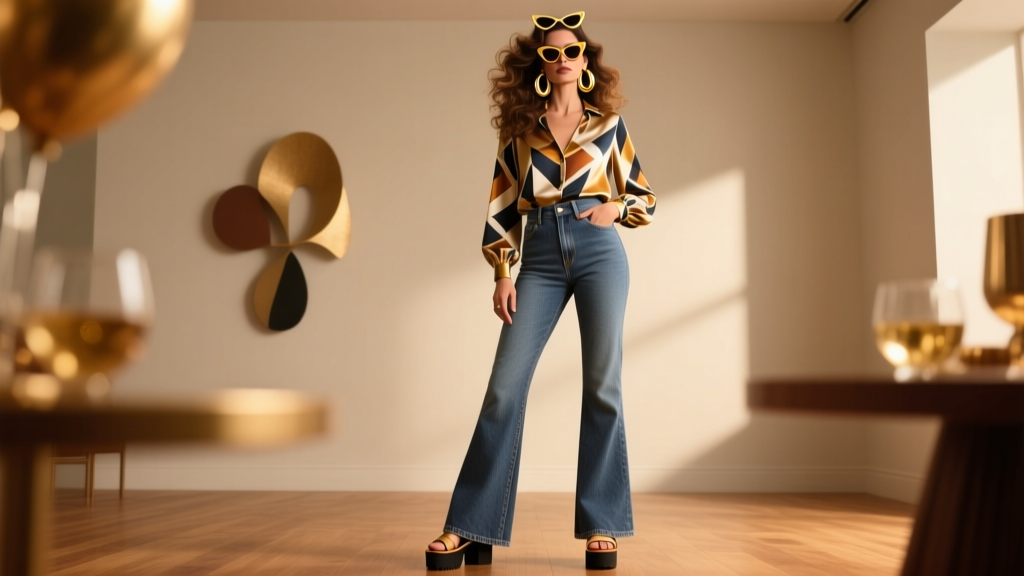
- Middle ’70s (1974–76): Disco took over. Metallics, halter jumpsuits, high-waisted flares, wrap tops, and bold geometric prints ruled. Men embraced leisure suits, open-collar shirts with chains, and wide collars—but not polyester-only; many wore silk or rayon blends for drape and breathability.
- Late ’70s (1977–79): Punk and funk collided. Asymmetrical hems, leather jackets over satin shirts, stacked heels with chunky soles, and Afrocentric prints (kente cloth, dashikis) gained mainstream visibility. Gender fluidity surged—men wore makeup and scarves; women wore tailored blazers with wide-leg trousers.
Pro tip: Scroll through Getty Images’ 1974 New York Street Style or 1977 LA Soul Train Dancers archives—not Pinterest boards labeled “70s costumes.” Real photos reveal how clothes moved, layered, and aged. That’s your authenticity cheat code.
Step 2: Build Your Outfit Using the 3-Element Framework
Forget “head-to-toe vintage.” Instead, anchor your look using this battle-tested trio:
- Silhouette First: Choose one defining shape—and let everything else support it. Flared pants? Then keep your top simple (a fitted ribbed knit or crisp button-down). Maxi skirt? Pair with a cropped peasant blouse or denim jacket. Wide-lapel blazer? Balance with slim-fit trousers or a pencil skirt. Silhouettes telegraph era faster than any accessory.
- Texture Second: The ’70s loved tactile contrast. Corduroy + suede, velvet + denim, knitted wool + silk. Skip flat, synthetic fabrics unless they’re intentionally shiny (disco) or heavily textured (shaggy knit). Run your hand over fabric swatches—if it doesn’t have dimension, it’s probably not ’70s.
- Attitude Third: This is where most fail. It’s not about smiling awkwardly in a feather boa. It’s posture (relaxed shoulders, chin slightly lifted), movement (a slight sway when walking), and confidence in proportion—even if your flares are slightly too long or your headband is handmade. Watch 30 seconds of Soul Train dancers: their joy is part of the uniform.
Case study: Maya, 29, had 48 hours to prepare for her friend’s ’70s rooftop party. She owned black flared jeans and a cream turtleneck—both modern but silhouette-accurate. She borrowed a burnt-orange corduroy blazer from her dad’s closet (early ’70s energy), added a vintage brass pendant necklace (found at a local antique mall), and slicked her hair back with a thin headband. Total cost: $0. Reaction? “You looked like you stepped out of a Rolling Stone cover.”
Step 3: Gender-Inclusive & Budget-Savvy Swaps (No Thrift Store Roulette)
Let’s be real: Not everyone has access to curated vintage shops—or wants to spend $120 on one pair of authentic Levi’s 505s. Here’s how to get 90% of the vibe for 20% of the effort:
- Flares & Bell-Bottoms: Most modern “flare” jeans taper below the knee—too subtle. Look for styles labeled “wide leg” or “ultra flare” (ASOS, Madewell, and even Old Navy carry them). For men: Try Dickies’ “Relaxed Fit” work pants—tapered at thigh, dramatically flared from knee down. Hem them 2 inches longer than usual for that iconic break-over-shoe effect.
- Shirts & Tops: Skip cheap polyester “disco shirts.” Instead, hunt for rayon-blend camp-collar shirts (Target’s Universal Thread line has $24 options that drape like vintage). Women: A wrap top made of viscose (not spandex) reads instantly ’70s—especially in paisley or abstract florals.
- Footwear: Platforms aren’t mandatory—but height matters. For women: Block-heeled mules or low-platform sandals (Clarks, Naturalizer). For men: Chunky-soled loafers or suede desert boots. Pro hack: Spray-paint plain white sneakers with gold metallic spray paint and add a thick cork sole sticker (Amazon)—instant custom platforms.
- Accessories Are Non-Negotiable: They’re your era amplifier. A wide leather belt with a large square buckle (not tiny round ones), oversized round sunglasses (not cat-eye), and layered necklaces (one short chain, one long pendant) do more than any shirt. Bonus: These items cost under $35 total and store easily year-round.
Step 4: The Era-Accurate Outfit Builder Table
| Outfit Goal | Key Piece (Authentic) | Budget Swap ($25 or less) | Era Accuracy Tip | Why It Works |
|---|---|---|---|---|
| Disco Glam (Women) | Halter jumpsuit in metallic brocade | Black wide-leg jumpsuit + gold lamé sash + rhinestone choker | Avoid plastic-y shine; aim for woven metallic thread or foil-printed rayon | Jumpsuits were the ultimate 1975–76 power move—effortless, leg-lengthening, and inherently festive |
| Boho Chic (All Genders) | Maxi skirt + crocheted vest + fringe bag | Long tiered skirt (H&M) + thrifted denim vest + leather fringe keychain as bag charm | Skirt length must hit mid-ankle or floor—no midi! Fringe should swing, not hang stiff | This combo dominated festivals and college campuses 1970–73; signals relaxed confidence, not “costume” |
| Urban Sharp (Men/Non-Binary) | Three-piece corduroy suit (brown/green) + turtleneck + pocket square | Wide-lapel blazer (Uniqlo) + tapered corduroys + ribbed black turtleneck + silk bandana folded as pocket square | Collar width = 3.5–4 inches; lapel roll should be soft, not sharp | Rooted in Blaxploitation and jazz culture—clean lines, rich textures, zero flash |
| Punk-Funk Fusion | Leather jacket + satin shirt + stacked heel boots | Secondhand moto jacket + thrifted polyester shirt (look for sheen, not stiffness) + platform ankle boots | Satin shirts were always worn untucked with sleeves rolled to forearms | Emerging late ’70s—this look said “I’m here, I’m loud, and I know my music” |
Frequently Asked Questions
Can I wear sneakers to a 70’s party?
Yes—but only if they’re era-coded. White leather low-tops (think Adidas Stan Smith, 1973 release) or platform sneakers (Puma Suede Platform, launched 1974) work perfectly. Avoid modern tech sneakers, neon colors, or visible branding. Bonus: Clean them obsessively—dirt reads as “I didn’t try,” not “vintage grunge.”
Are bell-bottoms required?
No—and insisting on them is the #1 reason people feel inauthentic. While flares defined the decade’s silhouette, straight-leg wide-leg trousers (think Charlie’s Angels season 2), culottes, and maxi skirts were equally common. Focus on proportion: If your legs look balanced and elongated, you’ve nailed the visual language—even in non-bells.
How do I make my outfit inclusive for all body types?
The ’70s celebrated volume and flow—not “slim fit.” Prioritize drape over tightness: A-line dresses, kimono sleeves, and empire waists flatter diverse shapes. Avoid “costume” sizing—instead, choose pieces with adjustable elements (tie waists, elastic backs, wrap closures). Real ’70s ads featured models of all sizes; your outfit should reflect that same joyful abundance.
Do I need makeup or hair to complete the look?
Makeup and hair amplify—but don’t define—the era. For early ’70s: minimal gloss, brushed-up brows, center-parted blowouts. For disco: dramatic false lashes, gold shadow, deep red lips. For punk-funk: bold liner, shaved side, or Afros with headwraps. But here’s the truth: A perfectly styled outfit with natural hair and bare face still reads ’70s—because authenticity lives in silhouette and confidence, not glitter alone.
What colors scream ‘1970s’ without looking Halloween-y?
Go earthy and saturated—not pastel or neon. Think burnt orange, avocado green, harvest gold, rust, mustard, deep plum, and chocolate brown. Avoid primary red/blue/yellow unless in a bold geometric print. Pro tip: Use color theory—pair one dominant earth tone with one accent (e.g., rust pants + cream turtleneck + gold jewelry). That’s how real people wore color.
Common Myths—Debunked
- Myth #1: “Everything had to be polyester.” While polyester was ubiquitous (especially for easy-care disco wear), natural fibers dominated everyday life—cotton denim, wool coats, linen shirts, rayon blouses. Polyester was often blended (65% polyester/35% cotton) for durability. Pure polyester feels cheap and staticky—avoid it unless going full Studio 54 satire.
- Myth #2: “You need full head-to-toe vintage to be authentic.” Authenticity came from mixing eras and budgets—even in 1975, people wore ’60s mod skirts with ’70s platform shoes. What mattered was intentionality: choosing pieces that shared the same textural language, proportion logic, and cultural reference point—not museum-perfect replication.
Related Topics (Internal Link Suggestions)
- How to Host a Themed Party on a Budget — suggested anchor text: "affordable themed party ideas"
- Vintage Clothing Shopping Guide: Thrift, Etsy & Estate Sales — suggested anchor text: "where to buy real vintage clothes"
- DIY Hair & Makeup for Retro Parties — suggested anchor text: "70s hair tutorial no heat"
- Playlist Curation for Decade-Themed Events — suggested anchor text: "authentic 70s party playlist"
- Gender-Neutral Costume Ideas for Group Events — suggested anchor text: "inclusive party outfit ideas"
Your Next Step Starts Now—No Time Travel Required
You now hold the antidote to last-minute panic: a framework—not a formula—for wearing the ’70s with intelligence and ease. Whether you’re pulling pieces from your closet, hitting a local thrift shop with purpose, or ordering two key items online, remember this—the 1970s weren’t about perfection. They were about presence, personality, and playful risk. So pick one silhouette that excites you, add one texture that makes you pause, and wear it like you own the dance floor—not like you’re auditioning for it. Your friends won’t quiz you on hem widths. They’ll remember how you made them laugh, how you moved, and how effortlessly cool you looked doing it. Ready to build your outfit? Grab our free Printable 70’s Party Outfit Checklist—with era-specific prompts, budget trackers, and last-minute fixes built in.
More Articles
 Graduation Party Decor Ideas That Wow
What Mario Party Games Are on Switch? The Ultimate 2024 Guide to Choosing the Right One for Your Next Game Night (No More Confusion or Buyer’s Remorse!)
Is Wii Party Good? We Tested All 8 Minigames, Compared It to Mario Party & Jackbox, and Asked 127 Families—Here’s What Actually Works (and What Falls Flat)
Which party raised the retirement age to 67? The bipartisan truth behind Social Security’s 1983 reform—and why blaming one side misses the real story of compromise, crisis, and consequences for today’s workers.
How Do I Join a Political Party? A Stress-Free 5-Step Checklist (No Prior Experience, No Fees, No Guesswork — Just Clear Action)
How Do You Form a Political Party? The Real-World 7-Step Blueprint (No Law Degree Required — Just Clarity, Compliance & Courage)
Graduation Party Decor Ideas That Wow
What Mario Party Games Are on Switch? The Ultimate 2024 Guide to Choosing the Right One for Your Next Game Night (No More Confusion or Buyer’s Remorse!)
Is Wii Party Good? We Tested All 8 Minigames, Compared It to Mario Party & Jackbox, and Asked 127 Families—Here’s What Actually Works (and What Falls Flat)
Which party raised the retirement age to 67? The bipartisan truth behind Social Security’s 1983 reform—and why blaming one side misses the real story of compromise, crisis, and consequences for today’s workers.
How Do I Join a Political Party? A Stress-Free 5-Step Checklist (No Prior Experience, No Fees, No Guesswork — Just Clear Action)
How Do You Form a Political Party? The Real-World 7-Step Blueprint (No Law Degree Required — Just Clarity, Compliance & Courage)