What Party Did Lincoln Belong To? The Surprising Truth Behind His Political Evolution — And Why Most People Get It Wrong (Spoiler: It Wasn’t the GOP As We Know It Today)
Why Lincoln’s Party Affiliation Still Matters — More Than Ever
If you’ve ever wondered what party did Lincoln belong to, you’re not alone — but the answer is far richer and more politically consequential than a simple label. Abraham Lincoln wasn’t just a Republican; he was the living embodiment of a seismic realignment in American politics. In an era of deep polarization, rising third-party movements, and debates over party loyalty versus principle, understanding Lincoln’s journey from Whig to Republican reveals how parties evolve — and how leaders can redefine them from within. This isn’t dusty history; it’s a masterclass in political courage, coalition-building, and ideological clarity.
From Log Cabin Lawyer to Whig Standard-Bearer
Before ‘Team Lincoln’ wore black armbands and recited the Gettysburg Address, Abraham Lincoln spent over two decades building his political identity as a Whig. Born in 1809 in Kentucky and raised in frontier Indiana and Illinois, Lincoln admired Henry Clay — the ‘Great Compromiser’ — whose American System championed internal improvements, a national bank, and protective tariffs. Lincoln didn’t just support these policies; he lived them. As a state legislator in Illinois (1834–1842), he lobbied relentlessly for railroads, canals, and public education funding — all core Whig priorities. His early speeches brim with Whig rhetoric: ‘The legitimate object of government is to do for a community of people whatever they need to have done, but cannot do at all, or cannot so well do, for themselves.’
Yet the Whig Party was fracturing by the early 1850s. Its fatal weakness? An inability to confront slavery’s expansion. When the Kansas-Nebraska Act of 1854 repealed the Missouri Compromise and opened western territories to popular sovereignty, Lincoln — who’d retired from politics after one term in Congress — felt morally compelled to return. In his famous Peoria Speech (October 16, 1854), he declared: ‘Our republican robe is soiled, and trailed in the dust. Let us repurify it.’ That speech wasn’t just anti-slavery — it was a funeral oration for the Whigs and a birth certificate for something new.
The Birth of the Republican Party: Not a Monolith, But a Coalition
Lincoln didn’t join an established party — he helped build one. The Republican Party coalesced in 1854–1856 not as a unified ideology, but as a coalition of conscience. It stitched together former Whigs like Lincoln, anti-slavery Democrats (‘Barnburners’), Free Soilers, Know-Nothings disillusioned by nativism, and radical abolitionists wary of moral compromise. At its first national convention in Philadelphia (1856), the platform declared slavery ‘a relic of barbarism’ and demanded its containment — but notably avoided calls for immediate abolition or federal interference in Southern states. Lincoln wasn’t the 1856 nominee (that was John C. Frémont), but his House Divided speech (1858) cemented his leadership: ‘A house divided against itself cannot stand. I believe this Government cannot endure permanently half slave and half free.’
Crucially, Lincoln’s Republicanism was rooted in the Declaration of Independence, not the Constitution — emphasizing equality as a ‘proposition’ to be fulfilled, not a settled fact. This philosophical grounding allowed him to frame slavery as a moral wrong *and* a constitutional threat — a dual argument that resonated across regional and class lines. By 1860, when he won the presidency with only 39.8% of the popular vote (but a decisive Electoral College majority), the Republican Party was less a machine and more a mission-driven movement — one that would soon face its ultimate test.
Wartime Leadership & Party Transformation: From Anti-Slavery to Emancipation
Once in office, Lincoln didn’t govern as a rigid ideologue — he governed as a strategist who understood that party survival depended on adaptability. His cabinet included not just Republicans, but War Democrats (like Edwin Stanton) and border-state conservatives (like Montgomery Blair). He tolerated dissent — even from Radical Republicans like Thaddeus Stevens — because unity, not purity, was the priority. Yet behind closed doors, Lincoln was quietly engineering the most consequential policy shift in U.S. history.
The Emancipation Proclamation (January 1, 1863) wasn’t just a moral act — it was a party-defining pivot. Issued under his war powers, it transformed the conflict from a struggle to preserve the Union into a crusade for human freedom. Overnight, the Republican Party became synonymous with liberation — attracting Black soldiers (nearly 180,000 served), abolitionist missionaries, and international allies. But it also alienated Northern Democrats (the ‘Copperheads’) and cost Lincoln support in key states like New York and Illinois. His 1864 re-election — achieved amid battlefield losses and war-weariness — proved the party’s resilience and cemented emancipation as non-negotiable Republican doctrine.
By the time of the 1864 National Union Convention (a temporary rebranding to attract War Democrats), Lincoln had effectively fused anti-slavery principle with nationalist pragmatism — laying groundwork for Reconstruction, the 13th Amendment, and the party’s postwar identity as the ‘Party of Lincoln,’ protector of freedmen and architect of civil rights legislation.
Then vs. Now: How the GOP Changed — And What Lincoln Would Recognize
This is where things get uncomfortable — and illuminating. Today’s Republican Party traces its lineage to Lincoln’s, but the ideological throughline is fractured. In the 1850s–1870s, the GOP stood for:
• Strong federal authority to enforce civil rights
• Progressive taxation (first income tax enacted under Lincoln in 1861)
• Investment in infrastructure (Transcontinental Railroad signed in 1862)
• Public education expansion (Morrill Land-Grant Act)
• Protection of labor rights (Contract Labor Law of 1864)
Contrast that with modern GOP platforms emphasizing deregulation, states’ rights supremacy, and skepticism toward federal civil rights enforcement. A 2023 Pew Research study found only 28% of self-identified Republicans agree that ‘government should do more to solve problems,’ compared to 89% of Lincoln-era Republicans who supported active federal nation-building. That doesn’t mean Lincoln wouldn’t recognize today’s party — but he’d likely ask: What mission binds you now?
| Issue Area | Lincoln-Era Republican (1854–1865) | Modern GOP (2020s Platform) | Key Shift |
|---|---|---|---|
| Federal Power | Assertive federal authority to end slavery, build infrastructure, and protect voting rights | Emphasis on states’ rights, limiting federal overreach (except on immigration, abortion) | From nation-building mandate to jurisdictional restraint |
| Economic Policy | Pro-tariff, pro-bank, pro-railroad; supported first federal income tax and greenbacks | Pro-free trade (post-NAFTA), anti-tax (Tax Cuts and Jobs Act), skeptical of central banking | From protectionist industrial policy to globalized deregulation |
| Civil Rights | Championed 13th, 14th, 15th Amendments; deployed federal troops to protect Black voters in South | Opposes federal voting rights expansions (e.g., H.R. 1); supports voter ID laws | From enforcement to skepticism of federal civil rights mechanisms |
| Immigration | Supported immigrant labor (railroads, industry); opposed nativist Know-Nothings | Platform emphasizes border security, restrictions, and merit-based systems | From assimilationist openness to restrictionist prioritization |
Frequently Asked Questions
Was Lincoln a Democrat before becoming a Republican?
No — Lincoln was never a Democrat. He began his career as a Whig and remained one until the party collapsed in 1854–1856. While some Democrats (like Stephen A. Douglas) were his political rivals, Lincoln actively opposed the Democratic Party’s pro-slavery expansion stance. His sole term in the U.S. House of Representatives (1847–1849) was as a Whig — and he criticized President Polk’s Mexican-American War as an unjust Democratic land grab.
Did Lincoln help found the Republican Party?
He was not among the very first organizers (like Alvan E. Bovay in Ripon, WI, or Horace Greeley in NY), but Lincoln was absolutely foundational to its national credibility and ideological coherence. His 1858 debates with Douglas gave the party intellectual heft; his 1860 nomination signaled its viability; and his presidency defined its moral mission. Historians widely credit him as the party’s ‘most indispensable founder.’
Why didn’t Lincoln free all enslaved people in the Emancipation Proclamation?
The Proclamation was a wartime executive order grounded in Lincoln’s constitutional authority as Commander-in-Chief — not a universal decree. It applied only to states ‘in rebellion’ (Confederate-held areas), exempting border states loyal to the Union (KY, MO, MD, DE) and occupied Southern regions (e.g., Tennessee). Lincoln feared losing those states to the Confederacy. Full abolition required the 13th Amendment — which he championed and secured passage of in January 1865.
What happened to the Whig Party after Lincoln left it?
The Whig Party dissolved completely by 1856. Its northern wing merged into the Republican Party; its southern wing splintered into the Constitutional Union Party (1860) and later aligned with Democrats. Without a unifying stance on slavery, the Whigs proved unable to survive the sectional crisis — a cautionary tale about parties that avoid existential moral questions.
Would Lincoln be a Republican today?
That’s unknowable — but historians like Eric Foner and David Blight argue he’d likely be troubled by the party’s retreat from federal civil rights enforcement and its embrace of populist nationalism over democratic norms. Lincoln revered the Constitution *and* the Declaration — and saw them as complementary, not competing. A party that elevates one over the other would give him pause.
Common Myths
Myth #1: “Lincoln was always a Republican.”
False. Lincoln was a Whig for over 20 years — longer than his entire Republican career (1856–1865). His Whig identity shaped his belief in economic development, rule of law, and moral persuasion over coercion.
Myth #2: “The Republican Party was founded to abolish slavery.”
Not quite. Its founding platform focused on containing slavery’s expansion — not immediate abolition. Abolition was the goal of radical factions (e.g., Garrisonians); Lincoln’s Republicans sought to place slavery ‘where the public mind shall rest in the belief that it is in the course of ultimate extinction.’
Related Topics (Internal Link Suggestions)
- Lincoln’s views on race and equality — suggested anchor text: "Lincoln's complex views on race"
- How the Emancipation Proclamation worked — suggested anchor text: "how the Emancipation Proclamation actually functioned"
- Whig Party history and collapse — suggested anchor text: "why the Whig Party disappeared"
- Republican Party platform evolution — suggested anchor text: "how the GOP platform changed since Lincoln"
- Lincoln-Douglas debates significance — suggested anchor text: "why the Lincoln-Douglas debates mattered"
Your Turn: Reclaim Historical Literacy
Understanding what party did Lincoln belong to isn’t about nostalgia — it’s about recognizing how parties rise, fall, and reinvent themselves around moral imperatives. Lincoln didn’t follow a party; he led one — with empathy, precision, and unwavering principle. In a time when political labels often obscure more than they reveal, studying his journey invites us to ask harder questions: What values bind *your* political community? What compromises are necessary — and which are betrayals? If you found this deep dive valuable, explore our interactive timeline of party realignments or download our free guide: 5 Lessons Lincoln Teaches Modern Leaders. History doesn’t repeat — but it does rhyme. And the rhythm matters.
More Articles
 How Do I Allow 3rd Party Cookies on My iPhone? The Truth Is: You Can’t — But Here’s Exactly What Works Instead (2024 iOS 17.5 Guide)
 What Is the Connection Between Ideology and Party? 7 Hidden Truths That Explain Why Voters Abandon Parties — and Why Some Parties Collapse Overnight
What Was Woodrow Wilson's Political Party? The Surprising Truth Behind His Democratic Identity—and Why It Still Shapes Modern Presidential Politics Today
What Is the Connection Between Ideology and Party? 7 Hidden Truths That Explain Why Voters Abandon Parties — and Why Some Parties Collapse Overnight
What Was Woodrow Wilson's Political Party? The Surprising Truth Behind His Democratic Identity—and Why It Still Shapes Modern Presidential Politics Today
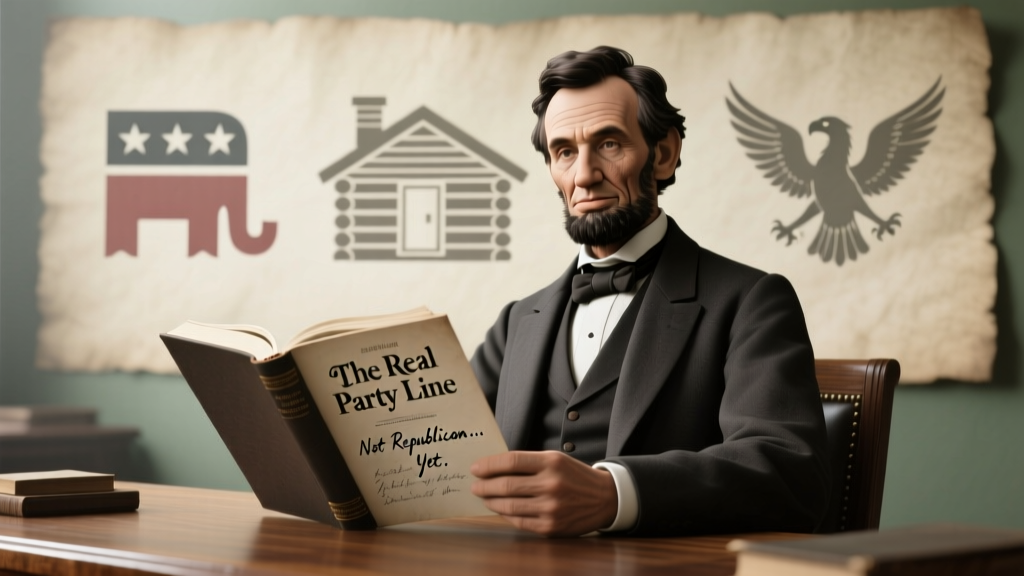 What Party Was President Lincoln? The Surprising Truth Behind His Political Identity — And Why Modern Voters Keep Getting It Wrong (Spoiler: It Wasn’t Republican… At First)
How to Display Photos at Graduation Party: 7 Stress-Free, Budget-Savvy Ways That Actually Wow Guests (No Framing Skills Required)
What political party was Abraham Lincoln affiliated with? The Surprising Truth Behind His Party Switch—and Why It Still Shapes U.S. Politics Today (Spoiler: It Wasn’t the GOP We Know)
Who Went to the Diddy Parties? The Real Guest List Breakdown (Names, Roles & What It Reveals About VIP Access in 2024)
What Party Was President Lincoln? The Surprising Truth Behind His Political Identity — And Why Modern Voters Keep Getting It Wrong (Spoiler: It Wasn’t Republican… At First)
How to Display Photos at Graduation Party: 7 Stress-Free, Budget-Savvy Ways That Actually Wow Guests (No Framing Skills Required)
What political party was Abraham Lincoln affiliated with? The Surprising Truth Behind His Party Switch—and Why It Still Shapes U.S. Politics Today (Spoiler: It Wasn’t the GOP We Know)
Who Went to the Diddy Parties? The Real Guest List Breakdown (Names, Roles & What It Reveals About VIP Access in 2024)