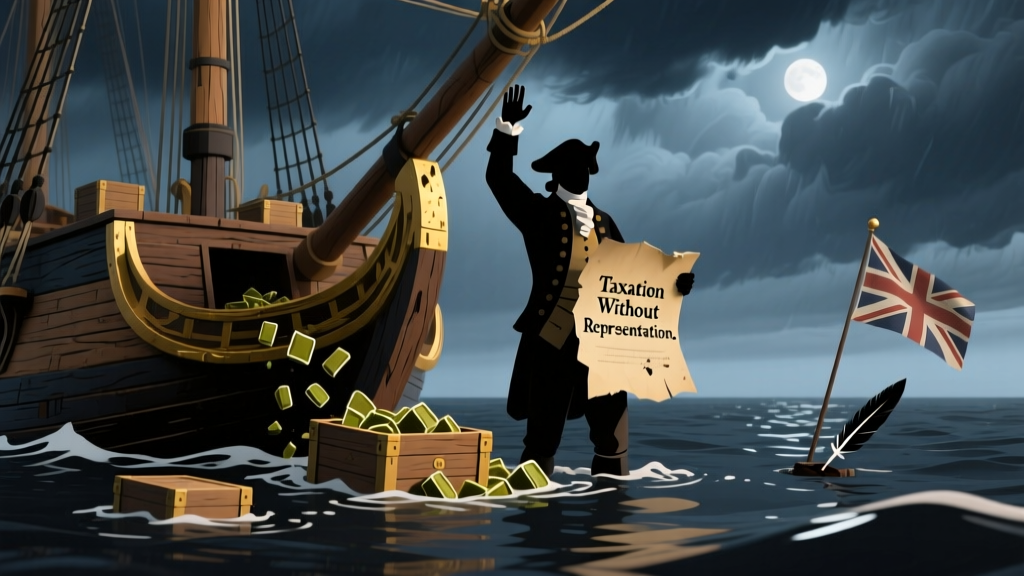
What Led to Boston Tea Party? The 5 Real Political, Economic, and Cultural Triggers Most Textbooks Oversimplify — And Why Your Next Living-History Event Needs This Nuance
Why Understanding What Led to Boston Tea Party Matters More Than Ever Today
If you're asking what led to Boston Tea Party, you're likely digging deeper than a textbook summary—you might be planning a historical reenactment, designing a museum exhibit, teaching a civics unit with real-world relevance, or crafting immersive colonial-era content for students or visitors. In an era where public trust in institutions is fragile and civic engagement is trending upward, the Boston Tea Party isn’t just history—it’s a masterclass in how economic grievance, strategic communication, and coordinated local action can shift national policy. And yet, most accounts reduce it to 'colonists hated taxes.' That oversimplification undermines its power—and your ability to translate it meaningfully into programming, curriculum, or community events.
The Imperial Backdrop: How the Seven Years’ War Changed Everything
Before tea crates hit Boston Harbor on December 16, 1773, the British Empire was financially exhausted—and politically overextended. The Seven Years’ War (1756–1763), known in North America as the French and Indian War, left Britain with a national debt that ballooned from £75 million to £130 million. To manage that burden—and to justify the cost of maintaining 10,000 troops in the colonies to prevent frontier conflict with Indigenous nations—the Crown turned to revenue-raising mechanisms previously unused in America.
Crucially, Parliament asserted its *sovereign right* to tax the colonies *without their consent*. The 1765 Stamp Act wasn’t just about paper—it was a legal declaration: 'Parliament has absolute authority over all colonial matters.' When colonists responded with boycotts, riots, and the formation of the Stamp Act Congress, Parliament repealed the tax—but simultaneously passed the Declaratory Act (1766), stating explicitly that it held 'full power and authority to make laws… binding the colonies and people of America… in all cases whatsoever.'
This dual move—concession followed by constitutional assertion—set the pattern. It taught colonial elites that resistance *could* force retreat, but also that Parliament would double down on principle. By 1767, Chancellor of the Exchequer Charles Townshend introduced new import duties on glass, lead, paint, paper, and tea—the Townshend Acts. Unlike the Stamp Act, these were 'external' taxes (levied at ports), which some British officials believed colonists would accept. They didn’t. Colonial merchants organized non-importation agreements; women formed the Daughters of Liberty to spin homespun cloth; and pamphleteers like John Dickinson published Letters from a Farmer in Pennsylvania, arguing that even external taxes violated the principle of 'no taxation without representation.'
The Tea Crisis: A Corporate Bailout Disguised as Policy
By 1773, the East India Company—the world’s largest multinational corporation of its time—was on the brink of collapse. Holding 17 million pounds of unsold tea (enough to supply America for years), it faced bankruptcy after losing access to European markets and suffering smuggling losses in Britain. Its political influence, however, remained immense: it contributed £400,000 annually to the British Treasury and employed over 20% of London’s dockworkers.
Enter the Tea Act of May 10, 1773. On the surface, it lowered the price of tea in America by eliminating the 12-penny-per-pound duty paid by British wholesalers—effectively granting the East India Company a monopoly on tea sales in the colonies. Colonists would pay less for tea than ever before… but they’d still pay the 3-penny Townshend duty. And crucially, the Act required colonial agents (like Boston’s consignees—Thomas Hutchinson’s sons and associates) to sell exclusively through the Company’s appointed distributors.
This wasn’t just economics—it was political theater. The Crown and Company framed the Act as benevolent relief. But colonial leaders saw it as a Trojan horse: a low-price trap designed to get colonists to *voluntarily* accept parliamentary taxation. As Samuel Adams warned in the Boston Gazette: 'They will call it cheap tea—but once we submit to the duty, the precedent is set for every future levy.'
When the first tea ships—the Dartmouth, Eleanor, and Beaver—arrived in Boston Harbor in late November 1773, Governor Thomas Hutchinson refused to let them leave without unloading and paying duty. Under Massachusetts law, ships had 20 days to clear customs or face seizure. With the deadline looming on December 16, a mass meeting of over 5,000 people gathered at Old South Meeting House—the largest public assembly in Boston’s history to that point.
The Organization Behind the 'Riot': From Committees to Costumes
Contrary to popular myth, the Boston Tea Party wasn’t a drunken mob’s spontaneous outburst. It was a tightly coordinated act of political theater, planned over weeks by Boston’s Committee of Correspondence and supported by networks across New England.
Key organizational elements included:
- Intelligence sharing: Committees used coded letters and express riders to track ship arrivals and coordinate responses across ports (New York, Philadelphia, and Charleston all turned away tea ships).
- Legal cover: Participants dressed as Mohawk warriors—not to insult Indigenous peoples (a harmful misreading), but to adopt a symbolic identity outside British jurisdiction. As historian Alfred Young notes, 'Mohawks represented sovereignty, self-governance, and resistance to empire—ideals colonists claimed for themselves.'
- Operational discipline: 30–130 men boarded the ships over three hours. They broke open 340 chests (90,000 lbs) of tea, dumped it into the harbor, and meticulously avoided damaging anything else—even replacing a padlock they’d broken on the Beaver.
- Media strategy: Within 48 hours, Boston newspapers published eyewitness accounts; within two weeks, London papers carried transatlantic reports. The Sons of Liberty distributed broadsides titled 'The Bostonians Paying the Excise-Man'—a satirical engraving showing a man being tarred and feathered while dumping tea.
This level of coordination—logistics, messaging, symbolism, and restraint—makes the event a landmark case study in pre-digital civil disobedience. For modern event planners, it underscores how authenticity, narrative cohesion, and participant training transform protest into legacy.
The Immediate Fallout: How One Night Sparked a Revolution
The British response wasn’t outrage—it was cold, calculated escalation. Rather than investigating or negotiating, Parliament passed the Coercive (Intolerable) Acts in spring 1774: closing Boston Harbor until restitution was paid; revoking Massachusetts’ charter; allowing royal officials accused of crimes to be tried in Britain; and authorizing quartering of troops in private homes.
These measures backfired spectacularly. Instead of isolating Boston, they unified the colonies. Virginia’s House of Burgesses declared a day of fasting and prayer—prompting Governor Dunmore to dissolve the assembly. Delegates from 12 colonies convened the First Continental Congress in Philadelphia in September 1774, adopting the Articles of Association: a continent-wide boycott of British goods, creation of local committees to enforce compliance, and commitment to reconvene if grievances weren’t redressed.
By April 1775, armed conflict erupted at Lexington and Concord—not over tea, but over the principle established in Boston: that colonial self-governance could not be revoked by fiat. As John Adams wrote in his diary: 'The die was cast. The spark of liberty was kindled.'
| Trigger Category | Specific Cause | Colonial Response | British Countermove | Strategic Impact |
|---|---|---|---|---|
| Financial | Post–Seven Years’ War debt & troop costs | Widespread resentment over 'taxation without representation' | Stamp Act (1765), then Declaratory Act (1766) | Established precedent: resistance works, but Parliament asserts supremacy |
| Economic | East India Company near-bankruptcy & surplus tea stockpile | Non-importation agreements; boycotts of British goods | Tea Act (1773) granting monopoly & retaining Townshend duty | Turned economic relief into political test of principle |
| Political | Governor Hutchinson’s refusal to permit tea ships’ departure | Mass meetings at Old South Meeting House; formation of 'Boston Committee of Safety' | Coercive Acts (1774) punishing all of Massachusetts | Galvanized intercolonial solidarity & created First Continental Congress |
| Cultural | Rise of print networks, pamphlets, and visual satire | Sons of Liberty broadsides; Daughters of Liberty homespun campaigns | Increased censorship attempts & crackdowns on printers | Proved information warfare could rival military power in shaping public will |
Frequently Asked Questions
Was the Boston Tea Party really about tea—or was tea just a symbol?
Tea was absolutely a symbol—but a highly strategic one. Colonists consumed over 1 million pounds of tea annually by 1773, much of it smuggled Dutch tea. The East India Company’s monopoly threatened local merchants’ livelihoods *and* challenged the foundational principle that only colonial legislatures—not Parliament—could levy internal taxes. As John Adams wrote in 1773: 'The question is not whether we shall drink tea, but whether we shall consent to be governed without our consent.'
Did any colonists support the British position—or oppose the Tea Party?
Yes—significant numbers did. Loyalist merchants like Joshua Henshaw and Thomas Flucker publicly defended the Tea Act as economically beneficial. Even among Patriots, opinions varied: Benjamin Franklin initially suggested colonists reimburse the East India Company for lost tea (a proposal widely rejected in Boston). The Massachusetts Gazette reported that 300 'gentlemen of property' signed a petition urging restraint just days before the event. Dissent existed—but was rapidly marginalized after the Coercive Acts made loyalty to Britain politically untenable for many.
How did the Boston Tea Party compare to other colonial protests?
It was unique in scale, coordination, and restraint. Earlier protests—like the 1765 Stamp Act riots—involved property destruction (e.g., burning Lt. Gov. Hutchinson’s house) and targeted individuals. The Tea Party deliberately avoided violence or personal harm, focusing solely on the symbolic commodity. It also succeeded where others failed: no participants were ever identified or prosecuted, and it triggered immediate, unified colonial action—unlike scattered reactions to earlier acts.
What role did women play in the events leading up to the Boston Tea Party?
Women were central—not as bystanders, but as economic and cultural strategists. The Daughters of Liberty organized spinning bees that produced over 100,000 yards of homespun cloth in 1769 alone, directly undermining British textile imports. They published poems and recipes substituting 'liberty tea' (made from raspberry or sage) for British tea. In Boston, women pressured merchants to sign non-importation pledges and monitored neighbors for compliance—making boycott enforcement a community-wide, gender-integrated effort.
Why didn’t the British simply lower or eliminate the tea tax instead of escalating?
Because doing so would have conceded Parliament’s lack of sovereign authority—a constitutional red line. Lord North and King George III believed that backing down would encourage further challenges across the empire (including in Ireland and India). As North stated in Parliament: 'We must master them, or totally leave them to themselves.' The Tea Act wasn’t about revenue—it was about asserting control. Ironically, the £9,659 in lost tea value was trivial compared to the £1.2 million annual cost of administering the colonies.
Common Myths
Myth #1: Colonists dressed as Native Americans to hide their identities.
False. While anonymity helped, the Mohawk disguise was deeply intentional symbolism—evoking Indigenous sovereignty and resistance to empire, aligning colonists with ideals of self-governance they claimed as their birthright. Contemporary accounts confirm participants discussed the choice beforehand and rehearsed chants.
Myth #2: The Boston Tea Party was universally celebrated across the colonies.
False. Many colonial leaders—including George Washington—condemned it as 'an act of disobedience to the laws of the land.' The Virginia Gazette called it 'the desperate act of a few hot-headed men.' Support solidified only after Britain’s punitive response revealed the stakes.
Related Topics (Internal Link Suggestions)
- First Continental Congress outcomes — suggested anchor text: "What decisions came out of the First Continental Congress?"
- Colonial boycott strategies — suggested anchor text: "How did colonial boycotts actually work?"
- Daughters of Liberty activities — suggested anchor text: "Women's role in the American Revolution"
- Tea Act vs Townshend Acts comparison — suggested anchor text: "Key differences between the Townshend and Tea Acts"
- Living history event planning guide — suggested anchor text: "How to plan an authentic colonial-era reenactment"
Your Next Step: Turn History Into Impact
Now that you understand what led to Boston Tea Party—not as a footnote, but as a layered convergence of finance, law, media, and grassroots mobilization—you’re equipped to design something meaningful: a classroom simulation where students debate the Tea Act as colonial merchants and royal officials; an exhibit that juxtaposes East India Company ledgers with Sons of Liberty broadsides; or a community event featuring period-accurate tea alternatives and storytelling stations on colonial women’s organizing. Don’t just teach the event—activate its principles. Download our free Colonial Resistance Toolkit (with role-play scripts, primary source handouts, and timeline visuals) to bring this history to life—with accuracy, nuance, and purpose.
More Articles
 How to Change My Political Party Online in 2024: A Step-by-Step Guide That Actually Works (No Mail, No Wait, No Mistakes)
What Is a Date Party Sorority? The Truth Behind This Misunderstood Tradition — How Real Chapters Actually Plan, Host, and Navigate These Social Events (Without Awkwardness or Pressure)
What Are Three Responsibilities of Political Parties? The Unspoken Truths Every Voter Needs to Know Before the Next Election Cycle — Because Ignoring These Roles Is Costing Democracy Real Time, Trust, and Representation
How to Change My Political Party Online in 2024: A Step-by-Step Guide That Actually Works (No Mail, No Wait, No Mistakes)
What Is a Date Party Sorority? The Truth Behind This Misunderstood Tradition — How Real Chapters Actually Plan, Host, and Navigate These Social Events (Without Awkwardness or Pressure)
What Are Three Responsibilities of Political Parties? The Unspoken Truths Every Voter Needs to Know Before the Next Election Cycle — Because Ignoring These Roles Is Costing Democracy Real Time, Trust, and Representation
 When Did the Two Party System Start? The Real Origin Story (It’s Not 1789 — and That Changes Everything You Think About U.S. Politics)
 What Is the Boston Tea Party in Simple Terms? 5 Clear Facts That Debunk the 'Just a Tea Protest' Myth—and Why It Still Shapes American Democracy Today
How Much Is Kona Ice for a Party? The Real Cost Breakdown (2024 Pricing, Hidden Fees, & How to Save Up to 35% Without Sacrificing Flavor or Fun)
Can Cops Shut Down a Party on Private Property? The Truth About Police Authority, Noise Laws, and Your Legal Rights — What Every Host Needs to Know Before the First Guest Arrives
What Is the Boston Tea Party in Simple Terms? 5 Clear Facts That Debunk the 'Just a Tea Protest' Myth—and Why It Still Shapes American Democracy Today
How Much Is Kona Ice for a Party? The Real Cost Breakdown (2024 Pricing, Hidden Fees, & How to Save Up to 35% Without Sacrificing Flavor or Fun)
Can Cops Shut Down a Party on Private Property? The Truth About Police Authority, Noise Laws, and Your Legal Rights — What Every Host Needs to Know Before the First Guest Arrives
 How to Host a Murder Mystery Dinner Party Without Stress: The 7-Step System That Saves 12+ Hours, Prevents Awkward Silences, and Turns First-Timers Into Host Legends (Even If You’ve Never Planned a Party)
What Was Grover Cleveland's Political Party? The Surprising Truth Behind His Two Non-Consecutive Terms—and Why Historians Still Debate His Real Ideological Home
Do You Have a Graduation Party Before or After Graduation? The Strategic Timing Breakdown That Prevents Scheduling Disasters, Family Conflicts, and Last-Minute Stress — Here’s Exactly When to Book Venues, Send Invites, and Lock in Your Guest List
How to Host a Murder Mystery Dinner Party Without Stress: The 7-Step System That Saves 12+ Hours, Prevents Awkward Silences, and Turns First-Timers Into Host Legends (Even If You’ve Never Planned a Party)
What Was Grover Cleveland's Political Party? The Surprising Truth Behind His Two Non-Consecutive Terms—and Why Historians Still Debate His Real Ideological Home
Do You Have a Graduation Party Before or After Graduation? The Strategic Timing Breakdown That Prevents Scheduling Disasters, Family Conflicts, and Last-Minute Stress — Here’s Exactly When to Book Venues, Send Invites, and Lock in Your Guest List