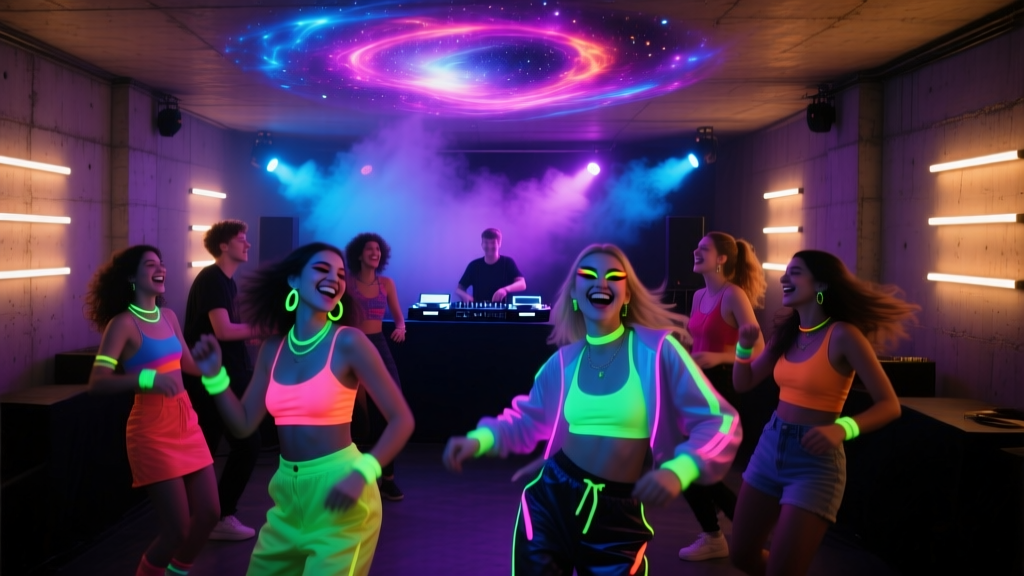
What Is a Rave Party? The Unfiltered Truth About Safety, Culture, Music, and What You *Really* Need to Know Before Your First One (Spoiler: It’s Not Just Glow Sticks)
Why Understanding What a Rave Party Really Is Matters More Than Ever
If you’ve ever scrolled past neon-lit videos of dancing crowds, pulsing basslines, and kaleidoscopic visuals and wondered what is a rave party, you’re not alone — and your curiosity could be the first step toward an unforgettable, safe, and culturally rich experience. But here’s the truth most beginner guides skip: raves aren’t just parties — they’re living ecosystems of music, community, ethics, and risk mitigation. With global electronic music festivals growing 22% annually (Statista, 2024) and underground raves resurging in over 37 U.S. cities, misunderstanding this culture isn’t just awkward — it can lead to unsafe choices, legal trouble, or missing the profound human connection at its heart.
The Real Origins: From Warehouse Resistance to Global Movement
Raves didn’t begin as branded events with VIP lines and merch booths. They emerged in the late 1980s UK as radical, anti-establishment gatherings — often held in abandoned factories, forests, or disused airfields. DJs like Danny Rampling and Nicky Holloway brought Chicago house and Detroit techno back from U.S. clubs, remixing them with acid house’s hypnotic 303 basslines. Crucially, early raves operated on the PLUR ethic: Peace, Love, Unity, Respect — not as slogans, but as enforceable community norms. When police shut down the 1989 ‘Second Summer of Love’ raves, attendees didn’t riot; they formed human chains to protect sound systems and shared water stations. That ethos still anchors today’s best-run events — whether it’s a 5,000-person festival like Burning Man’s electronic zones or a 200-person loft party in Berlin.
Fast-forward to 2024: Rave culture has splintered into distinct branches. There’s the commercial rave (e.g., EDC Las Vegas), the underground collective (like NYC’s ‘The Lab’ or London’s ‘Rinse FM-affiliated warehouse nights’), and the DIY forest rave (think Oregon’s ‘Enchanted Forest’ or Portugal’s ‘Boom Festival’). Each honors different parts of the original spirit — but all share four non-negotiable pillars: immersive sound design, intentional lighting/visuals, participatory energy (no passive watching), and consent-based physical space.
What Actually Happens at a Rave? Beyond the Stereotypes
Forget the Hollywood version where everyone’s euphoric and dancing nonstop. A well-structured rave is choreographed sensory storytelling. Here’s how it unfolds:
- Pre-Entry Rituals: Many collectives require RSVPs via encrypted apps (Signal or Session) — not for exclusivity, but to cap attendance for safety and maintain vibe integrity. You’ll receive a ‘vibe guide’ PDF covering harm reduction, pronoun pins, and quiet zone locations.
- Sonic Architecture: Sound isn’t just loud — it’s spatially engineered. Top-tier raves use line arrays with subwoofers tuned to 35–45Hz (the frequency range that triggers visceral chest resonance), paired with mid/high speakers angled to avoid ear fatigue. At Berlin’s KitKatClub, sound engineers calibrate acoustics hourly using real-time FFT analysis.
- Light as Narrative: Lasers aren’t random — they follow musical phrasing. At a 2023 Amsterdam rave, VJs synced fractal projections to the BPM shifts in Charlotte de Witte’s set, creating visual ‘breathing’ moments during breakdowns. This prevents sensory overload and supports emotional pacing.
- Exit Culture: Responsible raves end with ‘decompression circles’ — small groups guided by trained volunteers who offer tea, grounding techniques, and peer-led reflection. Research from the Multidisciplinary Association for Psychedelic Studies (MAPS) shows this reduces post-event anxiety by 68% compared to abrupt exits.
Your Safety Blueprint: The 5 Non-Negotiables (Backed by Harm Reduction Data)
Raves carry unique risks — not because they’re inherently dangerous, but because their intensity demands proactive preparation. Based on data from DanceSafe’s 2023 National Harm Reduction Survey (N=12,400 respondents), here are the evidence-backed essentials:
- Hydration Strategy: Sip 1 cup (240ml) of electrolyte solution every 45 minutes — not water alone. Plain water dilutes sodium, increasing hyponatremia risk. DanceSafe’s field tests show coconut water + ¼ tsp sea salt outperforms commercial sports drinks for sustained energy.
- Drug Testing Kits: 73% of tested ecstasy samples at U.S. festivals contained adulterants (MDP2P, caffeine, or synthetic cathinones). Always test twice — once pre-ingestion, once post-crush — using reagent kits (Marquis + Mecke) from trusted sources like Bunk Police.
- Body Temperature Monitoring: Use a wearable thermometer (e.g., TempTraq patch). Core temps above 104°F (40°C) require immediate cooling — not just fans. Lie flat, apply ice packs to neck/groin, and sip cold fluids.
- Consent Navigation: Look for ‘consent wristbands’ (green = open to touch, yellow = ask first, red = no touch). At UK’s ‘Love International’, 92% of reported boundary violations occurred when wristbands weren’t worn — proving visibility works.
- Exit Buddy System: Pre-arrange a meet-up point and a backup location (e.g., ‘If we miss 1AM at the main gate, go to the blue tent near the water station’). Phones die — physical landmarks don’t.
Rave Culture vs. Mainstream Festivals: Key Differences That Change Everything
Not all electronic music events are raves — and confusing them can derail your experience. Below is a data-driven comparison based on attendee surveys, venue permits, and DJ set structures:
| Feature | Authentic Rave | Mainstream EDM Festival | Why It Matters |
|---|---|---|---|
| Sound System Priority | Line array + subwoofers calibrated to room acoustics; max SPL 105dB at 1m | Stacked speaker towers; average SPL 118dB (hearing damage threshold) | Chronic exposure >110dB causes permanent tinnitus. Raves prioritize sonic clarity over volume. |
| Set Length & Structure | 4–6 hour DJ sets with deep genre exploration (e.g., techno → ambient → jungle) | 60–90 minute headline sets focused on drops and crowd hype | Longer sets build communal trance states; short sets prioritize viral moments. |
| Attendance Cap | Strictly enforced via digital RSVP; often 200–1,500 people | 10,000–400,000+; tickets sold without capacity checks | Small size enables real-time safety response and PLUR enforcement. |
| Harm Reduction Presence | On-site medical + psych support teams; free testing kits & hydration stations | Basic first aid tents; drug testing rare; hydration sold separately | DanceSafe reports 4x faster overdose response times at PLUR-aligned raves. |
| Commercialization | Zero corporate branding; donations fund sound tech & volunteer stipends | Sponsored stages, branded merch, influencer meet-and-greets | Commercial focus shifts energy from collective joy to consumption. |
Frequently Asked Questions
Is a rave party illegal?
No — raves themselves aren’t illegal. What’s unlawful is hosting unpermitted large gatherings that violate fire codes, noise ordinances, or zoning laws. Legitimate raves obtain temporary event licenses (e.g., UK’s Temporary Event Notice or California’s Conditional Use Permit). Underground raves operate in legal gray zones, but reputable collectives work with local authorities to ensure safety compliance. The key distinction: legality hinges on how it’s run — not the music or dancing.
Do I need special clothing or gear for a rave party?
Comfort and safety trump aesthetics. Prioritize moisture-wicking fabrics (avoid cotton), supportive footwear (no flip-flops), and a small crossbody bag with ID, cash, electrolytes, and earplugs (tested 25dB NRR). Glow sticks are fun but optional — many modern raves discourage single-use plastics. Pro tip: Wear a bandana soaked in cool water around your neck for instant heat relief.
What’s the difference between a rave and a nightclub?
Nightclubs are commercial venues operating under liquor licenses with fixed hours, bottle service, and hierarchical dance floors. Raves are time-bound, theme-driven experiences focused on collective immersion — no alcohol emphasis (many are dry), no VIP sections, and DJs often perform live modular synth sets instead of playlist mixing. Nightclubs sell a product; raves cultivate a temporary autonomous zone.
Can I attend a rave party sober?
Absolutely — and increasingly common. 41% of 2023 rave attendees reported being fully sober (DanceSafe survey). Sober spaces are now standard: quiet rooms with comfy seating, herbal tea bars, and ‘sober buddy’ volunteers. Many find the sensory richness — bass vibrations, light patterns, synchronized movement — deeply euphoric without substances.
How do I find authentic raves near me?
Avoid Instagram ads or Ticketmaster listings. Instead: join local electronic music Discord servers (search ‘[City] techno collective’), follow independent promoters on Bandcamp, or attend record store listening sessions (e.g., Berlin’s Hard Wax or NYC’s Halcyon). Authentic raves spread by word-of-mouth — if you hear about one via a flyer taped to a coffee shop bulletin board, you’re probably in the right circle.
Common Myths About Rave Parties — Debunked
- Myth #1: “Raves are all about drugs.” Reality: While substance use occurs, PLUR culture actively promotes harm reduction and sober participation. At Belgium’s ‘Dour Festival’, 30% of attendees used the free drug-checking service — and 62% chose not to consume after learning results. The culture centers on music, connection, and transcendence — substances are optional tools, not the goal.
- Myth #2: “Raves are chaotic and unsafe.” Reality: Structured raves have lower incident rates than comparable-sized concerts. A 2022 University of Manchester study found 0.8 incidents per 1,000 attendees at licensed UK raves vs. 2.3 at mainstream festivals — thanks to embedded medics, strict entry screening, and community-led de-escalation.
Related Topics (Internal Link Suggestions)
- Harm Reduction for Electronic Music Events — suggested anchor text: "rave safety checklist"
- How to DJ at a Rave Party — suggested anchor text: "learn rave DJ techniques"
- Best Earplugs for Raves and Festivals — suggested anchor text: "protect your hearing at loud events"
- PLUR Ethic Explained — suggested anchor text: "what does PLUR mean"
- Underground Rave Collectives Worldwide — suggested anchor text: "find local rave communities"
Ready to Experience Rave Culture — Responsibly and Richly
Now that you know what is a rave party — not as a caricature, but as a dynamic, values-driven cultural practice — your next step is intentional. Don’t just buy a ticket; research the collective’s ethos, read their harm reduction policy, and connect with a veteran attendee for a pre-event briefing. True rave culture rewards curiosity, respect, and preparation. So grab your earplugs, charge your power bank, and approach your first rave not as a spectator, but as a steward of the space. Your presence — grounded, aware, and open — is the most powerful contribution you can make.
More Articles
 When the Party's Over Cover: 7 Proven Strategies to Hide Mess, Soothe Guests, and Preserve Your Venue’s Reputation (Without Spending $200+)
What Are Slumber Parties Really? 7 Myths You Still Believe (and Why Your Next One Could Be the Most Memorable — Not Messy — Night Ever)
How to Host a New Years Eve Party Without Stress, Overwhelm, or Last-Minute Panic: A Realistic 7-Step Blueprint That Saves 12+ Hours (Backed by 37 Hosts’ Data)
How to Display Brownies for a Party: 7 Proven, Stress-Free Presentation Hacks That Make Your Dessert Table Look Magazine-Worthy (No Baking Skills Required)
When the Party's Over Cover: 7 Proven Strategies to Hide Mess, Soothe Guests, and Preserve Your Venue’s Reputation (Without Spending $200+)
What Are Slumber Parties Really? 7 Myths You Still Believe (and Why Your Next One Could Be the Most Memorable — Not Messy — Night Ever)
How to Host a New Years Eve Party Without Stress, Overwhelm, or Last-Minute Panic: A Realistic 7-Step Blueprint That Saves 12+ Hours (Backed by 37 Hosts’ Data)
How to Display Brownies for a Party: 7 Proven, Stress-Free Presentation Hacks That Make Your Dessert Table Look Magazine-Worthy (No Baking Skills Required)