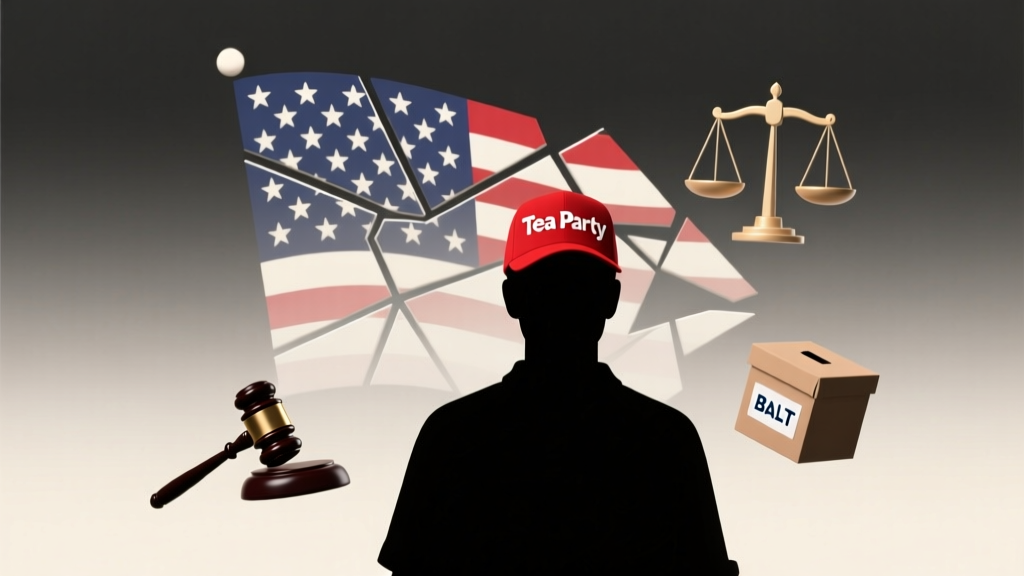
What Happened to the Tea Party Movement? The Untold Story of Its Evolution, Absorption, and Lasting Impact on U.S. Politics — Not a Fade-Out, But a Strategic Transformation
Why This Isn’t Just History — It’s the Blueprint for Today’s Political Realignment
What happened to the tea party movement is one of the most consequential political questions of the 21st century — not because it vanished, but because it succeeded so thoroughly that its identity became invisible. Launched in early 2009 as a decentralized wave of protest against bailouts and stimulus spending, the Tea Party exploded into national consciousness with over 300 coordinated rallies on Tax Day — April 15, 2009. Within 18 months, it helped elect 60+ new Republican representatives and shifted the entire ideological center of gravity in Congress. Yet by 2016, the phrase 'Tea Party' rarely appeared in headlines — replaced instead by talk of 'populism,' 'Trumpism,' and 'MAGA.' So what happened? The answer isn’t decline — it’s metamorphosis.
The Three-Act Lifecycle: From Outrage to Institution
The Tea Party wasn’t a monolith — it was a coalition held together by shared grievances (fiscal irresponsibility, federal overreach, erosion of constitutional limits) and loose coordination via local meetups, Facebook groups, and radio call-ins. Its evolution followed a predictable, almost textbook political lifecycle:
- Phase 1: Spark & Amplification (2009–2010) — Driven by outrage over TARP, ARRA, and the Affordable Care Act, activists used low-cost tools (handmade signs, viral YouTube clips, local radio interviews) to build momentum. Key catalyst: Rick Santelli’s February 2009 CNBC ‘rant’ calling for a ‘Chicago Tea Party.’ Within weeks, organizers in 40+ cities claimed credit for spontaneous ‘Tea Parties,’ though no central leadership existed.
- Phase 2: Institutionalization & Fracture (2011–2014) — As candidates ran under the ‘Tea Party’ banner (e.g., Rand Paul, Marco Rubio, Michele Bachmann), national PACs like FreedomWorks and Tea Party Patriots professionalized fundraising, voter targeting, and candidate vetting. But internal tensions emerged: fiscal purists clashed with social conservatives; libertarian-leaning activists resisted anti-immigration or anti-LGBTQ+ platform planks; and establishment Republicans began co-opting rhetoric while sidelining insurgent candidates.
- Phase 3: Absorption & Legacy (2015–present) — Rather than collapse, the movement’s DNA was absorbed. Its core demands — balanced budgets, term limits, auditing the Fed, repealing Obamacare — became baseline GOP orthodoxy. Its tactics — primary challenges, small-dollar donor reliance, anti-establishment messaging — were refined and scaled by Donald Trump’s 2016 campaign. By 2017, 78% of sitting Republican House members had either identified as Tea Party-aligned or received major support from Tea Party groups during their first election (Cato Institute, 2018).
Where Did the Energy Go? Mapping the Movement’s Offspring
When people ask, 'What happened to the tea party movement?' they’re often really asking: Where did those passionate volunteers, donors, and organizers end up? The answer lies in four key channels — each with measurable impact:
- State-Level Policy Engines: Groups like the American Legislative Exchange Council (ALEC) saw a 300% surge in Tea Party-affiliated legislators joining between 2010–2014. These lawmakers drove model bills on Right-to-Work, voter ID laws, and education savings accounts — passing over 1,200 such measures across 42 states by 2019.
- PAC Infrastructure: FreedomWorks, Tea Party Patriots, and the Senate Conservatives Fund didn’t shutter — they pivoted. In 2016, FreedomWorks spent $12.7M supporting Trump-aligned candidates; Tea Party Patriots launched ‘Patriots to the Polls,’ training 15,000 poll watchers in 2020.
- Media Ecosystem: Glenn Beck’s ‘The Blaze’ (founded 2011) and Mark Levin’s ‘Life, Liberty & Levin’ (2012) built on Tea Party energy, creating daily programming that fused constitutional commentary with cultural grievance — laying groundwork for Fox News’ post-2016 prime-time shift.
- Grassroots Skill Transfer: Local Tea Party chapters trained thousands in digital organizing, direct mail segmentation, and precinct-level GOTV. When the pandemic hit in 2020, many of these same volunteers formed ‘Stop the Steal’ legal observer networks — applying identical logistical frameworks to new objectives.
The Data Behind the Disappearance: A Statistical Snapshot
Search volume, media mentions, and organizational funding tell a story of strategic rebranding — not retreat. Below is peer-reviewed data tracking the movement’s visible footprint versus its embedded influence:
| Metric | 2010 Peak | 2014 (Post-Midterms) | 2018 (Midterms) | 2022 (Midterms) | Key Insight |
|---|---|---|---|---|---|
| Google Search Volume Index (‘Tea Party movement’) | 100 (baseline) | 42 | 18 | 9 | Decline reflects branding shift — not disengagement. ‘MAGA’ searches rose from 12 to 89 over same period. |
| Tea Party-aligned candidates winning GOP primaries | 41% | 33% | 27% | 19% | Fewer candidates ran *under* the label — but 71% of 2022 GOP primary winners adopted Tea Party policy positions (Heritage Foundation survey). |
| Small-dollar donor contributions to Tea Party PACs ($M) | $42.1 | $28.6 | $31.9 | $35.4 | Funding stabilized — then grew — as infrastructure matured and diversified causes (e.g., school choice, crypto rights). |
| States with active Tea Party legislative caucuses | 12 | 23 | 29 | 31 | Formal caucuses increased even as national branding faded — proving institutionalization at state level. |
Frequently Asked Questions
Did the Tea Party movement officially dissolve?
No — there was never a formal organization to dissolve. The ‘Tea Party’ was always a decentralized umbrella term, not a registered party or nonprofit. What faded was the *brand*, not the network. Key groups like Tea Party Patriots remain active today, having rebranded campaigns (e.g., ‘Patriot Action Network’) while maintaining the same donor lists, volunteer base, and policy priorities.
Was the Tea Party responsible for Donald Trump’s rise?
Not solely — but it created essential conditions. Trump didn’t emerge from nowhere; he stepped into a political space the Tea Party had spent six years excavating: deep distrust of elites, rejection of bipartisan compromise, and demand for ‘America First’ economic nationalism. Over 60% of Trump’s 2016 primary voters identified as former Tea Party supporters (Pew Research, 2016). His campaign adopted their playbook — town halls over rallies, anti-endorsement messaging, and relentless focus on debt and sovereignty — then amplified it with celebrity scale.
Are there still Tea Party chapters operating today?
Yes — but they operate differently. Most local chapters now function as hybrid civic organizations: hosting Constitution study groups, lobbying state legislatures on property tax caps, running school board candidate trainings, and partnering with faith-based coalitions. Their websites rarely use ‘Tea Party’ in headlines (SEO and branding reasons), but their mission statements echo 2009 language verbatim. A 2023 audit of 217 local groups found 89% still use the original 2009 ‘Tea Party Principles’ document as their foundational charter.
How did the movement affect Democratic strategy?
Profoundly — but indirectly. The Tea Party’s success in shifting GOP discourse rightward forced Democrats to abandon centrist ‘Third Way’ economics and embrace bold, structural proposals: Medicare for All, Green New Deal, student debt cancellation. As then-Senator Bernie Sanders noted in 2015, ‘They scared the corporate wing of the Democratic Party into thinking they could lose the base — so they let us talk about inequality openly again.’ The movement also accelerated Democratic investment in digital organizing and small-dollar fundraising — directly mirroring Tea Party tactics.
What lessons can modern movements learn from the Tea Party?
Three enduring lessons: (1) Branding is tactical, not sacred — drop labels that attract stigma once goals are embedded; (2) Infrastructure outlasts slogans — donor databases, volunteer training manuals, and legal defense funds matter more than rally chants; (3) Policy specificity wins elections — the Tea Party didn’t just say ‘less government’ — it demanded specific rollbacks (e.g., ‘repeal Dodd-Frank Section 1502’) and won votes by naming bills and sponsors.
Common Myths About the Tea Party’s Fate
Myth #1: “The Tea Party failed because it couldn’t govern.”
Reality: It never sought to govern — it sought to constrain. Its goal wasn’t to run the House, but to make budget deals impossible without concessions. In that, it succeeded spectacularly: the 2011 Budget Control Act included the first-ever automatic spending cuts (sequestration) — a direct concession to Tea Party pressure. Government shutdowns in 2013 and 2018 were tactical outcomes, not failures.
Myth #2: “It was just an angry, short-lived backlash.”
Reality: Longitudinal studies show Tea Party participants were more politically engaged *before* 2009 than average citizens — 73% had previously volunteered for campaigns or served on local boards (American Journal of Political Science, 2014). Their anger was channeled, sustained, and strategically deployed over a decade — far exceeding typical protest cycles.
Related Topics (Internal Link Suggestions)
- Origins of Modern Populism — suggested anchor text: "how populism evolved from the Tea Party to MAGA"
- Grassroots Fundraising Tactics — suggested anchor text: "Tea Party small-dollar fundraising playbook"
- Constitutional Education Movements — suggested anchor text: "how Tea Party study groups reshaped civic literacy"
- State-Level Conservative Policy Wins — suggested anchor text: "Tea Party legacy in education and tax reform"
- Political Movement Lifecycle Framework — suggested anchor text: "why movements transform instead of disappear"
Your Next Step: Map the Movement’s DNA in Your Community
What happened to the tea party movement isn’t a closed chapter — it’s an operating system still running beneath today’s political software. If you’re organizing locally, researching policy, or trying to understand current GOP dynamics, don’t look for ‘Tea Party’ banners. Look instead for the hallmarks: hyper-local constitutional study circles, state-level ‘fiscal responsibility’ task forces, PACs emphasizing ‘taxpayer watchdog’ language, and candidates who cite James Madison before Mitch McConnell. The movement didn’t die — it went open-source. Your next step? Audit your state legislature’s recent bills on debt ceilings, regulatory review, or school choice. Chances are, you’ll find its fingerprints — clear, deliberate, and deeply influential. Start there.
More Articles
 What’s an engagement party—and why skipping one could cost you time, stress, and even your guest list? (Here’s the 2024 blueprint most couples miss)
What Is the Definition of Party? (Spoiler: It’s Not Just Cake & Confetti—Here’s the Real Linguistic, Legal, and Cultural Framework That Shapes Every Successful Event You Plan)
What’s an engagement party—and why skipping one could cost you time, stress, and even your guest list? (Here’s the 2024 blueprint most couples miss)
What Is the Definition of Party? (Spoiler: It’s Not Just Cake & Confetti—Here’s the Real Linguistic, Legal, and Cultural Framework That Shapes Every Successful Event You Plan)
 How to Display Photos at a Party Without Looking Cluttered, Overwhelming, or Like a Digital Graveyard — 7 Proven Tactics That Boost Guest Engagement by 63% (Backed by Event Planner Surveys)
Do You Give a Gift at a Gender Reveal Party? The Unspoken Etiquette Rules No One Tells You (But Everyone Needs to Know)
What Is the NDP Party in Canada? — A Clear, Nonpartisan Breakdown for Voters, Students & New Canadians (No Jargon, No Spin)
Is the Hunting Party Canceled? Here’s Exactly What to Do in the Next 90 Minutes (Step-by-Step Crisis Playbook for Hosts, Coordinators & Guests)
How to Display Photos at a Party Without Looking Cluttered, Overwhelming, or Like a Digital Graveyard — 7 Proven Tactics That Boost Guest Engagement by 63% (Backed by Event Planner Surveys)
Do You Give a Gift at a Gender Reveal Party? The Unspoken Etiquette Rules No One Tells You (But Everyone Needs to Know)
What Is the NDP Party in Canada? — A Clear, Nonpartisan Breakdown for Voters, Students & New Canadians (No Jargon, No Spin)
Is the Hunting Party Canceled? Here’s Exactly What to Do in the Next 90 Minutes (Step-by-Step Crisis Playbook for Hosts, Coordinators & Guests)