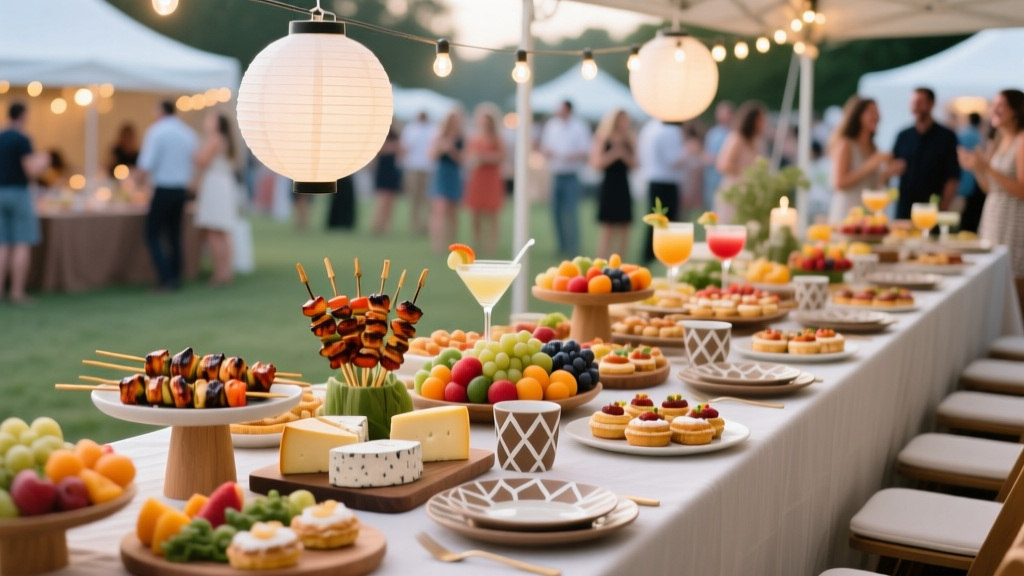
Top 15 Tips for a Food Festival
A food festival looks effortless when it’s done right: happy crowds, smooth lines, vendors selling out at the perfect pace, and a lively atmosphere that feels spontaneous. Behind that “easy” experience is detailed event planning, smart party organization, and strong on-site coordination.
Food festivals are uniquely complex because you’re managing public safety, high-volume transactions, competing aromas and sounds, strict health rules, and vendors who each operate like their own mini-business. Add weather, staffing, permits, and crowd flow—and it’s easy to see why careful planning matters.
This guide breaks down the top tips professional planners use to organize a successful food festival, including a practical planning timeline, a checklist, budget considerations, vendor selection strategies, trends, and common mistakes to avoid.
Top 15 Tips for a Food Festival (Pro-Level Planning Advice)
1) Define your festival “why” and measurable goals
Start with a clear purpose. Your goals drive every decision: site layout, vendor mix, pricing, sponsorship, and marketing.
- Examples of goals: raise $25,000 for a charity, generate 2,000 leads for downtown businesses, host 3,500 attendees, spotlight 25 local vendors, or boost tourism during a slow weekend.
- Key metrics to track: ticket sales, attendance, average spend per guest, vendor sales, sponsor impressions, email signups, and social engagement.
2) Choose the right festival format and footprint
Match the format to your audience and venue capabilities.
- Pay-as-you-go: lower barrier to entry, but needs solid cashless systems and line management.
- All-inclusive tasting: premium feel; requires strict portion control, timed entry, and vendor reimbursement planning.
- Hybrid: general admission + optional tasting packages or VIP lounge.
Real-world example: A city plaza festival with tight walkways may do better with timed entry and fewer large trucks, while a fairground can support full-service food trucks, seating villages, and a cooking demo stage.
3) Build a planning team and a clear chain of command
Food festivals run smoothly when responsibilities are obvious.
- Core roles: event director, vendor manager, operations lead, marketing/PR lead, volunteer coordinator, safety/compliance lead, and finance lead.
- On-site structure: use radio channels or group messaging with defined escalation steps (vendor issue → vendor manager → operations lead).
4) Start permits, insurance, and health compliance early
Permitting timelines can make or break your date. Confirm requirements with your city/county and public health department.
- Common permits: special event permit, street closure, fire permit (tents/cooking), temporary food establishment permits, alcohol license, noise permit, signage permit.
- Insurance basics: general liability, liquor liability (if applicable), additional insured endorsements for venue/city, vendor COIs.
5) Design a site layout that controls lines and improves flow
Crowd flow is event coordination in physical form. Reduce bottlenecks by designing for how people actually move.
- Use a one-way loop where possible.
- Create queue lanes with stanchions or taped pathways for popular vendors.
- Place seating away from ordering lines to prevent congestion.
- Cluster vendors by power/water needs and keep cooking smoke downwind from stages.
Trend: “Zoned experiences” are popular—food row, dessert corner, local artisan market, kids’ activity zone, and beverage garden—each with its own signage and mini-map.
6) Curate a balanced vendor mix (not just the most popular names)
Vendor selection is both art and math. A good mix increases satisfaction and prevents overcrowding at a handful of booths.
- Include variety: savory, sweet, vegetarian/vegan, gluten-free options, non-alcoholic specialty drinks.
- Balance price points: entry-level snacks + premium “signature” items.
- Prioritize vendors with high throughput (fast service) for peak periods.
7) Use a vendor vetting scorecard
Make vendor selection fair, organized, and defensible—especially if you’re oversubscribed.
- Menu uniqueness (does it add variety?)
- Operational readiness (staffing, equipment, POS)
- Compliance (licenses, health permits, insurance)
- Capacity (orders per hour; average ticket time)
- Brand fit (local focus, sustainable packaging, etc.)
8) Standardize vendor communications and deadlines
Professional event planning relies on systems, not memory. Provide a vendor packet and track confirmations.
- Load-in/load-out schedule with a map
- Power/water requests form
- Waste and greywater rules
- Required signage (allergen info if applicable)
- Deadline calendar (COI due date, permit docs due date, final menu due date)
9) Plan power, water, and waste like an operations pro
Utilities are where food festivals often fail quietly—until the first breaker trips.
- Power: don’t guess. Confirm amperage needs per vendor and avoid daisy-chaining. Hire licensed electricians for distribution.
- Water: plan fill stations and handwashing stations; confirm potable access.
- Waste: over-order bins, schedule mid-event trash pulls, and separate grease disposal rules.
10) Prioritize food safety and sanitation
Public trust is your most valuable asset. Build sanitation into the layout and staffing plan.
- Handwashing stations near food areas
- Clearly marked dish/greywater disposal points
- Extra gloves, sanitizer, paper towels on hand
- Health inspector access route and check-in process
11) Invest in a modern ticketing and cashless strategy
Current event planning trends favor speed: mobile tickets, tap-to-pay, QR menus, and wristbands for VIP.
- Offer mobile ticketing with scannable QR codes
- Encourage vendors to accept contactless payments
- Provide an on-site “payment help” tent for card issues and customer service
12) Create an entertainment plan that supports (not competes with) food sales
Entertainment should keep energy up and guests on site longer without drowning out vendor communication.
- Schedule cooking demos during slower sales windows
- Use local bands with controlled sound levels
- Place the stage so sound doesn’t overwhelm ordering areas
13) Build a staffing and volunteer plan around peak moments
Think in waves: gates, lunch/dinner rush, and closing.
- Critical posts: entrance scanning, info booth, sanitation team, runner team, crowd flow monitors, vendor support, stage manager.
- Proven strategy: schedule short shifts (3–4 hours) and a “float team” to plug gaps.
14) Plan for weather and other contingencies
Weather is not a surprise—it’s a scenario. Have triggers and backup actions.
- Rain plan: tenting, flooring in key zones, covered seating pockets
- Heat plan: shade, misting fans, extra water refill stations
- Wind plan: weighted tents, no loose signage, stage rigging checks
- Emergency plan: first aid, severe weather shelter points, clear evacuation messaging
15) Tell guests what to expect (and make it easy)
Strong guest communication reduces complaints and makes coordination smoother.
- Parking and transit guide + ADA info
- Festival map with zones, restrooms, and first aid
- What items are allowed (strollers, chairs, pets) and what aren’t
- Schedule highlights and vendor list
Step-by-Step Food Festival Planning Timeline (With Checklist)
12–6 Months Out: Foundation & approvals
- Select date, rain date policy, and venue footprint
- Confirm permit requirements and submission timelines
- Request venue/site diagrams and utility specs
- Define budget, revenue model (tickets, vendor fees, sponsorship)
- Draft vendor application and selection criteria
- Begin sponsor outreach with tiers and benefits
- Book key vendors: security, medical, sanitation, staging/sound
6–3 Months Out: Vendors, marketing, and operations build
- Finalize vendor lineup and contracts
- Collect COIs, permits, and menu details
- Draft site plan: vendor grid, queues, seating, exits
- Confirm power distribution and water access
- Launch event page, ticketing, and marketing calendar
- Recruit volunteers and department leads
- Coordinate with city services (traffic, police, fire)
3 Months–2 Weeks Out: Confirmations & rehearsals
- Publish guest info: parking, maps, schedules
- Order rentals: tents, tables, chairs, fencing, signage
- Finalize staffing schedule and role sheets
- Run an operations tabletop exercise (weather, lost child, medical call)
- Confirm vendor load-in times and routes
- Prepare on-site kits (see checklist below)
Event Week & Day-Of: Execution
- Mark vendor spots and label power drops
- Set up check-in: vendors, staff/volunteers, media
- Do a safety walk: fire lanes, exits, trip hazards, tent weights
- Hold a 10-minute all-hands briefing (top risks + escalation plan)
- Track attendance, peak times, incidents, and vendor feedback
Post-Event (Within 72 Hours): Wrap & improve
- Send vendor and sponsor thank-yous + recap metrics
- Reconcile finances and incident reports
- Survey attendees (what they loved, what to change)
- Hold a debrief meeting and document improvements for next year
Day-Of Operations Checklist (Quick Template)
- Signage: entrance, schedules, maps, restrooms, first aid, exits
- Safety: first aid station, AED location, fire extinguishers, incident log
- Vendor support: extra zip ties, duct tape, extension cords (rated), trash bags
- Guest services: lost & found, ADA support plan, info booth scripts
- Sanitation: restroom checks, handwashing stations stocked, trash pulls scheduled
- Tech: ticket scanners charged, backup battery packs, Wi-Fi/hotspot plan
Budget Considerations (Sample Breakdown + Money-Saving Moves)
Food festival budgets vary widely based on size, venue, and whether you include entertainment and alcohol. Use percentages to stay grounded, then convert to dollars.
Sample budget breakdown (percentage model)
- Permits, insurance, legal: 5–10%
- Site rentals & infrastructure (tents, fencing, tables, staging): 20–30%
- Power, water, sanitation, waste: 10–18%
- Security & medical: 8–15%
- Marketing & signage: 8–15%
- Entertainment & programming: 5–12%
- Staffing/volunteers (shirts, meals, training): 4–8%
- Contingency: 8–12%
Ways to protect your margin
- Sell sponsorship packages that “underwrite” key costs (stage sponsor, hydration sponsor, kids’ zone sponsor).
- Use scalable rentals: add seating only after early ticket milestones are met.
- Negotiate bundled services (sanitation + waste hauling, staging + sound).
- Keep signage modular so it can be reused for future events.
Vendor Selection Tips That Improve Guest Experience
- Ask throughput questions: “How many orders per hour can your team handle?” “What’s your average ticket time?”
- Request a simplified festival menu: 4–8 items is often ideal for speed and quality control.
- Confirm pricing strategy: Avoid sticker shock by encouraging a range (e.g., $6–$10 snack options plus higher-ticket specialties).
- Require sustainable packaging: Compostable serviceware is increasingly expected; align with local waste capabilities.
- Get proof of readiness: COI, permits, and a clear load-in plan reduce last-minute problems.
Common Food Festival Planning Mistakes to Avoid
- Underestimating lines: Not planning queue space creates blocked walkways, frustrated guests, and safety risks.
- Too many vendors selling the same thing: Ten taco vendors sounds exciting, but it can hurt vendor sales and guest variety.
- Not budgeting for power and waste: These are “unsexy” costs that quickly become emergencies if ignored.
- Skipping a contingency reserve: Weather, equipment failures, or extra staffing needs happen—plan a 10% buffer.
- Weak signage and guest info: Confusion shows up as long lines at the info booth and negative reviews.
- No post-event process: Without a debrief and documentation, you’ll repeat the same problems next year.
FAQ: Food Festival Planning & Coordination
How many food vendors should a festival have?
It depends on footprint and expected attendance. As a planning shortcut, aim for enough vendors that lines stay manageable during peak periods. For many events, that means building capacity for the busiest 60–90 minutes and spacing vendors so queues don’t collide.
Do I need vendors to carry their own insurance?
Yes in most cases. Require each vendor to provide a Certificate of Insurance (COI) with your organization (and often the venue/city) listed as additional insured. Confirm limits with your insurance broker and local requirements.
What’s the best ticketing model for a first-time food festival?
A hybrid model is often easiest: low-cost general admission to manage attendance plus optional add-ons (VIP seating, tasting packs, demo access). This reduces risk while you learn your crowd patterns.
How do I keep lines shorter?
Use a balanced vendor mix, design queue lanes, encourage simplified menus, and support cashless payments. Also consider timed entry and entertainment scheduling that spreads demand across the site.
What should I include in a vendor packet?
At minimum: site map, load-in instructions, required permits/COIs, power/water details, waste rules, festival hours, contact list, and a day-of issue escalation process.
How far in advance should I start planning?
For a public food festival with permits and multiple vendors, start 6–12 months out. Larger city events or street closures often need a longer runway.
Next Steps: Turn These Tips into a Real Plan
- Write your event goals and lock your format (pay-as-you-go, tasting, or hybrid).
- Confirm permitting requirements and build your timeline backward from submission deadlines.
- Draft your budget using percentage categories, then get three quotes for major cost centers.
- Open vendor applications with a scorecard and clear deadlines.
- Create a site plan that protects flow: queues, seating, sanitation, and emergency lanes.
- Finalize your run-of-show and day-of staffing plan, then rehearse your contingencies.
For more step-by-step event planning resources, coordination templates, and party organization guides, explore the latest articles on smartpartyprep.com.
More Articles
 What Did the Populist Party Accomplish? The Truth Behind Their Legacy — 5 Concrete Achievements History Books Often Overlook (and Why They Still Matter Today)
Stop Wasting Hours Comparing Venues & Rentals: How A & C Event Space & Party Rentals Solves 5 Hidden Stress Points Before Your Wedding, Corporate Gala, or Birthday Bash — Without Upsells or Last-Minute Surprises
How to Let Twitch Hear Party Chat: The 5-Step Fix That Actually Works (No More Muted Squad Moments or Awkward Silence on Stream)
What Did the Populist Party Accomplish? The Truth Behind Their Legacy — 5 Concrete Achievements History Books Often Overlook (and Why They Still Matter Today)
Stop Wasting Hours Comparing Venues & Rentals: How A & C Event Space & Party Rentals Solves 5 Hidden Stress Points Before Your Wedding, Corporate Gala, or Birthday Bash — Without Upsells or Last-Minute Surprises
How to Let Twitch Hear Party Chat: The 5-Step Fix That Actually Works (No More Muted Squad Moments or Awkward Silence on Stream)
 Can You Edit a Partiful After Publishing? Yes — But Only Within 15 Minutes (Here’s Exactly What You Can Change, What’s Locked, and How to Avoid Last-Minute Panic)
How to Keep Hot Chocolate Warm at a Party: 7 Proven Tactics (That Actually Work—No More Lukewarm Cups or Last-Minute Reheating!)
When Was Party in the USA Made? The Exact Recording Date, Studio Secrets, and Why This 2009 Hit Still Dominates 2024 Themed Parties (Plus How to License It Legally)
Where Can We Have a Party? 7 Unexpected, Budget-Friendly, and Stress-Free Venues (Including 3 You’re Already Paying For)
What Does the Boston Tea Party Mean Today? 7 Surprising Ways Modern Event Planners Use Its Legacy to Design Unforgettable Civic Experiences — Not Just History Lessons
Can You Edit a Partiful After Publishing? Yes — But Only Within 15 Minutes (Here’s Exactly What You Can Change, What’s Locked, and How to Avoid Last-Minute Panic)
How to Keep Hot Chocolate Warm at a Party: 7 Proven Tactics (That Actually Work—No More Lukewarm Cups or Last-Minute Reheating!)
When Was Party in the USA Made? The Exact Recording Date, Studio Secrets, and Why This 2009 Hit Still Dominates 2024 Themed Parties (Plus How to License It Legally)
Where Can We Have a Party? 7 Unexpected, Budget-Friendly, and Stress-Free Venues (Including 3 You’re Already Paying For)
What Does the Boston Tea Party Mean Today? 7 Surprising Ways Modern Event Planners Use Its Legacy to Design Unforgettable Civic Experiences — Not Just History Lessons