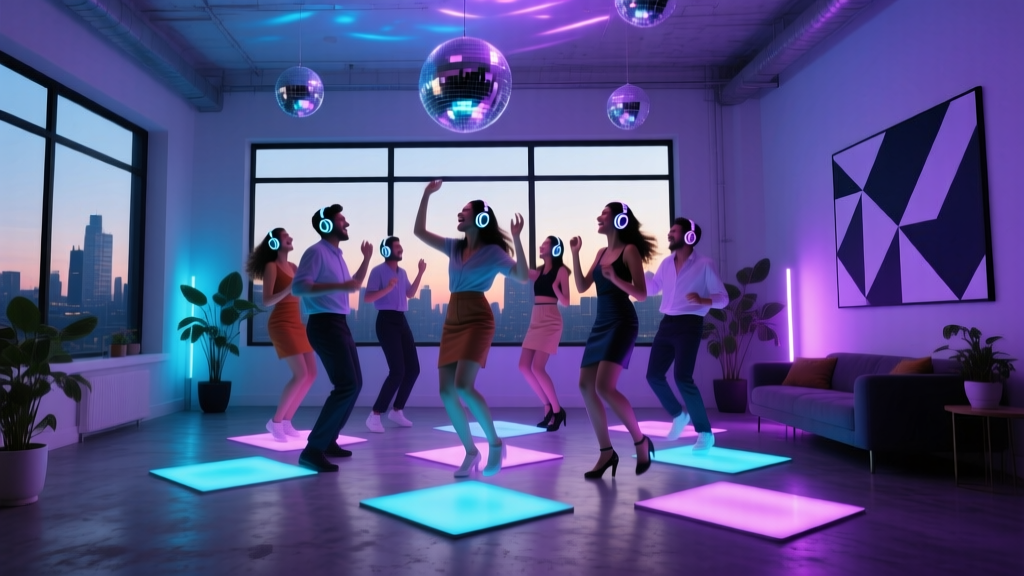
Top 10 Tips for a Silent Disco
A silent disco looks effortless when it’s done well: a crowd dancing in sync (and out of sync), color-coded headphone lights flashing, three DJs battling for attention, and a venue that stays conversation-friendly even while the party energy stays high. Behind the scenes, though, silent disco success depends on detailed event planning, smart vendor coordination, and a timeline that covers both the technical setup and the guest experience.
Because your sound system is personal (headphones) rather than environmental (speakers), a silent disco introduces unique considerations: transmitter range, channel management, headset counts, sanitation, battery life, and guest flow. The payoff is huge—noise restrictions are easier to manage, multiple music tastes can be served at once, and your event can happen in spaces that would never allow a traditional dance party.
This guide breaks down the top tips, a step-by-step planning timeline, budget planning and vendor selection, common mistakes, and a practical checklist so you can run a smooth silent disco for a birthday, wedding after-party, corporate event, fundraiser, festival activation, or campus celebration.
What Makes a Silent Disco Different (and Why Your Plan Matters)
Silent discos combine event coordination, AV planning, and crowd management in a compact format. You’re essentially running a mini broadcast operation while also hosting a dance party. The best results come from planning the technical details early and then designing a guest experience that makes headphones feel fun—not confusing.
- Noise control: Great for venues with sound limits, residential areas, rooftops, museums, libraries, or outdoor spaces.
- Multi-channel entertainment: Guests choose between DJs or playlists; fewer complaints about music.
- Operational complexity: You’ll coordinate headset pickup/return, charging, sanitation, channel signage, and troubleshooting.
Top 10 Tips for a Silent Disco (Expert-Proven)
1) Lock in the right venue and confirm noise/curfew rules
A silent disco still involves people cheering, singing, and moving. Start by confirming:
- Curfew, lighting restrictions, and security requirements
- Capacity limits and dance floor size
- Power access (outlets near DJ area and check-in)
- Entry/exit flow and where you can place a headphone station
- Whether you need insurance certificates (COI)
Real-world example: A rooftop venue may allow headphones past 10 p.m. but require you to keep “crowd noise” minimized. Plan a “late-night lounge” zone with seating and lower-energy tracks after a certain hour to reduce shouting.
2) Choose the right headphone count (and add a buffer)
Under-ordering is the fastest way to disappoint guests. A practical rule for event planning:
- Ticketed events: Order headsets for 100% of attendees + 5–10% buffer.
- Open-house or come-and-go events: Order for peak occupancy + 10–15% buffer.
- Corporate or weddings: If dancing isn’t guaranteed, plan for 70–90% usage, but keep 10% extra for batteries/issues.
Also confirm headphone features: multi-channel (2–3 channels), adjustable fit, volume limiting if needed, and LED color per channel for easy identification.
3) Decide on 2 or 3 music channels based on your crowd
More channels isn’t always better. Too many choices can slow the vibe and complicate coordination.
- 2 channels: Best for smaller events (under 100) or clear “two-tribes” tastes (Top 40 vs. throwbacks).
- 3 channels: Ideal for mixed audiences (EDM, hip-hop, and pop/Latin) and larger crowds.
Trend tip: Hybrid programming is popular—one live DJ plus two curated playlists. This reduces cost while keeping the “DJ energy” anchor.
4) Vet your silent disco vendor like an AV partner
Headphones are your core equipment—treat vendor selection with the same rigor as sound and lighting.
- What’s included: transmitters, cables, backup batteries, charging docks, signage, sanitation supplies
- Range expectations and interference risks (especially in hotels, campuses, and convention centers)
- On-site support vs. self-setup (and fees for each)
- Deposit, damage policy, and loss replacement pricing
- Delivery/pickup windows and after-hours return options
Pro move: Ask for a written “day-of troubleshooting guide” and a list of the most common failure points (dead batteries, wrong input cable, channel confusion) with solutions.
5) Create a seamless headset check-in and return system
The headphone station is the “front door” of your guest experience. Keep it fast and intuitive.
- Use two lines: pickup and return (clearly labeled)
- Assign 2 staff per 100 headsets for peak arrivals
- Use a deposit strategy: ID hold, credit card pre-auth (where appropriate), or ticket scan assignment
- Number headsets and log checkouts for faster loss control
Real-world example: For a fundraiser, a quick “scan ticket → hand headset → point to channel sign” workflow keeps the entry line moving and avoids a bottleneck at the dance floor.
6) Plan sanitation and comfort (a current event-planning priority)
Guests notice hygiene. Build sanitation into your operations and communicate it visibly.
- Provide disinfectant wipes at pickup/return
- Use disposable ear covers if your audience expects it (corporate, healthcare, family events)
- Have a small “comfort kit”: hair ties, blotting papers, water station signage, and a few backup foam ear pads
7) Design the room layout for flow, not just dancing
A silent disco works best with zones:
- Dance zone: Center space, clear of trip hazards
- DJ zone: Elevated if possible, with clear channel signage and lighting
- Conversation zone: Seating on the edges (guests can remove headphones and chat)
- Help desk: A small troubleshooting table (extra batteries, spare headsets, cable backups)
Trend tip: Event planners are leaning into “experience zoning” (dance + lounge + photo moment) because guests love options and it reduces overcrowding.
8) Use lighting and signage to make channel choices obvious
Since the music is invisible, visuals do the heavy lifting.
- Match each channel LED color to a sign: “Blue = Throwbacks,” “Red = Hip-Hop,” “Green = EDM”
- Place signs at: entry, DJ booth, and dance floor edge
- Add a short “how it works” board with 3 steps:
- Put on headphones
- Choose a channel
- Adjust volume
9) Build a DJ/playlists run-of-show to control energy
Silent discos can feel scattered without a plan. Coordinate a schedule that creates shared moments.
- Start with friendly, mid-tempo tracks for the first 15 minutes
- Plan “cross-channel moments” every 30–45 minutes (all DJs play a similar theme: 2000s, diva anthems, guilty pleasures)
- End with a unified finale track across all channels for a memorable closing
Pro tip: Tell DJs the objective: maximize participation, not niche deep cuts (unless your audience is genre-specific).
10) Prepare for technical hiccups with a simple backup plan
Most silent disco issues are small but can feel big if you’re unprepared. Pack or request:
- Spare headphones (at least 5–10)
- Extra fully charged batteries or charging packs
- Backup cables: RCA, XLR, 1/8” aux, adapters, power strips
- A printed quick guide for staff: “No sound? Check channel → volume → power → transmitter input.”
Step-by-Step Planning Timeline (with Checklist)
6–8 Weeks Out: Foundations
- Confirm event goals (fundraiser, social, employee appreciation) and target guest count
- Book venue and review noise/curfew policies
- Select silent disco vendor (headphones + transmitters) and secure date
- Decide on channels (2 or 3) and choose DJs or playlists
- Create a preliminary budget (see sample breakdown below)
4 Weeks Out: Design the Guest Experience
- Draft layout: DJ area, headset station, lounge zone, photo area
- Plan staffing: check-in, return, floater “help” person, security if required
- Confirm power needs and access; request venue floor plan
- Build marketing/guest communications: what to expect, dress code, start time, parking
- Choose lighting (uplights, wash lights, simple dance lighting)
2 Weeks Out: Operational Details
- Finalize music schedule and run-of-show with DJs
- Confirm delivery/pickup times and on-site support plan
- Prepare signage files: channel signs, “how it works,” headset return
- Create headset tracking method (numbered units, QR check-out, or ticket-based)
- Order sanitation supplies and disposables (wipes, ear covers)
72 Hours Out: Final Checks
- Confirm final headcount and headset quantity (+ buffer)
- Print signage and checklist
- Confirm DJ arrival times and equipment needs (laptops, controllers)
- Pack event kit: tape, zip ties, markers, extension cords, clipboards
- Send staff a one-page brief: timeline, roles, troubleshooting steps
Event Day: Execution Checklist
- Load-in: Place DJ tables, run power safely (tape down cables), set lighting
- Sound check: Verify each channel audio is clear and correctly mapped to LED colors
- Headset station: Set up two-line flow (pickup/return), sanitation supplies visible
- Signage: Place channel signs at entry and dance floor
- Staff positions: Assign one roaming helper to troubleshoot and encourage participation
- Mid-event: Check battery levels, manage returns, restock wipes
- Closeout: Announce final song, direct guests to return station, count headsets immediately
Budget Considerations (Sample Breakdown + Cost Controls)
Silent disco budgets vary by region and scale, but this structure helps you estimate costs and make tradeoffs without losing quality.
Sample Budget Breakdown (for ~150 guests)
- Silent disco headphones + transmitters: 35–55%
- DJs or entertainment: 15–30%
- Venue + permits/insurance: 10–25%
- Lighting + decor: 5–15%
- Staffing (check-in/return/support): 5–12%
- Sanitation + supplies + signage: 2–6%
- Contingency: 5–10%
Smart Ways to Control Costs
- Use one DJ + two curated playlists rather than three DJs
- Choose a venue that includes tables, chairs, and basic lighting
- Keep decor minimal and focus on lighting impact (uplights + a photo backdrop)
- Reduce loss risk with an efficient headset return plan (which prevents replacement fees)
Vendor Selection Tips (Headphones, DJs, Lighting, Staffing)
- Silent disco provider: Prioritize reliability, clear damage/loss policies, and strong support. Ask about interference in your venue type.
- DJs: Choose DJs who can read a room and collaborate (silent disco is more “team sport” than solo show).
- Lighting: Even a basic wash light package makes the dance floor feel alive and helps photos.
- Staffing: A calm, friendly check-in team reduces confusion and keeps the party moving.
Common Silent Disco Planning Mistakes to Avoid
- Ordering too few headsets: Creates frustration and slows entry. Always add a buffer.
- Skipping a channel test: Mis-mapped channels (wrong colors) cause instant confusion.
- No signage: Guests should understand the setup in 10 seconds without asking staff.
- Understaffing check-in/return: Lines kill momentum; headset returns become chaotic.
- No sanitation plan: Guests may avoid using headsets or feel uncomfortable.
- Ignoring the room layout: Crowded entry points and tangled cables can become safety issues.
- Not planning “shared moments”: Without coordinated peaks, the energy can flatten.
FAQ: Silent Disco Event Planning Questions
How many headphones do I need for a silent disco?
For ticketed events, plan for 100% of attendees plus a 5–10% buffer. For come-and-go events, plan for peak occupancy plus 10–15%.
Do silent discos work outdoors?
Yes, and they’re popular for outdoor events with noise restrictions. Confirm power access, weather backup plans (tenting or indoor pivot), and transmitter range with your vendor.
Is a silent disco actually “silent” for neighbors?
There’s no amplified speaker sound, but you’ll still hear crowd noise—singing, cheering, and movement. Set expectations with the venue, manage curfew rules, and design a late-night lounge zone if needed.
Should I hire DJs or use playlists?
Both can work. A common, cost-effective approach is one live DJ on the main channel and two well-curated playlists on the other channels. For high-energy crowds, multiple DJs can elevate the experience.
How do I prevent lost headphones?
Use a clearly labeled return station, assign staff to monitor exits, number headsets, and consider a deposit/ID hold method. Do a headset count immediately after the event ends.
Next Steps: Turn These Tips into Your Event Plan
Start by locking in your venue and silent disco vendor, then build your headset count, staffing plan, and signage around an efficient guest flow. Once the operational basics are solid, focus on the fun—music programming, lighting, and shared moments that make the dance floor feel connected even across multiple channels.
- Confirm venue rules, capacity, and power
- Book a reliable silent disco vendor and finalize headset quantity + buffer
- Choose 2–3 channels and build a run-of-show with planned peak moments
- Create a headset check-in/return system and staff it properly
- Test everything on-site and keep a simple backup kit ready
Looking for more step-by-step event planning guidance? Explore additional party organization and coordination guides on smartpartyprep.com to keep your next event organized, on budget, and unforgettable.
More Articles
 How Much Does a Party Bus Cost? The Real Price Breakdown (Spoiler: It’s Not Just Hourly Rates—Hidden Fees, Seasonal Surges & How to Save Up to 40%)
 Top 7 Tips for a Poetry Slam
How to Unlock New Maps in Mario Party Jamboree: The Exact 7-Step Progression Path (No Missed Stars, No Hidden Requirements)
When Is the Next Episode of The Hunting Party? Your Real-Time Air Date Tracker (Updated Hourly — No More Spoiler-Heavy Guesswork or Missed Premieres)
When Do Vegas Pool Parties Start? The Real Opening Dates (Not What Google Says) — Plus Exact 2024 Start Times, Insider Booking Windows, and How to Avoid $300+ Last-Minute Cover Fees
Is NJ a two party consent state? The truth that could save your business from $500K lawsuits — plus a 5-step compliance checklist every event pro must follow before hitting record.
What to Serve at a Pizza Party: The 7-Step Menu Blueprint That Prevents Boredom, Avoids Overwhelm, and Keeps Guests Eating (and Talking) for Hours — No Chef Skills Required
How Much Was the Tea at the Boston Tea Party? The Real Cost, Weight, and Economic Impact—Plus What It Would Cost Today (Adjusted for Inflation & Colonial Trade Laws)
What’s the party after the wedding called? (Spoiler: It’s NOT always a ‘reception’—and confusing it could cost you time, money, and guest confusion)
How to Unlock Bowser Map in Mario Party 8: The 3-Step Secret Most Players Miss (No Cheats, No Glitches—Just Verified Game Logic)
Top 7 Tips for a Poetry Slam
How to Unlock New Maps in Mario Party Jamboree: The Exact 7-Step Progression Path (No Missed Stars, No Hidden Requirements)
When Is the Next Episode of The Hunting Party? Your Real-Time Air Date Tracker (Updated Hourly — No More Spoiler-Heavy Guesswork or Missed Premieres)
When Do Vegas Pool Parties Start? The Real Opening Dates (Not What Google Says) — Plus Exact 2024 Start Times, Insider Booking Windows, and How to Avoid $300+ Last-Minute Cover Fees
Is NJ a two party consent state? The truth that could save your business from $500K lawsuits — plus a 5-step compliance checklist every event pro must follow before hitting record.
What to Serve at a Pizza Party: The 7-Step Menu Blueprint That Prevents Boredom, Avoids Overwhelm, and Keeps Guests Eating (and Talking) for Hours — No Chef Skills Required
How Much Was the Tea at the Boston Tea Party? The Real Cost, Weight, and Economic Impact—Plus What It Would Cost Today (Adjusted for Inflation & Colonial Trade Laws)
What’s the party after the wedding called? (Spoiler: It’s NOT always a ‘reception’—and confusing it could cost you time, money, and guest confusion)
How to Unlock Bowser Map in Mario Party 8: The 3-Step Secret Most Players Miss (No Cheats, No Glitches—Just Verified Game Logic)