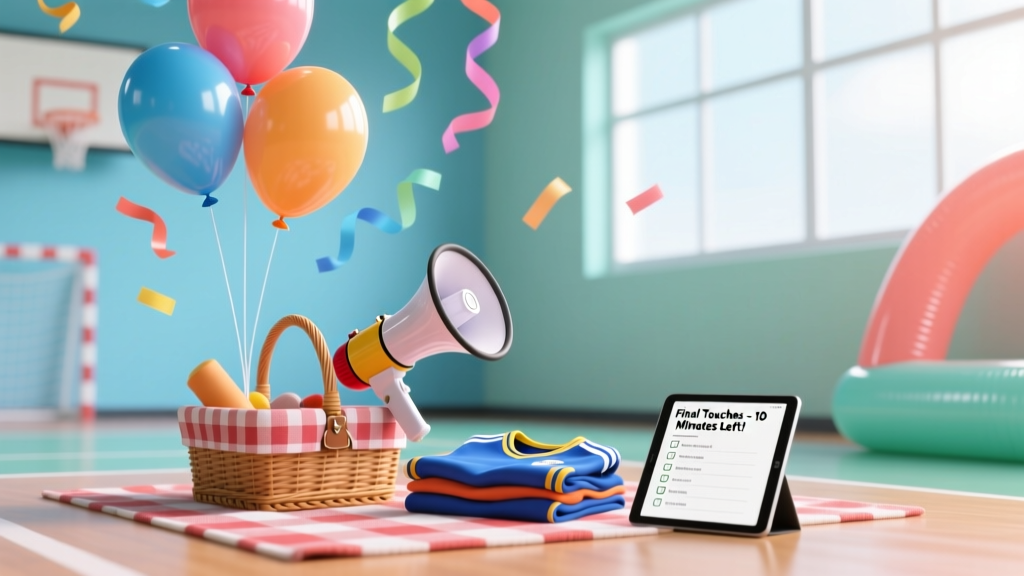
Last-Minute Sports Day Planning Tips
Planning a Sports Day on short notice can feel like juggling cones while sprinting—possible, but only if you’re organized. Whether you’re coordinating a school field day, corporate team-building sports day, community fundraiser, or a birthday sports-themed party, the secret to success is building a simple plan fast, then executing it with focus.
Sports Day events are high-energy and high-movement, which means the logistics matter more than ever: space planning, safety, clear schedules, equipment, hydration, and crowd flow. With a tight timeline, you don’t need perfection—you need a reliable structure, a lean budget strategy, and a checklist that prevents last-minute surprises.
This guide delivers a practical, step-by-step approach for last-minute event planning and coordination, complete with timelines, checklists, budget breakdowns, vendor tips, and real-world examples to help you pull off a Sports Day that feels intentional, fun, and well-run.
Start With the “Non-Negotiables” (30 Minutes That Save Hours)
Before you book anything or send a single email, lock in the essentials. This keeps your event planning efficient and prevents scope creep—one of the most common last-minute planning pitfalls.
Define Your Event in 7 Quick Decisions
- Date and time window: Include setup and breakdown time (minimum 60–90 minutes each).
- Location: Indoor gym, outdoor field, park, or rented sports facility.
- Guest count: Participants + spectators + volunteers.
- Audience and purpose: Competition, team bonding, fundraiser, or just fun.
- Age range and ability levels: Determines game choices, safety needs, and accessibility planning.
- Program length: A 2–3 hour event is ideal for last-minute coordination.
- Budget cap: Decide your ceiling now so choices stay realistic.
Choose a Simple Sports Day Format
Last-minute events run smoother with a format that’s easy to explain and easy to staff:
- Rotation stations: Small groups rotate through activities every 10–15 minutes.
- Mini-tournament: One or two core sports (e.g., soccer + relay races) with brackets.
- “Field Day” mix: Classic games (sack race, tug-of-war, beanbag toss) + one headline event.
The Last-Minute Planning Timeline (With Checklists)
Use the timeline that fits your situation. The structure is the same: secure venue, confirm staffing, build schedule, procure essentials, communicate clearly.
Option A: 7 Days Out (Best-Case Last Minute)
7 Days Before: Lock Core Logistics
- Confirm location reservation and rules (noise, parking, permits, weather plan).
- Draft your event schedule (arrival, warm-up, rotations, awards, cleanup).
- Recruit key roles: event lead, safety lead, check-in lead, station captains.
- Decide your activities list based on equipment available.
- Start vendor outreach (portable toilets, tents, sound system, water service if needed).
5–6 Days Before: Equipment + Communications
- Create a master equipment list and source items (borrow, rent, purchase).
- Send participant info: time, location, what to wear, what to bring, rules.
- Open sign-ups if needed (free tools like Google Forms work well).
- Confirm volunteers and assign stations.
- Order medals/ribbons or simple prizes (fast shipping or local pickup).
3–4 Days Before: Safety + Final Schedule
- Finalize risk and safety plan (first aid, hydration, heat policy, emergency contacts).
- Print or prepare digital signage: station signs, schedule, map, rules.
- Confirm vendor delivery times and contact numbers.
- Prepare scorekeeping sheets or a simple points system.
1–2 Days Before: Pack + Brief
- Assemble a “command kit” (see checklist below).
- Mark zones on a venue map (check-in, stations, hydration, rest area, awards).
- Volunteer briefing: station rules, timing, crowd flow, safety reminders.
- Weather check and activate Plan B if needed.
Event Day: Execute Like a Pro
- Arrive early with a setup crew (minimum 60–90 minutes).
- Set up check-in first, then stations, then awards table.
- Do a 10-minute staff huddle: timing, radios/phones, emergency plan.
- Start on time; keep rotations tight; announce breaks.
- Assign a cleanup captain and do a final sweep.
Option B: 72 Hours Out (True Crunch Time)
- Hour 1: Confirm venue + backup plan; choose a 2-hour station rotation format.
- Hour 2: Text/email volunteers and lock 1 captain per station.
- Hour 3: Buy/borrow essentials only: cones, whistles, tape/chalk, balls, first aid, water.
- Hour 4: Send a single “Sports Day Info” message (what/when/where/what to bring).
- Day before: Pre-pack stations into bins; print 1-page schedule and station rules.
A Ready-to-Use Sports Day Checklist
Event Command Kit (Bring These No Matter What)
- Printed schedule + venue map (at least 3 copies)
- Phone charger + power bank
- First aid kit (ice packs, bandages, antiseptic, gloves)
- Sunscreen and bug spray (outdoor events)
- Trash bags + paper towels
- Painter’s tape/duct tape + zip ties
- Clipboard, pens, markers
- Extra whistles and a simple timer/stopwatch
- Signage (check-in, hydration, stations, restrooms)
Equipment Essentials (Build Your List Around These)
- Cones (20–40) for lanes, boundaries, and queue lines
- Balls: soccer, basketball, foam balls (as appropriate)
- Relay items: batons, beanbags, hula hoops
- Tug-of-war rope, sacks for sack race
- Scorekeeping: sheets, whiteboard, or a simple points poster
- PA speaker or megaphone (for crowd management)
Pick Games That Are Fast to Set Up and Easy to Explain
Last-minute Sports Day planning works best with activities that require minimal equipment, have low injury risk, and keep lines moving. A good rule: aim for 6–8 stations for a 2–3 hour event.
Quick-Setup Station Ideas
- Relay races: Classic sprint relay, beanbag balance relay, “cone weave” relay.
- Target toss: Beanbag toss into buckets labeled 1–5 points.
- Obstacle lane: Cones + hop markers + hula hoop jump.
- Speed challenge: Timed shuttle run with clear start/finish lines.
- Tug-of-war: Best as a scheduled showcase (not continuous) to prevent bottlenecks.
- Mini soccer shootout: 3 shots per player, points per goal zone.
Real-World Example: A 2.5-Hour Corporate Sports Day
- 0:00–0:15: Check-in + team assignments
- 0:15–0:25: Group warm-up + rules
- 0:25–1:45: 6 stations, 12 minutes each + 3-minute transitions
- 1:45–2:05: Showcase event (tug-of-war bracket)
- 2:05–2:20: Snacks + hydration break
- 2:20–2:30: Awards + group photo
Budget Considerations (Spend Where It Matters)
When you’re planning a Sports Day quickly, budget discipline keeps you calm and resourceful. Prioritize safety, staffing, and comfort before decorations.
Simple Budget Breakdown Template
- Venue and permits (0–40%): Park fees, facility rental, permits, insurance
- Equipment and rentals (15–35%): cones, balls, tents, tables, PA system
- Food and hydration (15–30%): water, sports drinks, fruit, packaged snacks
- Staffing/volunteers (0–20%): paid referees, security, cleanup support
- Prizes and awards (5–15%): ribbons, medals, small gift cards
- Printing/signage (2–8%): station signs, schedules, banners
- Contingency (10%): always reserve for last-minute needs
Example: $800 Community Sports Day (60–100 People)
- Permit/venue fees: $150
- Equipment top-up (cones, rope, chalk, whistles): $120
- Hydration + snacks: $220
- Canopy rental (1–2 tents): $160
- Prizes/medals: $80
- Printing/signage: $30
- Contingency: $40
Vendor Selection Tips (Fast, Reliable, No Drama)
Last-minute event coordination is all about responsiveness. Choose vendors who communicate clearly, provide written confirmations, and have a track record with event timelines.
How to Vet Vendors Quickly
- Call first, email second: A 3-minute call reveals responsiveness better than a thread.
- Confirm availability in writing: delivery window, pickup time, and fees.
- Ask about backups: replacement equipment, late delivery policies.
- Check recent reviews: prioritize consistency and reliability over the lowest price.
- One vendor, multiple items: rental companies that bundle tents, tables, and PA reduce coordination load.
Must-Ask Questions for Rentals
- What is the earliest delivery and latest pickup?
- Do you provide setup and takedown? What’s the fee?
- What happens if it rains or winds are high?
- Is there a damage waiver and what does it cover?
Current Event Planning Trends You Can Use Immediately
- QR-code check-in and digital schedules: Reduce paper and speed arrivals (great for corporate or school events).
- Inclusive activity design: Offer modified versions of each station (shorter lanes, lighter balls, seated options).
- Experience-first budgeting: Spend on shade, hydration, and sound clarity—guests remember comfort.
- Micro-moments for photos: A simple banner, team flags, or a “winners podium” boosts engagement without a big decor budget.
Common Last-Minute Sports Day Planning Mistakes (And Fixes)
Mistake 1: Too Many Activities
Fix: Choose fewer stations and run them smoothly. Guests prefer flow over variety.
Mistake 2: No Weather Plan
Fix: Define a Plan B (indoor gym, reschedule policy, tents, or shortened schedule). Communicate it 24 hours before.
Mistake 3: Underestimating Check-In and Transitions
Fix: Add buffer time. Plan 3–5 minutes for station moves and 10–15 minutes for late arrivals.
Mistake 4: Weak Sound and Signage
Fix: Use a megaphone or speaker and post station signs. Clear instructions reduce confusion and crowding.
Mistake 5: Skipping Safety Structure
Fix: Assign a safety lead, define boundaries with cones, enforce hydration breaks, and keep a first aid kit visible.
FAQ: Last-Minute Sports Day Planning
How many volunteers do I need for a Sports Day?
Plan for 1 volunteer per station, plus 2–3 floaters for check-in, timekeeping, and support. For 6 stations, aim for 8–10 volunteers total.
What’s the easiest Sports Day schedule for mixed ages?
A station rotation works best. Group participants by age band (or mixed teams with balanced abilities) and offer “standard” and “modified” versions of each activity.
How do I keep a last-minute Sports Day on time?
Use a simple timing system: one master timer, a whistle or music cue, and clear transitions. Keep rules short and post them at each station.
What should I do if my equipment doesn’t arrive?
Build a backup plan with low-equipment games (relay races, cone drills, rock-paper-scissors tournament, fitness challenges). Also confirm vendor backup options and keep a small contingency budget.
Do I need insurance or permits for a community Sports Day?
Often yes, especially for public parks or school facilities. Contact the venue/municipality to confirm permit requirements, insurance needs, and restrictions on amplified sound or food service.
Actionable Next Steps: Your 60-Minute Last-Minute Planning Sprint
- Write your one-page plan: date/time, location, guest count, format, budget cap.
- Choose 6 stations: prioritize quick setup and low risk.
- Assign captains: one person responsible for each station and check-in.
- Send one clear info message: arrival time, what to wear, what to bring, and rules.
- Build your command kit and station bins: pack tonight, label everything.
- Confirm weather plan: communicate it 24 hours before the event.
When you focus on the essentials—clear scheduling, smart station design, safety, and strong communication—last-minute Sports Day planning becomes manageable and even enjoyable. For more step-by-step event planning, party organization, and coordination guides, explore the latest resources on smartpartyprep.com.
More Articles
 What Was the Populist Party? The Surprising Truth Behind America’s First Major Third-Party Revolt — And Why Its Legacy Still Shapes Elections Today
 Does Chase Bank Accept Third Party Checks? The Truth (Plus What You Must Do Before Depositing One—Or Risk a $35 Hold or Rejection)
What to Wear on a Christmas Party at Work: The 7-Second Dress Code Decoder (No More Awkward Outfits or Last-Minute Panic)
How Do We Do Party? The 7-Step Stress-Free Framework That Cuts Planning Time by 65% (Backed by 127 Real Hosts)
What Was the Main Goal of the Free Soil Party? The Surprising Truth Behind America’s First Anti-Slavery Political Movement — And Why It Changed Everything in 1848
How to Keep Taco Meat Warm for a Party Without Drying It Out, Burning It, or Turning It Into a Soggy Mess — 7 Proven Methods (Tested at 12+ Cinco de Mayo & Game Day Events)
How to Make a Party in Rune Slayer: The 7-Step Event Planner’s Blueprint (No More Failed Raids, Ghosted Invites, or Chaotic Loot Rolls)
What Is the Importance of Political Parties? 7 Real-World Functions You Didn’t Learn in Civics Class — And Why Ignoring Them Weakens Your Vote, Your Voice, and Your Community’s Future
What Is Party Leadership? The Overlooked Skill That Separates Memorable Events from Disastrous Ones (And How to Master It in 7 Days)
Does Chase Bank Accept Third Party Checks? The Truth (Plus What You Must Do Before Depositing One—Or Risk a $35 Hold or Rejection)
What to Wear on a Christmas Party at Work: The 7-Second Dress Code Decoder (No More Awkward Outfits or Last-Minute Panic)
How Do We Do Party? The 7-Step Stress-Free Framework That Cuts Planning Time by 65% (Backed by 127 Real Hosts)
What Was the Main Goal of the Free Soil Party? The Surprising Truth Behind America’s First Anti-Slavery Political Movement — And Why It Changed Everything in 1848
How to Keep Taco Meat Warm for a Party Without Drying It Out, Burning It, or Turning It Into a Soggy Mess — 7 Proven Methods (Tested at 12+ Cinco de Mayo & Game Day Events)
How to Make a Party in Rune Slayer: The 7-Step Event Planner’s Blueprint (No More Failed Raids, Ghosted Invites, or Chaotic Loot Rolls)
What Is the Importance of Political Parties? 7 Real-World Functions You Didn’t Learn in Civics Class — And Why Ignoring Them Weakens Your Vote, Your Voice, and Your Community’s Future
What Is Party Leadership? The Overlooked Skill That Separates Memorable Events from Disastrous Ones (And How to Master It in 7 Days)