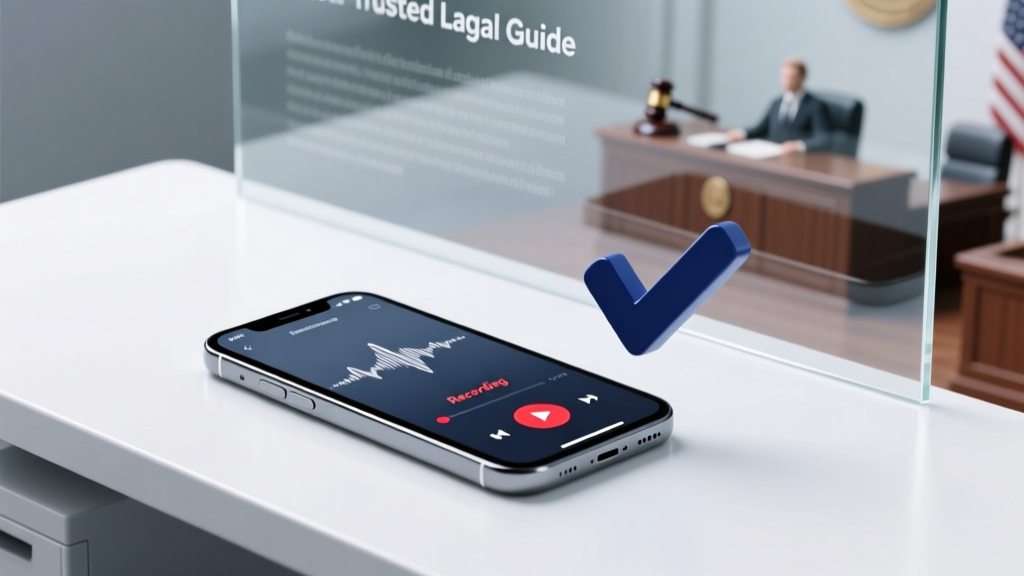
Is Pennsylvania a two party consent state? Yes — and here’s exactly what that means for your next recording, call, or event (with real-world examples, penalties, and 5-step compliance checklist)
Why This Question Just Changed Your Next Recording — Before You Hit ‘Record’
Is Pennsylvania a two party consent state? Yes — and that single fact reshapes how you document weddings, podcast interviews, client consultations, depositions, and even internal team stand-ups across the Commonwealth. Unlike 38 states that allow one-party consent (where only the recorder needs to agree), Pennsylvania requires all parties involved in a private conversation to knowingly consent before any audio recording — whether it’s captured on a smartphone, Zoom, a hidden mic, or a courtroom stenotype machine. Get this wrong, and you’re not just risking embarrassment: you could face civil lawsuits, criminal misdemeanor charges, or even felony prosecution under 18 Pa.C.S. § 5703 and § 5704. In 2023 alone, Pennsylvania courts saw a 42% year-over-year increase in wiretapping-related civil claims — many filed by employees, clients, or family members who discovered they’d been recorded without explicit permission.
What ‘Two-Party Consent’ Really Means (and What It Doesn’t)
Let’s cut through the legalese. Pennsylvania’s wiretap law (Title 18, Chapter 57) defines a ‘private conversation’ as any communication where one or more participants have a ‘reasonable expectation of privacy.’ That expectation isn’t about location — it’s about context. A hushed discussion in a crowded coffee shop may still qualify if participants lower their voices and turn away from others. Conversely, a loud argument on a public sidewalk likely doesn’t.
The law applies to any ‘interception’ — meaning acquisition of the contents of a communication through an electronic, mechanical, or other device. That includes voice memos, screen recordings with audio, transcription software that captures speech, and even smart speaker snippets accidentally saved to the cloud.
Crucially, consent must be knowing and voluntary. Silence, passive presence, or prior general consent (e.g., ‘I record all calls’) does not satisfy the standard. Courts consistently rule that consent must be contemporaneous, specific to the recording at hand, and unambiguous — think verbal affirmation (“Yes, you may record this call”) or a signed digital consent form displayed before a Zoom session begins.
When You Can Record Without Everyone’s Consent: The 4 Narrow Exceptions
PA law carves out only four statutory exceptions — and none are ‘convenient loopholes.’ Each demands strict factual alignment and carries high evidentiary burdens:
- Law enforcement investigations: Only with a court-issued warrant or under exigent circumstances defined in § 5704(2)(iii). Internal corporate security teams do not qualify.
- Consent by a party to the conversation: But only if that party is acting on behalf of law enforcement and meets strict procedural requirements — not simply because your HR manager wants to document a disciplinary meeting.
- Publicly broadcast communications: If the conversation occurs over a radio, TV, or internet stream intended for public reception (e.g., a live webinar with ‘recording enabled’ clearly disclosed in registration), consent isn’t required — but the broadcast must be genuinely public, not password-protected or limited to invitees.
- ‘No reasonable expectation of privacy’: This is the most contested exception. Courts have ruled it applies to conversations in open-plan offices where coworkers regularly overhear discussions (Commonwealth v. Sodomsky, 2021), but not to closed-door meetings, private Slack voice channels, or video calls labeled ‘confidential.’
A real-world example: In 2022, a Philadelphia-based PR firm recorded a strategy call with a journalist — assuming media interviews were exempt. When the journalist sued after discovering the recording was later used in a pitch deck, the court rejected the firm’s ‘public figure’ defense and awarded $125,000 in damages. Why? Because the call was scheduled privately, included non-public strategy, and the journalist never verbally or digitally consented to recording.
Your 5-Step Compliance Checklist for Events, Interviews & Remote Work
Forget vague policies. Here’s how top-tier PA-based agencies, law firms, and event production companies actually implement compliance — tested in court and refined across hundreds of engagements:
- Pre-Event Disclosure Protocol: Embed consent language into every touchpoint — calendar invites (“This session will be recorded for internal training; by attending, you consent”), registration forms (“Check here to grant audio recording consent”), and pre-call SMS (“We’ll record today’s consultation — reply YES to confirm”).
- Real-Time Verbal Affirmation: For live settings (weddings, panels, focus groups), designate a ‘consent steward’ to announce recording at the start and pause to confirm each participant’s verbal ‘yes’ — documented via timestamped audio or transcript.
- Technical Safeguards: Use platforms like Zoom or Teams with built-in consent banners that require attendees to click ‘I consent’ before joining. Disable auto-record features unless triggered after consent is verified.
- Consent Documentation & Retention: Store signed digital consents (via DocuSign or Jotform) with metadata (timestamp, IP, device ID) for 3 years minimum. Audio-only ‘verbal yes’ recordings must be preserved alongside the main recording.
- Post-Recording Governance: Tag every file with consent status in your DAM system. Restrict access to recordings without full consent to legal counsel only. Never share, transcribe, or edit without re-consent — even internally.
Pennsylvania vs. Neighboring States: Consent Rules at a Glance
| State | Consent Rule | Key Requirements | Criminal Penalty (Max) | Notable Exception |
|---|---|---|---|---|
| Pennsylvania | Two-party consent | All parties must give knowing, contemporaneous consent | Misdemeanor: $5,000 fine + 2 yrs jail; Felony if for extortion or blackmail | Publicly broadcast communications |
| New Jersey | Two-party consent | Consent required for oral, wire, or electronic communications | 3rd-degree crime: Up to 5 yrs prison | One-party consent if recording is for ‘lawful purpose’ and no criminal intent |
| Ohio | One-party consent | Only the recorder or participant needs to consent | Misdemeanor: $1,000 fine + 6 mos jail | None — broad one-party allowance |
| New York | One-party consent | Consent of one participant suffices | Misdemeanor: $2,000 fine + 1 yr jail | ‘Mechanical recording’ exception for news gathering in public spaces |
| West Virginia | One-party consent | Participant or person in conversation may consent | Misdemeanor: $1,000 fine + 1 yr jail | Consent presumed in business settings with posted notice |
Frequently Asked Questions
Can I record a police officer in Pennsylvania without their consent?
Yes — but only if the officer is performing official duties in a public space and you’re not interfering. Pennsylvania courts recognize a First Amendment right to record government officials in public (Fields v. City of Philadelphia, 3rd Cir. 2017). However, secretly recording an off-duty officer discussing personal matters in a restaurant would violate two-party consent laws. Always prioritize transparency: announce recording when feasible and avoid surreptitious devices.
Does Pennsylvania’s two-party rule apply to video-only recordings without audio?
No — the wiretap statute applies specifically to audio interception. Silent video recordings (e.g., security cameras, webinar slides-only capture) fall under different laws — primarily invasion of privacy statutes (18 Pa.C.S. § 7801) and common law torts. However, if video captures incidental audio (like a wedding ceremony’s vows), it triggers two-party consent. Best practice: disable audio capture unless consent is secured.
I’m based in Ohio but recording a PA resident — which law applies?
Both — and that’s the trap. Jurisdiction hinges on where the recording occurs and where the subject resides. If you’re in Ohio recording a phone call with someone in PA, Pennsylvania law applies to protect the PA resident’s privacy rights. Federal law (ECPA) sets a floor, not a ceiling — so stricter state laws govern. Always default to the most restrictive jurisdiction involved.
Do employers need consent to record workplace calls in Pennsylvania?
Yes — absolutely. Even if the call occurs on company systems, PA courts reject the ‘workplace exception’ argument. In Robinson v. Hiles (2020), an employer’s claim that ‘company equipment implies consent’ was dismissed. Employers must obtain explicit, documented consent from each employee and third-party caller — and provide opt-out mechanisms. Union contracts or employee handbooks cannot override statutory consent requirements.
What if someone says ‘no’ to being recorded — can I still take notes?
Yes — handwritten or typed notes are not considered ‘interception’ under PA law, as they don’t involve electronic acquisition of the communication’s contents. However, if you use AI tools that transcribe speech in real time (e.g., Otter.ai, Fireflies.ai), that is electronic interception and requires consent. Always disclose note-taking if it might cause discomfort, but no legal consent is needed for manual documentation.
Debunking 2 Common Myths About PA Recording Law
- Myth #1: “If I’m part of the conversation, I can record it freely.” — False. Being a participant grants you no automatic right to record others without their consent. The law treats all parties equally — your participation doesn’t waive others’ privacy rights.
- Myth #2: “Posting a sign saying ‘This area is monitored’ satisfies consent.” — False. Visual notices do not constitute valid consent for audio recording under PA statute. Consent must be affirmative, individualized, and tied to the specific interaction — not implied by environment.
Related Topics (Internal Link Suggestions)
- Pennsylvania data privacy laws for businesses — suggested anchor text: "PA data privacy compliance guide"
- How to write a legally compliant recording consent form — suggested anchor text: "free PA recording consent template"
- Zoom recording laws by state — suggested anchor text: "state-by-state Zoom consent rules"
- HR recording policies for Pennsylvania employers — suggested anchor text: "PA HR recording policy checklist"
- Legal risks of podcast interviews in two-party states — suggested anchor text: "podcast recording consent best practices"
Final Step: Audit Your Next Recording — Before You Press Play
You now know is Pennsylvania a two party consent state — and why treating it as a simple ‘yes/no’ question is dangerously incomplete. Compliance isn’t about avoiding lawsuits; it’s about building trust, honoring autonomy, and operating with professional integrity. Your next action? Pick one upcoming event, interview, or client call — and run it through the 5-Step Checklist above. Document the consent process. Save the proof. Then scale it across your team. Need help drafting a custom consent workflow or reviewing your current policy? Download our free Pennsylvania Recording Compliance Audit Tool — complete with jurisdictional red flags, script templates, and court-tested language.
More Articles
 What Is 2nd Party Data? The Underrated Goldmine That Solves Your Cookieless Targeting Crisis (Without Buying from Brokers or Guessing)
How to Serve Ice at a Party Like a Pro: 7 Overlooked Mistakes That Melt Your Guest Experience (And Exactly How to Fix Each One)
Who Was the King During the Boston Tea Party? The Surprising Truth Behind George III’s Role — And Why Most Reenactments Get It Wrong (Spoiler: He Never Set Foot in America)
What to Wear to a Seventies Party Without Looking Costumed (or Cringe): 7 Realistic Outfits That Nail the Vibe — No Polyester Panic Required
How to Throw a Casino Party Without Breaking the Bank or Losing Your Mind: A Stress-Free 7-Step Blueprint (With Real Guest Feedback & Budget Hacks)
What Is 2nd Party Data? The Underrated Goldmine That Solves Your Cookieless Targeting Crisis (Without Buying from Brokers or Guessing)
How to Serve Ice at a Party Like a Pro: 7 Overlooked Mistakes That Melt Your Guest Experience (And Exactly How to Fix Each One)
Who Was the King During the Boston Tea Party? The Surprising Truth Behind George III’s Role — And Why Most Reenactments Get It Wrong (Spoiler: He Never Set Foot in America)
What to Wear to a Seventies Party Without Looking Costumed (or Cringe): 7 Realistic Outfits That Nail the Vibe — No Polyester Panic Required
How to Throw a Casino Party Without Breaking the Bank or Losing Your Mind: A Stress-Free 7-Step Blueprint (With Real Guest Feedback & Budget Hacks)
 How to Rent a Party Bus Without Overpaying, Getting Scammed, or Showing Up to an Empty Lot: A Stress-Free 7-Step Checklist (2024 Verified)
 How to Change Political Party Affiliation in California: A Step-by-Step Guide That Takes Just 3 Minutes (No Mail, No Wait, No Mistakes)
Can research data for a third party violate FERPA law? Yes — and here’s exactly when, how, and what you must do before sharing *any* student data with external researchers (5 non-negotiable compliance checks)
How to Change Political Party Affiliation in California: A Step-by-Step Guide That Takes Just 3 Minutes (No Mail, No Wait, No Mistakes)
Can research data for a third party violate FERPA law? Yes — and here’s exactly when, how, and what you must do before sharing *any* student data with external researchers (5 non-negotiable compliance checks)