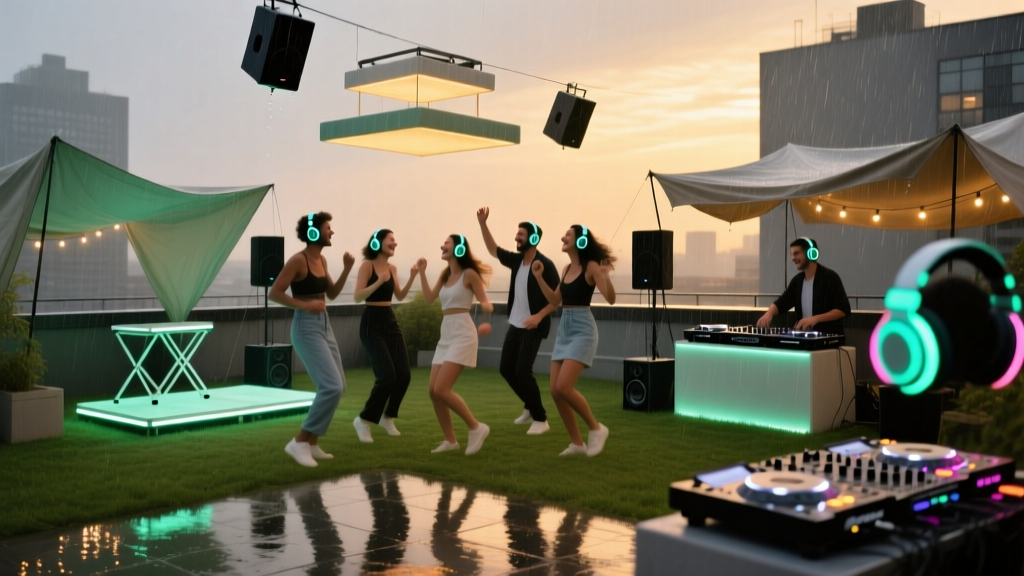
How to Handle Weather for an Outdoor Silent Disco
Outdoor silent discos are having a moment—and for good reason. They’re immersive, neighbor-friendly (no booming speakers), highly customizable with multi-channel music, and they create an unforgettable “only here, only now” atmosphere. The challenge is that the same open-air magic also makes your event vulnerable to weather: wind that steals heat, humidity that fogs headphones, surprise showers that threaten equipment, and extreme temperatures that impact guest comfort and safety.
Weather planning isn’t just a backup plan—it’s the backbone of smooth outdoor event coordination. When you build a weather-smart strategy into your timeline, vendor contracts, and site layout, you protect your budget, reduce day-of stress, and keep the energy high even when conditions change. Guests rarely remember that it rained; they remember whether the event felt organized, safe, and fun.
This guide walks through step-by-step event planning strategies for handling weather at an outdoor silent disco, with practical checklists, budget pointers, vendor selection tips, and real-world scenarios you can adapt for your own party organization plan.
Start With a Weather-First Mindset (Before You Book Anything)
Know your seasonal risks and microclimate
“Outdoor” doesn’t mean the same thing everywhere. A rooftop, park lawn, beach, courtyard, vineyard, and backyard each behave differently in wind, heat, and precipitation. Before locking in a date and venue, do a quick risk assessment:
- Historical weather patterns: Look up average highs/lows, rainfall probability, and wind speeds for your date range.
- Microclimate factors: Coastal fog, mountain storms, urban heat islands, shaded tree canopies, open fields with gusty wind.
- Sun path and shade: If your silent disco starts before sunset, identify where shade will fall and where glare could impact visibility and comfort.
- Noise ordinances and curfews: Silent discos help, but your venue may still restrict amplified announcements, generators, or crowd size.
Pick the right time window for weather stability
A proven event planning trend is choosing “weather-stable” time blocks rather than the most popular time. For many regions:
- Late afternoon into evening often reduces heat stress and sun exposure.
- Early evening can avoid late-night dew that chills guests and dampens equipment.
- Shoulder seasons can be ideal if you plan for temperature drops after sunset.
Weather-Proof Your Site Plan: Layout, Shelter, and Flow
Create zones that reduce weather impact
Smart event coordination starts with a site plan that anticipates comfort needs. Aim for distinct, well-marked zones:
- Check-in + headphone distribution: Under cover if possible; keep lines moving.
- Dance floor: Flat, stable surface; consider interlocking flooring for grass or soft ground.
- Chill zone: Seating, blankets, heat lamps (where allowed), or fans depending on season.
- Hydration + snacks: Easy access; separate from electronics.
- Equipment/control station: Covered, elevated, and protected from curious hands.
Shelter options that actually work for silent discos
Not all shelters are equal when you’re protecting headphones, transmitters, and power.
- Pop-up canopies (10x10, 10x20): Great for check-in and equipment; use proper weights (not just stakes).
- High-peak tents: Better for wind and rain, more professional look, and more usable space.
- Clear-top tents: Popular trend for evening events—keeps the outdoor vibe while adding rain protection.
- Sidewalls: Key for wind and temperature drops; consider at least 1–2 walls as a minimum.
Ground conditions: mud, puddles, and stability
A light rain can turn a beautiful lawn into a mess. Plan for:
- Temporary flooring for high-traffic areas (check-in, dance floor, bar).
- Walkway mats to prevent slips and protect shoes.
- Drainage awareness: Avoid low points where water pools; position the dance floor on higher ground when possible.
Protecting Silent Disco Gear in Real Weather Conditions
Electronics + moisture: set non-negotiable rules
Silent disco equipment is durable, but it’s not invincible. Build these rules into your party planning checklist:
- Keep transmitters, mixers, laptops/tablets, and charging stations under a covered, ventilated tent.
- Use water-resistant bins or cases for spare headphones and accessories.
- Assign one person to manage gear movement if weather shifts quickly.
- Keep drinks away from the control station (use signage and a physical barrier).
Heat management for batteries and performance
High temperatures can affect battery life and guest comfort. If it’s hot:
- Store spare headphones in the shade.
- Offer “cool-down” space with fans or misting (keep mist away from electronics).
- Encourage lighter attire in the dress code and provide water stations.
Cold management for guests and equipment
Temperatures often drop fast after sunset. If it’s cool or cold:
- Plan for blankets, outdoor heaters (approved and safely placed), and warm beverage options.
- Use sidewalls to block wind chill.
- Remind guests in pre-event messaging to bring a layer—this is one of the simplest event organization wins.
Step-by-Step Planning Timeline (with Weather Checkpoints)
6–8 weeks out: lock the weather strategy
- Choose your date range and confirm local weather history.
- Select venue with rain plan options (covered patio, indoor backup, tent allowance).
- Get quotes for tenting/flooring (even if “optional”).
- Confirm silent disco vendor’s outdoor protocol: waterproofing, replacement policy, and on-site support.
- Draft a weather decision policy (who decides, by when, and what happens).
4 weeks out: finalize vendors and contracts
- Book tent/flooring rentals with a weather clause (add sidewalls as an option).
- Confirm power plan: venue power vs generator (and weather-rated cables).
- Create a site map including covered zones and equipment placement.
- Plan lighting (especially if clouds/rain reduce visibility).
2 weeks out: guest comms + contingency drill
- Send guest email/text: parking, attire suggestions, and “event happens rain or shine” policy (if true).
- Confirm staffing plan: check-in, gear, floor lead, safety point person.
- Walk the site (or do a virtual walkthrough) and identify drainage, wind exposure, and shelter anchoring points.
7 days out: forecast monitoring and decision windows
- Start daily forecast checks.
- Confirm tent add-ons (sidewalls, extra weights) if wind/rain risk increases.
- Reconfirm vendor arrival times and setup order (tents first, then power, then gear).
48–72 hours out: lock the final plan
- Make go/no-go or “pivot” decisions based on your pre-set thresholds.
- Send final guest update with weather-ready tips and what’s provided (umbrellas, ponchos, heaters).
- Prep signage: “Dance Floor This Way,” “Return Headphones Here,” “Watch Your Step.”
Event day: execution checklist
- Set up shelter and anchor/weight it properly before any electronics arrive.
- Test transmitters and channels early; check coverage at edges of the dance area.
- Establish a “weather watch” role: one person monitors radar and wind.
- Keep towels, tarps, and bins accessible for fast protection.
- Do a safety sweep: slippery spots, cable covers, lighting, and signage.
Weather-Ready Checklist (Copy/Paste Template)
- Shelter: tent/canopy, sidewalls, stakes/weights, rain gutters (if available)
- Ground: flooring tiles, walkway mats, straw or traction material (venue-approved), squeegee
- Power: outdoor-rated extension cords, cable ramps, GFCI protection, backup batteries
- Gear protection: waterproof bins, tarps, towels, zip bags for adapters
- Guest comfort: water station, sunscreen, bug spray, blankets, heaters/fans, ponchos
- Lighting: string lights, uplights, battery lanterns, illuminated signage
- Communication: printed run-of-show, vendor contact list, group text for staff
- Safety: first aid kit, slip hazard cones, emergency plan and venue exit map
Budget Considerations: What to Spend on Weather Protection
Typical weather-related budget ranges
Every event is different, but these ranges help you plan realistic event costs:
- Tent rental: $300–$2,500+ depending on size, style, and delivery/setup
- Sidewalls: $100–$600 (often priced per wall)
- Flooring or mats: $200–$1,500+
- Heaters or fans: $60–$250 each (plus fuel where applicable)
- Lighting upgrades: $100–$800+
- Rain gear for guests (ponchos): $1–$5 per person
- Generator backup (if needed): $150–$600+ including delivery and fuel
Sample weather-protection budget breakdown (100 guests)
- 20x40 tent + setup: $1,200
- Sidewalls (2–4): $300
- Walkway mats + dance floor tiles (partial coverage): $500
- Two heaters or fans (seasonal): $250
- Ponchos (100): $200
- Extra lighting + cable covers: $250
- Estimated total: $2,700
Planning strategy: Build a weather contingency line item of 8–15% of your overall event budget. If the weather stays perfect, you can reallocate to upgrades like décor, photo moments, or late-night snacks.
Vendor Selection Tips (Silent Disco + Rentals + Power)
Questions to ask your silent disco vendor
- Are the headphones rated for light rain or humidity? What’s your recommended protocol?
- Do you provide an on-site technician or remote support?
- What is the replacement cost policy for damaged units?
- How do you manage channel interference outdoors (especially near urban areas)?
- What is the average range of transmitters in open air vs near buildings/trees?
Questions to ask tent and rental vendors
- What wind rating is the tent setup designed for, and what anchoring is included?
- Can we add sidewalls last-minute if the forecast changes?
- Do you provide flooring solutions for grass or soft ground?
- What is the cancellation/reschedule policy due to severe weather?
Power and lighting: avoid the “DIY surprise”
Outdoor power is one of the most common weak points in event logistics. If you’re using a generator, choose one that’s:
- Properly sized for your load (vendor can help calculate)
- Placed away from guest areas (fumes/noise)
- Protected from rain with a safe cover (never enclosed in a way that traps exhaust)
Real-World Weather Scenarios (and How to Respond)
Scenario 1: Light rain starts during peak dancing
- Move check-in and equipment fully under the tent (pre-planned).
- Keep dancing going if the dance floor is safe; shift guests to the covered area with lighting and clear signage.
- Offer ponchos and towel stations near the entrance.
Scenario 2: Unexpected wind picks up at sunset
- Add sidewalls on wind-facing sides (or roll down pre-installed walls).
- Recheck tent anchoring and remove lightweight décor that can become airborne.
- Move any tall signage or lighting stands to safer positions.
Scenario 3: Heat wave day (high humidity)
- Push the start time later and emphasize breathable attire.
- Add shade structures and fans; increase water stations.
- Rotate a “cool-down playlist channel” and encourage breaks.
Common Outdoor Silent Disco Planning Mistakes to Avoid
- Assuming “silent” means no event restrictions: you still need permits, power planning, and crowd control.
- Skipping sidewalls to save money: wind is often more disruptive than rain.
- No decision deadline: teams get stuck debating the forecast instead of executing a clear plan.
- Overlooking ground conditions: mud and uneven surfaces lead to safety issues and unhappy guests.
- Under-communicating attire expectations: a simple “bring a layer” message prevents a lot of discomfort.
- Poor cable management: outdoor events require ramps/tape and thoughtful routing to prevent trips.
FAQ: Weather Planning for Outdoor Silent Discos
Should an outdoor silent disco be “rain or shine”?
It can be, as long as you have covered space (tent or pavilion), safe ground conditions, and a gear protection plan. If you don’t have shelter, consider rescheduling or securing a backup indoor option.
What wind speed is too windy for tents and outdoor setups?
It depends on the tent type, anchoring, and vendor specs. Ask your tent provider for the wind rating and follow their guidance. If high gusts are forecast, prioritize safety and adjust the plan early.
Can silent disco headphones get wet?
Many units tolerate light moisture, but they’re not designed for heavy rain exposure. Plan to keep spare units dry, provide ponchos, and move key electronics under cover immediately if rain increases.
How do I keep guests comfortable when temperatures drop at night?
Use sidewalls, provide blankets, offer warm drinks, and communicate “bring a layer” in advance. Consider heaters where permitted and place them with proper clearance and supervision.
Do I need a permit for an outdoor silent disco?
Often yes—especially in public parks, beaches, and city venues. Requirements vary by location and may include event permits, insurance, and vendor approvals. Check with the venue or local municipality early in your planning timeline.
What’s the best way to communicate weather changes to guests?
Use a single source of truth: a text message system or event page with time-stamped updates. Send one message 48–72 hours out and a final day-of update with attire guidance, parking, and the rain plan.
Next Steps: Build Your Weather-Smart Silent Disco Plan
Choose a venue with real shelter options, set clear weather decision deadlines, and budget for the essentials—tenting, sidewalls, ground protection, and guest comfort. Then document everything in a simple run-of-show so your team and vendors can execute without confusion. When the weather shifts (and sometimes it will), your guests should feel like it was all part of the plan.
For more party organization tips, event planning checklists, and coordination guides, explore the latest resources on smartpartyprep.com.
More Articles
 Why Was the Whig Party Created? The Real Story Behind America’s First Major Anti-Jackson Coalition — Not What Your Textbook Told You
Who Was at the Boston Tea Party? The Real Participants — Not Just Sons of Liberty, But Dockworkers, Printers, Clerks, and Even a Teenage Apprentice (Plus Who Wasn’t There… And Why That Matters Today)
How Often Is a Party Platform Written? The Truth Behind Political Platforms: Why Most Parties Rewrite Them Every 2–4 Years (Not Annually, Not Once-And-Done)
Can You Do a Watch Party on Peacock? The Truth (Spoiler: Not Natively — But Here’s Exactly How to Host One That Feels Seamless, Free, and Fun in 2024)
How Much Do Party Buses Cost? The Real-World Breakdown (2024) — What Most Rentals Hide Until You Sign, Plus How to Slash Your Rate by 30% Without Sacrificing Safety or Style
Are Gifts Given at Engagement Parties? The Truth (Plus What to Do If You're Hosting, Attending, or Gifting — Without Awkwardness or Overspending)
What Does a Chief of Party Do? 7 Non-Negotiable Responsibilities That Separate Effective Leaders from Paper-Pushers (and Why Your Next Project Depends on Getting This Right)
What to Wear to a Swim Party: The 7-Step Outfit Formula That Prevents Awkward Tan Lines, Wardrobe Fails, and Post-Party Dampness (Backed by 200+ Real Guest Surveys)
Why Was the Whig Party Created? The Real Story Behind America’s First Major Anti-Jackson Coalition — Not What Your Textbook Told You
Who Was at the Boston Tea Party? The Real Participants — Not Just Sons of Liberty, But Dockworkers, Printers, Clerks, and Even a Teenage Apprentice (Plus Who Wasn’t There… And Why That Matters Today)
How Often Is a Party Platform Written? The Truth Behind Political Platforms: Why Most Parties Rewrite Them Every 2–4 Years (Not Annually, Not Once-And-Done)
Can You Do a Watch Party on Peacock? The Truth (Spoiler: Not Natively — But Here’s Exactly How to Host One That Feels Seamless, Free, and Fun in 2024)
How Much Do Party Buses Cost? The Real-World Breakdown (2024) — What Most Rentals Hide Until You Sign, Plus How to Slash Your Rate by 30% Without Sacrificing Safety or Style
Are Gifts Given at Engagement Parties? The Truth (Plus What to Do If You're Hosting, Attending, or Gifting — Without Awkwardness or Overspending)
What Does a Chief of Party Do? 7 Non-Negotiable Responsibilities That Separate Effective Leaders from Paper-Pushers (and Why Your Next Project Depends on Getting This Right)
What to Wear to a Swim Party: The 7-Step Outfit Formula That Prevents Awkward Tan Lines, Wardrobe Fails, and Post-Party Dampness (Backed by 200+ Real Guest Surveys)
 How Do You Change Your Party Affiliation in Florida? Here’s the Exact 4-Step Process (No Mail Delays, No Rejection Risks, and What to Do If You Missed the Primary Deadline)