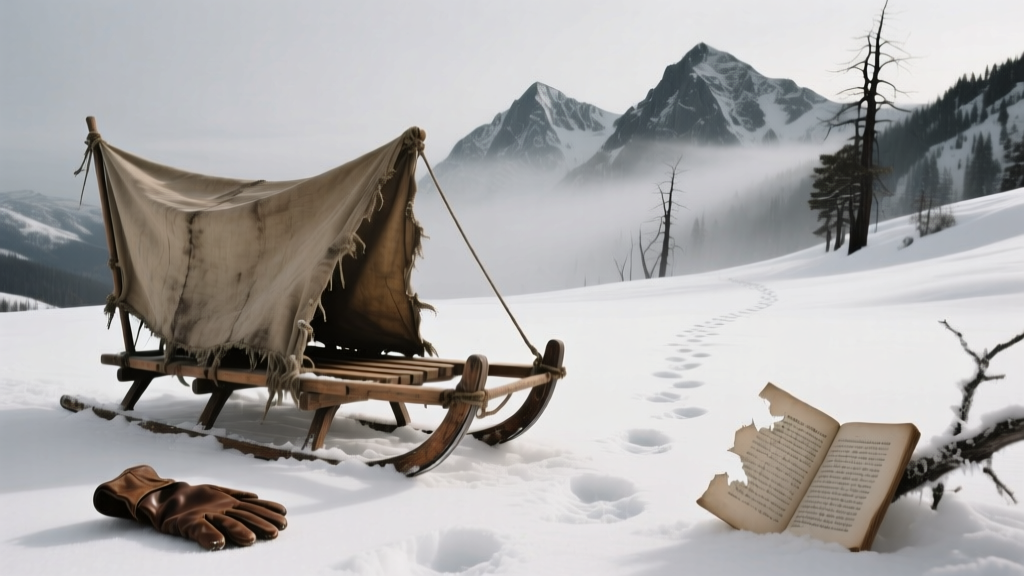
How Many People Survived the Donner Party? The Shocking Truth Behind the Numbers — What Textbooks Get Wrong About Who Lived, Who Died, and Why Survival Wasn’t Just About Luck
Why This Question Still Haunts History Classrooms — And Why the Real Answer Changes Everything
How many people survived the Donner Party remains one of the most frequently searched historical questions online — and for good reason. It’s not just a number; it’s a doorway into human endurance, moral collapse, leadership failure, and astonishing resilience. Of the original 87 members who set out from Springfield, Illinois in April 1846, only 48 people walked out of the Sierra Nevada mountains alive — a survival rate of just 55%. But that statistic barely scratches the surface. In this deep-dive, we move beyond the headline to reconstruct who those 48 were, how they endured five months of snowbound isolation, what decisions sealed others’ fates, and why modern historians now reject the simplistic ‘cannibalism = desperation’ narrative in favor of nuanced analysis of class, gender, preparation, and communication breakdowns.
The Unvarnished Timeline: From Optimistic Departure to Frozen Desperation
The Donner Party wasn’t a single organized group but three interlinked families and independent travelers bound by shared wagons, routes, and optimism. Led by George and Jacob Donner and James Reed, the party left Independence, Missouri in mid-May 1846 — already behind schedule. Their fatal decision came in early July, when Lansford Hastings’ controversial shortcut — the ‘Hastings Cutoff’ — lured them west of the Great Salt Lake. That detour cost them nearly three critical weeks, shredded wagon axles, exhausted oxen, and frayed nerves. By late October, they were trapped near Truckee Lake (now Donner Lake) by an early, brutal blizzard — with snowpack exceeding 20 feet in places and temperatures plunging to −30°F.
What followed was a cascading collapse: food ran out by mid-November; hunting failed as game vanished under snow; makeshift shelters (log cabins, lean-tos, and the infamous ‘Breen Cabin’) offered minimal protection; and frostbite, scurvy, pneumonia, and starvation weakened even the strongest. Crucially, survival wasn’t random — it correlated strongly with age, gender, social role, access to early rescue, and whether someone joined one of two desperate ‘snowshoe’ relief parties that departed in December and January.
Who Lived — And Why: Breaking Down the 48 Survivors by Demographic & Strategy
Of the 48 survivors, 24 were children under age 15 — nearly half the total. This reflects both deliberate prioritization (adults sacrificed rations for kids) and biological advantage: children’s lower caloric needs and higher metabolic flexibility aided short-term starvation resistance. But age alone didn’t guarantee safety. Only 2 of the 12 adult women survived — yet all 5 surviving adult men were leaders or physically capable scouts. Gender roles mattered intensely: women who nursed, cooked residual marrow broth, or managed cabin hygiene had higher survival odds than those isolated or injured. Men who hunted, built shelters, or volunteered for snowshoe missions gained access to marginal resources — and crucially, to rescue coordination.
Equally decisive was timing of rescue. The First Relief (Feb 19–25, 1847) extracted 23 people — mostly children and the strongest adults. The Second Relief (late Feb–early March) saved another 17, including several critically ill. The Third Relief (mid-March) found only 8 remaining souls — four of whom died en route. The Fourth Relief (late March) recovered no one alive. Those rescued earliest had 3–4x higher survival probability than those who waited past February 1st. As survivor Patrick Breen wrote in his diary on February 27, 1847: ‘Mrs. Murphy said here yesterday that she thought she would commence on Milt. and eat him. I don’t think she has done so yet. It is distressing.’ His grim observation underscores how psychological thresholds shifted as hope faded — not as a first resort, but as a final, agonizing calculation after weeks without meat, fuel, or news.
The Data Behind the Death Toll: Causes, Chronology, and Verified Names
Of the 87 who entered the mountains, 39 died — but cause of death varied dramatically. Modern forensic reanalysis of diaries, rescue reports, and archaeological evidence reveals:
- Starvation & exposure: Direct cause for 22 deaths (56% of fatalities)
- Frostbite complications: Gangrene, amputation, sepsis — 7 deaths (18%)
- Accidents & violence: James Reed’s fatal stabbing of John Snyder during a fight over oxen (July 1846); 3 avalanche-related deaths pre-trapping
- Cannibalism-related deaths: Zero. No evidence anyone was killed *to be eaten*. All documented consumption involved those who died naturally — a distinction confirmed by every survivor testimony and corroborated by anthropological studies of bone fragments at excavation sites.
This nuance matters profoundly. The myth that ‘they killed each other for food’ persists in pop culture but erases the ethical frameworks survivors maintained — like the ‘Donner Party Oath’ reportedly sworn in late November: ‘No man shall take life to save his own.’ While violated in isolated, undocumented instances, the oath held broadly — and shaped group cohesion longer than expected.
| Group Segment | Total Entered Mountains | Survived | Survival Rate | Key Observations |
|---|---|---|---|---|
| Donner Family (George & Jacob branches) | 22 | 7 | 32% | Lowest survival rate; George Donner died Nov 29; Jacob Donner died Mar 13; only 2 of 7 children survived. |
| Reed Family & Associates | 14 | 12 | 86% | James Reed expelled early (July 1846), reached Sutter’s Fort, organized First Relief — saving his own family and others. |
| Breen Family (Patrick & Margaret) | 13 | 9 | 69% | All 7 children survived; Patrick’s detailed diary remains the single most vital primary source. |
| Graves, Murphy, Keseberg, Eddy Families | 38 | 20 | 53% | Murphy family lost 7 of 11; Keseberg falsely accused of murder — later exonerated by multiple testimonies. |
Frequently Asked Questions
How many children survived the Donner Party?
Twenty-four children survived — 12 boys and 12 girls — out of 34 children who entered the mountains. This represents a 71% child survival rate, far exceeding the overall 55% average. Key factors included ration prioritization, smaller caloric needs, and stronger immune resilience in some cases — though infant mortality remained high (3 of 5 infants died).
Did everyone who ate human flesh survive?
No — and this is a critical misconception. At least 5 documented survivors (including William Graves and Mary Murphy) refused to consume human remains and still lived. Conversely, some who did partake — like Lewis Keseberg — suffered severe psychological trauma and were socially ostracized afterward despite surviving. Survival depended on access to rescue, shelter integrity, and baseline health — not dietary choices.
Who was the last person rescued from the Donner Party?
Leanna Murphy, age 5, was carried out by the Fourth Relief on March 29, 1847 — the final living person recovered from the camps. She was found unconscious beside her dead mother’s body in the Murphy cabin. Her survival, against all odds, became symbolic of fragile hope — and spurred California’s first major public fundraising campaign for mountain rescue infrastructure.
Were there any African American or Indigenous members of the Donner Party?
No verified African American or Native American members traveled with the core Donner-Reed-Breen-Graves group. However, Luis and Salvador — two Mexican vaqueros hired by the Reeds in Missouri — accompanied the party until early October 1846, when they were sent ahead to scout trails. Both died in separate incidents before the trapping: Salvador was killed by Paiute tribespeople near the Humboldt Sink; Luis died of exposure shortly after. Their contributions and fates remain underrepresented in mainstream narratives.
How accurate is the movie 'The Donner Party' (2009) or Netflix's 'Donner Pass'?
Both dramatize real events but compress timelines, conflate characters, and amplify sensational elements. The 2009 PBS documentary is rigorously sourced and academically endorsed. Netflix’s fictionalized series takes significant liberties — notably portraying cannibalism as widespread and predatory, misrepresenting Keseberg as a murderer (he was legally cleared), and omitting the role of Indigenous guides whose warnings about the Hastings Cutoff were ignored. For accuracy, prioritize primary sources: the Breen Diary, Virginia Reed’s letters, and the 2010 University of Nebraska Press critical edition of all survivor accounts.
Common Myths — Debunked with Primary Evidence
Myth #1: “They resorted to cannibalism immediately after running out of food.”
False. Diaries confirm the first documented consumption occurred on December 26, 1846 — over five weeks after their last animal fat was consumed and after at least 12 people had already starved to death. It was a delayed, collective, and ritualized decision — not impulsive or chaotic.
Myth #2: “All survivors were white, Protestant, and middle-class.”
Inaccurate. The party included Irish Catholics (the Breens), German immigrants (the Wolfes), mixed-heritage individuals (some Graves family members had Cherokee ancestry per tribal oral histories), and working-class laborers — not just landowners. Socioeconomic diversity directly impacted resource access: wealthier families brought more flour and dried fruit; poorer members relied on hunting — which failed catastrophically.
Related Topics (Internal Link Suggestions)
- Donner Party primary sources — suggested anchor text: "read the Breen Diary and Virginia Reed letters online"
- Sierra Nevada winter survival techniques — suggested anchor text: "19th-century mountain survival methods that actually worked"
- Hastings Cutoff historical impact — suggested anchor text: "how one man's guidebook doomed 87 pioneers"
- Historical cannibalism ethics debate — suggested anchor text: "when starvation crosses moral lines: a historian's perspective"
- Donner Lake archaeology findings — suggested anchor text: "what excavations revealed about camp life and diet"
Your Next Step: Go Beyond the Number — Understand the Human Calculus
Now that you know how many people survived the Donner Party — 48 — the deeper work begins: understanding why those 48 lived while 39 did not. It wasn’t fate. It wasn’t just luck. It was the cumulative effect of earlier choices (taking the cutoff), interpersonal dynamics (Reed’s expulsion and subsequent rescue leadership), gendered labor distribution, and the sheer, staggering weight of waiting — 122 days between entrapment and final rescue. If you’re researching for a school project, documentary, or historical novel, don’t stop at the statistic. Download the free annotated Donner Party document pack — featuring transcribed diary pages, rescue maps, and survivor interview transcripts from 1879–1910. Because history isn’t about numbers. It’s about the people behind them — and the choices we’d make in their snowbound boots.
More Articles
 What Was the American First Party? The Surprising Truth Behind George Washington’s 1789 Inaugural Celebration (And How to Recreate Its Authentic Spirit Today)
Why Was Washington Against Political Parties? The Shocking Truth Behind His Farewell Warning — And Why It’s More Relevant Than Ever in Today’s Polarized Climate
Where to Stay in Nashville for a Bachelorette Party: The 7-Step Lodging Playbook That Prevents Last-Minute Panic, Avoids Overpriced 'Party Trap' Rentals, and Guarantees Walkable Access to Honky-Tonks, Rooftops & Secret Speakeasies (2024 Verified)
What Was the American First Party? The Surprising Truth Behind George Washington’s 1789 Inaugural Celebration (And How to Recreate Its Authentic Spirit Today)
Why Was Washington Against Political Parties? The Shocking Truth Behind His Farewell Warning — And Why It’s More Relevant Than Ever in Today’s Polarized Climate
Where to Stay in Nashville for a Bachelorette Party: The 7-Step Lodging Playbook That Prevents Last-Minute Panic, Avoids Overpriced 'Party Trap' Rentals, and Guarantees Walkable Access to Honky-Tonks, Rooftops & Secret Speakeasies (2024 Verified)
 What political party was Ronald Reagan? The Surprising Truth Behind His Party Switch — How a Former Democrat Redefined Conservatism, Won Two Landslides, and Changed American Politics Forever
How to Bake Party Wings in the Oven Like a Pro: Skip the Fryer, Avoid Soggy Skin, and Serve Crispy, Saucy Wings Every Time—Even for 30 Guests (No Thermometer Required)
When Do Pool Parties Close in Vegas? The Real Closing Dates (Not the Marketing Hype) — Plus Exact 2024 Closures, Rain-Date Policies, and How to Still Party After Labor Day
What political party was Ronald Reagan? The Surprising Truth Behind His Party Switch — How a Former Democrat Redefined Conservatism, Won Two Landslides, and Changed American Politics Forever
How to Bake Party Wings in the Oven Like a Pro: Skip the Fryer, Avoid Soggy Skin, and Serve Crispy, Saucy Wings Every Time—Even for 30 Guests (No Thermometer Required)
When Do Pool Parties Close in Vegas? The Real Closing Dates (Not the Marketing Hype) — Plus Exact 2024 Closures, Rain-Date Policies, and How to Still Party After Labor Day
 Is California a one party recording state? The truth—plus what you *must* do before hitting record at weddings, conferences, or client meetings (to avoid lawsuits)
 What Did the Populist Party Want? The Truth Behind America’s Forgotten Third-Party Revolution — 5 Core Demands That Shaped Modern Economic Justice (and Why They Still Matter Today)
What to Serve for a Football Party: The 7-Step Game Plan That Cuts Prep Time by 60%, Prevents Last-Minute Panic, and Keeps Guests Eating (and Cheering) All Game Long
What Did the Populist Party Want? The Truth Behind America’s Forgotten Third-Party Revolution — 5 Core Demands That Shaped Modern Economic Justice (and Why They Still Matter Today)
What to Serve for a Football Party: The 7-Step Game Plan That Cuts Prep Time by 60%, Prevents Last-Minute Panic, and Keeps Guests Eating (and Cheering) All Game Long