How Did Political Parties Form? The Real Story Behind America’s First Factions — Not Founders’ Unity, But Bitter Cabinet Battles, Newspaper Wars, and a Constitutional Loophole That Changed Everything
Why This History Isn’t Just Academic—It Explains Today’s Polarization
The question how did political parties form isn’t a dusty footnote—it’s the origin story of modern democratic conflict. In 1789, George Washington took office hoping to lead a unified nation under a new Constitution that deliberately omitted any mention of political parties. Yet within two years, rival factions were publishing scathing editorials, lobbying Congress behind closed doors, and mobilizing voters across states. Understanding how political parties formed reveals why compromise feels so rare today—and why our institutions still struggle to contain partisan energy.
The Unplanned Birth: From Cabinet Rift to National Schism
Political parties didn’t emerge from manifestos or conventions. They formed organically—and messily—in the cramped offices of New York City’s Federal Hall and later Philadelphia’s Congress Hall. At the heart of it all: Treasury Secretary Alexander Hamilton and Secretary of State Thomas Jefferson. Their disagreement wasn’t ideological posturing—it was operational reality.
Hamilton believed national survival required a strong central bank, federal assumption of state debts, and close ties with British commerce. Jefferson feared this would create an aristocratic financial elite, erode state sovereignty, and betray the agrarian republic envisioned in the Declaration. What began as private cabinet debates spilled into public view when Jefferson confided his concerns to journalist Philip Freneau, who launched the National Gazette in 1791—a direct counterweight to Hamilton-backed Gazette of the United States.
This media duel transformed policy disputes into identity markers. Supporters of Hamilton coalesced as the Federalists; Jefferson and James Madison’s allies became known (derisively at first) as Democratic-Republicans. Crucially, neither group called themselves ‘parties’—they used terms like ‘friends of government’ or ‘republican interest.’ The label ‘party’ carried connotations of self-serving factionalism, condemned by Washington in his 1796 Farewell Address as ‘the worst enemy of republican government.’
The Electoral Catalyst: How the 1796 & 1800 Elections Forced Formalization
The Constitution’s original electoral system had no mechanism for distinguishing between presidential and vice-presidential candidates. Electors cast two votes; the runner-up became VP—regardless of party alignment. In 1796, this produced a bizarre outcome: Federalist John Adams (President) and Democratic-Republican Thomas Jefferson (Vice President) shared power despite diametrically opposed agendas. Legislative gridlock intensified, with Federalists controlling Congress while Jefferson used his VP role to author the Kentucky Resolutions—secretly challenging federal authority.
By 1800, both sides knew they couldn’t risk another split-ticket result. For the first time, caucuses of congressional representatives met privately to nominate unified tickets: Adams and Charles Pinckney for Federalists; Jefferson and Aaron Burr for Democratic-Republicans. When the Electoral College deadlocked 73–73 between Jefferson and Burr, the House of Representatives voted 36 times over six days before breaking the tie. The chaos led directly to the 12th Amendment (ratified 1804), mandating separate ballots for president and vice president—and cementing the necessity of coordinated, party-driven nominations.
This wasn’t theory—it was crisis management. As historian Joanne Freeman notes, ‘The parties didn’t wait for permission. They built infrastructure—committees, newspapers, local societies—because the Constitution gave them no roadmap, only vacuum.’
State-Level Engines: How Local Networks Made Parties Stick
National headlines mask where parties truly took root: in county courthouses, tavern meetings, and church basements. In Pennsylvania, Democratic-Republican ‘Democratic Societies’ formed as early as 1793—citizen groups debating legislation, circulating petitions, and endorsing candidates. Though Washington denounced them as ‘self-created societies,’ they became training grounds for grassroots organizing. Meanwhile, Federalists relied on merchant associations and established churches to disseminate pamphlets and rally voters.
A telling case study is New York in 1807. After years of Federalist dominance, Democratic-Republicans—led by DeWitt Clinton and Martin Van Buren—built a statewide patronage network tied to county sheriffs, postmasters, and militia captains. When Clinton ran for governor, his campaign distributed handbills listing ‘Friends of the People’ in every town, coordinated rallies using stagecoach schedules, and tracked voter commitments in ledger books. This proto-machine didn’t just win an election—it created durable loyalty. Van Buren later called it ‘the Albany Regency,’ and it became the blueprint for the Jacksonian party system.
Key takeaway: Parties formed not because elites willed them, but because ordinary citizens demanded mechanisms to hold distant governments accountable. As voting rights expanded (property requirements eased in most states by 1820), parties became indispensable translators between policy and populace.
Global Context: Why the U.S. Was Late—and Unique—in Party Development
Contrary to popular belief, the U.S. wasn’t the first democracy with parties. Britain’s Whigs and Tories had functioned as organized parliamentary blocs since the late 1600s. But American parties differed fundamentally: they were electoral, not parliamentary. British parties coalesced around legislative alliances; U.S. parties formed to win executive office and control appointments. This distinction explains their intensity—the presidency wasn’t just a job, but a prize carrying vast patronage power.
Europe watched closely. French revolutionaries dismissed American parties as dangerous relics of aristocracy. German liberals in the 1848 revolutions tried replicating U.S.-style mass parties but lacked constitutional protections for assembly and press. Only after the U.S. Civil War did continental Europe see comparable party systems emerge—often modeled on Republican and Democratic structures.
Ironically, the very feature that made American parties seem unstable—their decentralized, state-based nature—became their greatest strength. While European parties fractured along class or religious lines, U.S. parties absorbed regional, economic, and ethnic tensions into broad coalitions. The Democratic Party held together pro-slavery Southerners and immigrant laborers in Northern cities for decades. That elasticity remains central to understanding how parties survive today’s cultural fractures.
| Feature | Federalist Party (1792–1816) | Democratic-Republican Party (1792–1824) | Legacy Impact |
|---|---|---|---|
| Core Base | Commercial elites, bankers, New England merchants, Anglican/Episcopalian clergy | Small farmers, artisans, Southern planters, Scotch-Irish frontiersmen, Catholic immigrants | Established the template for urban vs. rural, cosmopolitan vs. traditional coalitions |
| Media Strategy | Relied on established printers; emphasized elite credibility and constitutional fidelity | Founded dozens of local papers; used satire, folksy language, and anti-aristocratic symbolism | Pioneered partisan journalism as mass mobilization tool—not just information delivery |
| Organizational Innovation | Loose networks of state societies; minimal local infrastructure | County-level Democratic Societies; later, formalized nominating conventions (first in 1832) | Conventions replaced congressional caucuses—democratizing candidate selection |
| Demise Catalyst | Opposition to War of 1812; Hartford Convention perceived as secessionist | Internal fracture over slavery and nationalism post-1824 election | Proved parties evolve—or collapse—under external stress and internal contradiction |
Frequently Asked Questions
Did the Founding Fathers intend for political parties to exist?
No—they actively feared them. Washington’s Farewell Address warned against ‘the baneful effects of the spirit of party.’ Madison acknowledged factions were inevitable in Federalist No. 10, but saw them as dangers to be controlled by large republics—not institutions to be embraced. Parties emerged despite, not because of, Founding intent.
What was the first official political party in U.S. history?
There was no ‘official’ founding moment, but historians identify the Federalist Party and Democratic-Republican Party as co-emerging around 1792–1793. The Democratic-Republicans held their first formal congressional caucus in 1795; the Federalists followed suit in 1796. Neither claimed the title ‘party’ initially—both preferred ‘interest’ or ‘friends of…’
Why does the U.S. have only two major parties?
Not by law—but by structural incentives: single-member districts, plurality voting (‘winner-take-all’), and the Electoral College punish third parties. The 1800 election proved coordination was essential to win nationally. Over time, the system rewarded broad coalitions over niche platforms—a dynamic reinforced by campaign finance rules and ballot access laws.
How did slavery impact early party development?
Initially, both parties contained pro- and anti-slavery voices. But the Missouri Compromise (1820) exposed irreconcilable regional splits. By the 1850s, the Whig Party collapsed over slavery, enabling the anti-slavery Republican Party’s rapid rise. Slavery didn’t create parties—but it shattered them, proving ideology could override coalition pragmatism.
Were early parties more moderate than today’s?
Superficially yes—but context matters. Federalists passed the Alien and Sedition Acts (1798) criminalizing criticism of government; Democratic-Republicans responded with nullification theories. Their conflicts involved existential questions about federal power, free speech, and national identity—making them arguably more consequential, if less visibly polarized, than modern procedural disputes.
Common Myths
Myth #1: Political parties formed after the Constitution was ratified to ‘fill a gap.’
Reality: They emerged from immediate, high-stakes conflicts over fiscal policy, foreign alliances, and executive power—before the Constitution was even fully implemented.
Myth #2: The two-party system is written into the U.S. Constitution.
Reality: The word ‘party’ appears zero times in the Constitution. The two-party structure evolved from electoral mechanics, not legal mandate.
Related Topics (Internal Link Suggestions)
- Origins of the Two-Party System — suggested anchor text: "how the two-party system began in America"
- Alien and Sedition Acts Impact — suggested anchor text: "how the Alien and Sedition Acts fueled party division"
- 12th Amendment Explained — suggested anchor text: "why the 12th Amendment changed presidential elections"
- Democratic Society Movement — suggested anchor text: "what were the Democratic Societies of the 1790s"
- Van Buren and the Rise of Modern Parties — suggested anchor text: "how Martin Van Buren built the first political machine"
Your Turn: Connect Past to Present
Understanding how did political parties form transforms today’s headlines from noise into narrative. That viral tweet attacking ‘career politicians’? Echoes Jefferson’s 1793 fear of a permanent governing class. The push for ranked-choice voting? A direct response to the same structural pressures that birthed parties in the first place. Don’t just consume politics—decode its architecture. Start by exploring how your state’s first party convention unfolded (many archives are digitized), or compare today’s party platforms with the 1792 Federalist Papers. History doesn’t repeat—but it auditions.
More Articles
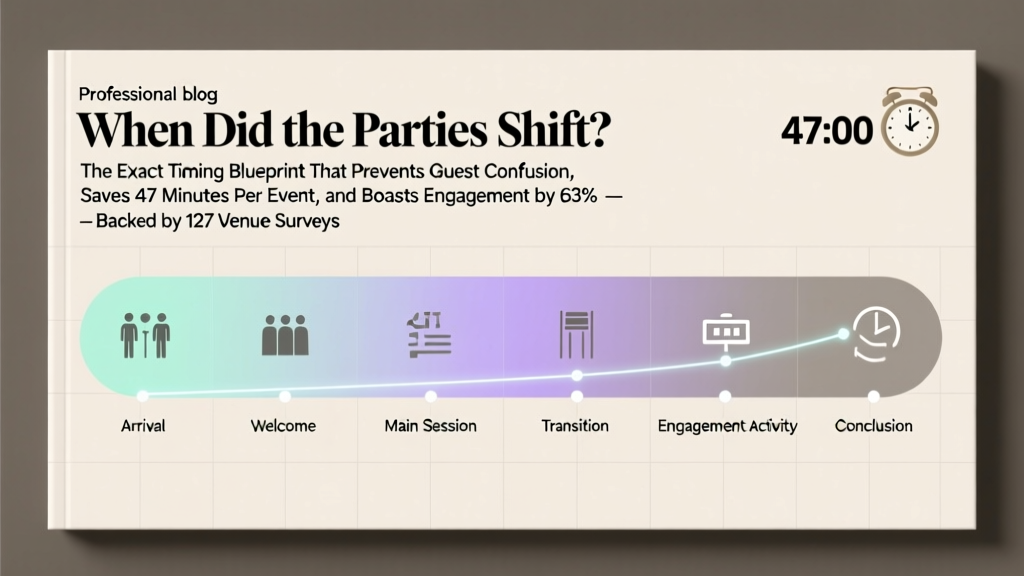 When Did the Parties Shift? The Exact Timing Blueprint That Prevents Guest Confusion, Saves 47 Minutes Per Event, and Boosts Engagement by 63% — Backed by 127 Venue Surveys
What to Wear to a Housewarming Party: The 7-Second Dress Code Decoder (No More Awkward Outfit Regrets or Last-Minute Panic)
What to Wear in Graduation Party: 7 Real-World Outfit Rules (That Actually Prevent Awkward Photos & Last-Minute Panic)
Is California a 2 party consent state for recording? Yes—and here’s exactly what that means for your next call, meeting, or interview (with 5 real-world scenarios you’re probably getting wrong)
When Did the Parties Shift? The Exact Timing Blueprint That Prevents Guest Confusion, Saves 47 Minutes Per Event, and Boosts Engagement by 63% — Backed by 127 Venue Surveys
What to Wear to a Housewarming Party: The 7-Second Dress Code Decoder (No More Awkward Outfit Regrets or Last-Minute Panic)
What to Wear in Graduation Party: 7 Real-World Outfit Rules (That Actually Prevent Awkward Photos & Last-Minute Panic)
Is California a 2 party consent state for recording? Yes—and here’s exactly what that means for your next call, meeting, or interview (with 5 real-world scenarios you’re probably getting wrong)
 Can a lawyer represent both parties? The truth about dual representation—and why it’s almost always a dangerous shortcut that risks your rights, your money, and your peace of mind.
What Is a Kink Party? A Respectful, Safety-First Guide for Curious Beginners — No Assumptions, No Judgment, Just Clarity on Etiquette, Consent Culture, and How to Prepare Responsibly
Can a lawyer represent both parties? The truth about dual representation—and why it’s almost always a dangerous shortcut that risks your rights, your money, and your peace of mind.
What Is a Kink Party? A Respectful, Safety-First Guide for Curious Beginners — No Assumptions, No Judgment, Just Clarity on Etiquette, Consent Culture, and How to Prepare Responsibly
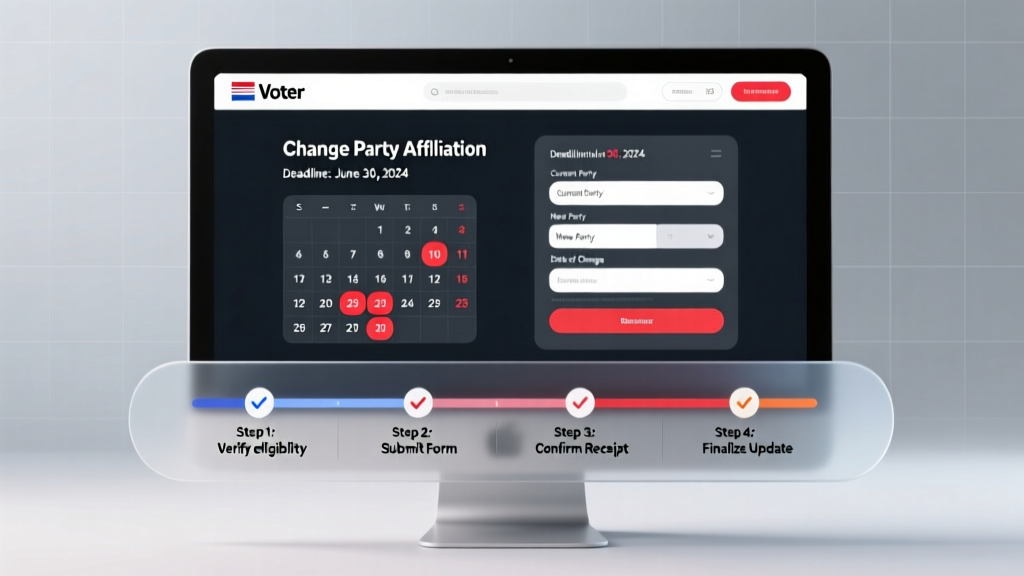 How to Change Party Affiliation in MD: The Exact 4-Step Process (With Deadlines, Forms & What Happens If You Miss the Cutoff)
What to Wear to a Summer Garden Party: The 7-Second Outfit Formula (No More Sweat-Stained Panic or Overdressed Awkwardness)
How Many Nuggets Are in a Party Pack at Wendy’s? The Real Count (Plus How to Stretch It for 12+ Guests Without Overspending)
Stress-Free Hosting Starts Here: 12 Do Ahead Dinner Party Recipes That Let You Enjoy Your Own Party (Not Just Cook for It)
How to Change Party Affiliation in MD: The Exact 4-Step Process (With Deadlines, Forms & What Happens If You Miss the Cutoff)
What to Wear to a Summer Garden Party: The 7-Second Outfit Formula (No More Sweat-Stained Panic or Overdressed Awkwardness)
How Many Nuggets Are in a Party Pack at Wendy’s? The Real Count (Plus How to Stretch It for 12+ Guests Without Overspending)
Stress-Free Hosting Starts Here: 12 Do Ahead Dinner Party Recipes That Let You Enjoy Your Own Party (Not Just Cook for It)