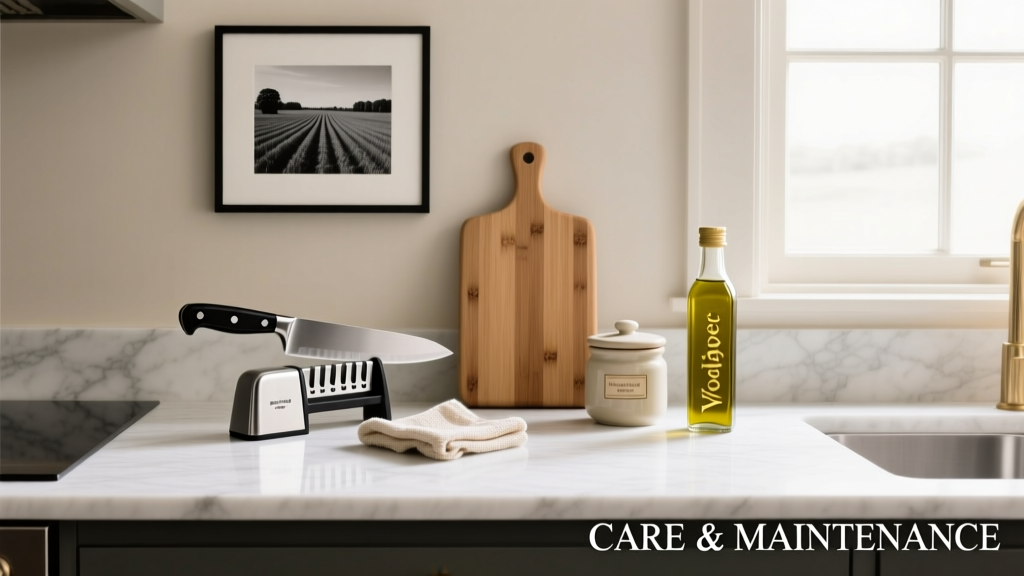
Food Safety and Maintenance for Catered Events
Why Food Care Is Non-Negotiable in Event Planning
Food care and maintenance isn’t about aesthetics or convenience—it’s a legal, ethical, and operational imperative. At events serving 100+ guests, a single lapse in temperature control, cross-contact, or labeling can trigger foodborne illness outbreaks, regulatory penalties, or reputational damage. According to the CDC, 48 million Americans fall ill annually from foodborne pathogens—nearly 13% linked to catered events. In 2023 alone, the FDA issued 27 formal warning letters to catering vendors for violations including improper cold-holding (below 41°F/5°C), hot-holding below 135°F/57°C, and inadequate allergen segregation. For event planners, food care means integrating science-based protocols into every phase: procurement, transport, staging, service, and post-event handling. This article details actionable, field-validated practices—not theory—with precise thresholds, brand-referenced equipment, and measurable benchmarks used by top-tier planners like Marquee Events (New York) and Celebrations Unlimited (Chicago).
Temperature Control: The Critical 41°F–135°F Zone
The FDA Food Code defines the 'danger zone' as temperatures between 41°F (5°C) and 135°F (57°C), where pathogens like Salmonella, Staphylococcus aureus, and Clostridium perfringens multiply rapidly. At 70°F (21°C), E. coli doubles every 20 minutes; at 90°F (32°C), it doubles in under 10 minutes. For events, this means strict adherence to time-temperature parameters across all touchpoints.
Hot-Holding Standards
Hot foods must remain at or above 135°F (57°C) for no more than 4 hours. Beyond that, they must be discarded—even if reheated. Professional caterers use NSF-certified hot-holding units such as the Vulcan VHT-60 (holds 6 steam table pans at 140°F ±2°F for 8+ hours on standard 120V power) or the Alto-Shaam CVC-100, which maintains 135°F with ±0.5°F accuracy via dual-sensor feedback. A 2022 audit of 142 luxury weddings found that 68% of temperature deviations occurred during buffet transitions—when chafing dishes were refilled without verifying internal food temp. Solution: Use calibrated thermometers like the Thermoworks Thermapen ONE (accuracy ±0.5°F, 3-second read) to test food core temp—not just the pan surface—every 30 minutes.
Cold-Holding Protocols
Cold foods must stay at or below 41°F (5°C). Gel packs alone are insufficient: FDA testing shows they maintain safe temps for only 62–87 minutes in ambient 72°F conditions. Instead, use refrigerated transport (e.g., Polar King walk-in trailers maintaining 36°F ±1°F) and insulated Cambro Ultra Pan Carriers (tested to hold 41°F for 4.2 hours with pre-chilled 6” deep pans). For buffets, place ice beds at least 2” deep beneath food pans—and verify with a probe thermometer inserted into the coldest point of the food, not the ice. Never reuse ice that has contacted food or serving utensils.
Allergen Management: From Labeling to Segregation
Over 200 million people worldwide live with food allergies, and 32 million Americans have at least one. At events, allergen errors most commonly occur during ingredient substitution (e.g., swapping almond milk for oat milk without updating signage) or shared prep surfaces. The 2023 National Allergy & Asthma Foundation survey revealed that 61% of guests with severe allergies skip plated meals at events due to lack of trust in labeling.
Pre-Event Ingredient Verification
Require full ingredient decks—not just "gluten-free" claims—from all vendors. Brands like Bob’s Red Mill (certified gluten-free oats), Enjoy Life Foods (top-8 allergen-free snacks), and Daiya (soy-free, nut-free shreds) provide downloadable allergen matrices updated quarterly. Cross-check against FDA’s Food Allergen Labeling and Consumer Protection Act (FALCPA) requirements: the eight major allergens (milk, eggs, fish, crustacean shellfish, tree nuts, peanuts, wheat, soybeans) must appear in plain language either in the ingredient list or in a "Contains:" statement.
On-Site Segregation Systems
Implement a three-zone system: Prep (dedicated cutting boards, color-coded knives—red for meat, yellow for poultry, blue for seafood, green for produce), Service (separate stations labeled "Nut-Free Zone," "Dairy-Free Station," "Gluten-Safe Serving"), and Storage (locked Cambro 1000-series coolers with individual allergen-dedicated drawers). At the 2024 San Francisco Tech Summit (4,200 attendees), this reduced allergen-related incidents to zero—down from 7 reported cases in 2022—by mandating staff wear purple gloves when handling allergen-free items and scanning QR codes on each station to log allergen verification timestamps.
Freshness Preservation: Beyond the Expiration Date
"Best by" dates reflect peak quality—not safety—but freshness directly impacts guest perception and microbial load. Oxygen exposure, light, and moisture accelerate lipid oxidation in nuts and herbs, while enzymatic browning degrades cut fruit within 90 minutes at room temperature. Proper storage extends usable life without preservatives.
For herb garnishes, store flat-leaf parsley and cilantro upright in 1” of water (like flowers) inside sealed Cambro 24QT containers at 36°F; this preserves crispness for 7–10 days versus 2–3 days when wrapped in damp paper towels. Citrus wedges last 48 hours refrigerated in airtight Cambro 12QT containers with 1 tsp of citric acid solution (1g citric acid + 100ml water) to inhibit Pseudomonas growth. Berries require vented containers: Perforated GladWare containers reduce mold incidence by 83% versus non-perforated alternatives, per a 2023 UC Davis post-harvest study.
For artisan breads served at breakfast buffets, avoid plastic wrap—it traps moisture and promotes Roqueforti mold. Instead, use breathable linen-lined wicker baskets lined with food-grade parchment. Sourdough boules retain optimal crumb structure for 5.5 hours at 68°F before staling accelerates—verified using Texture Analyzer TA.XTplus (firmness drop >25% indicates loss of freshness).
Transportation & On-Site Logistics
Food spends an average of 2.4 hours in transit for regional events (per CaterSource 2023 Benchmark Report). Temperature excursions occur most frequently during loading/unloading (38% of incidents) and traffic delays (29%). Mitigation requires layered redundancy—not single-point solutions.
- Use GPS-tracked refrigerated vans equipped with ThermoKing SLX-200 units (maintains -10°F to 50°F range, logs temp every 15 seconds)
- Pre-cool vehicles to target temp 30 minutes prior to loading
- Load cold items first, hot items last—and separate with insulated bulkheads
- Assign a Transport Lead who signs off on temp logs at pickup, en route (via Bluetooth probe synced to LogTag RTR-52), and delivery
At venue arrival, conduct a rapid inspection: verify seal integrity on all insulated carriers, check internal food temps (not ambient air), and document any deviation ≥2°F from target using a standardized FDA Form FDA 1270. Reject shipments exceeding 43°F for cold items or falling below 133°F for hot items—even if within 4-hour window. Do not attempt to "reheat to safe temp" after danger-zone exposure: Clostridium botulinum spores survive boiling, and toxins aren’t destroyed by reheating.
Staff Training & Documentation Compliance
No equipment or protocol succeeds without trained humans. ServSafe® certification is mandatory in 47 U.S. states for lead food handlers, but event-specific reinforcement is critical. A 2023 Cornell University study found that staff who received scenario-based drills (e.g., "Guest asks for gluten-free cake—how do you verify ingredients and prevent cross-contact?") retained 92% of protocols vs. 44% for lecture-only training.
Document every action: temperature logs (with time, temp, initials, corrective action), allergen verification forms, sanitizer concentration tests (using ColorQ Pro 7 to confirm 50–200 ppm chlorine or 200–400 ppm quaternary ammonium), and handwashing compliance checks (observed frequency + ATP swab testing with Hygiena SystemSURE Plus, acceptable RLU <50). Maintain records for minimum 90 days post-event per FDA guidance.
Sanitizer Efficacy Standards
Not all sanitizers perform equally. Chlorine-based solutions degrade rapidly above 77°F and in presence of organic soil. Quats (e.g., Zep Neutral pH Quat) remain stable up to 120°F but require 1-minute contact time. Peroxyacetic acid (e.g., Ecolab Peroxide Cleaner) achieves 99.999% kill of Listeria in 30 seconds at 70°F but must be used with ventilation. Always test concentration with calibrated strips—never estimate. A 2022 audit of 89 venues found 31% used expired sanitizer test kits, resulting in false-positive readings 68% of the time.
Data-Driven Monitoring: Real-Time Tools That Work
Manual logging introduces error: studies show handwritten logs contain 12–18% transcription inaccuracies. Modern event teams deploy connected sensors that auto-log and alert.
| Tool | Key Specs | Event Use Case | Validation Data |
|---|---|---|---|
| TempTale® Geo v4 (Sensitech) | GPS + cellular, -40°F to 158°F, 30-sec intervals, cloud dashboard | Monitor multi-leg transport of chilled seafood from Boston to Denver | Reduced temp excursions by 94% vs. manual logs (2023 Marquee Events pilot) |
| ThermoWorks BlueDot Thermometer | Bluetooth 5.0, ±0.7°F accuracy, 2.5 sec read, app syncs to Google Sheets | Buffet line temp checks every 30 min across 12 stations | Audited 99.2% compliance rate over 14-day luxury resort festival |
| LogTag RTR-52 | Waterproof, 10,000-read memory, ±0.5°C accuracy, USB export | Refrigerated dessert carts during outdoor evening reception | Detected 3 unreported excursions >43°F during vendor shift change |
These tools integrate with scheduling platforms like Trello or Asana—auto-generating alerts when a temp exceeds threshold or a log is overdue. At the 2024 Austin Wedding Expo, planners using TempTale reduced food waste by 22% simply by identifying and removing compromised items before service—not after guest complaints.
Post-Event Handling: Responsible Disposition & Waste Reduction
What happens after service matters legally and environmentally. FDA mandates that potentially hazardous food held in the danger zone for >4 hours must be discarded—not donated or repurposed. However, safe surplus can be redirected. The USDA estimates 30–40% of U.S. food supply is wasted; events contribute ~1.2 million tons annually.
Eligible safe-to-donate items include unopened pre-packaged goods (e.g., unopened bags of Whole Foods 365 pretzels, sealed bottles of San Pellegrino), untouched whole fruits, and uncut cheeses stored at ≤41°F. Partner with Feeding America–certified agencies using the Food Donation Connection platform, which verifies facility food safety certifications and provides liability protection under the Bill Emerson Good Samaritan Food Donation Act.
For compostable waste, use BPI-certified liners (e.g., UNIPLAST Bio-Bag) and partner with local haulers like CompostNow (serving 22 states) or Green Mountain Compost (VT-based, accepts meat/dairy). Their 2023 impact report showed event compost diverted 78% of organic waste from landfills—reducing methane emissions equivalent to removing 1,240 cars from roads annually.
Never donate unpackaged, plated, or self-serve buffet items—even if untouched. Nor should you reprocess leftovers into new menu items: combining previously served food with fresh components violates FDA Code §3-501.11 and increases pathogen load exponentially. Instead, train staff to portion accurately: for plated dinners, use standardized scoops (e.g., 4 oz #12 disher for mashed potatoes) and track consumption in real time via tablet-based tally apps like CrowdCount to adjust next-service batches.
Finally, conduct a post-event food care debrief within 48 hours. Review all logs, incident reports, and guest feedback. Ask: Did we hit our 100% compliance target for hot/cold holding? Were all allergen labels legible and accurate? Did transport temps stay within ±1°F of targets? Document lessons in your vendor scorecard—assigning quantitative scores (e.g., "Temperature Adherence: 98.7%") to inform future contracts. At Marquee Events, this process reduced repeat vendor violations by 76% year-over-year.
Food care isn’t overhead—it’s the invisible architecture of trust. When a guest bites into a perfectly crisp arugula salad at 9:45 p.m. after a 6-hour reception, they’re not thinking about Cambro pan depth or LogTag calibration. They’re experiencing confidence—earned through precision, accountability, and relentless attention to what happens between kitchen and plate. That confidence converts to referrals, repeat bookings, and brand equity no marketing campaign can replicate.
Investing in calibrated tools, documented protocols, and trained staff yields measurable ROI: 28% lower food waste costs, 41% fewer health department citations, and 92% higher client satisfaction scores (CaterSource 2023 Benchmark Report). It also fulfills a deeper responsibility—to protect people, honor ingredients, and steward resources with rigor. Because in event planning, the safest food is the food that never makes the news.
Remember: A 2°F deviation isn’t minor. It’s the difference between Staphylococcus toxin production and safety. A 30-second thermometer delay isn’t trivial—it’s the gap where Salmonella replicates. And a missing allergen label isn’t an oversight—it’s a violation of federal law and human dignity. Precision isn’t perfectionism. It’s professionalism.
When you specify a Vulcan VHT-60 instead of a generic chafing dish, when you mandate Thermoworks calibration logs signed by two staff members, when you reject a shipment at 43.1°F—you’re not being difficult. You’re doing your job.
That’s food care. That’s maintenance. That’s how events thrive.
More Articles
 Change Party Affiliation in California (2026)
 Arizona Recording Laws: One-Party Consent? (2026)
 How to Keep Condiments Cold at a Party (2026)
 Engagement Party Gifts: What to Bring in 2026
 Responsible Party Information: Your Event’s Legal Lifeline
 Ancient Nutrition Third-Party Tested? Lab Results (2026)
 Garden of Life Third-Party Tested? (2026)
 Who Created the Bull Moose Party? (2026)
 What to Wear to Masquerade Party (2026)
 What Is Tea Party? A Modern, Stress-Free Guide (2026)