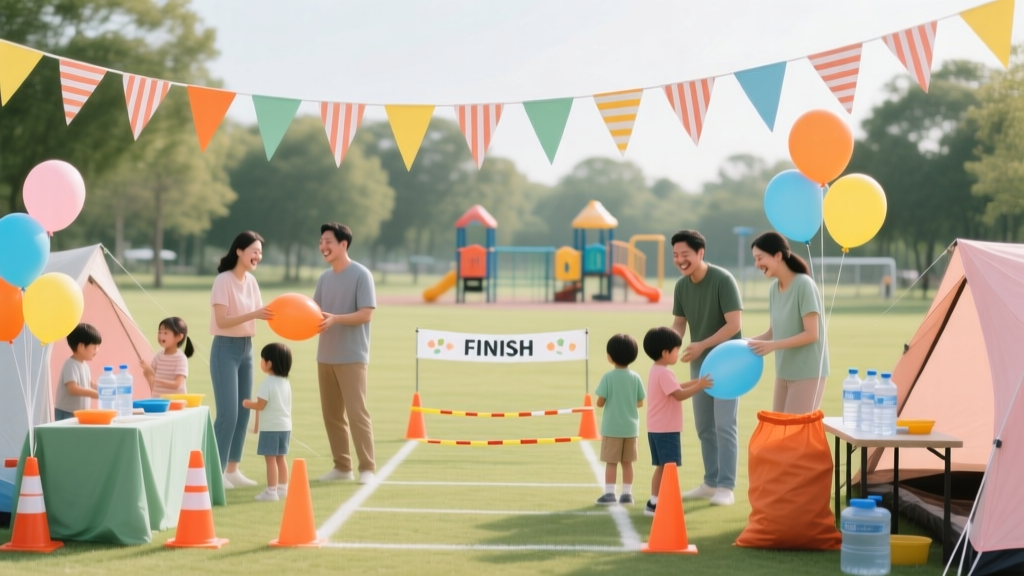
Common Mistakes When Planning a Sports Day (and How to Avoid Them)
A well-run Sports Day looks effortless: clear schedules, energized participants, safe activities, and a celebratory atmosphere that brings everyone together. Behind that “easy” experience is detailed event planning—coordinating people, space, equipment, timing, vendors, and safety measures while keeping costs under control.
Sports Day events also have unique pressure points compared to many parties or corporate gatherings. You’re managing movement, competition, weather exposure, multiple activity zones, and often a wide range of ages or fitness levels. Small planning gaps can quickly turn into long lines, injuries, confused volunteers, or a schedule that collapses before the final relay.
This guide breaks down the most common Sports Day planning mistakes and provides step-by-step organizational strategies, timeline templates, budgeting tips, and real-world examples so you can plan a smooth, inclusive, and memorable day.
What Makes a Sports Day Different from Other Events?
Sports Day blends the complexity of an event with the operational demands of a small tournament. You’re not just hosting—you’re running a coordinated experience.
- Multiple simultaneous activities: Several games or races running at once require zone management and clear communication.
- Higher safety and risk exposure: Physical activity increases injury risk; your plan must include first aid and crowd control.
- Time sensitivity: Races, heats, and rotations rely on exact timing; delays ripple across the whole schedule.
- Variable participant abilities: Inclusive event design matters, especially for schools, community groups, and workplace wellness days.
Common Sports Day Planning Mistakes (and Practical Fixes)
1) Starting Without Clear Goals and a Defined Audience
One of the biggest event planning mistakes is jumping into activities before deciding what success looks like. A company team-building Sports Day is different from a school field day or a community fundraiser.
Symptoms of this mistake:
- Activities don’t match participant age or ability.
- Too much competition (or not enough excitement).
- Budget gets spent on the wrong priorities.
Fix: Write a one-paragraph event brief before you book anything:
- Purpose: team-building, fundraising, community engagement, end-of-season celebration
- Audience: ages, mobility needs, number of teams, spectators
- Event style: casual stations, structured tournament, themed “Olympics,” mixed-ability games
- Top 3 priorities: safety, inclusivity, timekeeping, brand experience, cost control
2) Underestimating Space, Layout, and Flow
Sports Day success depends on how people move. Poor field layout leads to congestion, unclear boundaries, and delays at equipment handoffs.
Fix: Create a simple site plan with zones and buffers:
- Check-in zone: registration, waivers, wristbands, team assignments
- Activity zones: clearly marked areas with signage and cones
- Warm-up / cool-down space: especially for adults or competitive events
- Spectator area: shade if possible, separate from active play
- Hydration & first aid: central and visible
- Equipment staging: near zones, not at check-in
Real-world example: A community Sports Day scheduled tug-of-war next to a running lane. Spectators drifted into the track and repeatedly halted heats. The fix was simple: relocate tug-of-war to an edge zone and mark spectator boundaries with rope lines and clear “Watch Zone” signage.
3) Choosing Activities That Create Long Lines and Dead Time
Station-based events can feel fun—until everyone waits 15 minutes for a 30-second turn. This is a common party organization issue: the entertainment exists, but throughput wasn’t planned.
Fix: Plan for “throughput” and rotation.
- Favor activities that run multiple participants at once (relay heats, team challenges, group games).
- Use parallel stations (two sack-race lanes instead of one).
- Build “micro-activities” near high-traffic zones (jump rope, hula hoops, mini putting, reaction games).
Rule of thumb: For stations, aim for 3–5 minutes per group, not per person. If an activity is individual and slow, run two or three identical stations.
4) Weak Volunteer Roles and No Chain of Command
Sports Day events rely heavily on volunteers or staff. When roles are vague, everyone ends up doing check-in while no one is running the races.
Fix: Assign roles like a production team:
- Event Lead: overall decisions and schedule control
- Zone Captains: one per activity area; manages rules and timing
- Check-in Lead: waivers, team packets, wristbands
- Timekeeper/Announcer: starts, stops, transitions, announcements
- Safety Lead: first aid station, incident log, weather monitoring
- Runner: solves small problems (water refill, equipment retrieval)
Trend to use: Many event coordinators now use a shared mobile run-of-show (ROS) and group chat for real-time updates. Keep it simple: one group thread for staff/volunteers, and one for leadership only.
5) No Weather Plan (or a Plan That’s Not Communicated)
Outdoor Sports Days are exposed to heat, rain, wind, and air quality issues. Hoping for the best isn’t a strategy.
Fix: Create a weather decision tree and communicate it in advance:
- Heat plan: extra water points, shaded rest area, shorter heats, earlier start time
- Rain plan: tented zones, field-safe footwear guidance, alternative indoor activities
- Lightning policy: clear pause and evacuation rules (know your venue’s requirements)
- Communication plan: email + SMS + signage at check-in
6) Skipping Safety Details: First Aid, Hydration, and Waivers
Safety is both an ethical and operational priority. A single incident can derail the day and expose the organizer to risk.
Fix: Build safety into your event planning checklist:
- First aid kit(s) appropriate to crowd size
- Designated first aid area with signage
- Ice packs, bandages, antiseptic, blister care
- Hydration stations and cups (or refillable bottle policy)
- Emergency contact list and venue address posted for staff
- Waivers where appropriate; confirm requirements with your venue/organization
7) Overcomplicating Scoring and Awards
Complex scoring systems often cause confusion, disputes, and long pauses. The more complex the scoring, the more staff you need to manage it.
Fix: Keep scoring clean and transparent:
- Use a simple points table (e.g., 1st=10, 2nd=8, 3rd=6, participation=2)
- Run fewer “official” scored events and more free-play stations
- Post standings at set times (midpoint + final) to reduce constant questions
Awards trend: Many modern Sports Days include “spirit” awards (teamwork, creativity, sportsmanship) to keep the tone positive and inclusive.
8) Not Planning Check-in, Signage, and Participant Communication
Even a perfect schedule fails if participants don’t know where to go. Event coordination is communication management.
Fix: Provide information in three places:
- Before the event: email with arrival time, parking, what to wear, what to bring, schedule overview
- At check-in: simple map, team color assignment, rules summary
- On-site signage: big, readable signs for zones, water, restrooms, first aid
Step-by-Step Planning Timeline (with Checklist Templates)
6–8 Weeks Before: Define, Book, and Build the Framework
- Confirm event goals, audience, estimated attendance
- Choose a date/time window (consider heat and daylight)
- Book venue/field; confirm permits and insurance requirements
- Draft activity list (mix high-energy + low-impact)
- Create initial budget and secure approvals
- Recruit core leadership: event lead, safety lead, zone captains
4–5 Weeks Before: Finalize Program, Vendors, and Layout
- Lock in activities and schedule format (rotations vs heats)
- Create site map: zones, entry/exit, spectator area, equipment staging
- Reserve rentals: tents, tables, chairs, sound system, cones, barriers
- Source vendors: food trucks/catering, water service, first aid support (as needed)
- Plan awards/trophies and order items with lead time
2–3 Weeks Before: Communication and Operational Details
- Send participant info: what to wear, arrival time, parking, schedule overview
- Collect waivers/medical notes if required by your organization
- Assign volunteers to roles and zones; confirm shifts
- Build a run-of-show (ROS): timings, announcements, transition cues
- Prepare signage and printed materials (maps, rules, score sheets)
1 Week Before: Confirmations and Contingencies
- Confirm vendors, rentals, delivery times, contact numbers
- Walk the venue (or review field rules and access points)
- Finalize activity instructions for each zone (one-page cheat sheets)
- Prepare equipment bins per zone (labeled)
- Set weather decision points and draft the message templates
Event Day: Execution Checklist
- Set-up: cones/lines, signage, check-in table, hydration, first aid, equipment staging
- Staff brief: safety rules, emergency plan, schedule, chain of command
- Check-in: waivers verified, team assignments, maps distributed
- Run-of-show: start on time, announce rotations, manage transitions
- Monitor: heat/hydration, crowd flow, equipment issues
- Wrap-up: awards, lost-and-found, cleanup, vendor check-out
Post-Event (Within 48 Hours): Closeout and Improvement
- Send thank-you notes to volunteers and vendors
- Collect feedback (short survey: 5 questions max)
- Log incident reports and improvement notes
- Reconcile budget and store reusable supplies
Budget Considerations: Where Sports Day Costs Usually Go
A practical event budget prevents overspending and protects the participant experience. Here’s a sample budget breakdown (adjust based on size and location):
- Venue/permits: 10–25%
- Rentals (tents, tables, sound, barriers): 15–30%
- Equipment (cones, balls, bibs, stopwatches): 5–15%
- Food and beverage: 15–35%
- Awards/trophies/printing: 5–10%
- Safety (first aid supplies, on-site medic where required): 5–15%
- Contingency: 8–12% (weather extras, last-minute rentals)
Cost-control tips:
- Prioritize shade + water + staffing over “nice-to-have” décor.
- Rent big-ticket items (PA system, tents) and purchase reusable small supplies (cones, pinnies).
- Offer a “bring your bottle” hydration plan and place refill stations.
- Use digital scoreboards (shared sheet) to cut printing and reduce scoring errors.
Vendor Selection Tips (Rentals, Food, and Support)
Vendor reliability matters more than flashy offerings. Your best vendors simplify logistics.
How to Vet Vendors Quickly
- Confirm load-in/load-out times and vehicle access to the field.
- Ask about backup plans: spare equipment, staff coverage, rain procedure.
- Get proof of insurance if required by the venue.
- Request a clear quote: taxes, delivery fees, setup/tear-down, overtime.
Food and Beverage: Avoid the Long-Line Trap
- Use pre-packed options for speed (boxed lunches, snack bags).
- Stagger meal breaks by team or rotation group.
- Offer allergy-aware choices and label clearly.
Real-World Sports Day Formats That Work
Option A: Rotation Stations (Best for Mixed Ages or Large Groups)
- 6–10 stations (5–8 minutes each)
- Teams rotate on an audible cue (whistle/announcement)
- Minimal scoring; emphasize participation and spirit awards
Option B: Mini-Tournament + Free Play (Best for Adults or Competitive Groups)
- Two “anchor” events with brackets (e.g., soccer, dodgeball)
- Side stations for those waiting (cornhole, obstacle course, sprint challenges)
- Simple points system to combine bracket wins + participation
Quick “Don’t Miss” Sports Day Checklist
- Run-of-show with buffer time (build in 10–15% schedule slack)
- Site map with zones and signage plan
- Volunteer roster + contact list + role sheets
- Safety plan: first aid, hydration, emergency procedures
- Weather plan with decision points and message templates
- Equipment bins labeled per zone
- Simple scoring method and posted rules
FAQ: Planning and Coordinating a Sports Day
How far in advance should I plan a Sports Day?
For a small Sports Day (under 75 people), 4–6 weeks is usually workable if the venue is available. For larger school or community events, aim for 8–12 weeks to secure rentals, vendors, and volunteer staffing.
What are the best activities for a mixed-age Sports Day?
Choose station-based games with adjustable difficulty: relay variations, obstacle courses with optional challenges, bean bag toss, tug-of-war with weight-balanced teams, and team puzzles. Add spirit awards to keep motivation high for all ability levels.
How do I keep the schedule from falling behind?
Use a run-of-show with buffer time and an announcer/timekeeper. Reduce rule explanations by posting simple rules at each station, and assign zone captains who can start the next heat without waiting for central approval.
Do I need a first aid professional on-site?
Requirements vary by venue and organization. For higher-intensity activities, larger crowds, or hot weather, on-site medical support is a smart risk-management choice. At minimum, designate a trained first aid lead and create a clearly marked first aid station.
What’s the easiest way to manage teams and rotations?
Color-coded teams (wristbands, pinnies, or bandanas) paired with a printed map and rotation schedule reduces confusion. Keep team sizes consistent and assign one captain per team to help move groups on time.
How can I plan a Sports Day on a tight budget?
Focus spending on safety, shade, and clear communication. Choose low-cost games (cones, jump ropes, relay batons), seek community sponsorships for awards, and use volunteers for staffing. Keep décor simple and invest in reusable equipment.
Actionable Next Steps
- Write your one-paragraph event brief (purpose, audience, priorities).
- Pick a format (rotation stations or mini-tournament + free play) and draft a simple run-of-show.
- Build your site map with zones for check-in, hydration, first aid, and spectators.
- Lock your budget with an 8–12% contingency and start vendor outreach.
- Assign roles early and give zone captains one-page instructions to run their stations.
If you’re ready to plan your next celebration with more confidence and less stress, explore more event planning guides, party organization checklists, and coordination tips at smartpartyprep.com.
More Articles
 What political party was Herbert Hoover? The Surprising Truth Behind His GOP Legacy — And Why Modern Voters Keep Misreading His Presidency
How to Decorate for a Tea Party Without Stress or Spending: A Realistic 7-Step Guide That Works for Beginners (Even With Just $25 & 90 Minutes)
What political party was Martin Van Buren? The Surprising Truth Behind America’s First ‘Professional Politician’ and Why His Party Switch Still Shapes Modern Elections Today
What to Bring to a Class Party: The Stress-Free, Teacher-Approved Checklist That Saves Time, Avoids Awkward Oversights, and Keeps Kids Happy (No Last-Minute Panic Needed)
What Is a Related Party Transaction? The Hidden Risk That Just Cost One Public Company $42M in Fines — And How to Spot, Disclose, and Prevent It Before Your Audit Begins
What political party was Herbert Hoover? The Surprising Truth Behind His GOP Legacy — And Why Modern Voters Keep Misreading His Presidency
How to Decorate for a Tea Party Without Stress or Spending: A Realistic 7-Step Guide That Works for Beginners (Even With Just $25 & 90 Minutes)
What political party was Martin Van Buren? The Surprising Truth Behind America’s First ‘Professional Politician’ and Why His Party Switch Still Shapes Modern Elections Today
What to Bring to a Class Party: The Stress-Free, Teacher-Approved Checklist That Saves Time, Avoids Awkward Oversights, and Keeps Kids Happy (No Last-Minute Panic Needed)
What Is a Related Party Transaction? The Hidden Risk That Just Cost One Public Company $42M in Fines — And How to Spot, Disclose, and Prevent It Before Your Audit Begins