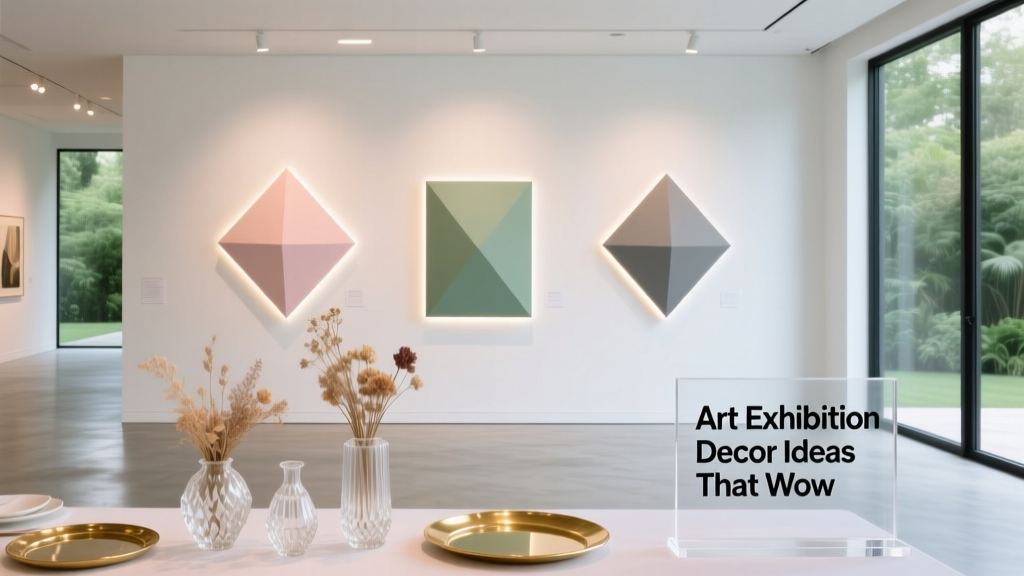
an Art Exhibition Decor Ideas That Wow
An art exhibition is more than a room full of pieces—it’s an experience that shapes how guests feel, move, and remember the work. Thoughtful decor and event coordination can elevate your show from “nice gallery” to “can’t-stop-talking-about-it,” while still keeping the focus on the art itself.
Proper planning matters because exhibition decor has to do many jobs at once: guide traffic flow, support lighting and sightlines, reinforce your theme, protect artwork, and make guests comfortable. When the environment is designed intentionally, guests linger longer, take better photos, and engage more deeply—whether you’re hosting a pop-up exhibit, a student showcase, a charity fundraiser, or a professional gallery opening.
This guide breaks down art exhibition decor ideas that wow, along with step-by-step timelines, checklists, budget ranges, vendor tips, and common planning mistakes—so you can organize a polished event with confidence.
Start With a Clear Exhibition Concept (The Decor Follows the Story)
The fastest way to create “wow” decor is to commit to one clear concept and let it steer every decision: color palette, signage, lighting mood, music, and even the opening-night flow.
Pick a theme that supports the work
- By medium: photography night, ceramics studio showcase, mixed media, digital art + projection.
- By story: “City After Dark,” “Botanical Dreamscape,” “Portraits of Place.”
- By audience goal: collector preview (elevated + minimal), community night (interactive + welcoming), fundraiser gala (sponsor-forward + photo moments).
Define your “exhibition style rules”
- Palette: 2–3 core colors + 1 accent (often neutral + metallic accent).
- Materials: linen, acrylic, raw wood, matte black, brushed brass—choose consistent finishes.
- Lighting temperature: warm (2700–3000K) for intimate shows, neutral (3500–4000K) for contemporary clarity.
Real-world example: A local photography collective themed their show “Neon Nights.” Decor stayed minimal—black drape at the entry, magenta uplighting, and a single neon-style title sign. The art stayed center stage, but the mood was unmistakable.
Art Exhibition Decor Ideas That Deliver Instant Impact
1) A strong entrance moment (first 10 seconds)
Your entry sets expectations and manages crowd flow. It should feel intentional, not like “we borrowed a room.”
- Title wall or banner: Use vinyl lettering on foam board or a fabric banner. Add the show name, dates, and a short curator statement.
- Queue-friendly layout: Create a check-in zone with stanchions or subtle floor tape if you expect a rush.
- Signature scent (lightly): If venue allows, a gentle diffuser can enhance ambience. Avoid strong scents near food or sensitive guests.
2) Gallery-level lighting upgrades
Lighting is the most overlooked “decor” element and the quickest way to make work look professional.
- Track lighting or clamp spots: Angle lights at 30 degrees to reduce glare on framed pieces.
- Uplighting: Use battery uplights to wash walls in a soft color that complements the theme.
- Accent lighting for sculptures: Small LED pin spots create dimension and shadows that feel intentional.
Trend watch: Battery-powered, app-controlled uplights are popular for pop-ups because they reduce cables and trip hazards.
3) Clean, consistent label and signage design
Signage is both decor and guest service. Consistency reads “curated.”
- Wall labels: Same font, size, and placement for every piece.
- Price list or QR code: Use QR codes for a digital catalog to reduce printed clutter and support sustainability trends.
- Directional signage: Restrooms, exits, “Start Here,” and “Artist Talk at 7:00 PM.”
4) Layered textures that don’t compete with the art
- Draping: Pipe-and-drape can hide storage areas, soften echo, and create a gallery backdrop in non-gallery spaces.
- Pedestals and plinths: Matte white or matte black finishes look modern and photograph well.
- Rugs in lounge zones: Defines conversation areas and improves acoustics (choose low-pile for safety).
5) One “hero” photo moment (but keep it art-forward)
Social sharing is built into current event planning trends. A single, well-designed photo moment encourages organic promotion without turning the exhibition into a selfie museum.
- Branded step-and-repeat: Best for sponsor-heavy openings and press coverage.
- Install-based backdrop: A sculptural frame, floral minimal arch, or a wall of textured panels in your palette.
- Artist quote wall: A large quote that reflects the theme + subtle logo for smart branding.
6) Interactive elements guests actually use
- Guest book alternatives: Polaroid guest wall, “leave a note for the artist” cards, or a digital message board via QR.
- Process corner: Sketches, tools, or short “making of” video loop.
- Live demo: Short timed sessions (10–15 minutes) to manage crowding and keep attention.
7) Lounge + networking zones that keep people in the room
A comfortable guest is a longer-staying guest—helpful for sales, donations, and deeper engagement.
- Seating clusters: Two chairs + small table, repeated 2–3 times.
- Cocktail tables: Use fitted linens and small centerpieces that don’t block sightlines.
- Sound control: Soft furnishings + strategic placement of speakers away from art walls.
8) Food and beverage styling that matches the exhibit
- Minimal bar design: A clean bar front, tidy menu board, and consistent glassware.
- Color-coordinated bites: A signature cocktail/mocktail that matches the palette (with a printed ingredient card).
- Protective spacing: Keep food and drink stations away from artwork and high-value pieces.
Step-by-Step Planning Timeline (With Checklist Templates)
6–8 Weeks Out: Foundation + Venue Logistics
- Confirm venue contract, hours, access times, loading instructions, and insurance requirements.
- Create a basic floor plan: entry, exhibit flow, sales/check-out, bar/refreshments, restrooms, storage.
- Lock exhibition theme, color palette, and a simple decor plan.
- Inventory display needs: walls, easels, pedestals, hanging hardware, label holders.
- Book key vendors: lighting rental, AV, catering/bar, photographer, security (if needed).
4–5 Weeks Out: Design + Guest Experience
- Draft signage: title wall, directional signs, labels, price sheets, QR code catalog.
- Plan lighting: identify outlets, cable paths, and battery uplight counts.
- Plan opening-night schedule: doors open, remarks, artist talk, demo, closing.
- Confirm staffing: check-in, floor host(s), art handling lead, sales lead, bar/catering contact.
2–3 Weeks Out: Production + Purchases
- Order print materials: labels, programs, menus, sponsor signage.
- Confirm rentals: pedestals, stanchions, cocktail tables, linens, pipe-and-drape.
- Finalize the artwork list and placement plan (with measurements).
- Prepare sales tools: POS system, payment links, receipts, packaging, certificate of authenticity templates.
1 Week Out: Confirmations + Run-of-Show
- Send vendor confirmations with arrival times, contacts, parking/loading instructions.
- Create a run-of-show document (minute-by-minute for opening night).
- Print a master checklist for installation day and event day.
- Prepare emergency kit: gaffer tape, level, command strips (where allowed), gloves, extra batteries, first-aid basics.
Event Day: Install + Final Walkthrough
- Install art first (clean hands/gloves, proper hanging hardware, stable pedestals).
- Focus lighting piece-by-piece; check for glare and reflections.
- Place labels and signage consistently; test QR codes.
- Set lounge and bar areas; keep traffic lanes clear (ADA-friendly spacing).
- Sound check music and microphone (if used).
- Final walkthrough from guest perspective: entry to exit, restrooms, trash points, safety check.
Quick Checklist: Opening Night Essentials
- Check-in list or ticketing app + pens + wristbands (if applicable)
- Clear signage: restrooms, start point, schedule
- Art sales station with POS + packaging + sales sheets
- Trash/recycling discreetly placed
- Staff briefing: roles, timeline, emergency plan
- Photo plan: must-capture shots (wide room, each wall, VIPs, candid engagement)
Budget Considerations (Sample Breakdown)
Your art exhibition budget depends on venue type, scale, and whether it’s a sales event, fundraiser, or private showcase. Use percentages to stay flexible.
Typical decor + production budget ranges
- Small pop-up (30–60 guests): $500–$2,000
- Mid-size opening (75–150 guests): $2,000–$7,500
- Large event (200+ guests) or gala-style: $7,500–$25,000+
Smart budget breakdown (example percentages)
- Lighting & AV: 20–35%
- Print + signage + branding: 10–20%
- Rentals (pedestals, tables, drape): 15–30%
- Floral/greenery or installation feature: 5–15%
- Staffing/security: 5–15%
- Contingency: 8–12%
Where to splurge vs. save
- Splurge: lighting, clean signage, professional installation support for valuable work, one high-impact focal moment.
- Save: minimal centerpieces, fewer but better rentals, DIY guest book, QR-based catalogs.
Real-world example: A nonprofit showcase cut floral costs by using potted plants from a local nursery (later donated to a community garden). Savings went to uplighting and a photographer—two items that improved both ambience and post-event marketing.
Vendor Selection Tips (So Decor Runs Smoothly)
Lighting/AV vendors
- Ask for photos of similar gallery-style setups, not just weddings.
- Confirm color temperature options and dimming control.
- Request a plan for cable management (safety + aesthetics).
Rental companies
- Prioritize pedestal stability and weight limits for sculptures.
- Check delivery windows and whether they handle setup/strike.
- Confirm what happens if items arrive scratched or mismatched (document on delivery).
Floral/installation artists
- Share your artwork images and palette; insist decor won’t overpower the pieces.
- Ask about maintenance (drooping florals under warm lighting, water near art, etc.).
Photographer/videographer
- Confirm they can handle low-light environments.
- Provide a shot list: wide room, each section, details, crowd engagement, sales/donation moment, speakers.
Common Art Exhibition Planning Mistakes (And How to Avoid Them)
- Too much decor competing with art: Choose one hero moment and keep the rest minimal and consistent.
- Lighting added last-minute: Do a lighting test early; glare on framed work can ruin the experience.
- No clear traffic flow: Use subtle cues—signage, stanchions, rugs, and furniture placement—to guide movement.
- Food and drinks too close to artwork: Create a dedicated refreshment zone with cocktail tables and trash nearby.
- Inconsistent labels and pricing: Standardize formatting; consider QR codes for updates without reprinting.
- Understaffing opening night: Assign roles (check-in, floor host, sales, VIP/press support) so issues don’t snowball.
- No contingency plan: Have backup tape, batteries, tools, and a plan for last-minute layout changes.
FAQ: Art Exhibition Decor and Event Coordination
How do I make a pop-up art exhibition look professional on a budget?
Prioritize three upgrades: consistent signage/labels, clean lighting (battery uplights or clamp spots), and a cohesive palette (neutral base + one accent). Use pipe-and-drape to hide clutter and create a gallery feel in multipurpose venues.
What lighting is best for art exhibitions?
Neutral white lighting (around 3500–4000K) is a safe choice for accurate color, with fixtures angled about 30 degrees to reduce glare. For mood-driven shows, add subtle uplighting in your accent color while keeping the artwork lighting neutral.
How do I create a good event flow for an opening reception?
Design a simple loop: entry/check-in → “start here” wall → main exhibit path → lounge/networking → refreshments → sales/donation station → exit. Use signage, furniture placement, and spacing to prevent bottlenecks.
Should I use printed programs or QR codes?
Many organizers use both: a small printed welcome card (easy for guests) plus QR codes for the full catalog, artist statements, and pricing. QR-based catalogs also make last-minute edits simple.
What are must-have rentals for an art exhibition?
Common essentials include pedestals/plinths (for 3D work), cocktail tables, stanchions (if you expect lines), and pipe-and-drape for transforming non-gallery spaces. Add battery uplights for instant atmosphere without cables.
How far in advance should I book vendors for an exhibition?
For most cities, book core vendors 6–8 weeks out (lighting/AV, rentals, catering). If you’re planning around a busy season or need specialty installations, secure vendors 10–12 weeks ahead.
Your Next Steps: A Simple Action Plan
- Choose your exhibition concept (theme + palette + lighting mood) and write a one-paragraph “experience goal.”
- Sketch a floor plan that supports traffic flow, sales, and comfort.
- Allocate your budget using the percentage breakdown and protect a 10% contingency.
- Book vendors for lighting, rentals, and photo/video early.
- Build your signage kit (title wall, labels, QR catalog, directional signs) and keep design consistent.
When your decor choices are guided by a clear story and supported by strong event planning and coordination, the art shines—and the guest experience feels effortless. Explore more practical event planning checklists, party organization tips, and coordination guides at smartpartyprep.com.
More Articles
 Top 12 Tips for a Film Screening
 How to Join Xbox Party on PC in 2024: The Only Step-by-Step Guide That Actually Works (No App Confusion, No Failed Invites, No More Silent Calls)
How to Throw a Mardi Gras Party That Feels Like Bourbon Street (Without the Hangover or $500 Budget): A Stress-Free, Step-by-Step Blueprint for First-Timers and Seasoned Hosts Alike
Is Nebraska a one-party recording state? Yes — but here’s exactly what that means for your next meeting, wedding, or tenant screening (and why assuming it’s ‘safe’ could land you in legal trouble)
What Are the Two Major Political Parties? The Truth Behind Their Power, Evolution, and Why Your Local Event Planning Depends on Understanding Their Real-World Impact Today
How to Join Xbox Party on PC in 2024: The Only Step-by-Step Guide That Actually Works (No App Confusion, No Failed Invites, No More Silent Calls)
How to Throw a Mardi Gras Party That Feels Like Bourbon Street (Without the Hangover or $500 Budget): A Stress-Free, Step-by-Step Blueprint for First-Timers and Seasoned Hosts Alike
Is Nebraska a one-party recording state? Yes — but here’s exactly what that means for your next meeting, wedding, or tenant screening (and why assuming it’s ‘safe’ could land you in legal trouble)
What Are the Two Major Political Parties? The Truth Behind Their Power, Evolution, and Why Your Local Event Planning Depends on Understanding Their Real-World Impact Today
 How to DIY a Product Launch
What Was the Point of the Boston Tea Party? Debunking 5 Myths That Still Mislead Students, Teachers, and Event Planners Today — Here’s What Actually Happened (and Why It Still Matters for Modern Civic Engagement)
How to DIY a Product Launch
What Was the Point of the Boston Tea Party? Debunking 5 Myths That Still Mislead Students, Teachers, and Event Planners Today — Here’s What Actually Happened (and Why It Still Matters for Modern Civic Engagement)
 Who Was in Boston Tea Party? The Real Participants (Not Just 'Sons of Liberty' — Here’s the Full Roster, Roles, & Why 116 Names Matter for Your Event Planning)
 What to Wear to a 90s Party Black Female: 7 Effortless Outfit Formulas That Honor Your Style *and* the Era (No Costumes, No Cringe)