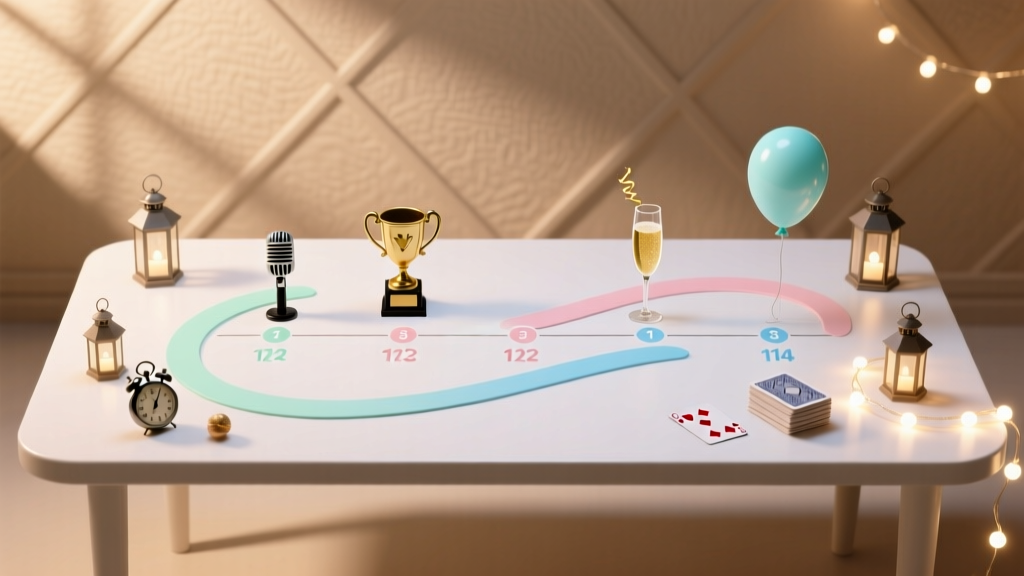
A Trivia Night Timeline Template
Trivia night looks simple on paper: ask questions, tally points, hand out prizes. In real life, it’s a fast-moving live event with lots of small moments that can derail the energy—slow check-in, unclear rules, audio issues, late food delivery, or scoring delays that make teams restless. A strong trivia night timeline keeps the pace crisp, protects the guest experience, and makes your event feel professionally produced.
Whether you’re planning a fundraiser, corporate team-building, bar trivia takeover, or a birthday with a competitive twist, the planning process is the same: define the format, lock your vendors and host, build a realistic run-of-show, and prepare for the “what-ifs.” The timeline below is designed for event planning and coordination—from the first brainstorm to the last load-out—so you can host a smooth, memorable trivia night.
This guide includes step-by-step checklist items, budget considerations, vendor selection tips, common mistakes to avoid, and real-world examples you can adapt for your venue and audience.
Before You Start: Define Your Trivia Night Blueprint
1) Set your goals and success metrics
- Fundraiser: target revenue, sponsorship packages, donation goals, ticket tiers.
- Corporate event: engagement goals, team mixing, timebox to fit work schedules.
- Community or venue night: repeat attendance, bar sales, reviews, social growth.
2) Choose your trivia format (and keep it consistent)
- Rounds: 4–6 rounds is typical; plan 8–12 questions per round.
- Question styles: standard Q&A, picture round, audio round, rapid-fire, wager question.
- Team size: 2–6 people per team tends to work well for scoring and table space.
- Game length: 90–120 minutes plus check-in and social time.
- Scoring method: paper answer sheets, QR-code submissions, or trivia software (faster, fewer errors).
3) Confirm the basics (your planning foundation)
- Date + start/end time: align with venue peak times and audience availability.
- Venue capacity + layout: table count, stage/host location, power access, sightlines.
- Accessibility: entrances, restrooms, seating options, captions if using video.
- Noise considerations: nearby events, room acoustics, mic requirements.
Trivia Night Planning Timeline (Template + Checklist)
Use this as your event planning timeline template. Adjust timeframes for smaller house parties (shorten) or large fundraisers (extend).
6–8 Weeks Before: Concept, Venue, and Key Vendors
- Lock the venue and confirm:
- Load-in/load-out times
- Tables/chairs included
- A/V available (speakers, mic, projector/screen)
- Food and beverage policy (in-house catering vs outside allowed)
- Choose your host (MC): charismatic, clear voice, comfortable managing a room. If using a trivia company, confirm what’s included (question writing, scoring, equipment).
- Decide on theme and branding: “’90s Night,” “Pop Culture,” “Local Legends,” “Holiday Trivia,” “Office Olympics.” Themes help marketing and team costume participation.
- Build your core team: event lead, check-in lead, scorekeeper, tech/A/V helper, runner.
- Outline a preliminary budget and set ticket pricing or fundraising targets (see budget section below).
Trend to use: Hybrid engagement elements. Even for in-person trivia, consider digital extras—QR codes for rules, live leaderboard on a screen, and optional team name voting to boost interaction.
4–6 Weeks Before: Content, Sponsorships, and Promotion
- Write or source trivia questions (or confirm delivery timeline with vendor):
- Keep difficulty balanced: 30% easy, 50% medium, 20% hard
- Fact-check and avoid overly niche questions unless it’s a themed event
- Plan time per question (average 60–90 seconds including reading + answering)
- Confirm prizes and how they’ll be presented:
- Top 3 teams
- Best team name
- Best costume (if themed)
- “Last place” fun prize (optional)
- Sponsorship outreach (especially for fundraising trivia nights):
- Prize sponsors (gift cards, baskets, experiences)
- Round sponsors (“Round 3 presented by…”)—easy recognition
- Table sponsors (company-branded table sign)
- Launch marketing:
- Event page with schedule, rules, and what’s included
- Email + social promotion; encourage early team registration
- Simple assets: square graphic, story graphic, printable flyer
2–3 Weeks Before: Operations and Run-of-Show
- Create your trivia night run-of-show (minute-by-minute outline; template below).
- Finalize staffing and roles:
- Check-in: tickets, team list, wristbands/stamps
- Floor runner: collects answer sheets or assists with app issues
- Scorekeeper: tallies and updates leaderboard
- A/V: manages mic, music, projector, slides
- Confirm A/V needs:
- Microphone (wireless handheld preferred)
- Speaker coverage for the room
- Projector + screen or large TV for questions/leaderboard
- Backup plan: printed question packets if tech fails
- Menu and bar plan (if applicable):
- Pre-order snack platters or a limited menu to keep service fast
- Offer a signature drink/mocktail tied to the theme
- Schedule a food drop that doesn’t interrupt a high-energy round
Trend to use: Streamlined service and “less menu, more speed.” Venues increasingly prefer simplified food options during interactive events to reduce delays and keep tables engaged.
1 Week Before: Final Confirmations and Print/Prep
- Confirm all vendors in writing:
- Arrival time, contact names, invoices, what they are bringing
- Load-in instructions and parking
- Prepare event materials:
- Answer sheets, pens, clipboards (if using paper)
- Team numbers or table tents
- Rules signage (large-print friendly)
- Prize labels and distribution plan
- Build your check-in system:
- Alphabetical team list + captain name
- Walk-up registration plan and payment method
- Wristbands or stamps if you need re-entry control
- Host rehearsal (30 minutes is enough):
- Pronunciation checks
- Timing per round
- How you’ll handle tie-breakers and disputes
Event Day: Setup, Showtime, and Breakdown
Event Day Setup Checklist (3–4 hours before doors)
- Venue walkthrough: confirm tables, chairs, stage/host placement, lighting
- A/V test: mic levels, music, projector, laptop power, backup cables
- Place table tents/team numbers, pens, answer sheets, sponsor signage
- Set up check-in: list, wristbands, payment device, cash box (if needed)
- Prep prizes in a dedicated “winners table” area
- Brief staff: roles, escalation plan, timing, how to handle issues quietly
Sample Trivia Night Run-of-Show (2 hours of gameplay)
- 6:00 PM Doors open + check-in + music
- 6:25 PM Welcome, rules, sponsor mentions, how scoring works (5–7 min)
- 6:35 PM Round 1 (10 questions)
- 6:50 PM Quick scoring + leaderboard update (5 min)
- 6:55 PM Round 2 (10 questions)
- 7:10 PM Break (10 min) – bar/food push + mid-event announcements
- 7:20 PM Round 3 (picture/audio round)
- 7:40 PM Scoring + mini game or sponsor raffle (5–8 min)
- 7:48 PM Round 4 (10 questions)
- 8:05 PM Final scoring + tie-breaker if needed (10 min)
- 8:15 PM Winners announced + prizes + photos
- 8:25 PM Wrap + thank you + promote next event
- 8:30 PM Load-out begins
Real-world pacing tip: If you notice teams finishing early, shorten the answer window. If they look stressed, give 15 extra seconds and reduce question reading speed. The host sets the rhythm.
Budget Considerations (with Sample Budget Breakdown)
Trivia night budgets vary widely depending on whether you’re hosting at home, renting a hall, or running a ticketed fundraiser. Build your event budget around fixed costs first, then scale variable items like prizes and decor.
Typical trivia night expense categories
- Venue: room rental, minimum spend, security, cleaning fee
- Host/Trivia provider: MC fee, question writing, scoring staff
- A/V: microphone, speakers, projector, technician
- Food & beverage: catering, appetizers, soft drinks, service charges
- Prizes: gift cards, trophies, baskets, branded swag
- Marketing: printing, social ads, ticketing fees
- Decor + supplies: signage, pens, answer sheets, table numbers
- Contingency: 8–12% buffer for last-minute needs
Sample budget: 60-person trivia fundraiser (moderate scale)
- Venue rental / minimum: $400
- Trivia host (2 hours + prep): $350
- A/V rental (mic + speaker + projector): $200
- Food (light appetizers): $600
- Prizes (top 3 + fun awards): $150
- Printing/signage/supplies: $75
- Marketing/ticketing fees: $125
- Contingency (10%): $190
Estimated total: $2,090 (about $34.83 per guest)
Cost-control strategy: Secure prize sponsorships and a round sponsor. Even two $250 sponsors can meaningfully reduce ticket price pressure while improving perceived event quality.
Vendor Selection Tips (Venue, Trivia Host, Catering, A/V)
How to choose a trivia host or trivia company
- Ask for a sample round to match difficulty and tone to your audience.
- Confirm whether they provide equipment (mic, speaker, screen) or you must rent separately.
- Clarify scoring method and turnaround time between rounds.
- Look for a host who can manage a room with clear rules and friendly authority—this prevents disputes.
Venue selection checklist
- Enough table space for answer sheets and drinks
- Low background noise or ability to control music
- Multiple power outlets near host station
- Line-of-sight to screens (avoid pillars blocking views)
- Staffing levels that can handle service during gameplay
Catering and bar coordination
- Choose handheld, low-mess foods that won’t ruin answer sheets (sliders, skewers, fries in cups).
- Schedule food service between rounds to reduce distractions.
- If fundraising, consider pre-sold drink tickets or a mocktail add-on for predictable revenue.
Common Trivia Night Planning Mistakes (and How to Avoid Them)
- No clear rules: Post rules on tables and review them quickly at the start. Include phone policy, tie-breakers, and answer challenges.
- Overlong rounds: Energy drops when scoring drags. Use a dedicated scorekeeper and streamline answer collection.
- Unbalanced question difficulty: If every question is hard, teams disengage. Balance levels and mix categories.
- Audio issues: A weak mic or poor speaker placement ruins the event. Always do a full soundcheck with someone seated in the back.
- Too few staff: One person cannot host, score, troubleshoot tech, and run check-in. Assign roles and backups.
- Prizes that don’t motivate: Even small prizes should feel exciting. Curate bundles (gift card + treats + a trophy) for better impact.
- Not planning for ties: Always have a tie-breaker question ready (or a fastest-answer challenge).
Real-World Example Timelines
Example A: Corporate team-building trivia (75–90 minutes)
- Doors open + mingling: 15 minutes
- 3 rounds x 8 questions: ~45–55 minutes
- Break: 5 minutes
- Final round + scoring: 15 minutes
- Awards + group photo: 5–10 minutes
Coordination tip: Use pre-assigned teams to reduce time spent organizing at the start. Keep prizes symbolic but fun (travel trophy, bragging-rights medal).
Example B: Fundraiser trivia night (2.5–3 hours total)
- Check-in + silent auction browsing: 30–40 minutes
- Trivia gameplay: 2 hours
- Raffle/auction close + winners + thank-you: 20–30 minutes
Coordination tip: Place bidding close during a break between rounds and have staff dedicated to payment pickup so trivia can continue on schedule.
FAQ: Trivia Night Planning and Coordination
How long should a trivia night last?
Plan for 2–3 hours total including arrival and awards. Gameplay itself is typically 90–120 minutes. If your audience is corporate or weeknight-focused, aim closer to 90 minutes to keep energy high.
How many questions do I need for a 2-hour trivia night?
A common structure is 4 rounds of 10 questions (40 total), plus a tie-breaker. If you add an audio or picture round, you can keep question count similar but vary the format to reduce fatigue.
What’s the best scoring method: paper or digital?
Digital scoring (QR forms or trivia software) reduces errors and speeds up leaderboards, which improves pacing. Paper works well for smaller groups if you have enough staff to collect and tally quickly.
How do I prevent cheating without making it awkward?
Set expectations at the start: “No phone use during questions.” Build in natural deterrents—fast pacing, engaging hosting, and occasional visual rounds. For higher-stakes events, consider a phone basket per team or a “screens down” policy during active questions.
How do I price tickets for a trivia fundraiser?
Start with your per-guest cost (venue + food + host + supplies), then add your fundraising margin. Many events use tiered pricing: individual ticket, full table package, and VIP table with perks (premium seating, extra raffle tickets, bonus points item).
What should I include in a trivia night planning checklist?
At minimum: venue confirmation, host/trivia content plan, A/V plan and backup, staffing roles, check-in system, rules signage, prizes, run-of-show timeline, and a contingency buffer for last-minute needs.
Your Next Steps: Put This Timeline Into Action
- Pick your date, venue, and trivia format (round count, team size, scoring method).
- Draft your run-of-show using the sample timeline and adjust for food service and sponsor moments.
- Build your budget, then lock your key vendors (host/trivia provider, A/V, catering).
- Assign roles to your team and schedule a short rehearsal or walkthrough.
- Prepare backups (extra pens, printed questions, spare cables, tie-breakers).
Trivia night is one of the best event formats for connection, friendly competition, and repeat attendance—when the pacing and coordination are tight. Save this trivia night timeline template, customize it to your venue and audience, and you’ll walk into event day with a clear plan and confident team.
Want more planning templates and party organization guides? Explore more event planning resources on smartpartyprep.com to keep your next event even smoother.
More Articles
 Do politicians wear the color tie of their party? The surprising truth about partisan neckwear—and how campaign teams actually use color psychology to influence voter perception without breaking protocol.
How to Change Political Party in Oregon in 2024: A Step-by-Step Guide That Takes Less Than 5 Minutes (No Forms, No Mail, No Waiting)
How to Dress for a Garden Party: The 7-Second Rule (What Guests Notice First) + What You’re Wearing Wrong in 2024 (Spoiler: It’s Not the Shoes)
What Gift for an Engagement Party? The 7-Step Gifting Framework That Prevents Awkwardness, Saves Money, and Actually Strengthens Your Relationship with the Couple (No More Last-Minute Panic or Regrettable Amazon Orders)
When Do Disney World Christmas Party Tickets Go On Sale? The Exact 2024 Dates (Plus How to Set Alerts, Avoid Sold-Out Disappointment, and Save $50+ with Early Access Tips)
What Party Started the KKK? The Shocking Truth Behind the Origins — Debunking Decades of Misinformation, Political Blame-Shifting, and Historical Whitewashing You’ve Been Told
Is Bloom Third Party Tested? We Investigated 7 Lab Reports, Certifications, and Customer Complaints to Answer the Question You’re Too Busy to Research Before Booking Your Wedding or Corporate Event
Do politicians wear the color tie of their party? The surprising truth about partisan neckwear—and how campaign teams actually use color psychology to influence voter perception without breaking protocol.
How to Change Political Party in Oregon in 2024: A Step-by-Step Guide That Takes Less Than 5 Minutes (No Forms, No Mail, No Waiting)
How to Dress for a Garden Party: The 7-Second Rule (What Guests Notice First) + What You’re Wearing Wrong in 2024 (Spoiler: It’s Not the Shoes)
What Gift for an Engagement Party? The 7-Step Gifting Framework That Prevents Awkwardness, Saves Money, and Actually Strengthens Your Relationship with the Couple (No More Last-Minute Panic or Regrettable Amazon Orders)
When Do Disney World Christmas Party Tickets Go On Sale? The Exact 2024 Dates (Plus How to Set Alerts, Avoid Sold-Out Disappointment, and Save $50+ with Early Access Tips)
What Party Started the KKK? The Shocking Truth Behind the Origins — Debunking Decades of Misinformation, Political Blame-Shifting, and Historical Whitewashing You’ve Been Told
Is Bloom Third Party Tested? We Investigated 7 Lab Reports, Certifications, and Customer Complaints to Answer the Question You’re Too Busy to Research Before Booking Your Wedding or Corporate Event
 What Is the Democratic Party's Approval Rating Right Now? Real-Time Data, Trends Since 2020, and What It Means for Your Campaign Strategy in 2024
How to Book an Airbnb for a Party Without Getting Canceled, Fined, or Banned: A Step-by-Step Guide That Actually Works (2024 Edition)
What Is the Democratic Party's Approval Rating Right Now? Real-Time Data, Trends Since 2020, and What It Means for Your Campaign Strategy in 2024
How to Book an Airbnb for a Party Without Getting Canceled, Fined, or Banned: A Step-by-Step Guide That Actually Works (2024 Edition)