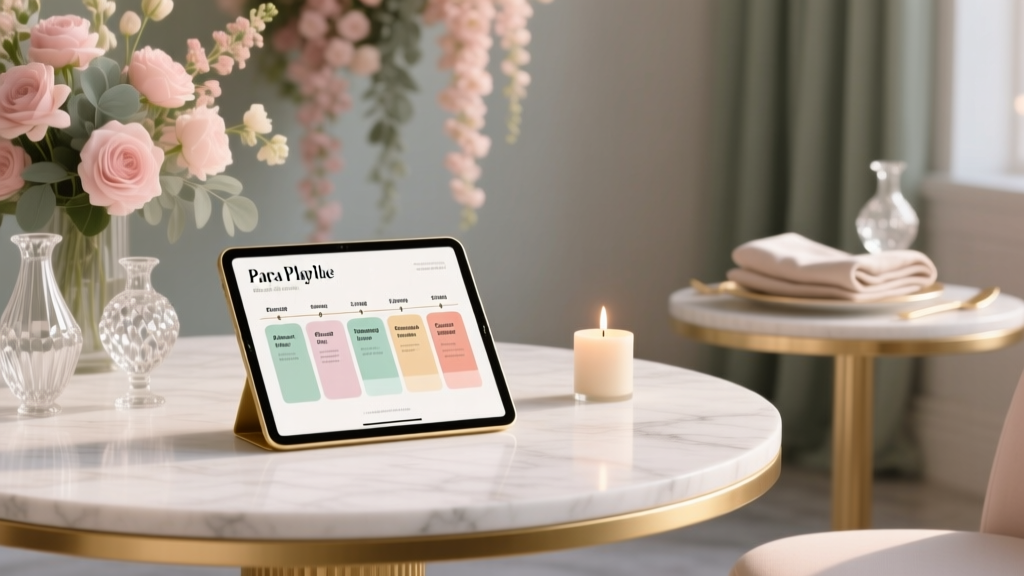
A Spa Day Timeline Template
A spa day can feel effortless for guests—and that’s exactly the point. Behind the calm music, plush robes, and perfectly timed treatments is a well-built event planning timeline that keeps everything moving without anyone feeling rushed. Whether you’re hosting a birthday spa party, a bridal spa day, a corporate wellness retreat, or a “just because” self-care gathering, planning matters because spa experiences rely on pacing, privacy, and service flow.
Unlike many parties where guests mingle freely, a spa day includes appointments, transitions, and vendor coordination. One late arrival can ripple through a schedule, and a missing supply (like extra towels or disinfectant wipes) can slow down stations fast. A clear spa day timeline template helps you manage the guest experience from arrival to farewell—while protecting your budget, honoring vendor needs, and creating a polished, organized event.
This guide gives you a step-by-step planning timeline, practical checklists, budget breakdowns, vendor selection tips, and real-world examples so you can coordinate a spa day that runs like clockwork and feels like a treat.
Start Here: Define Your Spa Day Vision (and Make Key Decisions)
Choose the spa day format
Your timeline and budget hinge on the structure. Popular formats include:
- At-home spa day: DIY stations + optional mobile providers (massage, facials, nails).
- Rented venue spa day: Private studio, boutique hotel suite, or event space with stations.
- Spa facility day pass: You reserve group packages at a spa; planning focuses on arrivals, add-ons, and hospitality.
- Hybrid: Treatments at a spa, then a lunch or mocktail lounge at home/venue.
Set the essentials
- Guest count: 4–8 for luxe pacing; 10–16 for station-style flow; 20+ requires strict time blocks and multiple providers.
- Duration: 3–5 hours is a sweet spot; 6+ hours needs structured breaks.
- Time of day: Late morning to mid-afternoon supports healthy menu options and daylight ambiance.
- Style: “Clean minimal,” “tropical retreat,” “rose-gold glam,” or “quiet luxury” (a current trend emphasizing neutral palettes, elevated basics, and fewer—but higher-quality—touchpoints).
Step-by-Step Planning Timeline (with Checklist Templates)
Use this spa day planning timeline as your event planning framework. Adjust based on whether you’re hiring vendors or doing a DIY spa party at home.
6–8 Weeks Before: Foundations + Vendor Outreach
What to lock in
- Choose date, start/end times, and format (home, venue, spa facility).
- Define your “treatment menu” (massages, mini facials, mani/pedi, mask bar, aromatherapy, guided meditation).
- Set a per-person budget and an overall spending cap.
- Create a guest list and collect emails/phone numbers.
Vendor selection tips (mobile or venue-based)
- Request proof of licensing/insurance for massage therapists, estheticians, and nail techs.
- Ask about equipment needs: table space, outlet access, water, chair types, privacy screens.
- Confirm service timing: 15–25 minute minis are ideal for groups; 50–60 minutes works for small, intimate spa days.
- Discuss sanitation protocols: clean tools, single-use items, and between-guest wipe-downs.
- Get everything in writing: deposit, travel fees, cancellation policy, and arrival/setup time.
Checklist
- Draft your event timeline (first version).
- Create a simple event planning spreadsheet (guests, RSVPs, vendor contacts, payments).
- Book venue or confirm at-home space plan.
- Request 2–3 quotes for each vendor category.
4–5 Weeks Before: Design the Experience + Send Invites
Build the guest journey
Think like a coordinator: where do guests enter, drop bags, change, wash hands, and move between stations?
- Arrival zone: welcome signage, slippers/robes (optional), drink station.
- Treatment zone: quiet area for massage/facials; consider white-noise machine.
- DIY zone: mask bar, hand scrub station, nail drying area.
- Lounge zone: seating, cozy throws, snack table, photo moment (trend: subtle “self-care” neon or acrylic sign, not oversized balloon walls).
Invitations and RSVPs
- Send digital invites with clear start/end times, location, parking, and what to wear.
- Ask about allergies/sensitivities (fragrance, nuts, latex) and preferred treatment types.
- Set an RSVP deadline 10–14 days before the event.
Checklist
- Finalize vendors and pay deposits.
- Choose theme colors and shopping list.
- Decide menu: light, fresh, and low-mess (current trend: grazing boards, infused waters, mini salads, protein bites).
- Order any custom items (robes, reusable cups, personalized sleep masks).
2–3 Weeks Before: Confirm Details + Build the Treatment Schedule
Create your service rotation plan
For group spa days, a rotation schedule is the difference between calm and chaos.
Rotation Template (Example for 12 guests, 3 stations, 20-minute blocks)
- Station A: Mini facials (esthi)
- Station B: Chair massage (LMT)
- Station C: Mask bar + hand scrub (DIY)
Build 20-minute blocks + 5-minute transition buffers:
- Block 1: Group 1 at A, Group 2 at B, Group 3 at C
- Transition (5 minutes)
- Block 2: Rotate
- Transition
- Block 3: Rotate
Pro coordination tip: Assign guests to groups in advance and display a simple schedule on a clipboard or framed sign. This avoids “where do I go next?” confusion.
Order and prep supplies
- Disposable or dark-colored washcloths, headbands, and towels
- Hand sanitizer and disinfectant wipes
- Bowls, spatulas, and single-use applicators for masks
- Trash bins at every station
- Extension cords, power strips, phone chargers
- Music playlist (ad-free) + portable speaker
Checklist
- Confirm vendor arrival times and setup duration.
- Confirm menu/catering order or grocery list.
- Plan lighting (soft lamps, battery candles) and temperature control.
- Finalize the timeline version you’ll follow day-of.
7–10 Days Before: Final Confirmations + Printables
Vendor and guest confirmation script
- Send guests: reminder, attire guidance, parking, and start-time expectations.
- Send vendors: address, contact number, load-in instructions, space photos, and schedule.
Create your “day-of binder” (digital or printed)
- Master timeline
- Vendor contact list + payment status
- Rotation schedule
- Menu plan + shopping list
- Allergy list
- Setup diagram (where each station goes)
Checklist
- Prep signage: “Mask Bar,” “Hydration Station,” “Quiet Zone,” “Shoes Here.”
- Plan favors (trend: practical wellness favors like mini hand creams, eye patches, lip balm).
- Confirm cleanup plan (who does laundry, trash, rentals return).
48–72 Hours Before: Shop, Stage, and Pre-Set Stations
- Buy perishables, ice, fruit, and beverage ingredients.
- Wash linens/towels; set aside extras for spills.
- Pre-label bins for each station (Face, Nails, Massage, Snacks).
- Charge devices (speaker, phone, battery candles).
- Set up as much as possible: tables, chairs, linens, signage.
Day-Of Spa Day Timeline Template (Copy + Customize)
Use this sample spa day schedule for a 4-hour event (adjust block length to your services).
4-Hour Spa Day Schedule
- T-90 minutes: Host setup (lighting, music, stations, trash bins, towels). Start beverages chilling.
- T-60 minutes: Vendors arrive and set up. Walk-through and confirm flow + sanitation.
- T-15 minutes: Final reset (bathroom stocked, entry tidy, signage out, rotation schedule displayed).
- 0:00–0:20: Guest arrival + welcome mocktail/tea. Collect waivers if needed. Explain the schedule.
- 0:20–0:30: Quick grounding moment (guided breathing, intention setting, or short stretch).
- 0:30–2:10: Rotations (3–4 blocks depending on station count) with 5-minute buffers.
- 2:10–2:30: Snack break + hydration refill. Optional photo moment.
- 2:30–3:30: Final treatments or open spa time (guests revisit favorite station).
- 3:30–3:50: Closing: gratitude toast, favor handoff, next-step skincare tips card.
- 3:50–4:00: Guest departures + vendor breakdown begins.
- T+30–60 minutes: Cleanup sweep (trash, surfaces), towel collection, inventory leftover supplies.
Real-world example: Bridal spa day (8 guests)
- Two vendors: 1 massage therapist + 1 esthetician
- Services: 30-minute massage + 30-minute facial per guest
- Structure: 5-hour schedule with staggered arrival times (two guests arrive every 30 minutes)
- Result: No waiting room feel, bride gets prime mid-event slot, and food is served as a continuous grazing table
Budget Considerations (with Sample Breakdown)
Budgeting is a core event planning skill. For spa days, costs typically fall into treatments, hospitality, and comfort details.
Sample budget: 10 guests, at-home spa day with 2 mobile providers
- Mobile services: $800–$1,400 (mini facials + chair massage; pricing varies by market and service length)
- Food + beverages: $150–$350 (grazing board ingredients, infused water, tea/coffee)
- Supplies + disposables: $80–$200 (headbands, wipes, applicators, sanitizer)
- Decor + ambiance: $60–$180 (candles, florals, linens, signage)
- Favors: $50–$150 (mini wellness kits)
- Contingency (10%): $120–$230
Estimated total: $1,260–$2,510
Money-saving strategies that still feel elevated
- Replace full treatments with express services (15–20 minutes) for more guests.
- Go heavier on experience design: lighting, scent (gentle), and comfy seating can outperform expensive decor.
- Offer one “hero” vendor service (like chair massage) and keep the rest as well-curated DIY stations.
- Use digital signage (a tablet on a stand) instead of printing multiple boards.
Vendor Selection Tips for a Smooth Spa Day
- Look for event-ready professionals: Ask if they regularly do parties and corporate wellness events.
- Ask about setup footprint: A massage table needs more clearance than most hosts expect.
- Confirm sound/privacy needs: A quiet zone and optional room divider can improve the experience instantly.
- Clarify what they bring: table, linens, oils, gloves, sanitation supplies, waste bag.
- Build buffer time: The best schedules include 5-minute reset windows between guests.
Common Spa Day Planning Mistakes to Avoid
- Overpacking the timeline: Too many stations creates decision fatigue and delays. Aim for 2–4 strong touchpoints.
- Skipping transition time: Guests need a few minutes to wash hands, use the restroom, or reset between services.
- Ignoring scent sensitivities: Heavy fragrance can ruin the day for some guests. Offer unscented options and keep aromatherapy subtle.
- Underestimating towels and trash: Spa parties generate more laundry and waste than typical gatherings.
- No plan for late arrivals: Add a built-in “open spa” block so late guests can still participate without derailing rotations.
- Forgetting hydration and protein: Light bites are great, but include filling options to keep energy steady.
FAQ: Spa Day Event Planning
How long should a spa day party be?
Plan for 3–5 hours for most home or venue spa days. If you’re offering full-length massages or facials, increase time or reduce guest count to avoid a rushed schedule.
How many stations do I need for a spa day?
For 8–12 guests, 3 stations is a reliable structure (one vendor-led, one vendor-led or guided, one DIY). For 4–6 guests, fewer stations with longer treatments feels more luxurious.
What’s the best way to organize the treatment schedule?
Use a rotation chart with assigned groups, fixed time blocks, and 5-minute transition buffers. Display it clearly and announce the first rotation during the welcome moment.
Do I need waivers for a spa day event?
If you’re hiring licensed providers, they may supply their own intake forms/waivers. For DIY-only events, you may not need formal waivers, but you should still collect allergy and sensitivity info and label ingredients.
What food works best for a spa-themed party?
Choose low-mess, easy-to-eat items: fruit, yogurt cups, mini salads, wraps, protein bites, sparkling water with citrus, and herbal teas. Avoid anything overly greasy or powdery near treatment areas.
How do I keep the spa day feeling calm with a larger group?
Create clear zones (Quiet Treatment, Lounge, Refreshments), keep music consistent, use signage, and assign one person to act as day-of coordinator to manage timing and troubleshoot.
Next Steps: Use This Template to Plan with Confidence
Pick your date, decide your spa format, and plug your guest count into the timeline template above. Then build your rotation schedule, confirm vendor needs, and stage your stations with comfort and sanitation in mind. A well-coordinated spa day doesn’t require a massive budget—it requires smart pacing, clear zones, and a host who plans like a pro.
For more event planning timelines, party organization checklists, and coordination tips, explore the guides at smartpartyprep.com and keep building celebrations that feel effortless from start to finish.
More Articles
 A Holiday Party Planning Checklist
What Political Party Is Kendrick Lamar? The Truth Behind His Activism, Grammy Protests, and Why He Refuses Labels — And What It Means for Your Next Civic Engagement Event
A Holiday Party Planning Checklist
What Political Party Is Kendrick Lamar? The Truth Behind His Activism, Grammy Protests, and Why He Refuses Labels — And What It Means for Your Next Civic Engagement Event
 What Is the Main Function of a Political Party? 5 Core Roles You Didn’t Learn in Civics Class (But Absolutely Need to Understand in 2024)
What to Bring to Breakfast Party: The Stress-Free 12-Minute Checklist (No More Awkward Empty-Handed Arrivals or Over-Overthinking Your Contribution)
Why Does Airbnb Say Unauthorized Party? The Real Reason Your Booking Got Flagged (and Exactly How to Host Legally Without Getting Banned)
What Is Green Political Party? The Truth Behind Their Climate Promises, Electoral Power, and Why Most Voters Still Don’t Understand Their Real Agenda — Here’s What Textbooks Won’t Tell You
What to Wear to a 1920s Party Male: The 7-Item Checklist That Guarantees Authentic Flair (No Costume Store Needed)
What Is the Main Function of a Political Party? 5 Core Roles You Didn’t Learn in Civics Class (But Absolutely Need to Understand in 2024)
What to Bring to Breakfast Party: The Stress-Free 12-Minute Checklist (No More Awkward Empty-Handed Arrivals or Over-Overthinking Your Contribution)
Why Does Airbnb Say Unauthorized Party? The Real Reason Your Booking Got Flagged (and Exactly How to Host Legally Without Getting Banned)
What Is Green Political Party? The Truth Behind Their Climate Promises, Electoral Power, and Why Most Voters Still Don’t Understand Their Real Agenda — Here’s What Textbooks Won’t Tell You
What to Wear to a 1920s Party Male: The 7-Item Checklist That Guarantees Authentic Flair (No Costume Store Needed)